

Physiotherapy: The Complete Guide to Treatment, Recovery and Pain Relief
Ankle pain rarely gets the attention it deserves. People walk on sore ankles for months, assuming they will settle, and often they do. The ones that persist usually have a reason: a sprain that never fully retrained, a tendon loaded past its capacity, or a joint quietly stiffening. The ankle carries your entire body weight on a joint the size of a matchbox, thousands of steps a day, so small problems get rehearsed until they become patterns.
Key Takeaways
- Physiotherapy is a regulated, degree-level health profession: every UK physiotherapist must be HCPC-registered, and "physiotherapist" is a protected title in law.
- The job is rehabilitative: treating the symptoms you feel and the causes that produced them, then restoring what the pain interrupted.
- Active, progressive exercise is the best-evidenced treatment for most musculoskeletal conditions, supported by hands-on therapy rather than replaced by it.
- No GP referral is needed for private physiotherapy; direct access applies across the UK, and earlier treatment consistently improves outcomes.
- Most people notice improvement within two to four weeks of starting treatment, with recovery windows that follow tissue biology, not wishful thinking.
What is physiotherapy?
Physiotherapy is a science-led health profession that restores movement, reduces pain, and rebuilds capability when injury, illness, or surgery has taken them away. It works through a combination of assessment, hands-on treatment, targeted exercise, and education, and it treats both the symptoms you feel and the causes that produced them.
The distinction that matters: physiotherapy is rehabilitative by nature. A physiotherapist assesses how you move, identifies why something has gone wrong, explains it clearly, and builds a plan to get you back to the things that matter. Pain relief is part of the job. Restoring what the pain interrupted is the actual job.

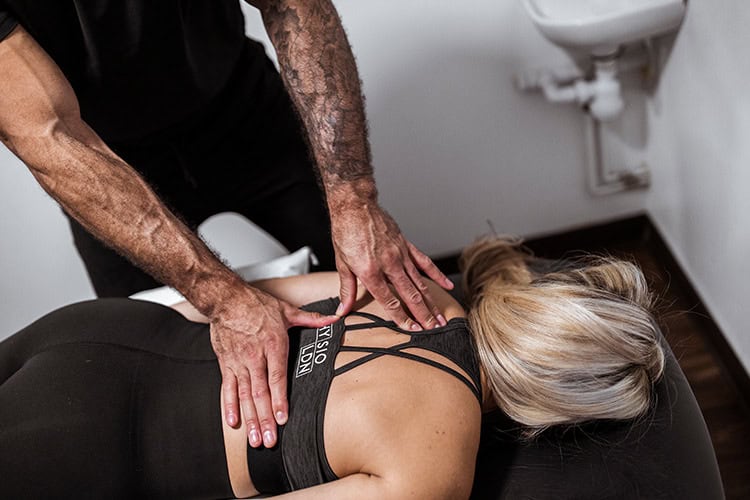
In the UK, every practising physiotherapist must be registered with the Health and Care Professions Council (HCPC), the statutory regulator that sets and enforces professional standards. The Chartered Society of Physiotherapy (CSP) is the professional body, and the letters MCSP after a clinician’s name signify chartered membership.
Physiotherapist is a protected title in law, which means the person treating you holds a degree-level qualification or higher and is accountable to legal and professional standards. Our guide to choosing a physiotherapist covers how to verify both credentials in minutes.
Who Physiotherapy Helps
Physiotherapy serves people of all ages — from children with developmental conditions to older adults managing degenerative change. You do not need to be a serious athlete or to have suffered a dramatic injury to benefit. Common reasons people seek physiotherapy include:
- Persistent or recurring pain in the back, neck, shoulders, hips, knees, or elsewhere
- Sports and activity injuries: sprains, muscle tears, tendon problems, ligament damage
- Post-surgical rehabilitation to restore strength and movement after operations
- Workplace and postural problems, from repetitive strain to desk-related back and neck pain
- Long-term conditions such as osteoarthritis, where strength work protects function year on year
Musculoskeletal problems are the leading cause of pain and disability in the UK, affecting more than one in four people, and research funded by the National Institute for Health Research shows that physiotherapy for these conditions improves outcomes while reducing overall healthcare costs. The full territory, including where physiotherapy hands over to medical care, is mapped in our guide to what physiotherapists treat.
Physiotherapy as a profession also spans neurological rehabilitation, respiratory care, and women’s health. At One Body LDN our focus is musculoskeletal, sports, and post-surgical physiotherapy, and where a problem sits outside that scope, we say so and point you to the right service.
Physiotherapy and Physical Therapy
In the UK the two terms are used interchangeably, and in practice they describe the same regulated profession. The difference is mostly geography: physiotherapy is the British, Australian, and European term, physical therapy the American one.
Where a distinction is drawn, physiotherapy is associated with a whole-body approach blending manual therapy, movement re-education, and self-management, while physical therapy leans harder on structured exercise rehabilitation. Good modern practice combines both, and the full comparison sits in our guide to physio vs physical therapy.
What Conditions Does Physiotherapy Treat?
- Back pain: acute episodes, persistent pain, sciatica, and disc-related problems
- Neck pain: including whiplash, nerve-related arm symptoms, and neck-driven headaches
- Shoulder problems: rotator cuff injuries, frozen shoulder, impingement
- Elbow, wrist and hand conditions: tennis and golfer's elbow, carpal tunnel syndrome, tendon problems
- Hip pain: bursitis, impingement, hip flexor strains, early arthritis
- Knee injuries: patellofemoral pain, ACL rehabilitation, meniscal problems
- Foot and ankle problems: sprains, instability, plantar fasciitis, achilles tendinopathy
Each body area behaves differently, which is why this site treats each one in depth. The full set of area guides sits at the end of this page.
Sports physiotherapy runs through all of it: assessment and treatment of the injury, then the more valuable half, understanding why it happened and correcting the load, weakness, or movement pattern behind it, through to full return to sport.
Your First Physiotherapy Appointment?
A first appointment runs to a structured rhythm, and knowing it helps you get more from the session. It starts with your history: how the problem began, how it behaves, what makes it better and worse, your work, your activity, your goals. This conversation is the foundation of everything that follows, and a thorough one takes fifteen to twenty minutes done properly.
The physical examination follows: range of movement, strength, joint mobility, and the specific clinical tests that confirm or rule out particular diagnoses. Some tests deliberately reproduce your symptoms, which is diagnostic, not careless. How physiotherapists reach a diagnosis without defaulting to scans is a subject in itself, covered in our guide to how physiotherapists diagnose.
Then the explanation: what the problem is, which tissues are involved, why it developed, and what the plan looks like, including honest session estimates and what your home programme will involve. Treatment usually starts the same visit. The full walkthrough sits in our guide to what happens at your first appointment, and the perennial practical question is answered in what to wear to physiotherapy.
Physiotherapy Treatments and Techniques
Modern physiotherapy draws on a wide, evidence-based toolkit, and skilled clinicians select and combine rather than apply a fixed menu. The full evidence hierarchy is explained in our guide to physiotherapy treatment methods. The short version:
Exercise therapy leads. Active, progressive exercise now has definitive research support as the most effective approach for most musculoskeletal conditions, and recent high-quality meta-analyses place supervised exercise as first-line treatment for chronic presentations.
Your programme is built to your diagnosis and progressed as you improve: mobility work, strength and control, then functional and sport-specific training. The between-sessions half of this, the home programme, is one of the biggest single determinants of how fast you recover, and our guide to the physiotherapy home exercise programme explains why small, precise programmes beat long generic sheets.
Manual therapy supports. Joint mobilisation, manipulation, soft-tissue techniques, and neural mobilisation reduce pain and restore movement, and contemporary research shows they work through both mechanical and neurophysiological mechanisms. Best practice integrates hands-on treatment with active exercise rather than using it alone.
Shockwave therapy has strong published evidence for specific stubborn tendon problems, including tennis elbow, plantar fasciitis, and calcific shoulder tendinopathy, with high reported success rates in the research literature for well-selected cases.
Adjuncts earn their place selectively. Ultrasound, TENS, heat and cold support pain management in appropriate cases, always alongside active rehabilitation rather than instead of it.
Education is treatment. For persistent pain, understanding how pain actually works is itself a proven intervention, and pain science education combined with exercise has strong evidence for long-term conditions.
Clinical insight from One Body LDN
"The strongest predictor of a fast recovery is rarely the diagnosis. It is what happens between appointments. Two patients with the same problem and the same plan recover at completely different speeds depending on whether the home programme actually gets done, which is why we build programmes people can genuinely fit into a working week."Rebecca Bossick — Chartered Physiotherapist & Clinical Director
How Long Does Physiotherapy Take?
| Tissue / condition type | Typical recovery window |
|---|---|
| Minor muscle strains | 2–4 weeks |
| Soft tissue injuries (sprains, strains) | 6–8 weeks |
| Tendon problems (mild–moderate) | 6–12 weeks |
| Ligament injuries (moderate) | 6 weeks – 3 months |
| Bone injuries | 6–12 weeks after immobilisation |
| Acute lower back pain | 4–6 weeks to significant improvement |
| Persistent back pain | 8–12 weeks, consolidating over 3–6 months |
| Post-surgical rehabilitation | 12–16+ weeks depending on procedure |

Most people notice improvement within two to four weeks of starting treatment. Progress is rarely linear, and a harder week inside an improving month is normal healing, not a setback. What decides your actual session count, and what moves it up or down, is covered in our guide to how many physio sessions you need.
Whatever the condition, rehabilitation progresses through the same five overlapping stages: protecting the tissue and settling pain, restoring range of movement, rebuilding strength and control, functional rehabilitation for your real life or sport, and return to full activity with the habits that prevent a repeat.
Private Physiotherapy: Access and Costs
Physiotherapy is available on the NHS, and NHS musculoskeletal waiting lists are measured in weeks to months in much of London. Private physiotherapy exists for the gap: faster access, longer appointments, and continuity with the same clinician. The honest comparison, including when NHS physio is the right call, sits in our guide to NHS vs private physiotherapy waiting times.
No GP referral is needed.
Direct access applies to private physiotherapy across the UK, so you book directly, and for acute injuries the earlier start genuinely changes outcomes. Details in physiotherapy without a GP referral.
Insurance usually works differently from self-pay.
Insured patients typically need pre-authorisation before the first session, and the process is straightforward once you know it: our guide to how insurance-funded physiotherapy works walks through it.
Costs are knowable in advance.
London physiotherapy pricing follows patterns, and our guide to what to pay for physio in London sets out the honest ranges so you can compare properly.
At One Body LDN, every physiotherapist is HCPC-registered, holds a degree-level qualification or above, and maintains continuing professional development in line with HCPC and CSP requirements. Appointments run early, evening, and weekends across our London clinics.
Physiotherapy for Specific Body Areas
Neck Pain →
Whiplash, nerve-related arm symptoms, neck-driven headaches, and postural neck pain
Back Pain →
Acute and persistent back pain, sciatica, disc-related problems, and the full treatment pathway
Elbow Pain →
Tennis elbow, golfer's elbow, and nerve-related elbow problems
Wrist Pain →
Carpal tunnel syndrome, sprains, and tendon problems
Ankle Pain →
Sprains, instability, and achilles problems
Shoulder Pain →
Rotator cuff injuries, frozen shoulder, impingement, and instability
Hand Pain →
trigger finger, arthritis, and grip-related conditions
Hip Pain →
Bursitis, impingement, flexor strains, and early arthritis
Knee Pain →
ACL rehabilitation, kneecap pain, meniscal injuries, and instability
Foot Pain →
Plantar fasciitis, ball-of-foot pain, and heel conditions
Frequently Asked Questions
Do I need a GP referral to see a physiotherapist?
How many sessions will I need?
It depends on the condition, severity, and how the home programme goes. Most people notice change within two to four sessions, and your physiotherapist gives you an honest estimate at the first assessment. Our session numbers guide covers what moves the number.
Is physiotherapy painful?
Some assessment and treatment involves temporary discomfort, always within your tolerance and always explained. Treatment soreness typically settles within a day or two.
Do I need a scan before starting?
Usually not. Most musculoskeletal problems are diagnosed well from history and movement testing, and scans are reserved for where the result would change the plan. The reasoning is covered in how physiotherapists diagnose.
Can physiotherapy prevent problems coming back?
What is the difference between a physiotherapist, a chiropractor, and an osteopath?
I have had my problem for years. Is it too late for physiotherapy to help?
Should I rest or keep moving while waiting for my appointment?
How often will I need to attend sessions?
What happens if physiotherapy is not working?
A good clinician reviews honestly. If progress stalls, the plan changes: the diagnosis gets re-examined, the loading adjusted, or imaging and specialist referral arranged. Physiotherapy done properly includes recognising when the problem needs a different door, and saying so.
Can I see a physiotherapist for a second opinion?
Are online physiotherapy appointments effective?
References
- Versus Arthritis. The State of Musculoskeletal Health 2023. Versus Arthritis; 2023.
- National Institute for Health Research. Moving Forward: Physiotherapy for Musculoskeletal Health and Wellbeing. NIHR Themed Review; 2018.
- Babatunde OO, Jordan JL, Van der Windt DA, Hill JC, Foster NE, Protheroe J. Effective treatment options for musculoskeletal pain in primary care: a systematic overview of current evidence. PLOS ONE. 2017;12(6):e0178621.
- National Institute for Health and Care Excellence. Low back pain and sciatica in over 16s: assessment and management. NICE guideline NG59; 2016 (updated 2020).
- Bialosky JE, Beneciuk JM, Bishop MD, et al. Unraveling the mechanisms of manual therapy: modeling an approach. Journal of Orthopaedic & Sports Physical Therapy. 2018;48(1):8-18.
- Moya D, Ramón S, Schaden W, Wang CJ, Guiloff L, Cheng JH. The role of extracorporeal shockwave treatment in musculoskeletal disorders. Journal of Bone and Joint Surgery. 2018;100(3):251-263.
- Watson JA, Ryan CG, Cooper L, et al. Pain neuroscience education for adults with chronic musculoskeletal pain: a mixed-methods systematic review and meta-analysis. Journal of Pain. 2019;20(10):1140.e1-1140.e22.
- Health and Care Professions Council. Standards of proficiency
- Chartered Society of Physiotherapy. What is physiotherapy?