

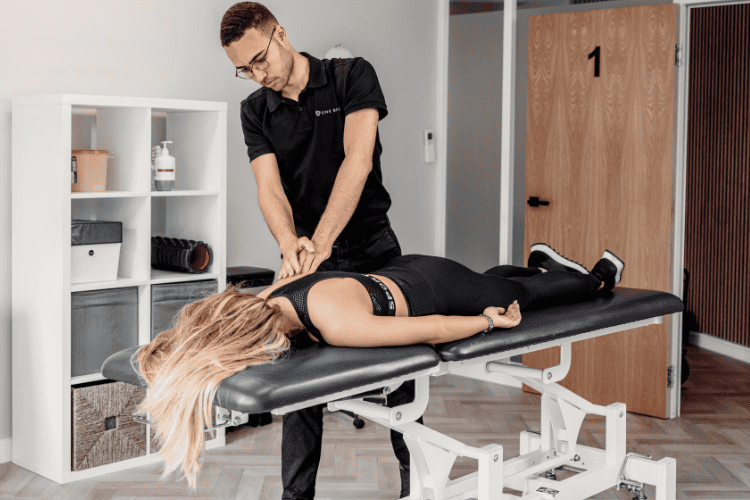

Physiotherapy results are made between appointments. The session sets the direction. The home programme does the building, because tissue changes through repetition, and repetition happens across the week, not in a thirty-minute visit.
This is why two patients with the same problem and the same physiotherapist can finish in different places. The one who did the programme recovered. Understanding why the programme matters, and what makes one stick, changes how you use every session you pay for. We explain both below.
Our MCSP-registered team at One Body LDN builds home programmes into every treatment plan across our London clinics, because the evidence leaves no other honest way to work.
Key Takeaways
- Recovery is built through repetition, and repetition happens at home between sessions.
- A good home programme is short, specific, and progressed as you improve.
- Two to four exercises done consistently beat ten done occasionally.
- Doing the programme usually means needing fewer sessions overall.
- Tell your physiotherapist honestly when a programme is not getting done, because fixable reasons are common.
Why Home Exercises Matter So Much In Physiotherapy

Tissue adapts to what it experiences repeatedly, and sessions alone are not repeated enough.
Muscles, tendons, and joints change in response to consistent load over weeks. A weekly session supplies guidance, hands-on treatment, and progression, but it cannot supply the repetitions that drive adaptation.
The home programme supplies them. This is not a supplement to treatment. For most problems, it is the treatment, with sessions steering it.
The evidence hierarchy behind this sits in our guide to physiotherapy treatment methods: exercise leads because it changes capacity, and capacity is built between visits. Skipping the programme while attending the sessions is paying for the map and refusing to walk.
What A Good Home Exercise Programme Looks Like
Short, specific, and progressed. A good programme respects your week.
Few Exercises, Chosen Precisely
Expect two to four exercises targeting your specific problem, not a ten-exercise sheet. Small programmes get done. Large ones get abandoned. Precision beats volume.
Clear Purpose For Each Exercise
You should know what each exercise is for. A programme you understand is a programme you keep, and asking why is always fair.
Progression As You Improve
The programme should change every week or two as capacity builds. Week four should not look like week one. A static sheet is a stalled plan.
A Realistic Slot In Your Day
Good programmes fit real routines: minutes, not hours, tied to something you already do. Your physiotherapist should ask about your day and build around it.
How To Actually Stick To Your Programme

Adherence is a design problem, not a willpower problem.
The people who complete programmes are not more disciplined. They have programmes designed to be completable. Three habits do most of the work. Anchor the exercises to an existing routine, after brushing teeth, before the shower, with the kettle on, so they need no separate decision.
Track completion simply, a note or a tick, because visible streaks sustain themselves. And report honestly at each session, including what did not get done, because a skipped programme usually has a fixable cause: too long, too painful, too confusing, or life simply changed. Adjusting the programme is normal physiotherapy practice. Abandoning it silently is the only real failure.
What Happens If You Skip The Home Programme
Skipping the programme slows recovery and usually means more sessions, not fewer.
The arithmetic is plain. Without home repetitions, each session spends time recovering lost ground instead of progressing, the timeline stretches, and the course grows. Doing the programme reverses it: sessions build on completed work, progress compounds, and discharge arrives sooner.
How many sessions a course takes, and what moves that number, is covered in our guide to how many physio sessions you need. Adherence is the single biggest factor within your control.
Our physiotherapy team in London designs programmes around your actual week at the first assessment, because a programme that fits is a programme that works.
Note. Home exercise programmes are prescribed after assessment and matched to your problem, so this guide describes the principles rather than specific exercises. Stop and contact your physiotherapist if an exercise sharply worsens your symptoms.
Seek urgent medical care rather than continuing any programme for numbness in the saddle area, new bladder or bowel changes, severe unrelenting night pain, unexplained weight loss with new pain, fever alongside joint pain, or an injury you cannot bear weight through. Contact NHS 111 when unsure.
Frequently Asked Questions
We answer the home programme questions that patients ask most.
Do I really need to do my physiotherapy exercises at home?
Yes, for most problems, the home programme is where recovery is built, with sessions steering it. Tissue adapts through repetition across the week, which sessions alone cannot supply. Doing the programme usually means fewer sessions overall.
How many exercises should a physiotherapy home programme have?
Expect two to four precise exercises, not a long generic sheet. Small, specific programmes get completed and progressed. If your programme feels too large to sustain, say so, because trimming it is normal practice.
What if I keep forgetting or skipping my exercises?
Tell your physiotherapist honestly, because skipped programmes usually have fixable causes. Anchoring exercises to an existing daily routine and tracking completion are the two changes that help most. Adjusting the programme to fit your life is part of the treatment.
