

Shoulder Pain: Symptoms, Causes, Treatment and When to See a Physio
Shoulder pain is one of the most common upper-body problems treated in physiotherapy, and one of the most varied. It might be a dull ache after a desk day, a sharp catch when lifting your arm, a shoulder you cannot lie on at night, or an ache spreading from the neck into the shoulder blade.
Key Takeaways
- Pain when raising the arm is the single most common shoulder complaint, and usually points to the rotator cuff, bursa or impingement rather than structural damage.
- A shoulder that stays stiff even when someone else moves it points to frozen shoulder; a shoulder that is painful but movable points to the cuff and its neighbours.
- Pain around the shoulder blade is regularly referred from the neck, which is why proper assessment tests both before treating either.
- Shoulder or left arm pain arriving with chest tightness, breathlessness or sweating is treated as a possible heart problem: call 999.
- Strengthening the rotator cuff and shoulder blade muscles is the best-evidenced treatment for nearly every shoulder condition on this page.
What is Shoulder Pain?
Shoulder pain refers to discomfort, stiffness, or weakness around the shoulder joint, upper arm, or shoulder blade area. It may come on suddenly after an injury or build gradually through postural strain or overuse.
In many cases it develops from irritation or overload of the muscles, tendons, or joints, most often involving the rotator cuff, the shoulder capsule, the bursa, or nearby nerves. Pain felt in the shoulder does not always start there either: the neck refers into the shoulder blade region constantly, which is why a proper assessment tests both before treating either.
Main Types of Shoulder Pain
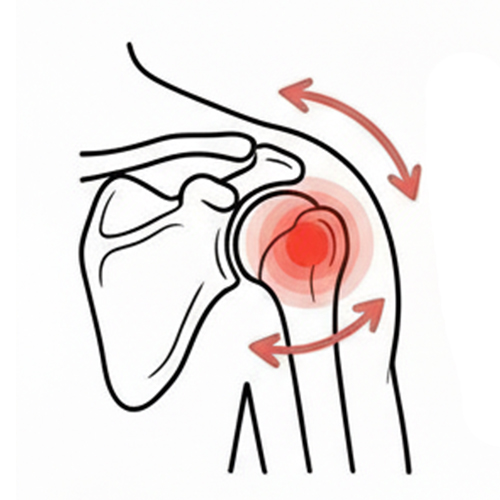
Rotator Cuff Strain or Tendinopathy
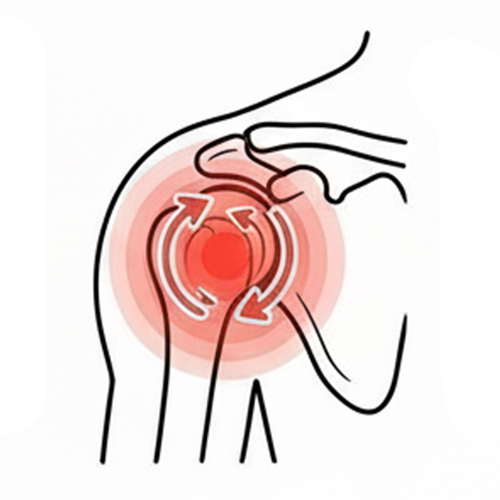
Frozen Shoulder (Adhesive Capsulitis)
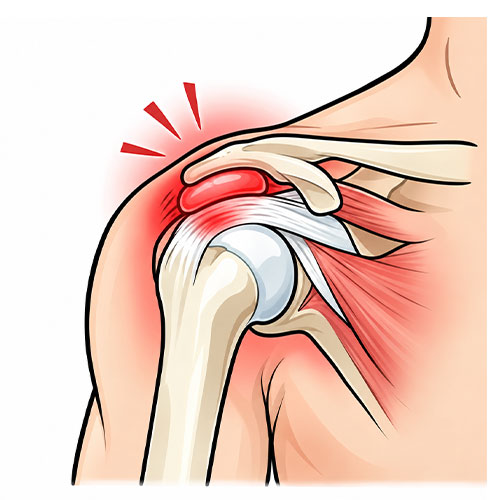
Shoulder Bursitis
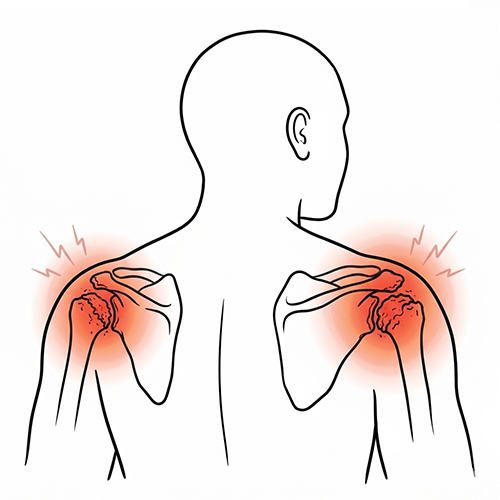
Arthritis and Degenerative Changes
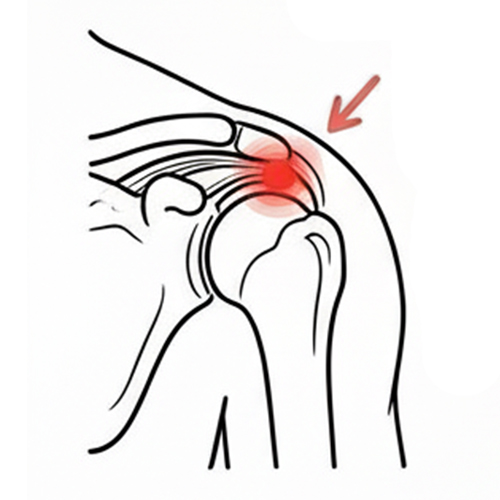
Shoulder Impingement and Painful Arc
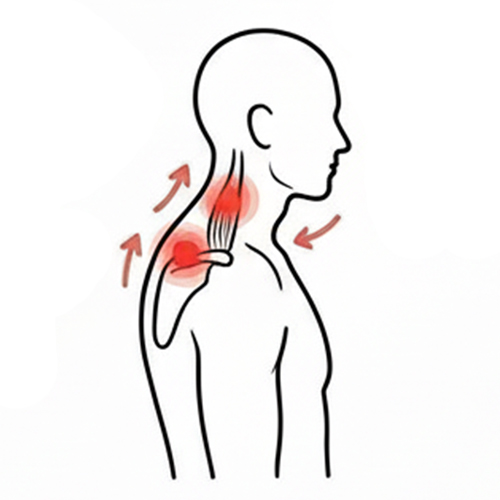
Postural, Neck-Referred and Shoulder Blade Pain
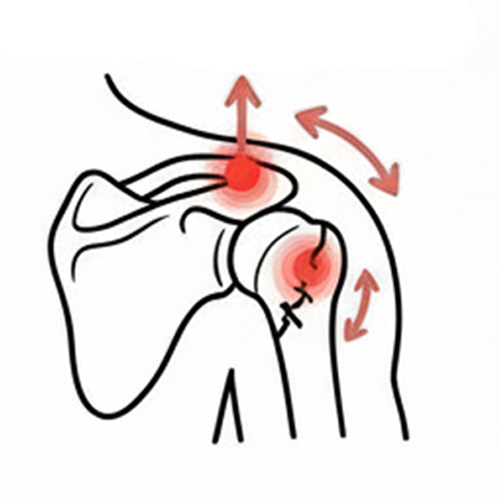
Post‑Injury or Post‑Surgery Pain
Common Causes and Contributing Factors
- Overuse or repetitive overhead movements, at work, in the gym, or in sport
- Poor posture and rounded shoulders loading the cuff unevenly
- Muscle weakness or imbalance in the rotator cuff and shoulder blade stabilisers
- Sudden trauma, a fall onto the arm or outstretched hand
- A previous shoulder injury or instability never fully rehabilitated
- Stress and fatigue increasing muscle tension across the neck and shoulders
Often pain develops gradually with no single cause, from daily habits that overload some shoulder muscles while underusing others. Where the problem is tendon-driven, our tendonitis treatment page covers that pathway.
Symptoms and What They Mean
- Sharp, catching pain when raising or rotating the arm, the impingement and cuff signature
- Pain reaching behind your back, into a sleeve or bra strap, which points at the cuff and capsule
- Night pain lying on the affected side, common across cuff and bursa problems, and pain in every position early in a frozen shoulder
- Stiffness after inactivity, or a shoulder progressively losing movement
- Weakness or reduced ability to lift and carry, and true weakness after an injury matters more than pain
- Clicking or grinding with movement, which alone, without pain, is usually harmless
- Pain at the front of the shoulder, typically the biceps tendon or the front of the cuff, or on top, where the collarbone meets the shoulder
Clinical insight from One Body LDN
"Shoulders rarely fail at the ball and socket first. What we find on assessment, again and again, is a shoulder blade that has stopped doing its share of the movement, so the rotator cuff works overtime until it complains. It is why our rehabilitation so often starts behind the shoulder rather than on top of it."Rebecca Bossick — Chartered Physiotherapist & Clinical Director
How Long Does Shoulder Pain Last?
Acute shoulder pain, under six weeks, often improves quickly with sensible load management and targeted physiotherapy. Sub-acute pain, six to twelve weeks, usually needs structured rehabilitation and progressive strengthening.
Persistent pain beyond twelve weeks benefits from a comprehensive programme that rebuilds shoulder strength, stability and confidence together, and shoulders reward that work reliably at any duration. The exception on timescales is frozen shoulder, which runs its own longer course through stages. Early assessment makes every version faster and prevents the stiffness and weakness that make later recovery slower.
When Shoulder Pain Needs Urgent Attention (Red Flags)
- Shoulder or left arm pain arriving with chest tightness, pressure, breathlessness, sweating or nausea, which can signal a heart problem: call 999
- Sudden inability to move the arm after an injury, or visible deformity
- A hot, swollen shoulder with fever or feeling unwell
- Numbness, tingling, or weakness spreading down the arm, or progressing week on week
- Severe pain following trauma or a dislocation
- Unexplained swelling, a lump, weight loss, or constant pain unrelated to movement, including night pain no position eases
Your physiotherapist screens for every one of these at first assessment and refers to the right specialist the same day where needed. After a fall or impact, a fracture check comes first: our fracture treatment page covers that route.
How Physiotherapists Diagnose Shoulder Pain
- Take a full history of your symptoms, work, training, and how the pain behaves
- Assess shoulder movement, including the painful arc and what happens when someone else moves the arm, the test that separates a stiff joint from a painful tendon
- Test rotator cuff strength and shoulder blade control
- Identify signs of tendon, bursa, or nerve involvement
- Rule out the neck as the true source, and screen for serious pathology
Where imaging, ultrasound, MRI or X-ray, would genuinely change the plan, your physiotherapist coordinates with your GP or specialist. Scan findings are read against your symptoms, because cuff changes appear on scans of pain-free shoulders too, and treating the image rather than the person leads care astray.
Physiotherapy Treatment for Shoulder Pain
Hands‑On Therapy
Exercise Therapy
Movement Retraining
Rehabilitation Programmes
How Physiotherapy Helps Long Term
Physiotherapy improves function and prevents recurrence by restoring shoulder strength and joint mobility, reducing inflammation and muscle tension, improving posture and overhead control, supporting your return to gym training, sport, and daily life, and teaching you to manage and prevent future flare-ups. The shoulder is a joint held together by muscle, which is why the strength built in rehabilitation is also the honest answer to keeping it well.
When to See a Physio
- Pain lasts more than a few days or returns frequently
- Night pain is affecting your sleep or side-lying, a pattern with its own escalation rules covered in our guide to shoulder pain at night
- You notice weakness, or cannot lift your arm fully
- The shoulder is losing movement rather than gaining it
- Pain interferes with gym work, sport, or daily activities
- You are unsure what is safe to do
The full decision rules, by time, cause, and recurrence, sit in our guide to when to see a physio for shoulder pain, and our guide to finding a private physio for shoulder pain covers how to choose and verify the right clinician. Early care consistently shortens shoulder recoveries and prevents the compensations that prolong them.
Take the Next Step Toward Recovery
At One Body LDN, our physiotherapists treat the full range of shoulder problems, from rotator cuff issues and impingement to frozen shoulder and post-surgical rehabilitation. We combine thorough assessment, hands-on treatment, and personalised exercise programmes to help you move freely and confidently again. Direct access applies: no GP referral needed.
Learn more about shoulder pain
Frequently Asked Questions
Should I use ice or heat on a painful shoulder?
Can I keep going to the gym with shoulder pain?
Why does my shoulder hurt when I bench press or lift weights?
What does pain under or around my shoulder blade mean?
Why do both my shoulders hurt at once?
Do rotator cuff tears heal on their own, or do I need surgery?
Who gets frozen shoulder, and can it happen twice?
Should I get a steroid injection for my shoulder?
Will massage fix my shoulder pain?
Are my rounded shoulders causing the pain?
Why is shoulder pain so common in women in their 40s and 50s?
Should I rest my shoulder in a sling until it settles?
References
- Hopewell S, Keene DJ, Marian IR, et al. Progressive exercise compared with best practice advice, with or without corticosteroid injection, for the treatment of patients with rotator cuff disorders (GRASP): a multicentre, pragmatic, 2x2 factorial, randomised controlled trial. The Lancet. 2021;398(10298):416-428.
- Lewis J. Rotator cuff related shoulder pain: assessment, management and uncertainties. Manual Therapy. 2016;23:57-68.
- Rangan A, Brealey SD, Keding A, et al. Management of adults with primary frozen shoulder in secondary care (UK FROST): a multicentre, pragmatic, three-arm, superiority randomised clinical trial. The Lancet. 2020;396(10256):977-989.
- Girish G, Lobo LG, Jacobson JA, Morag Y, Miller B, Jamadar DA. Ultrasound of the shoulder: asymptomatic findings in men. American Journal of Roentgenology. 2011;197(4):W713-W719.
- National Institute for Health and Care Excellence. Clinical Knowledge Summary: Shoulder pain.
- NHS. Shoulder pain
- NHS. Heart attack: symptoms.

Reviewed by Rebecca Bossick, Co-Founder & Clinical Director, HCPC-registered Physiotherapist.
Last reviewed: October 2026