



First physiotherapy appointments follow a structure, and knowing it beforehand removes most of the nerves. The session is a conversation followed by an examination, ending in a diagnosis and a plan you understand. Nothing is done to you without explanation, nothing hurts by design, and no question you ask is too basic.
Expect forty-five minutes to an hour with the same clinician who will run your treatment. We wrote this walkthrough because the most common thing new patients tell us at One Body LDN is that they nearly delayed booking out of uncertainty about what the appointment involves. The uncertainty is fixable in five minutes of reading. Here is the whole session, in the order it happens.
Key Takeaways
- A first physiotherapy appointment runs forty-five minutes to an hour and splits into conversation, examination, and plan.
- The conversation half is diagnostic work, not paperwork. Most of the diagnosis forms there.
- The physical examination tests movement, strength, and specific structures, always within your tolerance.
- You leave with a working diagnosis, your first exercises, and a clear picture of the sessions ahead.
- Treatment usually starts in the same visit. Assessment and waiting are not separate steps.
Before the appointment
Arriving prepared takes five minutes and improves the whole session.
Bring or note down three things: your symptom story (when it started, what makes it better or worse), any scan results or clinic letters you hold, and a list of medications. Wear or bring clothing that lets the area be seen and moved: shorts for a knee or hip, a vest for a shoulder or neck.
Booking needs nothing else, because no GP referral is required for physiotherapy. Insurance patients should bring their authorisation number. Self-pay patients bring nothing but themselves. Arrive five minutes early for a short registration form, and the clinical time starts on schedule.
The conversation: your history
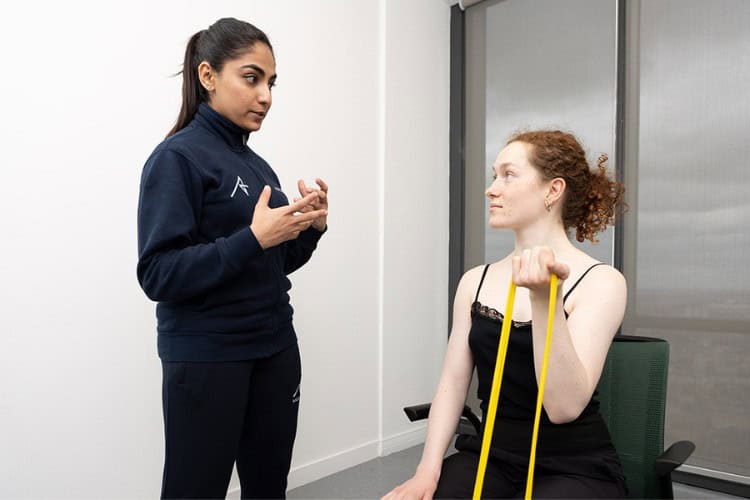
The first twenty minutes are questions, and they carry most of the diagnostic weight.
Physiotherapists call this the subjective assessment, and it is structured detective work. Expect questions across five areas. How the problem started: sudden with an incident, or gradual over weeks. The behaviour of the pain: what movements, positions, and times of day change it. The pattern over time: improving, worsening, or fluctuating. Your health background: previous injuries, medical conditions, medications, sleep.
Your life and goals: the job, the sport, the stairs at home, the holiday booked next month. Answer honestly and specifically. A pain that wakes you at 3am tells a different story from one that only appears after running. Screening questions about weight loss, night pain, and bladder or bowel changes appear here too.
They are routine safety checks asked of everyone, not signs of concern about you.
The examination: movement and testing
The physical examination confirms or rules out what the conversation suggested.
The objective assessment is systematic rather than mysterious. Your physiotherapist watches how you move generally, walking, sitting, standing, bending. Then the area is examined specifically: active movements you perform yourself, passive movements the physiotherapist guides, resisted tests against gentle pressure to load particular muscles and tendons, and palpation of the structures involved. Special tests follow where useful, positioning a joint to stress one ligament or tendon at a time.
Some tests deliberately reproduce your familiar symptom for a second or two, because reproduction confirms the source. Nothing continues past your tolerance, and you can pause anything. Scans rarely enter the picture at this stage.
UK guidance discourages routine imaging for most musculoskeletal problems because examination findings direct treatment better than pictures do.
The diagnosis and your plan

You leave the room knowing what the problem is, why it happened, and what happens next.
The final fifteen minutes bring the threads together. Your physiotherapist explains the working diagnosis in plain language, what structure is involved, what stage it is at, and what drove it. Then the plan: how physiotherapy will treat it, roughly how many sessions the pattern typically needs, what you will do between sessions, and what recovery milestones to expect.
First treatment usually starts immediately, hands-on work to settle symptoms where appropriate, and two or three starter exercises taught properly rather than handed over on a sheet. You should also hear the honest version of the timeline, including what could slow it. Prognosis talk is part of the appointment, not a topic to chase later.
Questions worth asking before you leave
The best patients leave with answers, not just exercises.
Five questions worth asking in the final minutes:
What exactly is my diagnosis, in one sentence I can repeat?
What should this feel like as it improves, and what would tell us the plan needs changing?
Which movements should I keep doing, and which should I limit for now?
How many sessions do you expect, and how will we both know it is working?
What can I do about work, sport, and sleep this week?
Every one of these has a real answer after a proper assessment. A clinician who welcomes the questions is a good sign in itself. Patients across south London often ask these at their first visit to our Battersea physiotherapy clinic, and the answers shape everything that follows.
Note. A first physiotherapy assessment includes screening for symptoms that need medical review instead. Seek urgent GP or A&E care rather than waiting for a physiotherapy appointment if you have numbness in the saddle area, new bladder or bowel changes, severe night pain no position eases, unexplained weight loss alongside new pain, fever with joint pain, or an injury you cannot bear weight through. Physiotherapists check for these signs with every new patient and refer onward the same day when they appear. Contact NHS 111 when unsure.
Frequently asked questions
We answer the first-appointment questions patients ask most.
How long does a first physiotherapy appointment last?
Expect forty-five minutes to an hour for the first session. The time splits roughly into twenty minutes of history, twenty of examination, and fifteen of diagnosis, planning, and first treatment. Follow-up sessions are usually shorter.
Will the first appointment hurt?
No, assessment works within your tolerance, though one or two tests may briefly reproduce your familiar symptom to confirm its source. Reproduction lasts seconds and stops immediately. Treatment on day one aims to settle symptoms, not provoke them.
Do I get treatment at the first appointment or only an assessment?
Treatment normally starts in the same visit once the assessment is complete. Hands-on techniques and your first exercises typically begin on day one. Our physiotherapy team in London runs assessment and first treatment as a single session as standard.
References
- Chartered Society of Physiotherapy. What to expect from physiotherapy.
- National Institute for Health and Care Excellence. Musculoskeletal conditions: assessment and imaging guidance.
- Health and Care Professions Council. Standards of proficiency for physiotherapists.
- National Health Service. Physiotherapy: what happens during an appointment.
