

Physiotherapy: The Complete Guide to Treatment, Recovery & Pain Relief
What is physiotherapy?
Physiotherapy is a science-led health profession that helps people restore movement, reduce pain, and improve quality of life when affected by injury, illness, or disability. Using a combination of hands-on manual therapy, targeted exercise, education, and lifestyle advice, physiotherapists treat both the symptoms you feel and the root causes that created them.
Unlike treatments that simply mask pain, physiotherapy is rehabilitative by nature. A qualified physiotherapist will assess how you move, identify why something has gone wrong, explain it to you clearly, and build a personalised programme designed to get you back to doing the things that matter. Whether you are dealing with a sporting injury, a long-standing musculoskeletal condition, recovering from surgery, or managing a neurological diagnosis, physiotherapy provides an evidence-based path forward.
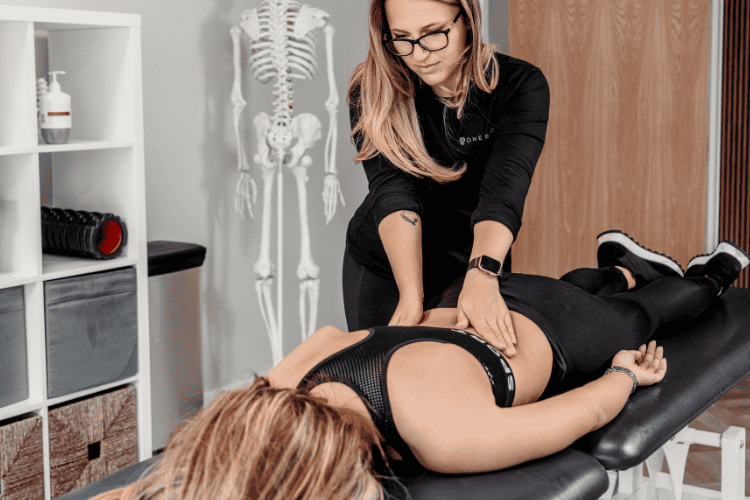
In the UK, all practising physiotherapists must be registered with the Health and Care Professions Council (HCPC) — the statutory regulator that sets and enforces professional standards. The Chartered Society of Physiotherapy (CSP) is the professional body and trade union representing the profession, and the designation of Chartered Physiotherapist (MCSP) signifies full membership and professional standing.
Who Can Benefit from Physiotherapy?
Physiotherapy serves people of all ages — from children with developmental conditions to older adults managing degenerative change. You do not need to be a serious athlete or to have suffered a dramatic injury to benefit. Common reasons people seek physiotherapy include:
- Persistent or recurring pain in the back, neck, shoulders, hips, knees, or elsewhere
- Sports and activity injuries such as sprains, muscle tears, tendon problems, and ligament damage
- Post-surgical rehabilitation to restore strength and movement after operations
- Neurological conditions including stroke recovery, Parkinson's disease, multiple sclerosis, and spinal cord injury
- Workplace or postural problems such as repetitive strain injury, tension headaches, and desk-related back pain
- Pre- and post-natal issues including pelvic girdle pain and pelvic floor dysfunction
- Long-term conditions such as osteoarthritis, rheumatoid arthritis, fibromyalgia, and chronic pain
Musculoskeletal problems are the leading cause of pain and disability in the UK, affecting more than one in four people. Research funded by the National Institute for Health Research (NIHR) shows that investment in physiotherapy services for musculoskeletal conditions improves patient outcomes and reduces overall healthcare costs.
The Difference Between
Physiotherapy and
Physical Therapy
In the UK, physiotherapy and physical therapy are widely used interchangeably, and in clinical practice, there is significant overlap. However, there are meaningful distinctions in emphasis and approach.

- Physiotherapy takes a holistic, whole-body perspective — treating not only the injured area but also the contributing factors, lifestyle elements, and underlying movement patterns that created the problem.
- The physiotherapy model incorporates manual techniques, movement re-education, pain science education, and self-management strategies as an integrated whole.

- Physical therapy tends to place a stronger emphasis on exercise-based interventions — structured rehabilitation programmes, targeted strength work, and specific functional training.
- In practical terms, most high-quality physiotherapy today combines both approaches: hands-on treatment to reduce pain and restore mobility, supported by a progressive exercise programme to build lasting strength and resilience.
In the UK, physiotherapists are HCPC-registered with a degree-level qualification (or higher), meaning you are always seeing a regulated healthcare professional who is accountable to professional and legal standards.
What Conditions Does Physiotherapy Treat?
Physiotherapy has a broad scope of practice. Conditions commonly treated include:
Musculoskeletal Conditions
Musculoskeletal physiotherapy is the most widely accessed type, covering injuries and disorders of the bones, muscles, joints, ligaments, and tendons. Common presentations include:
- Back pain — acute, chronic, and post-surgical (one of the most researched areas of physiotherapy practice)
- Neck pain and cervicogenic headaches
- Shoulder problems — rotator cuff injuries, frozen shoulder (adhesive capsulitis), shoulder impingement
- Elbow conditions — lateral epicondylitis (tennis elbow), medial epicondylitis (golfer's elbow)
- Hip pain — trochanteric bursitis, femoroacetabular impingement, hip flexor strains
- Knee injuries — patellofemoral pain, anterior cruciate ligament (ACL) rehabilitation, meniscal conditions, runner's knee
- Ankle and foot problems — ankle sprains, plantar fasciitis, Achilles tendinopathy, shin splints
- Wrist and hand conditions — carpal tunnel syndrome, De Quervain's tenosynovitis, trigger finger
Neurological Conditions
- Stroke — gait re-training, upper limb function, balance recovery
- Parkinson's disease — mobility, freezing of gait, balance, and falls prevention
- Multiple sclerosis — fatigue management, strength, coordination
- Spinal cord injuries — maximising residual function and independence
- Cerebral palsy — motor development, posture, and functional movement
- Peripheral neuropathy — strength, sensation re-education, and balance
Neurological physiotherapy uses principles of neuroplasticity — the brain’s ability to form new connections — combined with targeted exercise and functional task practice to drive recovery.
Sports Injuries
Sports physiotherapy supports athletes and active individuals at every stage of injury — from initial assessment and pain management through to full return to sport. The goal is not only to heal the injury but to understand why it occurred and correct the movement patterns, weaknesses, or training loads that contributed to it. Common sports injury presentations include muscle strains and tears, ligament sprains, stress fractures, overuse tendinopathies, and post-operative ACL or shoulder reconstructions.
What Happens at Your First Physiotherapy Appointment?
Understanding what to expect helps you arrive prepared and get more from your first session. A typical initial physiotherapy consultation follows a structured but collaborative process.
The Subjective Assessment (Your History)
Your physiotherapist will begin by taking a thorough case history — typically 15–20 minutes of focused conversation. This covers when and how the problem started, the nature and behaviour of your symptoms, what makes things better or worse, your general health, any previous treatments, and your daily life, work demands, and activity levels. This narrative is the foundation of good physiotherapy: the more you share, the more tailored your treatment will be.
The Physical Assessment
Following the verbal assessment, your physiotherapist will carry out a hands-on physical examination. This typically includes assessing your range of movement, joint mobility, muscle length and strength, neurological status, posture, and functional movement patterns. Special clinical tests may be performed to confirm or rule out specific diagnoses. Some movements may be uncomfortable — this is intentional and diagnostic, not harmful.
Diagnosis and Explanation
After the assessment, your physiotherapist will explain what they have found — including the likely diagnosis, the tissues involved, why the problem has developed, and how physiotherapy will help. At One Body LDN, physiotherapists take time to ensure you understand your condition, because informed patients achieve better outcomes. Clear communication is a core part of our clinical approach.
Treatment and Plan
Where possible, treatment begins at the first appointment. Your physiotherapist will also discuss the recommended number and frequency of sessions, outline what your home exercise programme will involve, and set realistic recovery goals with you
Physiotherapy Treatments and Techniques
Modern physiotherapy draws on a wide and evidence-based toolkit. No single technique suits every patient or condition — skilled physiotherapists select and combine approaches based on thorough clinical reasoning.
Manual Therapy
Manual therapy encompasses a range of hands-on techniques designed to reduce pain and restore movement in joints, muscles, nerves, and soft tissues. The International Federation of Orthopaedic Manipulative Physical Therapists (IFOMPT) defines orthopaedic manual therapy as “a specialised area of physiotherapy for the management of neuro-musculoskeletal conditions, based on clinical reasoning, using highly specific treatment approaches.”
Key manual therapy techniques include:
- Joint mobilisation — graded passive movements applied to a joint to restore normal mechanics and reduce pain
- Joint manipulation — a high-velocity, low-amplitude thrust technique that can rapidly restore movement and reduce pain, often accompanied by a clicking sound that simply reflects pressure changes within the joint
- Soft tissue techniques — including massage, myofascial release, and trigger point therapy to address muscle tension and fascial restrictions
- Muscle energy techniques (MET) — using the patient's own muscle contractions to restore joint position and length
- Neural mobilisation — techniques addressing the mobility and sensitivity of the nervous system
Contemporary research shows that manual therapy works through both mechanical and neurophysiological mechanisms — its benefits extend well beyond simply “moving things back into place.” Best practice integrates manual therapy with active exercise rather than using it in isolation.
Exercise Therapy and Rehabilitation
Your physiotherapist will design a progressive exercise programme specific to your diagnosis and goals, typically covering:
- Mobility and flexibility work — restoring normal range of movement
- Strength and neuromuscular control — building the muscular support around affected structures
- Cardiovascular conditioning — where appropriate to overall recovery
- Functional and sport-specific training — movement patterns that translate back to everyday life or your sport
Shockwave Therapy
Sports Massage and Therapy Soft Tissue Therapy
Electrotherapy and Adjuncts
Therapeutic modalities such as ultrasound, TENS (transcutaneous electrical nerve stimulation), and heat or cold therapy may be used as adjuncts to support pain management and tissue healing in appropriate cases. These are most effective when used alongside active rehabilitation rather than as standalone treatments.
Pain Neuroscience Education (PNE)
How Long Does Physiotherapy Take?
Recovery timelines vary depending on the condition, the individual, and their commitment to the programme — but evidence-based estimates provide useful benchmarks.
| Tissue / Condition Type | Typical Recovery Window |
|---|---|
| Minor muscle strains | 2–4 weeks |
| Soft tissue injuries (sprains, strains) | 6–8 weeks |
| Tendons (mild–moderate) | 6–12 weeks |
| Ligaments (moderate sprain) | 6 weeks – 3 months |
| Bone injuries | 6–12 weeks (post-immobilisation) |
| Acute lower back pain | 4–6 weeks significant improvement |
| Chronic lower back pain | 8–12 weeks (lasting results 3–6 months) |
| Post-surgical rehabilitation | 12–16+ weeks depending on procedure |

Most physiotherapy patients begin noticing improvement within 2–4 weeks of starting treatment. For straightforward presentations like minor muscle strains or early-stage back pain, meaningful recovery typically occurs within 6–8 weeks — aligning with the biology of soft tissue healing.
Progress is not always linear. Some days feel harder than others. This is a normal part of healing, not a setback. Physiotherapy does not simply mask pain — it works at the level of tissue healing, movement re-education, and neuromuscular adaptation. These changes take time to consolidate.
The Five Stages of Physiotherapy Rehabilitation
Regardless of the specific injury or condition, effective physiotherapy rehabilitation generally
progresses through five overlapping phases:
Protection and pain management — reducing inflammation, protecting the injured tissue, managing acute symptoms
Restoring range of movement — targeted mobilisation, stretching, and early active exercise to recover normal motion
Rebuilding strength and neuromuscular control — progressive loading, stability work, and coordination exercises
Functional rehabilitation — applying strength in movement patterns relevant to daily life, work, or sport
Return to full activity and prevention — achieving pre-injury levels of performance and implementing strategies to prevent recurrence
Why Choose Private Physiotherapy?
At One Body LDN, all physiotherapists are HCPC-registered, hold degree-level qualifications or above, and undertake regular continuing professional Development (CPD) in line with HCPC and CSP requirements. Our approach is grounded in current clinical evidence — we apply what the research shows works, not outdated or unsupported techniques.
You can access private physiotherapy without a GP referral. In many cases, selfreferring means you are seen and treated faster, which is particularly important for acute injuries where early intervention produces significantly better outcomes.
Physiotherapy for Specific Body Areas
Physiotherapy is most effective when treatment is tailored to the specific structures and mechanics of the affected area. The following pillar guides explore each region in depth — covering anatomy, common conditions, diagnosis, and the evidence-based treatments available:
Neck Pain Physiotherapy →
Cervicogenic headaches, whiplash, disc-related neck pain, and postural neck stiffness — physiotherapy that addresses the root cause, not just the symptoms.
Back Pain Physiotherapy →
The most comprehensive guide to back pain — covering acute and chronic presentations, disc-related problems, sciatica, postural pain, and the full range of physiotherapy interventions backed by evidence.
Elbow Pain Physiotherapy →
Tennis elbow, golfer's elbow, cubital tunnel syndrome, and other elbow conditions — when to seek treatment and what physiotherapy involves
Wrist Pain Physiotherapy →
Repetitive strain injuries, wrist sprains, carpal tunnel syndrome, and wrist tendinopathies — how physiotherapy restores pain-free function to the wrist and forearm.
Shoulder Pain Physiotherapy →
Rotator cuff injuries, frozen shoulder, shoulder impingement, and shoulder instability — evidence-based physiotherapy for one of the most complex joints in the body.
Hand Pain Physiotherapy →
From carpal tunnel syndrome and trigger finger to De Quervain's tenosynovitis — physiotherapy for hand and finger conditions affecting grip, function, and daily life.
Hip Pain Physiotherapy →
Trochanteric bursitis, femoroacetabular impingement, hip flexor strains, and hip arthritis — how physiotherapy restores power and mobility to the hip
Knee Pain Physiotherapy →
ACL rehabilitation, patellofemoral pain, meniscal injuries, runner's knee, and osteoarthritis — physiotherapy programmes tailored to knee conditions at every level of activity.
Foot Pain Physiotherapy →
Plantar fasciitis, Morton's neuroma, metatarsalgia, and heel pain — physiotherapy approaches that address the foot's complex biomechanics.
Ankle Pain Physiotherapy →
From acute sprains to chronic ankle instability and Achilles tendinopathy — how physiotherapy restores stability, strength, and confidence in the ankle.
E-E-A-T and Clinical Credibility: Why This Matters?
Google evaluates health content against strict standards of Experience, Expertise, Authoritativeness, and Trustworthiness (E-E-A-T), holding healthcare websites to a higher bar than almost any other sector. For physiotherapy content, this means:
- Content written or reviewed by qualified, credentialled physiotherapists
- Accurate, up-to-date clinical information grounded in current evidence
- Transparent professional credentials and HCPC registration details
- A trustworthy, secure online environment with clear contact and booking information
All content on One Body LDN is produced under the clinical oversight of our registered physiotherapy team. We reference current guidelines, NIHR-funded research, and peer-reviewed evidence to ensure every patient who arrives at this website can trust what they read
Frequently Asked Questions
Do I need a GP referral to see a physiotherapist?
No. In the UK, you can self-refer directly to a private physiotherapist without a GP referral. Many NHS areas also allow direct self-referral to musculoskeletal (MSK) physiotherapy services.
How many physiotherapy sessions will I need?
This depends on your specific condition, severity, duration, and your engagement with the exercise programme. Most patients begin to notice improvement within 2– 4 sessions for subacute presentations, with full resolution commonly occurring within 6–12 weeks. Your physiotherapist will give you a personalised estimate at your first appointment.
What should I wear to a physiotherapy appointment?
Loose, comfortable clothing that allows access to the area being treated. Shorts and a vest are ideal if your hip, knee, ankle, or shoulder is being assessed. Bring any relevant imaging (X-rays, MRI scans), a list of current medications, and any referral letters.
Is physiotherapy painful?
Some assessments and treatments involve temporary discomfort, particularly when testing range of movement. Your physiotherapist will always work within your tolerance and will explain what to expect at each stage. Treatment-related soreness typically subsides within 24–48 hours.
How is private physiotherapy different from NHS physiotherapy?
Private physiotherapy provides faster access, longer appointment times, greater continuity with your treating physiotherapist, and access to a broader range of specialist treatments. NHS physiotherapy is free but may involve significant waiting times.
Can physiotherapy help with long-term or chronic conditions?
Yes. Physiotherapy is one of the most effective long-term management strategies for chronic musculoskeletal conditions, neurological conditions, and persistent pain. Exercise-based rehabilitation, pain neuroscience education, and selfmanagement strategies have strong evidence bases for chronic presentations.
Do you need a scan before starting physio?
Many common problems can be assessed well from your history, symptoms and movement testing. Scans can be useful in some cases, but they are not needed for every painful shoulder, knee, back or ankle. The more important question early on is usually: what is the problem most likely to be, what can you safely do now, and what is the right next step?
Can physiotherapy help prevent problems coming back?
Yes.
A major part of physiotherapy is not just calming pain down. It is improving the factors that contributed to it. That may mean better strength, better movement options, better load management, better pacing, or a more sensible return to work, training or sport. For people who sit a lot, train hard, commute heavily or have repeated flare-ups, that preventative side of physio is often just as valuable as the treatment itself.
Is physiotherapy just exercises?
No. Exercise is a big part of physiotherapy, but good physio also includes assessment, diagnosis, hands-on treatment where appropriate, education, rehab planning and progression.
Can physio help after surgery?
Yes. Physiotherapy is commonly used after surgery to restore movement, rebuild strength, improve function and guide return to normal activity