
You bought a standing desk to fix your back pain. So why does your back hurt more than it did before?
Here’s the honest answer most articles won’t give you. Standing desks don’t cure back pain on their own. They help only when used as part of a sit-stand routine, and they cause real problems when used the wrong way.
In this guide, we’ll explain why standing desks cause back pain, whether they actually help, and how a physiotherapist can help you use one properly.
Key takeaways
- Standing desks don’t cure back pain on their own. Postural variety does.
- Standing for eight hours is no better for your spine than sitting for eight hours.
- The evidence supports the 20-8-2 ratio: 20 minutes sitting, 8 minutes standing, 2 minutes moving.
- Three mistakes cause most standing desk pain: standing too long, wrong desk height, and locked knees.
- Sciatica, disc problems, and excessive lumbar lordosis can get worse with standing.
- Red flag symptoms need urgent medical review rather than physiotherapy.
Why does a standing desk cause back pain?
Standing desk back pain develops when prolonged static standing replaces prolonged static sitting. Both extremes load your spine in damaging patterns.
Your lumbar spine compresses when you sit for too long. It overarches when you stand for too long. A University of Waterloo study found nearly half of standing desk users developed lower back pain within hours of static standing.
Standing isn’t the opposite of sitting. It’s a different version of the same problem when movement is missing.
If a standing desk has been making your pain worse, our back pain physiotherapy across London starts with a hands-on assessment to find what’s really driving it.
Why switching to a standing desk often makes back pain worse?
A lot of people buy a standing desk expecting it to fix existing back pain. Some get worse instead. The pattern shows up across Reddit threads, physiotherapy clinics, and clinical case studies.
The reason is simple. You move from eight hours of sitting straight into eight hours of standing. The muscles that hold your body upright aren’t conditioned for that load. Your lumbar spine takes the strain. Pain follows within days or weeks.
The fix is a gradual progression. Stand for 15 minutes at a time in the first week. Build up over several weeks. And never replace sitting fully with standing.
Do standing desks actually help with back pain?
Standing desks reduce some sitting-related back pain when used as part of a sit-stand routine. They don’t work as a single fix when you stand all day.
A 2025 systematic review found that sit-stand desks reduce sedentary time by 69 to 88 minutes per day at three months. A year-long study found 47% of users reported relief from back, shoulder, and neck pain.
But here’s the catch. The benefit came from postural variety, not from standing itself. Desk-based workers also face setup-specific challenges that we cover in our guides on office worker back pain and working from home back pain.
The 20-8-2 ratio: how long to stand at a standing desk
The evidence supports the 20-8-2 ratio within each half hour of work.
- 20 minutes sitting with feet flat, hips slightly higher than knees, lower back supported.
- 8 minutes standing with weight balanced between both feet, knees slightly bent, elbows at 90 degrees.
- 2 minutes moving with a short walk, a stretch, or a shoulder reset.
The ratio isn’t strict. The principle is to switch positions before your body stiffens in either one. Some users prefer 30-20-10. Some prefer 25-5. The exact numbers matter less than the act of switching.
The three standing-desk mistakes that cause pain
Three mistakes account for most standing desk back pain.
Standing for too long without sitting
Your body fatigues after 30 to 45 minutes of static standing. Your lumbar spine moves into excessive lordosis, your glutes switch off, and your calves take more load than they were designed for.
Wrong desk height
Your desk should sit at elbow height with your elbows bent at 90 degrees. A desk set too high lifts your shoulders and strains your upper back. A desk set too low forces your head and neck forward, which loads your cervical spine.
Locked knees
Locking your knees disengages your glutes and shifts the load onto your lumbar spine and the front of your hips. Knees should stay slightly bent. Weight should shift between both feet every few minutes.
When standing makes back pain worse
A standing desk isn’t safe for every back pain case. Three conditions get worse with prolonged standing.
Sciatica. Standing compresses your lumbar spine and can increase nerve irritation. Walking helps. Static standing often doesn’t.
Disc problems. People with bulging or herniated discs often find that standing increases pressure on the affected segment. Pain often radiates into the leg.
Excessive lumbar lordosis. Standing exaggerates the natural curve of your lower back. If your lumbar spine is already overarched, standing tends to make it worse.
A physiotherapy assessment helps you decide whether standing is safe in any of these cases.
The anti-fatigue mat question
Anti-fatigue mats reduce foot pressure and encourage micro-movements while you stand. They help. They aren’t a fix.
The mat reduces fatigue in your calves and feet. It doesn’t change what’s happening in your lumbar spine. A user who locks their knees on an expensive mat will still develop back pain.
Active weight shifting matters more than any equipment purchase. Shift your weight from foot to foot every few minutes. Use the mat as a reminder, not as a solution.
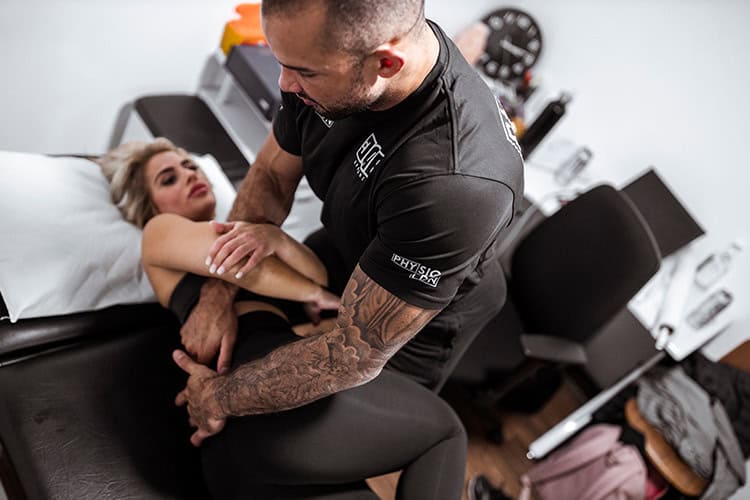
How a physiotherapist fixes standing desk back pain
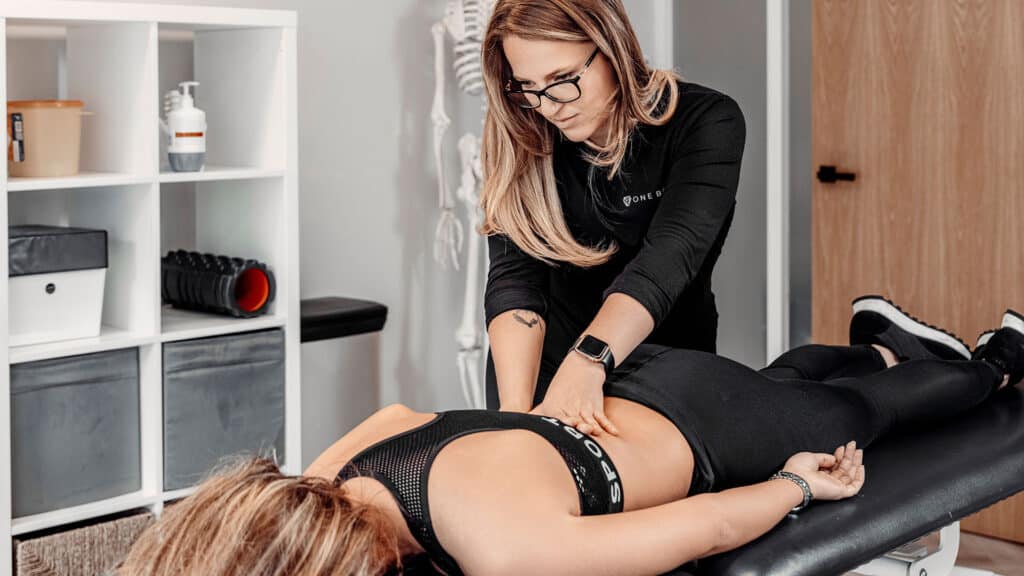
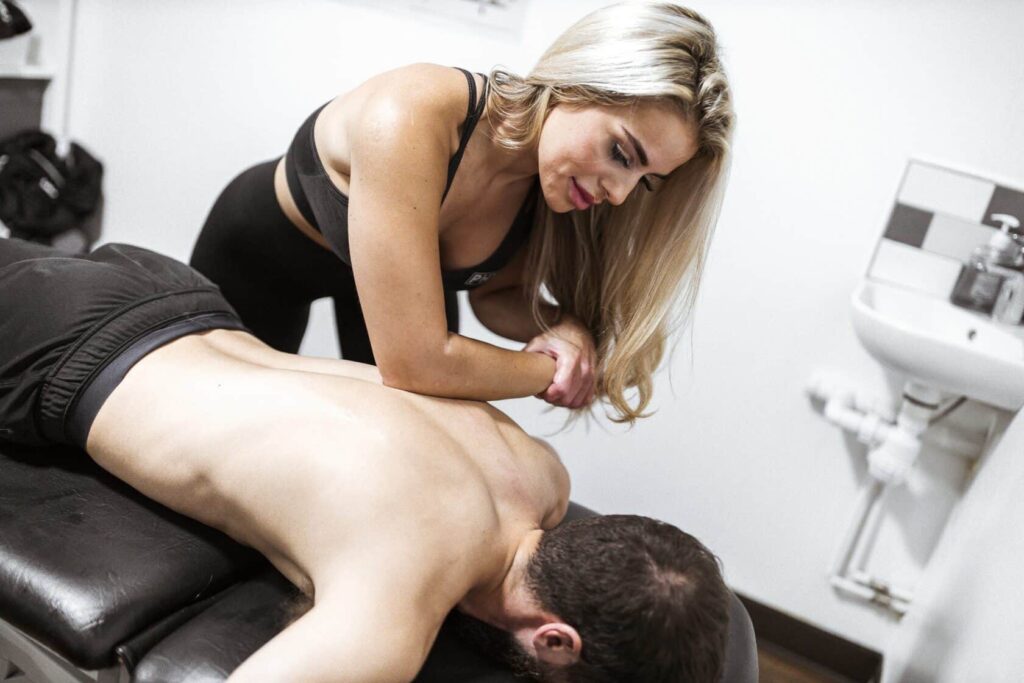
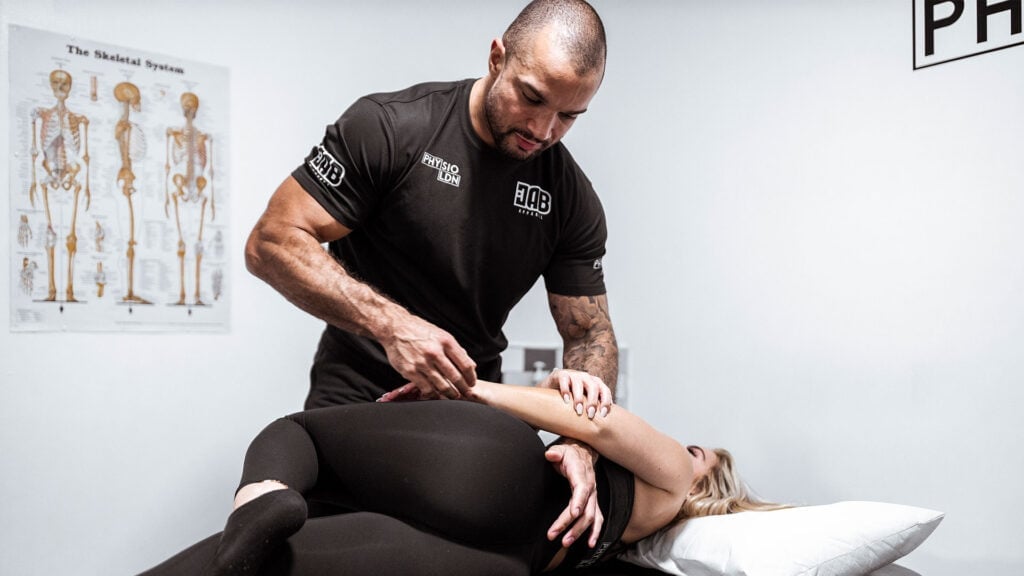
Treatment starts with a hands-on assessment. Your physiotherapist will test movement, strength, joint mobility, and nerve function, and screen for red flags.
The standing-desk assessment includes one extra step. We check how you actually stand, often through video or photos. The treatment plan is then matched to the muscles taking the wrong load.
Rebecca Bossick, our Lead Clinical Physiotherapist, has treated many patients with this exact pattern. “Most standing desk patients I’ve treated arrive convinced the desk is the cure. The conversation starts with explaining that standing isn’t the answer. Movement is.”
Sessions run 25 or 55 minutes. Most acute cases respond within two to four sessions. You can book a private back pain assessment at a clinic near you.
When standing desk back pain needs medical attention
Most standing desk back pain is mechanical and responds to physiotherapy. Some symptoms suggest a more serious cause and need urgent medical review.
Call 999 or attend A&E for back pain with loss of bladder or bowel control, numbness around the saddle area, severe progressive leg weakness, or back pain after major trauma. Call 111 for fever, unexplained weight loss, a history of cancer, or pain that wakes you at night.
See our complete back pain guide for the full list of red flags.
Frequently asked questions
Can a standing desk cause back pain?
Yes, when used poorly. Standing for hours without sitting, locking your knees, or working at the wrong desk height all cause mechanical back pain.
How long should I stand at a standing desk?
The evidence supports the 20-8-2 ratio. Sit for 20 minutes, stand for 8 minutes, and move for 2 minutes within each half hour.
Should I get a standing desk if I already have back pain?
A standing desk may help if your pain is from prolonged sitting and you commit to a sit-stand routine. It may worsen pain in cases of sciatica, disc problems, or excessive lumbar lordosis. A physiotherapy assessment helps you make the decision.
When should I see a physiotherapist for standing desk back pain?
Book an assessment if your pain has lasted four to six weeks, keeps returning, affects sleep or work, or travels into the leg with pins, needles, or numbness.
Getting help with standing desk back pain
Standing desk back pain is fixable when the cause is mechanical. The right plan combines hands-on physiotherapy, a sit-stand routine that actually works, and targeted strength work for the muscles holding your spine in place.
At One Body LDN, we provide private physiotherapy for desk-related back pain across our UK clinics, with multiple London locations. Our team of registered physiotherapists assesses how you stand, identifies what’s loading your spine the wrong way, and builds a recovery plan that fits around your working week.
📚 References
- NICE. Low back pain and sciatica in over 16s (NG59)
- NHS. Back pain
- HSE. Display Screen Equipment at Work
- Agarwal S et al. Sit-stand workstations and impact on low back discomfort. PubMed. 2018
- Lee H et al. Effects of Postural Changes Using a Standing Desk on Musculoskeletal Discomfort. PMC. 2024
Schöne D et al. Working from Home and Physical Activity. BMC Public Health. 2025