

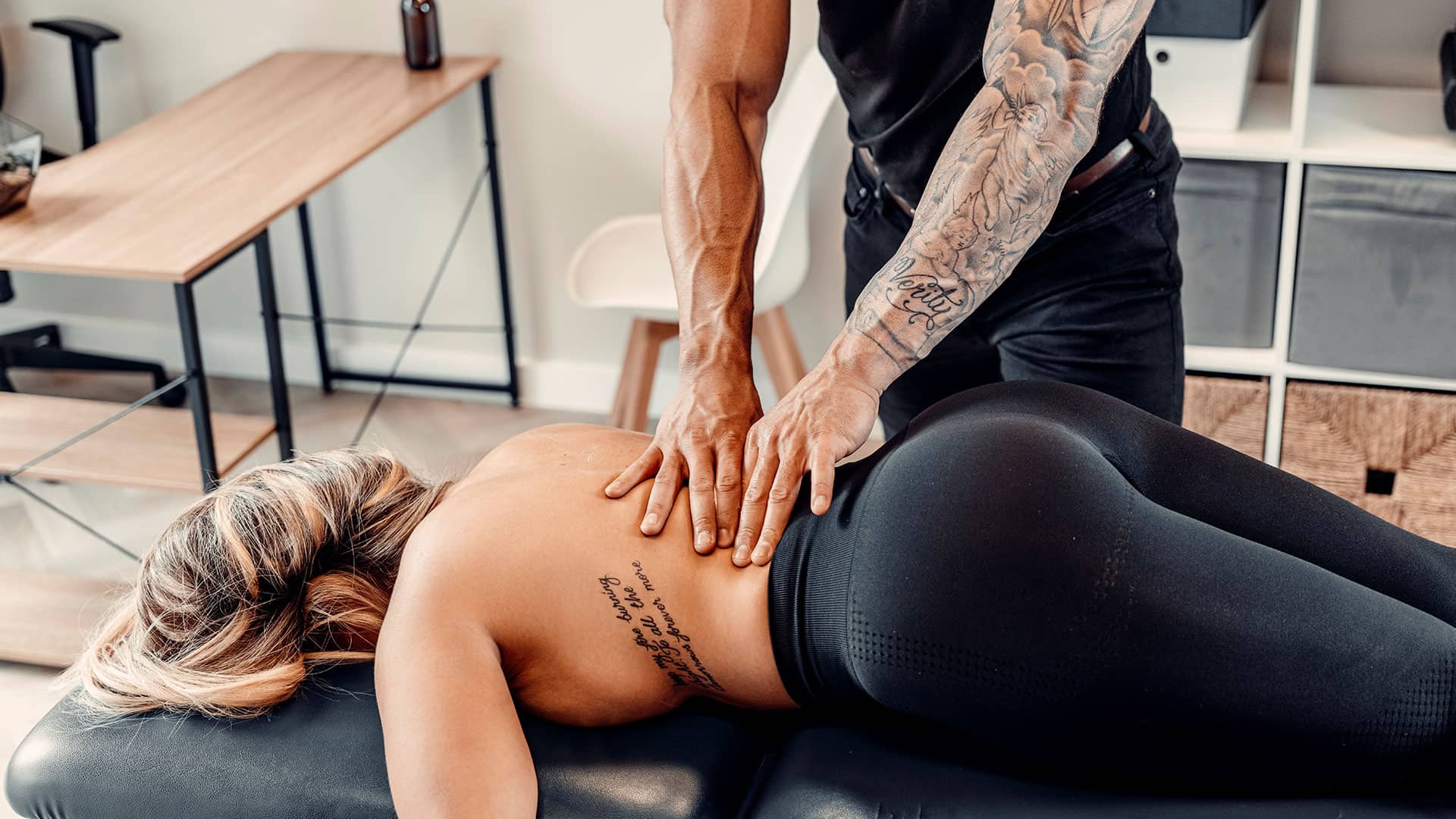

Lower back pain that flares when you bend forward or lift something is one of the most common reasons people end up in our One Body LDN clinics. The trigger gives us the diagnosis nine times out of ten, because the lumbar spine reacts in specific, predictable ways depending on which structure is irritated.
Pain that hits the moment you bend forward usually means one thing. Pain that hits two seconds later, when you lift, usually means something else.
This guide explains what is happening when bending or lifting causes lower back pain, how to tell the patterns apart, what to do next, and when the pain needs a physio rather than a few days of rest.
Key Takeaways
- Bending forward loads the discs more than any other movement, so disc strain is the most common cause of bending-related back pain
- Lifting combines bending with rotation and load, which is why lifting injuries usually involve both the discs and the surrounding muscles
- Sharp pain that locks the back is usually muscular; pain that radiates into the leg usually involves a nerve
- Pain that has not eased in 48 to 72 hours after a lifting injury is the threshold for a physio assessment
- Most bending and lifting injuries resolve without imaging, injections, or surgery when treated early
What Happens to Your Spine When You Bend Forward

Forward bending loads the front of each lumbar disc, while the back of the disc opens up. In a healthy spine, the disc handles this loading easily, and the surrounding muscles share the strain. In a tired, weakened, or already irritated spine, the loading pattern overwhelms the disc, the muscles guard against the movement, and pain hits within seconds.
Three structures take the highest load during forward bending:
The intervertebral discs absorb most of the compression. The deep paraspinal muscles work eccentrically to control the descent. The ligaments at the back of the spine stretch and provide passive resistance.
When any one of these fails to do its share, the others overload. That is the moment the back goes.
Why Lifting Causes a Different Kind of Pain
Lifting is forward bending with weight added, often with rotation. The combination multiplies the force going through the lumbar spine. A 25-kilogram object lifted with poor mechanics can put around 250 kilograms of compressive force through the lower discs. The disc is built to handle this if the technique is right, but small errors compound quickly under load.
The classic lifting injury involves three elements at once: the disc takes a sudden compressive load, the surrounding muscles spasm to protect the spine, and the ligaments at the back of the spine overstretch. The result is pain that arrives suddenly, locks the back, and makes any further bending feel impossible.
How to Identify the Pattern Causing Your Pain
The exact pattern of your pain points to the structure involved. Reading the pattern correctly saves time and tells a physio where to start.
Sharp Localised Pain at the Moment of Bending or Lifting
Sharp pain that arrives instantly and stays in one area usually means muscle or ligament strain. The pain is mechanical, eases when you stop loading the area, and worsens when you try to repeat the movement. Recovery typically takes one to three weeks with sensible movement.
Pain That Builds After Bending and Stays for Hours
Pain that takes a few minutes to fully arrive after a bending or lifting event, then sits at a high level for hours, usually points to disc involvement. The disc takes time to react. You finish the lift, feel slightly off, and 30 minutes later, you cannot stand straight.
Pain That Radiates Down the Leg After Lifting
Radiating pain into the buttock, thigh, or calf after a lifting event usually means the disc has bulged enough to press on a nerve. The pain pattern is sciatica, and it does not settle as quickly as ordinary mechanical pain. The leg pain often becomes more noticeable than the back pain itself.
The Back That Locks and Cannot Be Straightened
A back that locks at an angle and cannot be straightened usually means combined disc and muscle protection. The muscles are spasming around an irritated joint or disc to prevent further damage. The lock is protective, not structural.
What to Do in the First 72 Hours
The first 72 hours after a bending or lifting injury matter more than people realise. The right early response shortens recovery; the wrong one extends it.
In the first 24 hours, focus on gentle movement rather than complete rest. Short walks, lying flat on your back with knees bent, and changing position every 30 minutes all help. Over-the-counter pain relief is appropriate if you would normally use it. Bed rest for more than 48 hours actively slows recovery.
By days two and three, the pain should be starting to ease, and movement should be returning. If you can walk, dress, and get in and out of a chair without the pain worsening significantly, the injury is following the normal recovery pattern. If any of these movements still produces the sharp pain at the same intensity as day one, the injury is not resolving on its own.
When to See a Physio After a Bending or Lifting Injury

Three signals point to a physio assessment rather than continued self-care.
Pain that has not started easing within 48 to 72 hours is the first signal. Mechanical injuries follow a downward pain curve from day one. A pain that is the same on day three as it was on day one needs an assessment.
The second signal is any radiating pain into the leg, which suggests nerve involvement and benefits from earlier intervention. The third is repeat injuries, where the same lifting movement causes the same pain again and again, which almost always points to a movement pattern or postural issue that has not been addressed.
For an assessment, our lower back pain physio in London page covers what to expect.
When Bending and Lifting Pain Means A&E
A small number of post-injury symptoms point to a same-day A&E visit rather than a physio appointment. Sudden bladder or bowel changes, numbness in the saddle area, sudden severe leg weakness, or pain following a major impact such as a fall from height all need urgent assessment.
Our guide to back pain warning signs and when to see a physio covers the full red-flag list.
Frequently Asked Questions
Why does my lower back hurt every time I bend forward?
Repeated pain when bending forward usually points to disc involvement, weak deep stabilising muscles, or a poor hinge pattern at the hips. The trigger is consistent because the underlying mechanics have not changed.
Why did my back lock up when I lifted something?
A back that locks during lifting usually means the muscles around the spine have gone into protective spasm to prevent further damage to a disc or joint. The lock is the body protecting itself, not a structural injury.
How long does a lifting injury take to heal?
Most lifting injuries ease significantly within one to three weeks with gentle movement and graded loading. Disc-related injuries or those with leg pain typically take longer.
Should I use ice or heat after a lifting injury?
Ice for the first 24 to 48 hours, then heat as the acute inflammation settles. Movement matters more than either, and gentle walking helps more than lying still.
Can I keep working out after a back injury from lifting?
Avoid loaded spinal flexion until the pain has fully resolved. Walking, gentle mobility work, and upper body exercises that do not load the spine are usually safe and supportive of recovery.
Why do I always hurt my back doing the same lift?
Repeat injuries from the same movement almost always mean the lift pattern itself is the problem, not the weight. A physio assessment identifies the specific mechanical fault and corrects it through targeted exercise.
Get a Physio Assessment in London
We treat bending and lifting-related lower back injuries at our One Body LDN clinics in the City of London, including Bank and Moorgate. A back pain assessment takes 45 to 60 minutes and covers your full history, a movement examination, and a clear treatment plan combining hands-on therapy, targeted strengthening, and lifting technique correction.
Related resources
- For a broader view of what causes lower back pain across all triggers, our lower back pain guide covers the four mechanical causes and how to identify yours.
- Desk work and lifting injuries often connect because weak stabilising muscles from prolonged sitting reduce the spine’s ability to absorb lifting loads. The spokes on office worker back pain and working from home back pain cover desk-related patterns.
- For sciatica patterns that develop after a lifting injury, our sciatica treatment in London page explains what to expect.
