

Knee Pain: Symptoms, Causes, Treatment and When to See a Physio
Knee pain reaches everyone eventually: runners and lifters, desk workers whose knees stiffen after sitting, and older adults whose knees object to stairs. The knee is the body’s largest joint and its most exposed, carrying several times your body weight with every step down a staircase, and where it hurts says a great deal about why.
Key Takeaways
- Location is the knee's best clue: front-of-knee pain points to the kneecap, behind-the-knee to a Baker's cyst or tendon overload, outside to ITB syndrome, and inside to the MCL, meniscus or early joint change.
- Knee pain without an injury is usually load, weakness and time reaching a threshold, which is why it responds so well to targeted strengthening.
- Painless clicking on its own is common and usually harmless; clicking with swelling, locking or giving way is worth assessing.
- A locked knee, a hot swollen knee with fever, or rapid swelling with a pop after a twist all need urgent review, not a wait-and-see.
- Strengthening the quads, glutes and hamstrings is the best-evidenced treatment for nearly every knee condition, and the honest answer to preventing the next episode.
What is Knee Pain?
Knee pain is discomfort, aching, or swelling around or within the knee joint, where the thigh bone, shin bone and kneecap meet. It may arrive suddenly after a twist or impact, or build gradually from overload, muscle imbalance, or joint change.
The knee itself is a hinge stabilised almost entirely by what surrounds it, ligaments, menisci, tendons and muscle, so knee pain very often reflects how the whole leg is working, which is why assessment looks at the hips and ankles as well as the sore spot. Location is the first and best clue, and the types below are organised around it.
Main Types of Knee Pain
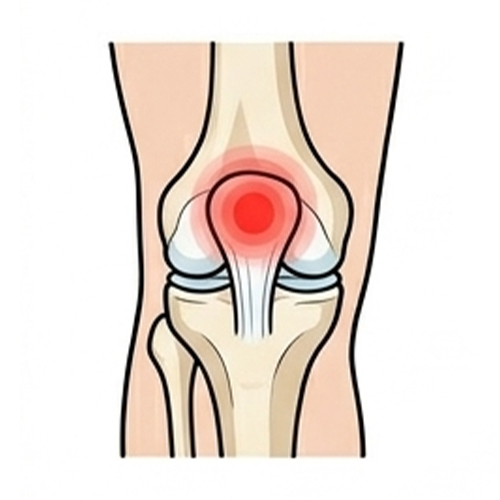
Pain Around or Behind the Kneecap (Runner's Knee)
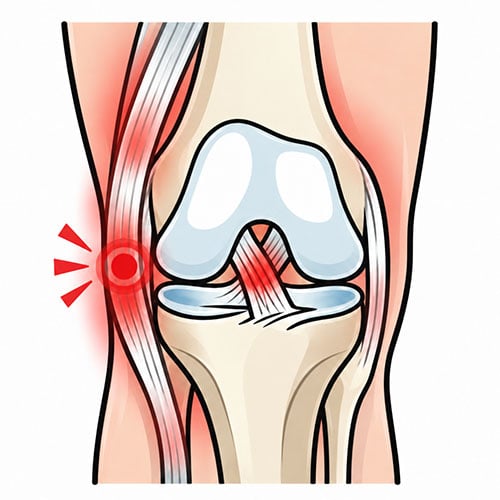
Pain on the Inside of the Knee
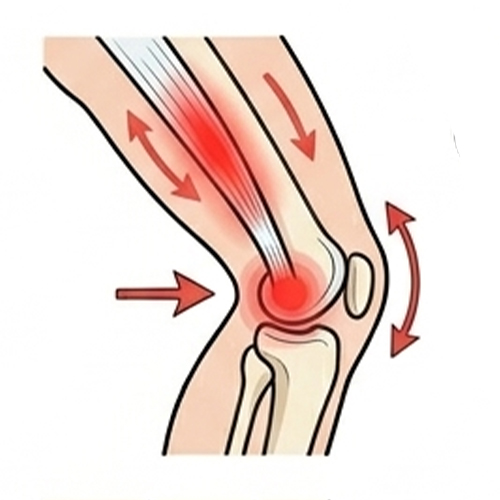
Pain Behind the Knee
A deep ache or tightness at the back of the knee, sometimes with a sensation of fullness or a small swelling. Common sources include a Baker’s cyst, a fluid swelling that usually signals irritation inside the joint, along with hamstring and calf tendon overload, or referral from a meniscus problem. Persistent swelling behind the knee is worth assessing, and our Baker’s cyst treatment page covers that pathway.
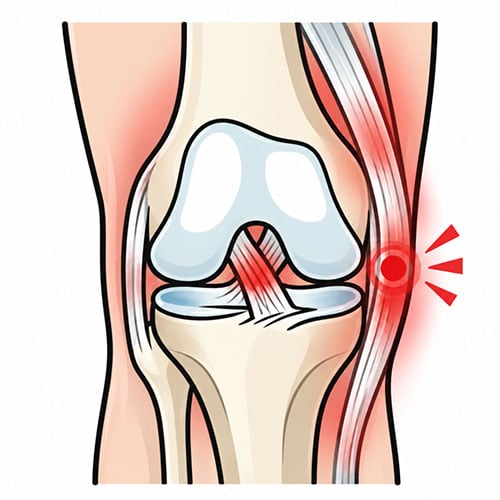
Pain on the Outside of the Knee (ITB Syndrome)
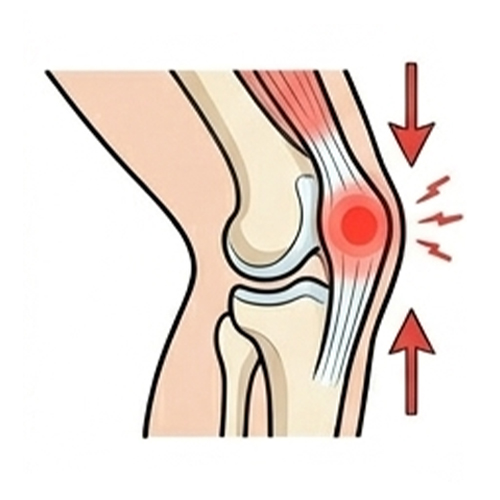
Ligament Injury (ACL, MCL, LCL)
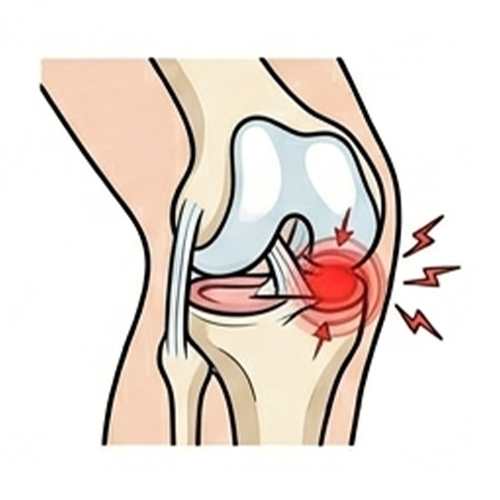
Meniscus Tear
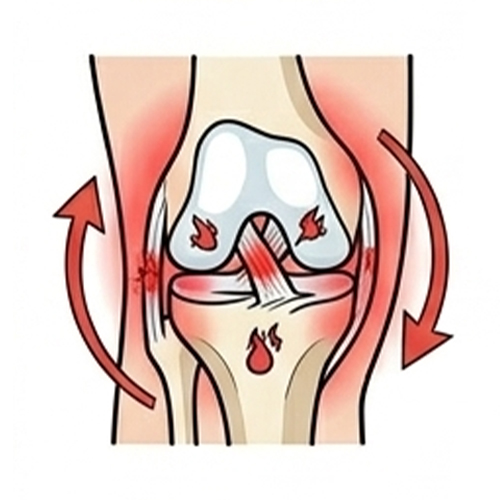
Tendinopathy (Jumper's Knee)
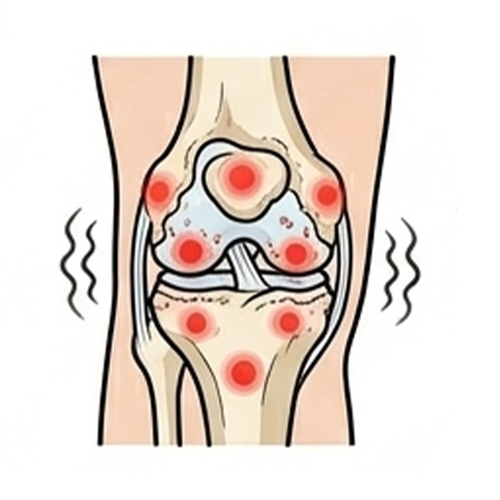
Arthritis and Degenerative Change
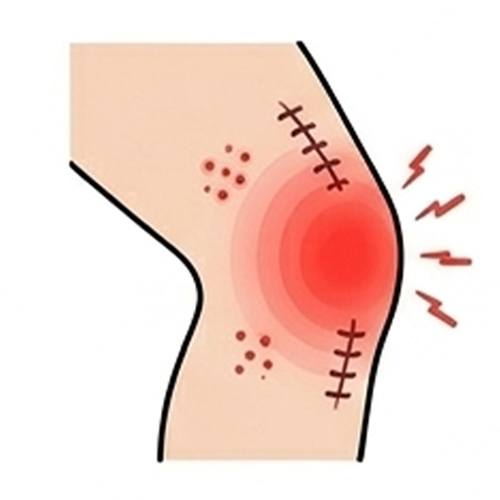
Post-Operative or Post-Injury Knee Pain
Common Causes and Contributing Factors
- Repetitive strain, overtraining, or a sudden jump in activity
- Muscle weakness or imbalance, especially the quads and glutes
- Poor movement mechanics or landing technique
- Limited hip or ankle mobility pushing extra load through the knee
- Change in footwear, surface or training programme
- Prolonged sitting and postural habits
- A previous injury that never fully rebuilt its strength and control
Knee pain without any injury is one of the most common presentations we see, and it is rarely a mystery: it is usually the combined total of load, weakness and time reaching a threshold, which is also why it responds so well to targeted strengthening.
Symptoms and What They Mean
- Dull ache, stiffness, or heaviness after activity or rest
- Sharp pain during squatting, kneeling, or on stairs
- Burning pain at the front with kneeling, the outside with running, or at night, which usually reflects irritated tendon or joint tissue rather than damage
- Clicking, grinding, or locking of the joint
- Swelling, or the feeling of fluid on the knee, which means the joint is irritated and deserves assessment when it persists or recurs
- Pain when straightening the leg fully, or at the deepest point of a bend
- A sensation of instability or the knee giving way
- Pain severe enough to change how you walk
The pattern matters as much as the sensation: what movement fires it, where exactly it sits, and whether it is trending better or worse across weeks. Painless clicking on its own, without swelling or giving way, is common and usually harmless.
Clinical insight from One Body LDN
"When we assess knees, the question we weight most heavily is not how much it hurts but whether it gives way. A painful knee that holds is usually an overload problem with a strengthening answer. A knee that buckles, even with modest pain, is telling us about control or structural damage, and it moves to the front of the queue for proper testing."Rebecca Bossick — Chartered Physiotherapist & Clinical Director
How Long Does Knee Pain Last?
Acute knee pain, up to six weeks, often improves quickly with targeted exercise and load management. Sub-acute pain, six to twelve weeks, usually needs structured strength and movement retraining, because by then the limitation is capacity rather than healing.
Persistent pain beyond twelve weeks benefits from a comprehensive programme that rebuilds knee strength, control and confidence together, and it remains very treatable: a knee that has hurt for months is almost never a knee damaged for months.
Early treatment shortens recovery and reduces the risk of long-term stiffness, weakness and the compensations that spread trouble to the other side.
When Knee Pain Needs Urgent Attention (Red Flags)
Most knee pain responds well to physiotherapy, but seek urgent medical review if you experience:
- Severe pain, rapid swelling or deformity immediately after trauma
- Inability to bear weight or to fully straighten the knee
- A locked knee that will not move in either direction
- A hot, swollen, red knee with fever or feeling unwell, which can signal joint infection and is an emergency
- Sudden instability after a twist or collision, especially with a pop and fast swelling
- Calf swelling and tenderness alongside knee symptoms, which can signal a clot
After a heavy impact or fall, a fracture check comes first: our fracture treatment page covers that route. For everything else, a physiotherapist can assess, apply the screening rules, and refer for imaging or specialist input the same day where needed.
How Physiotherapists Diagnose Knee Pain
- Take a detailed history of your symptoms, activities, and training loads
- Assess knee movement, swelling, and joint integrity
- Test muscle strength, flexibility, and balance against the other side
- Examine the mechanics of the hips, knees, and ankles together, since the knee pays for problems on either side of it
- Perform specific tests for the ligaments, menisci, and kneecap where the story points there
Where imaging would genuinely change the plan, your physiotherapist coordinates X-ray or MRI with your GP or specialist. Most knee diagnoses, though, are made through the story and the examination, and scan findings are always read against symptoms, because age-related changes appear on scans of pain-free knees too.
Physiotherapy Treatment for Knee Pain
Hands‑On Physiotherapy
Exercise Therapy
Strengthening for the quads, glutes, and hamstrings, the muscles that protect and control the knee, and the best-evidenced treatment for nearly every knee condition on this page. Strengthening the knee is also the honest answer to preventing the next episode.
Movement Retraining
Rehabilitation Programmes
How Physiotherapy Helps Long Term
The aim goes past pain relief to a knee you trust. Long-term, physiotherapy restores joint mobility and muscle balance, improves alignment and load distribution, reduces stiffness and swelling, rebuilds squat, running and sport performance, and teaches you the strength habits and early-warning signs that stop the next episode before it starts. Knees reward strength more reliably than any other joint, and the work done after the pain settles is what decides whether it returns.
When to See a Physio
- Pain persists beyond two to three weeks or keeps returning
- Knee pain is interrupting your training, sport, or daily life
- You notice swelling, grinding, locking, or the knee giving way
- Pain is disturbing your sleep
- You are unsure which movements and exercises are safe to continue
Early assessment prevents minor problems from being rehearsed into chronic ones, and a knee that has started to change how you walk has already earned its appointment.
Take the Next Step Toward Recovery
Learn more about knee pain
Frequently Asked Questions
Why do my knees hurt going down stairs more than up?
Why does my knee hurt after sitting for a long time?
Should I use ice or heat on a painful knee?
Should I wear a knee support or brace?
Can I keep running or training with knee pain?
Why do both my knees hurt?
What does fluid on the knee mean?
Do squats and lunges damage your knees?
Why does my knee hurt at night or at rest?
Do I need an X-ray or MRI for my knee pain?
Can physiotherapy help knee arthritis, or is a replacement inevitable?
How do I strengthen my knees if exercise hurts?
References
- National Institute for Health and Care Excellence (NICE). Osteoarthritis in over 16s: diagnosis and management. NICE guideline NG226; 2022.
- Collins NJ, Barton CJ, van Middelkoop M, et al. 2018 Consensus statement on exercise therapy and physical interventions (orthoses, taping and manual therapy) to treat patellofemoral pain. British Journal of Sports Medicine. 2018;52(18):1170-1178.
- Culvenor AG, Øiestad BE, Hart HF, Stefanik JJ, Guermazi A, Crossley KM. Prevalence of knee osteoarthritis features on magnetic resonance imaging in asymptomatic uninjured adults: a systematic review and meta-analysis. British Journal of Sports Medicine. 2019;53(20):1268-1278.
- Fransen M, McConnell S, Harmer AR, Van der Esch M, Simic M, Bennell KL. Exercise for osteoarthritis of the knee. Cochrane Database of Systematic Reviews. 2015;(1):CD004376.
- Filbay SR, Grindem H. Evidence-based recommendations for the management of anterior cruciate ligament (ACL) rupture. Best Practice & Research Clinical Rheumatology. 2019;33(1):33-47.
- NHS. Knee pain

Reviewed by Rebecca Bossick, Co-Founder & Clinical Director, HCPC-registered Physiotherapist.
Last reviewed: October 2026