



You wake at 3am with a hand that feels dead. You shake it out over the edge of the bed, the pins and needles flood back, and after a minute or two it settles enough to get back to sleep. Then it happens again the next night.
If that is your pattern, the timing is not incidental. Night is when nerve compression in the hand and arm declares itself, and it does so for specific, explainable reasons. More usefully, which fingers go numb narrows the cause quickly. This guide covers why night is the giveaway, what the finger pattern tells you, what helps tonight, and the small number of symptoms that need urgent attention rather than a physiotherapist.
Key takeaways
- Night numbness is the classic presenting symptom of carpal tunnel syndrome, not a random occurrence
- Which fingers go numb narrows the cause: thumb side points to the wrist, little finger side to the elbow
- Night is when it shows up because of sleeping positions and fluid shifting while you lie flat
- Shaking the hand to relieve it is a recognised sign, not just a coincidence
- Sudden numbness with weakness on one side, face drooping, or speech trouble is a 999 call, not a physio issue
First: the numbness that is not a hand problem
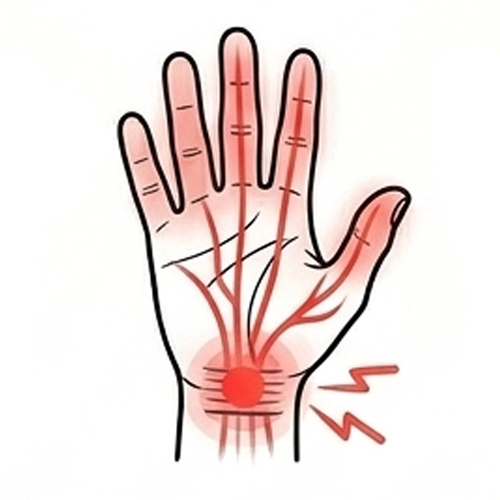
Sudden numbness affecting one side of the body, especially with face drooping, arm weakness, or difficulty speaking, is a medical emergency and needs 999 immediately.
This page is about the gradual, position-related night numbness that builds over weeks and settles when you move. That is a completely different thing from sudden numbness that arrives out of nowhere. If numbness appears abruptly alongside weakness on one side, a drooping face, slurred speech, confusion, or a sudden severe headache, call 999. Those are stroke signs and time matters.
Everything below assumes that picture has been excluded.
Why night is when hands go numb
Hands go numb at night because sleeping positions compress the nerves of the arm for hours at a time, and because fluid redistributes when you lie flat, raising pressure inside the tunnels those nerves pass through.
Three things happen while you sleep that do not happen during the day.
Your wrists and elbows bend and stay there
Most people sleep with wrists curled and elbows bent. Both positions narrow the tunnels the nerves travel through. During the day you shift constantly; at night you hold one position for hours. A nerve tolerates brief compression easily and sustained compression poorly.
Fluid moves when you lie down
Through the day, gravity keeps fluid in your lower limbs. Lying flat lets it redistribute, and some settles in the hands and wrists. In an already snug tunnel, that small extra volume raises the pressure enough to tip a nerve into complaining. This is the part most explanations skip, and it is why symptoms can appear even when your position is fine.
Nothing distracts you
Mild daytime symptoms get lost in activity. At night there is nothing competing for your attention, so the same level of irritation is what wakes you.
Put together, night is not just when it happens to occur. It is when the conditions are most stacked against the nerve.
Which fingers? The pattern that narrows the cause
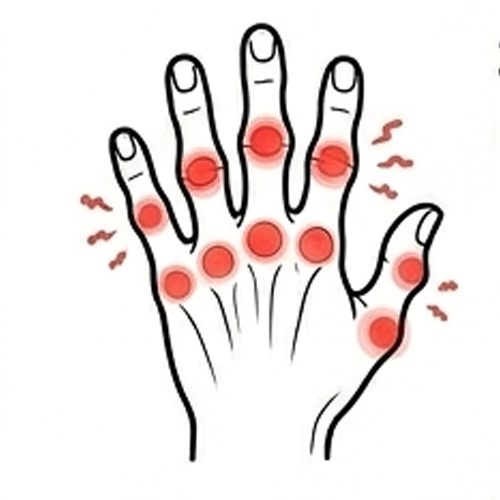
The fingers that go numb identify which nerve is involved, and therefore where the compression is happening.
This is the most useful thing you can notice, and it takes one night’s attention.
Thumb, index, and middle fingers
Numbness across the thumb side of the hand points to the median nerve, compressed at the wrist. This is carpal tunnel syndrome, and night symptoms are its hallmark presenting complaint. People typically describe waking with a numb, clumsy hand that improves after shaking it out. Our carpal tunnel treatment in London page covers the condition and its treatment.
Little finger and half the ring finger
Numbness on the little finger side points to the ulnar nerve, usually compressed at the elbow rather than the wrist. Sleeping with elbows bent stretches and squeezes that nerve for hours, which is why it also shows up at night. It is a different condition with a different fix.
The whole hand, or the whole arm
Numbness that involves everything, or that travels down from the shoulder, often points higher up, to the neck or the space where nerves pass under the collarbone. Neck involvement is common and frequently missed.
The complete map of which fingers point to which nerve, and what each pattern means, sits in our guide to numbness and tingling in the fingers.
Why shaking it out matters
Shaking the hand to relieve the numbness is such a consistent feature of carpal tunnel that clinicians treat it as a recognised sign. If that is your instinctive response and it works, mention it at your assessment. It is genuinely useful information, not a quirk.
What helps tonight
Keeping the wrist and elbow straighter while you sleep reduces the compression that causes night numbness, and it is the single most effective thing you can change immediately.
For thumb-side numbness, a neutral wrist splint worn at night keeps the wrist from curling. It is one of the better-evidenced conservative measures for carpal tunnel and often produces noticeable improvement within a few weeks.
For little-finger-side numbness, the equivalent is keeping the elbow from bending fully. Some people loosely wrap a towel around the elbow at night for a couple of weeks, which is enough to break the habit.
For either, avoid sleeping with your arm tucked under your pillow or your head, and avoid arms-overhead positions, both of which compress nerves further up.
These measures ease symptoms. They do not treat the underlying cause, which is what decides whether this becomes a passing phase or a recurring one. Night pain and ache in the arm without numbness is a related but different pattern, covered in our guide to elbow, wrist and hand pain at night.
When to get it assessed
Night numbness that happens most nights, does not settle on shaking the hand, or comes with daytime symptoms or weakness needs assessment rather than another splint.
Book an assessment if numbness wakes you regularly, has started appearing during the day, is affecting grip or fine tasks, or has not improved after a few weeks of position changes.
Escalate promptly rather than waiting if numbness has become constant rather than intermittent, if you have noticeable hand weakness or are dropping things, or if you can see any wasting of the muscle at the base of the thumb. Nerves under prolonged pressure can sustain lasting changes, and those signs mark the point where early treatment matters most.
Our carpal tunnel and nerve-related hand physiotherapy in London team assesses night numbness, identifies where the compression is happening, and arranges onward referral where needed, through direct access, no GP referral required. Where the wider wrist is involved, our wrist pain guide maps the full picture.
Common questions about numb hands at night
Why do my hands go numb every night?
Because sleeping positions compress the nerves for hours, and lying flat shifts fluid into the wrists, raising pressure in the tunnels nerves pass through. Night symptoms are the classic presentation of carpal tunnel syndrome in particular.
Which fingers go numb with carpal tunnel?
The thumb, index, and middle fingers, and the thumb side of the ring finger. Numbness in the little finger and the other half of the ring finger points to a different nerve, usually compressed at the elbow.
How do I stop my hands going numb while sleeping?
Keep the wrist and elbow straighter. A neutral wrist splint at night helps thumb-side numbness; limiting elbow bend helps little-finger-side numbness. Avoid sleeping with your arm under your pillow or overhead.
Should I worry about numb hands at night?
Occasional position-related numbness that settles quickly is common and not alarming. Numbness most nights, constant numbness, weakness, or dropping things needs assessment. Sudden numbness with weakness on one side, face drooping, or speech difficulty needs 999.
Can numb hands at night be from my neck?
Yes. Numbness involving the whole hand or travelling down from the shoulder often comes from the neck rather than the wrist. This is a common source that gets missed when everything is assumed to be carpal tunnel.
Book your hand numbness assessment
Waking with numb hands is not something to simply adjust around, and the finger pattern already tells you a great deal about where the problem sits. Book an assessment with our carpal tunnel and hand nerve physiotherapy in London team in 60 seconds, no GP referral needed.
Note: Numbness that needs urgent care
Call 999 immediately for numbness that arrives suddenly alongside:
- Weakness or drooping on one side of the face or body
- Difficulty speaking or understanding speech
- Sudden severe headache or confusion
Seek prompt assessment for constant numbness, hand weakness, dropping things, or visible muscle wasting at the base of the thumb.
References
- NHS. Carpal tunnel syndrome.
- Padua L, Coraci D, Erra C, et al. Carpal tunnel syndrome: clinical features, diagnosis, and management. The Lancet Neurology. 2016;15(12):1273-1284.
- Huisstede BM, Hoogvliet P, Franke TP, Randsdorp MS, Koes BW. Carpal tunnel syndrome: effectiveness of physical therapy and electrophysical modalities. Archives of Physical Medicine and Rehabilitation. 2018;99(8):1623-1634.
- Andrews K, Rowland A, Pranjal A, Ebraheim N. Cubital tunnel syndrome: anatomy, clinical presentation, and management. Journal of Orthopaedics. 2018;15(3):832-836.
- NHS. Stroke symptoms: act FAST.
- National Institute for Health and Care Excellence. Clinical Knowledge Summary: Carpal tunnel syndrome.
