



Fingers go numb along maps, not at random. Three nerves share the hand, each owns its own territory, and a squeezed nerve switches off exactly the fingers it serves. So the pattern of numbness is a message: thumb-side numbness names one nerve and one squeeze point at the wrist, little-finger numbness names another at the elbow, and patterns running down the arm in a line point up to the neck.
Reading your own map takes a minute, and the reading decides the next step better than the intensity of the tingling ever does. Four patterns cover most numb fingers, matched below. One pattern outranks all of them: sudden numbness on one side of the body with face or speech changes is a 999 emergency, not a matching exercise.
Key Takeaways
- Finger numbness follows nerve territories, and the pattern points to the squeeze point.
- Thumb, index, and middle finger numbness points to the wrist tunnel.
- Ring and little finger numbness points behind the inner elbow.
- Whole-hand, both-hand, and arm-line patterns point beyond the arm and need assessment.
- Sudden one-sided numbness with face or speech changes is a 999 emergency.
Match Your Numbness Pattern First
Four patterns cover most finger numbness, and each names its own suspect.
Thumb, Index And Middle Fingers
Numbness or tingling in the thumb-side fingers, often at night, with the little finger untouched. Points to the median nerve squeezed in the wrist tunnel.
Ring And Little Fingers
Numbness or tingling on the little-finger side, often with the inner elbow involved. Points to the ulnar nerve squeezed behind the funny bone.
The Whole Hand, Or Both Hands
Numbness ignoring the finger boundaries, or appearing in both hands together. Points beyond a single squeeze point and needs assessment rather than matching.
A Line Down The Arm
Numbness or tingling tracking from the neck or shoulder blade down the arm into the fingers, often with neck pain. Points to a nerve root at the neck.
Thumb-Side Numbness: The Wrist Tunnel
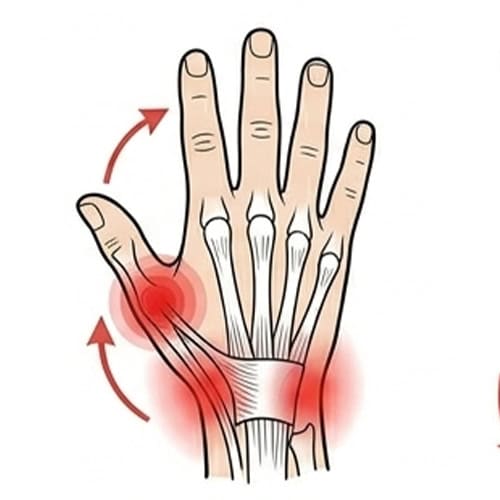
Numbness sparing the little finger points to the median nerve at the wrist.
The median nerve serves the thumb, index, middle, and half the ring finger, and its squeeze point is the carpal tunnel at the wrist. Night waking, the shake-it-out fix, and tingling while gripping a phone complete the picture.
The full pattern, plus two home tests that read it, sits in our guide to carpal tunnel syndrome symptoms and self-testing. The boundary is the diagnostic gift here: a normal little finger while its neighbours tingle is the wrist tunnel declaring itself, and early conservative care through carpal tunnel physiotherapy works best before numbness turns constant.
Little-Finger Numbness: Behind The Elbow
Numbness in the ring and little fingers points to the ulnar nerve at the inner elbow.
The ulnar nerve serves the little finger and half the ring finger, and its favourite squeeze point sits behind the inner elbow, the spot that jolts when you knock your funny bone. Leaning on the elbow, long phone calls with a bent arm, and sleeping with elbows folded all narrow its tunnel, so little-finger tingling often follows bent-elbow time rather than hand use.
Inner elbow ache can travel with it. A full guide to this condition is coming in this series. The routing rule stands meanwhile: little-finger numbness that keeps returning deserves assessment, because a nerve pressed at the elbow needs different care from one pressed at the wrist.
Whole-Hand, Both-Hands And Neck Patterns
Numbness that ignores the finger maps points beyond a single nerve tunnel.
Three patterns fall outside the two tunnels, and each routes differently. Whole-hand numbness crossing every territory suggests either more than one nerve or a source higher up, and earns an assessment.
Both hands numbing together, especially in a glove-like pattern, points toward body-wide causes, circulation, medication effects, or conditions such as diabetes, and starts with a GP rather than a physiotherapist.
A line of numbness tracking from the neck down the arm into specific fingers, often with neck pain or stiffness, points to a nerve root where it leaves the spine, the pattern treated through cervical radiculopathy physiotherapy. The hand reports the symptom in every case. The source sits anywhere from fingertip to neck, which is exactly why the map matters.
When Numb Fingers Mean Book Now

Persistence, progression, and weakness decide urgency more than tingling intensity does.
Occasional tingling after leaning on an arm is a nerve complaining briefly and needs nothing. Book an assessment for numbness returning most days beyond two to three weeks, numbness lasting longer each time, or any tingling now interfering with typing, gripping, or sleep.
Book promptly, without waiting on thresholds, for numbness that has turned constant, grip weakness, dropping things, or visible thinning of the hand muscles, because a nerve losing strength is a nerve running out of time.
Go to 999 for sudden numbness down one side of the body, or numbness with face drooping or speech changes, at any age. Everything short of that emergency suits a nerve-aware assessment, and ours run within days through direct access, no referral needed.
Note. Some numbness patterns need medical care rather than pattern-matching. Call 999 for sudden numbness down one side of the body, or numbness with face drooping, speech changes, or sudden severe headache. Seek prompt review for constant numbness, progressive grip weakness, visible thinning of hand muscles, or numbness in both hands in a glove pattern. Seek urgent care for a hand turning cold, pale, or blue, or numbness after injury with deformity. Physiotherapists screen for all of these at first assessment and refer onward the same day when they appear. Contact NHS 111 when unsure.
Frequently Asked Questions
We answer the finger numbness questions patients ask most.
What do numb fingers mean?
Numb fingers mean a nerve is being squeezed or irritated somewhere between the neck and the hand, and the pattern names the spot. Thumb-side numbness points to the wrist tunnel, little-finger numbness to the inner elbow, and arm-line patterns to the neck.
Why do my fingertips tingle?
Tingling is a nerve reporting reduced blood flow or pressure along its path. Brief tingling after leaning on the arm is normal. Tingling that returns most days, wakes you at night, or follows one finger territory points to a specific squeeze point worth assessing.
When should I worry about numbness and tingling?
Act urgently for sudden one-sided numbness or numbness with face or speech changes, which is a 999 emergency. Book promptly for constant numbness, weakening grip, or hand muscles visibly thinning. Book normally for tingling returning most days beyond two to three weeks.
Can a neck problem cause finger numbness?
Yes, nerves serving the fingers begin at the neck, and a nerve root squeezed there sends numbness down the arm in a line. Neck-referred numbness often travels with neck pain or stiffness and follows specific fingers by root. Assessment separates a neck source from a wrist or elbow one.
References
- National Health Service. Pins and needles: causes and when to get help.
- National Institute for Health and Care Excellence. Peripheral nerve entrapment and cervical radiculopathy: assessment guidance.
- Chartered Society of Physiotherapy. Direct access to physiotherapy.
- Health and Care Professions Council. The register of physiotherapists.
