



RSI gets used as a catch-all term, and that is exactly the problem with it. Repetitive strain injury describes how a problem developed, load repeated faster than the tissue can recover, not what the problem actually is.
Two people who both say “I think I have RSI” can have completely different conditions: one a tendon problem in the elbow, another a nerve problem in the wrist. Understanding RSI as a mechanism rather than a diagnosis is the first useful step, because it points you toward finding out what you actually have rather than treating a vague label.
Our MCSP-registered team at One Body LDN sees RSI-pattern presentations across the elbow, wrist, and hand daily, and naming the actual condition is usually the difference that makes treatment work.
Key Takeaways
- RSI describes a mechanism, load without enough recovery time, not a specific diagnosis.
- The same RSI mechanism can produce tendon problems, nerve problems, or joint irritation, depending on the structure involved.
- Typing, gripping, and repetitive fine motor tasks are the most common modern triggers.
- Naming the actual underlying condition, not just RSI, is what directs the right treatment.
- Most RSI-pattern problems respond well to assessment and a staged loading plan.
What RSI Actually Means
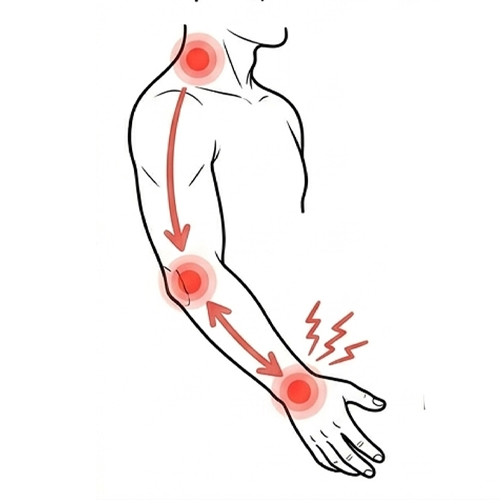
RSI is a description of a process, load outpacing recovery, not a named condition in itself.
Tissue, whether tendon, nerve, or joint lining, adapts to load over time. Give it enough repetition without enough recovery between bouts, and it starts to complain faster than it can adapt. That process is what RSI describes.
The label tells you how the problem likely developed. It does not tell you which structure is involved or what to do about it, which is why “I have RSI” is the start of a conversation with a physiotherapist, not the end of one.
The Three Places RSI Shows Up
The same overload mechanism produces different named conditions depending on which structure takes the strain.
In the elbow, repetitive gripping and forearm use commonly produces tendon overload, which is what sits behind tennis elbow and golfer’s elbow, covered in our guides to tennis elbow and golfer’s elbow symptoms and self-testing.
In the wrist, the same repetitive load can affect the tendons at the base of the thumb, producing De Quervain’s, or irritate the nerve running through the wrist, producing carpal tunnel syndrome, covered in our guide to carpal tunnel symptoms.
In the hand, repeated fine motor strain can affect the tendon sheaths that let fingers glide smoothly, one root of trigger finger, covered in our guide to trigger finger symptoms. Three different structures, three different conditions, one shared mechanism.
The Modern Triggers
Typing, gripping, and repetitive fine motor tasks are the most common causes seen now.
Desk work, phone use, manual trades, and repetitive gym movements all load the same tendons, nerves, and joints in a repeated pattern. None of these require a dramatic injury moment.
The pattern usually builds over weeks, a gradual increase in ache that people explain away until it stops settling overnight. Our guide to typing and desk work wrist and hand pain covers the desk-specific version of this pattern in more depth.
Why Naming The Actual Condition Matters
Treating RSI as a vague label rather than identifying the specific structure involved slows recovery.
A tendon problem responds to progressive loading. A nerve problem responds to load management plus, where needed, positional changes that reduce pressure on the nerve. A joint or tendon-sheath problem responds to its own specific approach.
Treating all three the same way because they all got labelled RSI wastes the most useful information an assessment can give you, which is knowing exactly which structure needs the plan built around it. This is the reason we never use RSI as a standalone diagnosis in our own clinical notes, only as a description of how a problem likely started.
What Happens When You Book
An assessment identifies which structure is actually involved, then builds the plan around it.
Your physiotherapist takes the history, including the repetitive tasks that may have contributed, examines the specific area, and reaches a working diagnosis naming the actual structure and condition involved.
From there you get a plan matched to that condition specifically, not a generic RSI programme. Our teams across elbow, wrist, and hand conditions in London run this assessment within days through direct access, no referral needed.
Note. Some RSI-pattern symptoms need medical review rather than waiting. Seek urgent GP or A&E care for sudden severe pain, visible deformity, or inability to move the joint after an injury. Seek urgent medical advice for numbness or weakness that is rapidly worsening, or a hot swollen joint with fever. Physiotherapists screen for these at first assessment and refer onward the same day when they appear. Contact NHS 111 when unsure.
Frequently Asked Questions
We answer the RSI questions patients ask most.
Is RSI a real diagnosis?
RSI describes how a problem developed, not a specific condition, so it is not a diagnosis on its own. The actual diagnosis is whichever tendon, nerve, or joint condition the pattern produced, such as tennis elbow, carpal tunnel syndrome, or trigger finger. An assessment identifies which one applies.
Can RSI affect the elbow, wrist, and hand at the same time?
Yes, the same repetitive-load mechanism can affect more than one area, though it usually shows up more strongly in one. Each area is assessed and treated on its own terms, since the specific structure involved differs by location.
Does RSI go away on its own?
Mild cases can settle with reduced load and rest, but persistent RSI-pattern symptoms usually respond better to assessment and a staged plan. Identifying the specific condition behind the pattern is what makes treatment effective, rather than waiting out a vague label.
