



Deep buttock pain has three main stories, and they get confused constantly. The piriformis pattern, where a deep buttock muscle is the sore spot. The hip joint, which refers pain into the buttocks more than people expect. And nerve-related pain travelling down the leg, which is a different condition entirely.
Each point leads to a different plan, so the sorting matters. One honest note first: piriformis syndrome is a debated label in clinical circles, and we use it here as most people search it, meaning a recognisable pattern of deep buttock pain with specific features.
We set out the three-way split first. Our MCSP-registered team at One Body LDN assesses buttock and hip pain across our London clinics, and this sorting is usually the first job.
Key Takeaways
- Deep buttock pain splits three ways: the piriformis pattern, hip joint referral, and nerve-related pain.
- The piriformis pattern is tender deep in the buttocks and hates firm sitting.
- Hip joint pain refers to the buttocks, but it usually brings groin pain and stiffness with it.
- Pain travelling below the knee points toward nerve involvement, a separate condition.
- Persistent buttock pain warrants assessment, because the three need different plans.
The Three-Way Split: Reading Your Buttock Pain

Three patterns cover most deep buttock pain, and each has a tell.
The Piriformis Pattern
Deep, specific tenderness in the middle of one buttock. Sitting on firm surfaces aggravates it, especially while driving. The pain sits in the buttock and may touch the back of the thigh, without travelling below the knee.
Hip Joint Referral
Buttock ache that travels with groin pain, stiffness, or trouble with deep bending. The buttock is one place the hip joint speaks, and it rarely speaks there alone.
Nerve-Related Pain
Pain shooting or trailing down the leg, past the knee, sometimes with pins and needles or numbness. This points toward nerve involvement, covered in our guide to what sciatica is, and it follows its own pathway.
What The Piriformis Pattern Feels Like
A deep buttock muscle problem is tender to sit on and specific to find.
The piriformis is a small, deep muscle crossing the buttocks. When it is the story, the pattern is consistent. You can find the sore spot: pressing deep into the middle of the buttock reproduces a familiar ache.
Firm sitting aggravates it, so car seats, wooden chairs, and long drives are the classic complaints. Crossing the affected leg can pull on it. The pain stays local, buttock and sometimes the upper thigh, without the below-knee travel that signals nerve involvement.
Because the muscle sits near the sciatic nerve, the pattern occasionally brings tingling toward the thigh, which is exactly why persistent cases deserve assessment rather than self-labelling.
How Hip Joint Pain Shows Up In The Buttocks
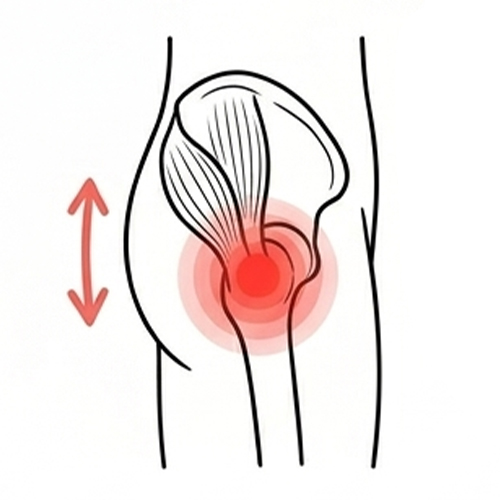
The hip refers pain backward as well as forward, and it rarely comes alone.
The hip joint sends pain to the groin, most famously, covered in our guide to groin pain that comes from the hip, but the buttock is its second address. The tell is the company. Hip-driven buttock pain usually arrives with groin ache, stiffness in deep bending, or trouble with socks and low chairs.
Buttock pain that is truly alone, with a findable sore spot and firm-sitting aggravation, leans toward piriformis. Buttock pain travelling with groin and stiffness leans hip.
Outer-hip pain, tender to lie on rather than sit on, is a third neighbour again, mapped in our guide to hip bursitis symptoms and self-testing. Location plus company reads the source.
When Buttock Pain Needs An Assessment
Persistent or spreading buttock pain warrants assessment, because the plans differ.
Three triggers decide it. Duration: buttock pain beyond two to three weeks despite easing the obvious aggravators. Spread: pain starting to travel down the leg, or bringing pins and needles, which moves the question into nerve territory and deserves prompt assessment.
Recurrence: a pattern that settles and returns with sitting or activity. The assessment tests the buttock, the hip, and the nerves together, which is the only reliable way to separate these three sources this entangled.
The plans genuinely differ, muscle-focused work for one, joint-focused for another, nerve pathways for the third, so the sorting is worth a session in itself. Persistent hip pain of any pattern can be booked within days through our hip pain team in London, with direct access, no referral needed.
Note. Some buttock and leg symptoms need urgent medical care rather than sorting at home. Seek urgent care for numbness in the saddle area, new bladder or bowel changes, weakness developing in the leg or foot, or severe, unrelenting night pain. Seek GP review for buttock pain with unexplained weight loss or fever. Physiotherapists screen for these at the first assessment and refer onward the same day when they appear. Contact NHS 111 when unsure.
Frequently Asked Questions
We answer the buttock pain questions patients ask most.
How do I know if it is piriformis syndrome or my hip?
Piriformis-pattern pain is a findable sore spot deep in the buttock that hates firm sitting, while hip-driven buttock pain usually travels with groin ache and stiffness. Location plus company reads it. An assessment confirms the source, because the two need different plans.
Is piriformis syndrome the same as sciatica?
No, sciatica describes nerve-related pain travelling down the leg, while the piriformis pattern stays in the buttock and upper thigh. The piriformis muscle sits near the sciatic nerve, which is why the two get confused. Pain below the knee points toward the nerve pathway.
Can you sit with piriformis syndrome?
Sitting on firm surfaces typically aggravates the piriformis pattern, so softer seating and regular position changes help in the short term. Lasting relief comes from treating the cause rather than managing chairs. Assessment stages that plan.
References
- National Health Service. Hip and buttock pain: causes and assessment.
- National Institute for Health and Care Excellence. Sciatica and low back pain: assessment guidance (NG59).
- Chartered Society of Physiotherapy. Direct access to physiotherapy.
- Health and Care Professions Council. The register of physiotherapists.
