



Groin pain is often the hip talking. People assume a groin strain or worry about a hernia, and miss that the hip joint itself refers pain straight into the groin. It is one of the most common ways hip problems show up, and one of the most misread. The distinction matters, because hip-driven groin pain and a pulled muscle need completely different plans.
We set out how to tell the sources apart first, then explain each. Our MCSP-registered team at One Body LDN assesses groin and hip pain across our London clinics, and sorting the hip from the muscle is often the first useful step.
Key Takeaways
- The hip joint commonly refers pain into the groin, often mistaken for a muscle strain.
- Hip-driven groin pain sits deep and is provoked by moving the joint, not by touching the muscle.
- A groin strain is usually tender to touch and hurts when the muscle contracts.
- Deep groin pain with stiffness or a catch on hip movement points toward the hip joint.
- Some groin pain has non-hip causes that need medical review, listed at the end.
Where Is Your Groin Pain Coming From

Three broad sources cover most groin pain, and the pattern points to which.
Match yours below, then read its section.
The Hip Joint
Deep groin pain, felt inside rather than on the surface, provoked by moving the hip: bending it fully, rotating, squatting, or sitting low. Often comes with stiffness or a catch. This is the source people miss.
A Muscle Or Tendon
Surface-level pain, tender when you press it, and painful when the muscle works, such as bringing the leg inward against resistance. Usually follows a specific overload or sprint. This is the classic groin strain.
A Non-Hip, Non-Muscle Cause
Groin pain with a visible bulge, pain on coughing, or symptoms unrelated to movement can point to causes outside the hip and muscle entirely. These need medical review rather than physiotherapy, covered at the end.
Why The Hip Refers Pain To The Groin
The hip joint sits deeper and more forward than people expect, and its pain surfaces in the groin.
The hip joint is not on the outer side where people point. It sits deep in the front, and the nerves that supply it share pathways that project pain into the groin and sometimes down toward the knee. So a problem inside the joint, worn cartilage, impingement, a labral issue, is felt as groin pain rather than pain over the joint itself.
This is why groin pain provoked by moving the hip, rather than by touching a muscle, is the joint declaring itself. Recognising that pattern is the key that unlocks the right hip pain plan, because treating a joint problem as a muscle strain gets nowhere.
The Hip Conditions That Cause Groin Pain
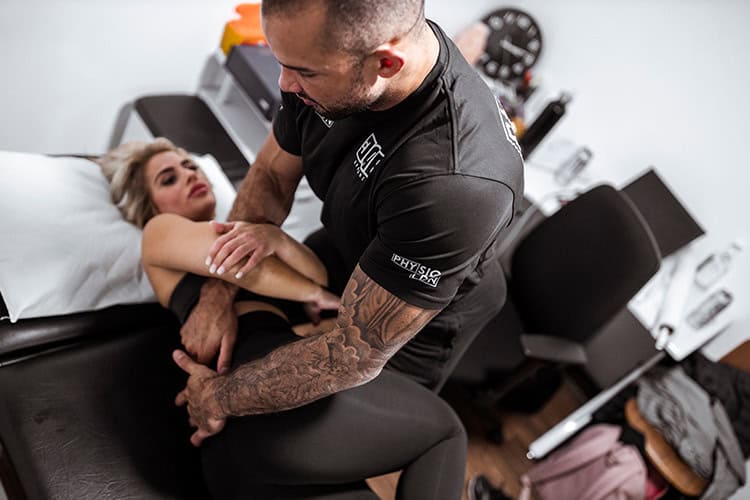
Two common hip problems show up mainly as groin pain.
Hip Impingement
A deep front-of-hip pinch on full bending, common in younger active hips, felt in the groin. The recognition pattern and home tests are covered in our guide to hip impingement symptoms and self-testing.
Hip Osteoarthritis
Groin ache with morning stiffness that eases, more common with age, often referring toward the knee. The early signals are covered in our guide to early hip osteoarthritis warning signs.
Both are joint-source problems felt in the groin, and both respond to assessment and a staged plan rather than rest alone.
What Happens When You Book
An assessment separates the hip from the muscle, which decides the whole plan.
Your physiotherapist tests whether moving the hip reproduces the groin pain, whether the muscle is tender and pain on resisted movement, and how the joint moves overall. That quickly sorts a joint source from a muscle source.
From there you get a working diagnosis and a plan matched to the actual cause. General guidance on the timing of hip assessment sits in our guide to when to see a physio for hip pain. Our hip pain team in London runs this assessment within days through direct access, no referral needed.
Note. Some groin pain needs medical review rather than physiotherapy. Seek GP or urgent care for a visible bulge in the groin, groin pain that worsens on coughing or straining, groin pain with fever or feeling unwell, testicular pain or swelling in men, or groin pain with unexplained weight loss.
Seek urgent care for groin pain after a significant injury you cannot bear weight through. Physiotherapists screen for these at first assessment and refer onward the same day when they appear. Contact NHS 111 when unsure.
Frequently Asked Questions
We answer the groin pain questions patients ask most.
Can hip problems cause groin pain?
Yes, the hip joint commonly refers pain into the groin, and it is one of the most missed causes. Hip-driven groin pain sits deep and is provoked by moving the joint, not by pressing a muscle. Impingement and osteoarthritis both show up this way.
How do I know if my groin pain is a strain or my hip?
A strain is tender to touch and hurts when the muscle contracts, while hip-joint pain sits deeper and is provoked by moving the hip. Deep groin pain with stiffness or a catch on hip movement points toward the joint. An assessment confirms which it is.
Should I see a physio or a doctor for groin pain?
Movement-related groin pain from the hip or a muscle is well suited to physiotherapy assessment. Groin pain with a visible bulge, pain on coughing, or symptoms unrelated to movement needs a GP first. When unsure, start with whichever is quicker to access and expect onward referral if needed.
