



Sciatica is pain caused by irritation or compression of the sciatic nerve. The pain typically radiates from your lower back through one buttock and down the back of your leg. Most cases settle within six weeks with conservative treatment.
This article explains the four sources of sciatic nerve compression, the symptom patterns that map to specific nerve roots, and how a physiotherapist confirms the diagnosis.
Key Takeaways
- Sciatica is a symptom of sciatic nerve compression, not a diagnosis on its own
- Four anatomical sources cause the majority of sciatica cases
- Pain location on the leg indicates which lumbar nerve root is involved
- Most cases settle within six weeks with conservative treatment
- Bilateral leg symptoms, saddle numbness, or bladder changes need immediate A&E attention
Sciatica Is a Symptom, Not a Diagnosis
Sciatica describes a pain pattern, not an underlying condition. When sciatica appears, something further up the nerve pathway is the source. Identifying that source changes the treatment plan. Two people with the same leg pain can have entirely different causes, and the right care for each depends on which one applies.
The Sciatic Nerve Runs from Your Lower Back to Your Foot
The sciatic nerve is the longest nerve in your body. The nerve starts at the lumbar and sacral nerve roots (L4 through S3) in your lower spine, passes through your pelvis, and travels down the back of your thigh into the calf and foot.
Each side of your body has one. The sciatic nerve carries signals for movement and sensation between your spinal cord and your leg muscles.
A small compression at the spinal end can produce symptoms 90 cm away in your foot, which is why a problem in your lower back often shows up as pain in your calf.
Four Sources Cause Most Cases of Sciatica
Most sciatica traces back to one of four anatomical sources. Each has its own pattern, demographic, and trigger.
1- Herniated lumbar disc
A disc between two vertebrae bulges outward and contacts a nerve root. Around 90% of sciatica cases involve a disc. The most common sites are the L4/L5 disc and the L5/S1 disc. Sciatica from a herniated disc most often affects adults aged 30 to 50. Pain typically worsens with bending forward, coughing, or sneezing. Our guide on lower back pain when bending or lifting covers the mechanism in detail.
2- Piriformis muscle compression
The sciatic nerve passes through or beneath the piriformis muscle deep in your buttock. When that muscle spasms or tightens, the nerve can be squeezed. Symptoms reproduce on prolonged sitting or when the hip is rotated. Piriformis compression can mimic disc-related sciatica without the disc being involved.
3. Lumbar spinal stenosis
The spinal canal narrows with age, which puts pressure on the nerve roots passing through it. Stenosis-related sciatica usually affects adults over 60. The pain eases when sitting forward and worsens when walking or standing for long periods.
4. Spondylolisthesis
One vertebra slips forward over the one below, narrowing the space the nerve passes through. The most common site is the L5/S1 segment. The cause can be congenital, age-related, or follow a sports injury. Our guide on the four mechanical patterns of lower back pain covers a wider context.
Sciatica Pain Follows a Specific Path Down the Leg

Sciatica produces three main symptom qualities. Pain feels sharp, burning, or electric-shock in character. Numbness or tingling can accompany. Muscle weakness sometimes appears in the foot. The pain pattern follows the nerve root that is compressed.
L4 nerve root. Pain travels across the front of your thigh and into the inner shin. Weakness when straightening your knee can occur.
L5 nerve root. Pain runs down the outside of your thigh and calf, into the top of your foot and the middle toes. Foot drop, where lifting the front of the foot becomes difficult, can occur with stronger compression.
S1 nerve root. Pain runs down the back of your thigh and calf, into the sole and the little toe. Calf weakness and reduced ankle reflexes are common signs.
The location of your symptoms tells a physiotherapist which nerve root is involved, and that guides the treatment plan.
Sciatica Usually Affects Only One Leg
Each lumbar nerve root branches to one side of the body. Compression on the right L5 root causes right-leg sciatica, and compression on the left S1 root causes left-leg pain. Sciatica is almost always one-sided. Symptoms in both legs at the same time suggest something different is happening, and that something can be serious. The next section covers when to act on those signs.
A Physiotherapist Diagnoses Sciatica from History and Examination
Sciatica is usually diagnosed without imaging. The history and physical examination give most of the answers.
Medical history. We ask when your symptoms started, what makes the pain worse, what eases it, and if any red flag symptoms have appeared. Recent injuries, lifting incidents, and changes in posture all count.
Movement examination. We watch how your lower back, hips, and legs move. Certain positions reproduce nerve root pain, which gives clues about the source.
Neurological examination. We test the strength of specific muscles, your reflexes, and sensation in the dermatomal areas covered earlier. Loss of ankle reflex points to S1 involvement.
The straight leg raise test. You lie on your back, and we slowly lift your straight leg. Pain reproduced between 30 and 70 degrees of lift suggests nerve root irritation. The test is one of the most reliable single signs of true sciatica.
Imaging applies only when red flags appear, when symptoms persist beyond six weeks, or when surgery is being considered.
Some Sciatica Symptoms Need Urgent Attention
Cauda equina syndrome is rare but serious. Symptoms to act on the same day include:
- Numbness around the genitals, the anus, or the saddle area
- Loss of bladder or bowel control, or sudden inability to pass urine
- Weakness or numbness in both legs at once
- Severe leg pain following a traumatic injury
These signs need A&E assessment, not a physio appointment. Our guide on when to see a physio for back pain covers the wider red flag picture.
Treatment Starts with Physiotherapy in Most Cases
NICE clinical guideline NG59 recommends physiotherapy as the first-line treatment for sciatica in the UK. Most cases settle within six weeks of combined manual therapy, guided movement, and a graded return to normal activity.
Self-care helps in the early days. Keep moving where possible, avoid prolonged bed rest, and use heat or cold packs over short periods for symptom relief. Our sciatica physiotherapy in London service runs same-day assessments for cases that need quick attention.
Sciatica Treatment at One Body LDN
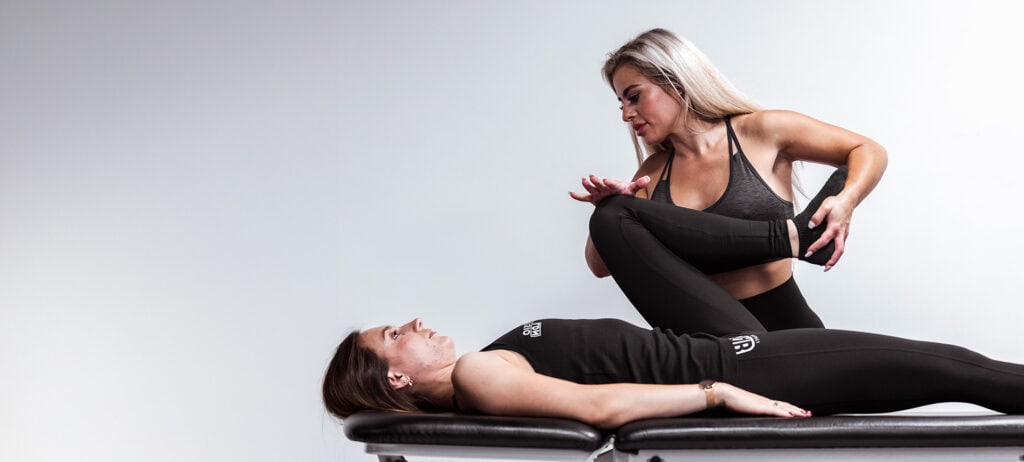
One Body LDN runs registered physiotherapy clinics all throughout London. Our team offers same-day sciatica assessments, full neurological examinations, and a treatment plan matched to your specific nerve root involvement. We work with the four-source framework outlined above to identify the cause and guide your recovery from the first session onward.
Frequently Asked Questions
What is the main cause of sciatica?
The most common cause of sciatica is a herniated lumbar disc, which accounts for around 90% of cases. The disc protrudes and contacts the nerve root in the lower back, triggering pain that radiates down the leg.
How do I know if I have sciatica?
Pain that travels from your lower back through one buttock and down the back of your leg is the classic sciatica pattern. Sciatica pain is usually one-sided. Back pain on its own, with no leg involvement, is unlikely to be sciatica.
How do doctors diagnose sciatica?
A physiotherapist or GP diagnoses sciatica from your history and a physical examination. The straight leg raise test is the most reliable single sign. Imaging is rarely needed in the first six weeks.
What are the red flags for sciatica?
Numbness around the saddle area, loss of bladder or bowel control, or bilateral leg weakness needs urgent A&E attention. These signs can indicate cauda equina syndrome, which is rare but serious.
References
- NHS: Sciatica overview. https://www.nhs.uk/conditions/sciatica/
- NICE NG59: Low back pain and sciatica in over 16s. https://www.nice.org.uk/guidance/ng59
- NHS Inform: Sciatica. https://www.nhsinform.scot/illnesses-and-conditions/muscle-bone-and-joints/conditions/sciatica/
- Cleveland Clinic: Sciatica causes, symptoms, treatment. https://my.clevelandclinic.org/health/diseases/12792-sciatica
