



Climbing stairs asks two hard things of the hip at once. Deep bending as the knee lifts, then a single-leg push as you rise. Different hip problems fail at different points in that sequence, which makes stairs a useful diagnostic test you run every day.
Two questions read the pattern: where does it hurt, and when in the step does it appear? Groin pain as the knee lifts points one way. Outer hip pain as you push up points to another. We set out the matcher first, then each source.
Our MCSP-registered team at One Body LDN assesses hip pain across our London clinics, and the stairs question is one of the first we ask.
Key Takeaways
- Where the pain is felt, in the groin or outer hip, points toward the source.
- When it appears in the step, lifting the knee or pushing up, sharpens the answer.
- Deep groin pinch on the lifting phase points toward the hip joint itself.
- Outer hip pain on the push-up phase points toward the tendons on the side of the hip.
- Pain in the stairs that persists beyond two to three weeks or limits daily life warrants assessment.
Where And When: Reading Your Stairs Pain
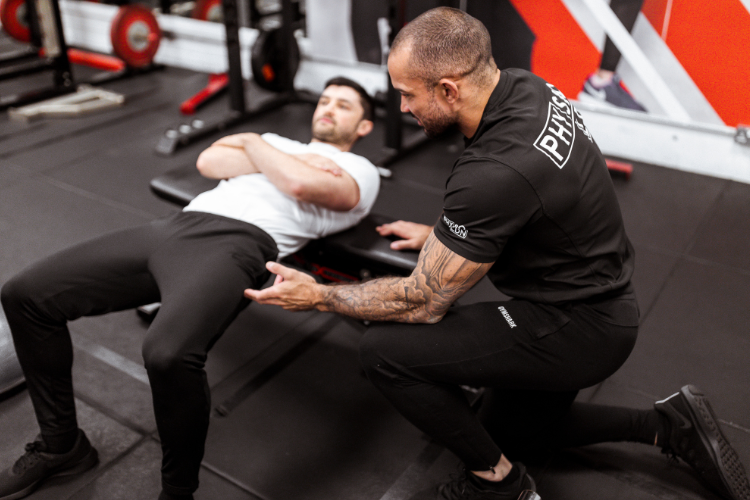
Two questions route most stair-related hip pain to its source.
Deep Groin Pinch As The Knee Lifts
Pain felt deep in the groin or front of the hip as you bend it to lift onto the step points toward the joint itself. Climbing compresses the front of the hip in deep bending, which is exactly where joint-related problems complain.
Outer Hip Ache As You Push Up
Pain on the side of the hip as you drive up onto the leg points toward the tendons that stabilise the pelvis. The push-up phase is a single-leg effort, and the outer-hip tendons do that stabilising work.
Groin Ache With General Stiffness
A dull groin ache on stairs, with morning stiffness and reduced range, points toward joint wear rather than a pinch, more common with age.
Groin Pain On Stairs: The Hip Joint Sources
Deep, front-of-hip stairs pain usually comes from the joint, and two patterns lead.
The sharp deep-flexion pinch, worst when lifting the knee onto a high step, fits the impingement pattern, common in younger active hips, and covered with home tests in our guide to hip impingement symptoms and self-testing.
The dull groin ache with stiffness, building over months and worse after rest, fits early joint wear, and its subtler signals are mapped in our guide to early hip osteoarthritis warning signs.
The two feel different in quality, pinch versus ache, and an assessment separates them properly. Both are joint stories told through the same staircase.
Outer Hip Pain On Stairs: The Tendon Source
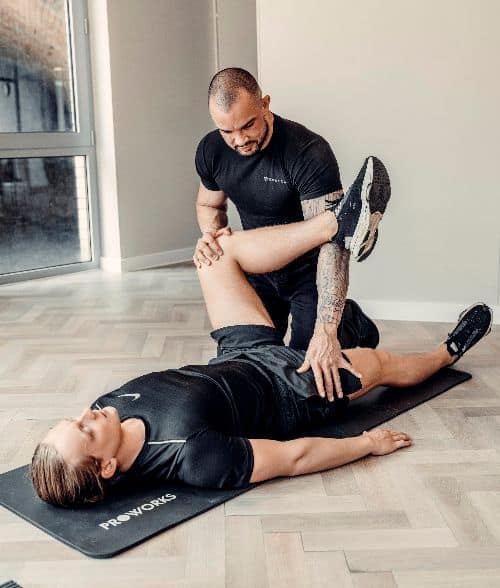
Side-of-hip pain on the push-up phase points toward the gluteal tendons.
Rising onto one leg makes the tendons on the side of the hip hold your pelvis level. When those tendons are irritated, the single-leg demand of each step reproduces the pain, on the bony point at the side of the hip rather than in the groin.
The same problem usually hurts when lying on that side at night and when standing on one leg to dress. This outer-hip pattern, often labelled bursitis, is covered with home tests in our guide to hip bursitis symptoms and self-testing.
It is a load-capacity problem, and it responds to assessment and staged strengthening rather than rest alone.
When Stairs Pain Means Book An Assessment
Three triggers turn a stairs pattern into a booking.
Duration: Stairs pain persists beyond two to three weeks despite easing the aggravating load. Function: pain now changing how you climb, taking steps one at a time, pulling on the rail, or avoiding stairs entirely, because compensation spreads the problem.
Recurrence: a pattern that settles then returns with activity. Any trigger met, book. The assessment tests the hip through the movements stairs demand, separates the joint from the tendon, and stages the plan.
Persistent hip pain on stairs rarely resolves by avoidance, because stairs are not optional in London life. Our hip pain team in London assesses stair-pattern presentations within days through direct access, no referral needed.
Note. Some hip symptoms need medical review rather than pattern-watching. Seek urgent GP or A&E care for hip pain after a fall you cannot bear weight through, a hot, swollen hip with fever, or sudden inability to move the leg. Seek GP review for hip pain with unexplained weight loss, severe unrelenting night pain, or constant pain unrelated to movement.
Physiotherapists screen for these at the first assessment and refer onward the same day when they appear. Contact NHS 111 when unsure.
Frequently Asked Questions
We answer the stairs hip pain questions patients ask most.
Why does my hip hurt going up stairs but not walking?
Stairs demand deep hip bending and a single-leg push that flat walking does not. Climbing compresses the front of the hip and loads the outer-hip tendons harder. A problem that copes with walking gets exposed on stairs first.
Why does the outside of my hip hurt on stairs?
Outer hip pain on the push-up phase points toward the gluteal tendons that keep your pelvis level on one leg. The same problem typically hurts when lying on that side at night. It responds to assessment and staged strengthening rather than rest alone.
Should I avoid stairs if my hip hurts?
Short-term moderation is sensible, but long-term avoidance weakens the hip and rarely fixes the cause. Pain in the stairs persisting beyond two to three weeks, or changing how you climb, warrants assessment so the actual source gets treated.
