



Hip osteoarthritis rarely arrives loudly. It starts as small things people explain away: a bit of morning stiffness, a groin ache after gardening, a hip that clicks getting out of the car. The obvious stage comes later. The early stage is where physiotherapy makes the most difference, and it is the stage most often missed.
Catching it early does not stop osteoarthritis existing, but it changes how well you live with it. We set out the early signals first, then explain why they matter and what to do. Our MCSP-registered team at One Body LDN assesses hip osteoarthritis across our London clinics, and the earlier we see it, the more we can do.
Key Takeaways
- Early hip osteoarthritis shows as subtle stiffness and groin ache, not severe pain.
- Morning stiffness that eases within thirty minutes is a classic early signal.
- Pain and stiffness often sit in the groin and can refer to the knee.
- Early-stage osteoarthritis responds well to strengthening and activity, which physiotherapy leads.
- These signs warrant assessment, not alarm. Early action changes how the condition progresses to live with.
The Early Warning Signs
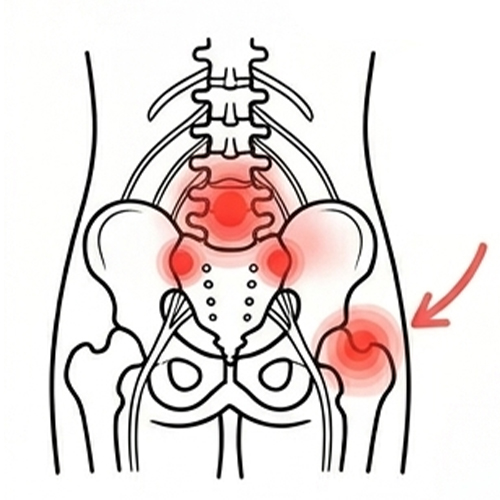
Five early signals appear before the obvious stage, and each is easy to dismiss.
- Short-lived morning stiffness. The hip feels stiff on waking or after rest, then eases within about thirty minutes of moving. This is one of the most reliable early signs.
- Groin ache, not outer-hip pain. Early osteoarthritis is usually felt in the groin or deep in the hip, sometimes referring down toward the knee.
- First-movement stiffness. The hip feels stiff and awkward for the first steps after sitting, then loosens as you walk.
- Reduced range. Putting on socks, shoes, or getting in and out of a car starts to feel restricted on one side.
- Activity-related ache. A dull ache after longer walks, gardening, or a busy day, settling with rest early on.
None of these is dramatic, which is exactly why they get ignored. The pattern of stiffness plus groin location is the early signature.
Why These Signs Are Worth Catching
Early-stage hip osteoarthritis is where physiotherapy changes the trajectory most.
Osteoarthritis is often assumed to be a wait-for-a-replacement condition. It is not, especially early. The strongest evidence for managing hip osteoarthritis supports exercise and staying active, and both work best before the hip has stiffened and weakened around the problem.
Caught early, targeted strengthening maintains the movement and muscle that keep the hip working, which can ease symptoms and support day-to-day function for years. Left until the obvious stage, there is still plenty to do, but the early window offers the most. Understanding how physiotherapy helps hip pain in older adults covers the physio-first case in more detail, and it starts with recognising the signs above.
Telling It Apart From Other Hip Problems

Early osteoarthritis is easy to confuse with other common hip conditions.
Location and pattern separate them. Osteoarthritis sits in the groin with morning stiffness that eases, and tends to appear with age. Bursitis sits on the outer hip and is tender to touch and to lie on. Impingement gives a deep front-of-hip pinch on full bending, more common in younger active hips.
Distinguishing osteoarthritis from bursitis specifically is covered in our guide to hip bursitis versus hip osteoarthritis. Getting the distinction right matters, because the conditions need different plans, and the groin-plus-stiffness pattern is what points toward osteoarthritis.
What Happens When You Book
A hip assessment confirms the pattern and builds the early-stage plan.
Your physiotherapist takes the history, examines hip movement and strength, and reaches a working diagnosis. Scans are often unnecessary early, because the pattern and examination direct the plan more usefully than an image of a hip at rest.
From there you get a staged plan built around strengthening, movement, and keeping the hip active. Our hip pain team in London assesses hip osteoarthritis within days through direct access, no referral needed, and the earlier the assessment, the more the plan can protect.
Note. Some hip symptoms need medical review rather than watching and waiting. Seek urgent GP or A&E care for hip pain after a fall you cannot bear weight through, a hot swollen hip with fever, or sudden inability to move the leg.
Seek GP review for hip pain with unexplained weight loss, severe unrelenting night pain, or pain that is constant and worsening rather than activity-related. Physiotherapists screen for these at first assessment and refer onward the same day when they appear. Contact NHS 111 when unsure.
Frequently Asked Questions
We answer the early hip osteoarthritis questions patients ask most.
What are the first signs of hip osteoarthritis?
Short-lived morning stiffness, groin ache rather than outer-hip pain, and stiffness for the first steps after sitting. These early signs are mild and easy to dismiss. The combination of stiffness that eases and pain felt in the groin is the early signature worth noticing.
Can physiotherapy help early hip osteoarthritis?
Yes, exercise and staying active have the strongest evidence for managing hip osteoarthritis, and both work best early. Targeted strengthening maintains the movement and muscle that keep the hip working. Early assessment offers the most opportunity to protect function.
Is hip osteoarthritis just part of getting older?
Age is a factor, but osteoarthritis is a manageable condition, not an inevitable decline to accept passively. Early recognition and active management change how it progresses to live with. Dismissing the early signs as ageing is the missed opportunity.
