

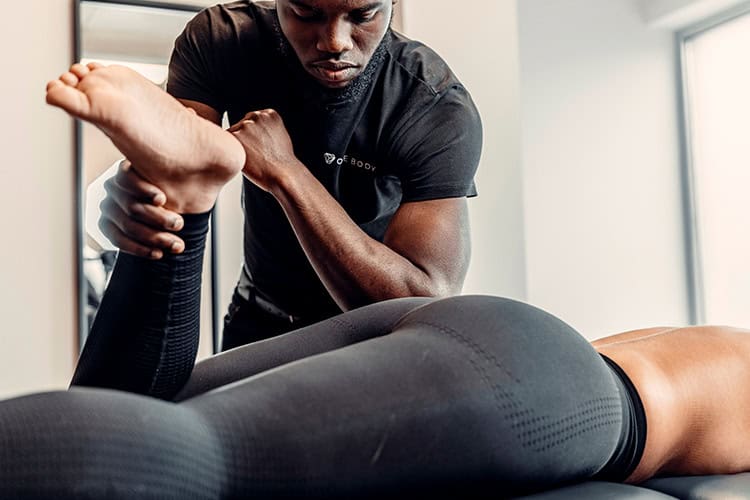

Hip impingement has a signature move that gives it away: a deep pinch in the front of the hip when you bend it fully. Sit in a low chair, pull your knee toward your chest, or crouch, and a sharp catch or ache appears at the front or deep in the groin.
Doctors call it femoroacetabular impingement, or FAI, where the hip bones meet slightly early and pinch the tissue between them. The name matters less than the pattern. Two home tests, run in ten minutes, tell most people whether their hip pain fits it.
The tests classify, they do not diagnose, and we hold that line throughout. Our MCSP-registered team at One Body LDN assesses hip pain across our London clinics, and impingement is one of the more missed patterns in younger, active hips.
Key Takeaways
- A deep pinch in the front of the hip during full bending is the hallmark impingement symptom.
- Pain often sits deep in the groin, and people cup the hip with a C-shaped hand to point to it.
- Two home tests build a reliable pattern picture in ten minutes.
- A positive pattern alongside deep-flexion pain points toward impingement, not confirms it.
- Home tests classify the pattern. A physiotherapy assessment confirms the diagnosis and stages the plan.
Hip Impingement Symptoms

Five symptoms define the impingement pattern, and the deep-flexion pinch leads.
- The deep-flexion pinch. A sharp catch or pinch at the front of the hip when you bend it fully, crouching, sitting low, or pulling the knee to the chest.
- Deep groin pain. Pain felt inside the hip or deep in the groin, not on the outer hip where bursitis sits.
- The C-sign. People often cup the side of the hip with a C-shaped hand to show where it hurts, wrapping thumb and fingers around the joint.
- Trouble with prolonged sitting. Aching after long periods in low seats, cars, or cinema chairs, easing when you stand.
- A catch on rotation. Twisting or pivoting on the leg can catch or pinch, common in sports with quick turns.
The first two carry the pattern. Impingement pain sits deep and in front, which separates it from the outer-hip pain of other conditions.
The Two Home Tests
Two tests build the pattern picture. Stop either if it produces sharp, worsening pain.
Test 1: The Deep Flexion Pinch
How to do it. Lie on your back. Pull the affected knee up toward the same-side shoulder, then draw it slightly across toward the opposite shoulder.
Positive sign. A familiar sharp pinch or catch felt at the front or deep in the groin, clearly different from a stretch felt at the back of the hip.
Test 2: The Low Squat Check
How to do it. Holding support, lower into a deep squat as far as comfortable, keeping feet flat.
Positive sign. A front-of-hip or groin pinch appearing as you reach the bottom of the squat, often with a sense the hip cannot travel further on that side.
Reading Your Results
A positive pattern with deep-flexion pain points toward impingement, and toward assessment.
Both tests reproducing your familiar deep front-of-hip pain, alongside the sitting and rotation pattern, makes impingement a leading explanation and a physiotherapy assessment the sensible next step. One positive test alone is weaker.
Zero positives with ongoing hip pain still warrants assessment, because hip pain has neighbours: outer-hip pain suggests bursitis, which our guide to hip bursitis symptoms and self-testing covers, and morning-stiff, age-related hip pain points more toward osteoarthritis. The tests narrow the field. The examination decides it.
What The Self-Test Cannot Tell You
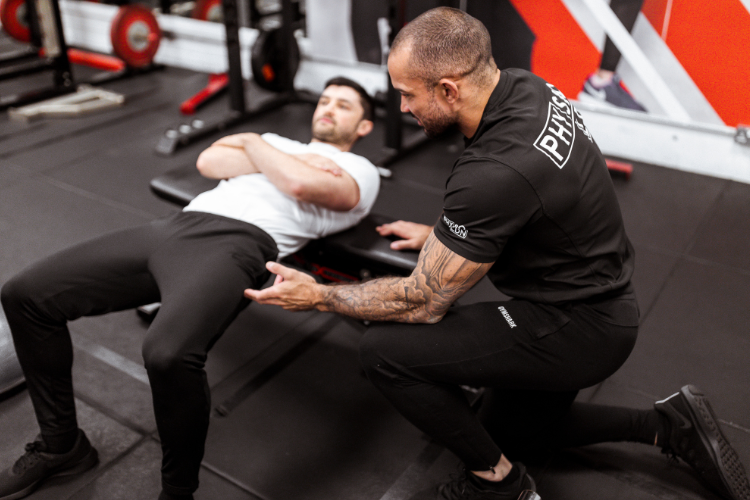
Home testing classifies a pattern. It cannot confirm the diagnosis or grade the hip.
The tests cannot measure how the hip is shaped, cannot separate impingement from a labral problem that often travels with it, cannot assess the surrounding strength and control, and cannot stage a recovery.
Assessment adds those layers: a full examination, strength and movement testing, and the load history that explains why this hip and why now. Some impingement is managed well without surgery through targeted strengthening and movement change, and knowing which path fits starts with an assessment.
Persistent hip pain that fails simple self-care deserves that fuller look. Our hip pain team in London runs exactly this assessment, typically within days through direct access, no referral needed.
When To Book The Assessment
Three triggers turn a positive self-test into a booking.
Duration: deep hip or groin pain persisting beyond two to three weeks despite easing the aggravating positions. Function: pain now limiting sitting, squatting, sport, or stairs. Recurrence: a catch or pinch that keeps returning with activity.
Any trigger met, book. General guidance on the timing of hip assessment sits in our guide to when to see a physio for hip pain. Early assessment matters more for active hips, because the aggravating movements are often ones people are reluctant to give up.
Note. Some hip symptoms need medical review rather than self-testing. Seek urgent GP or A&E care for hip pain after a fall you cannot bear weight through, a hip that is hot and swollen with fever, sudden inability to move the leg, or pain with sudden colour change in the leg.
Seek GP review for hip pain with unexplained weight loss, night pain unrelated to activity, or pain that is severe and constant. Physiotherapists screen for these at first assessment and refer onward the same day when they appear. Contact NHS 111 when unsure.
Frequently Asked Questions
We answer the hip impingement questions patients ask most.
What does hip impingement feel like?
A deep pinch or catch at the front of the hip or groin when you bend it fully, such as squatting or sitting low. The pain sits deep and in front, not on the outer hip, and can catch when twisting on the leg. Prolonged sitting often aggravates it.
Can I test for hip impingement at home?
Yes, the two tests above build a reliable pattern picture, and reproducing deep front-of-hip pain points toward impingement. The tests classify rather than diagnose. An assessment confirms it and separates impingement from a labral or other hip problem.
Does hip impingement always need surgery?
No, many cases are managed without surgery through targeted strengthening and movement changes. Surgery is considered only when a proper course of physiotherapy has not resolved it. An assessment establishes which path fits your hip.
