

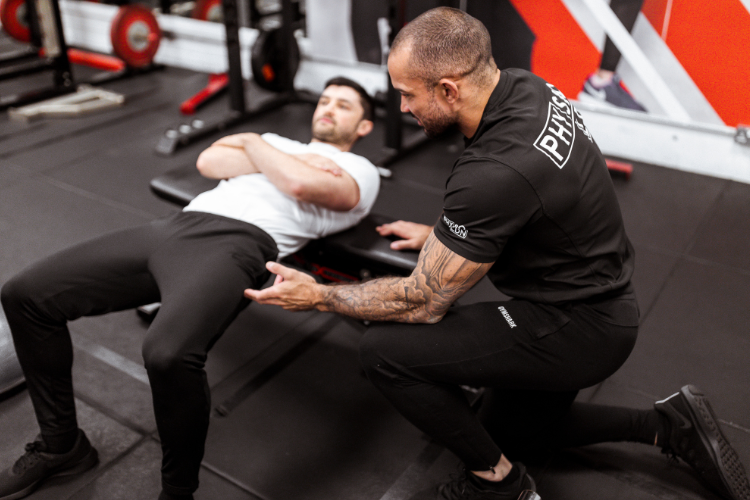

The front of the hip is a crowded address. The hip flexor muscles and the hip joint sit millimetres apart, hurt in almost the same spot, and need entirely different plans. One rule separates them better than any anatomy lesson: muscles hurt when they work, joints hurt when they are compressed.
A strained hip flexor complains when you drive the knee up against resistance, and offers a sore spot you can press. A joint problem complains in deep positions, low chairs, long sitting, twisting, and gives your fingers nothing to find. Runners, footballers, and gym athletes own most of the genuine strains, and the strain story has a beginning: a sprint, a kick, a lunge, a moment. Front-of-hip pain with no moment usually belongs to the joint, and the sections below sort yours.
Key Takeaways
- Muscles hurt when they contract and stretch. Joints hurt when they are compressed and loaded.
- A genuine hip flexor strain has an onset moment: a sprint, kick, or lunge where the pain began.
- Resisted knee-lift pain plus a pressable sore spot points to the muscle.
- Deep-position pain with nothing to press points to the joint.
- Tight-feeling hip flexors without a strain story are usually not a strain, and stretching a real strain early makes it worse.
The Muscle-Or-Joint Rule
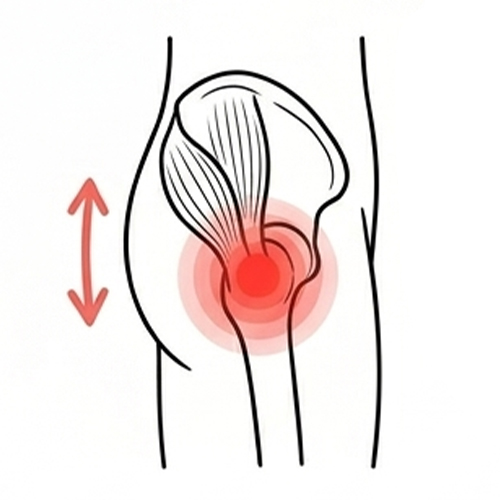
Contract versus compress sorts front-of-hip pain faster than any scan.
Run three quick checks. Resisted work: sitting, lift the sore-side knee toward your chest while pressing down on it with your hands. Sharp front-of-hip pain during the effort points to the muscle, because resistance makes the hip flexor work hard while barely moving the joint. Press: feel along the crease at the front of the hip and just below it.
A specific tender spot that reproduces your pain points to muscle, since the joint sits too deep for fingers. Compress: sink into a deep squat or pull the knee fully to the chest. Pain arriving only in that deep, loaded position, with the first two checks quiet, points to the joint. Muscle answers effort. Joint answers position. Mixed answers happen, and mixed answers are exactly what an assessment untangles.
Hip Flexor Strain: The Pattern
A genuine strain tells a story with a beginning, and the beginning is the diagnosis half-made.
Hip flexor strains happen in a moment of high effort: accelerating into a sprint, striking a ball, a lunge under load, a slip caught late. The muscle overloads, fibres tear, and the front of the hip knows immediately. From there the pattern is consistent. Pain on driving the knee upward, running uphill, kicking, and the push-off phase of stride.
Tenderness at the front of the hip you can locate with a finger. Discomfort stretching the hip into extension, the back-leg position of a lunge. A dull ache at rest in the first days that sharpens on use. Severity spans a pull that niggles for a week to a tear that ends a season, and the early management is the same start: ease the aggravating load, keep gentle pain-free movement, and resist the urge to stretch it hard, because a torn muscle needs loading in stages, not lengthening on day one.
When Front-Of-Hip Pain Is The Joint Instead
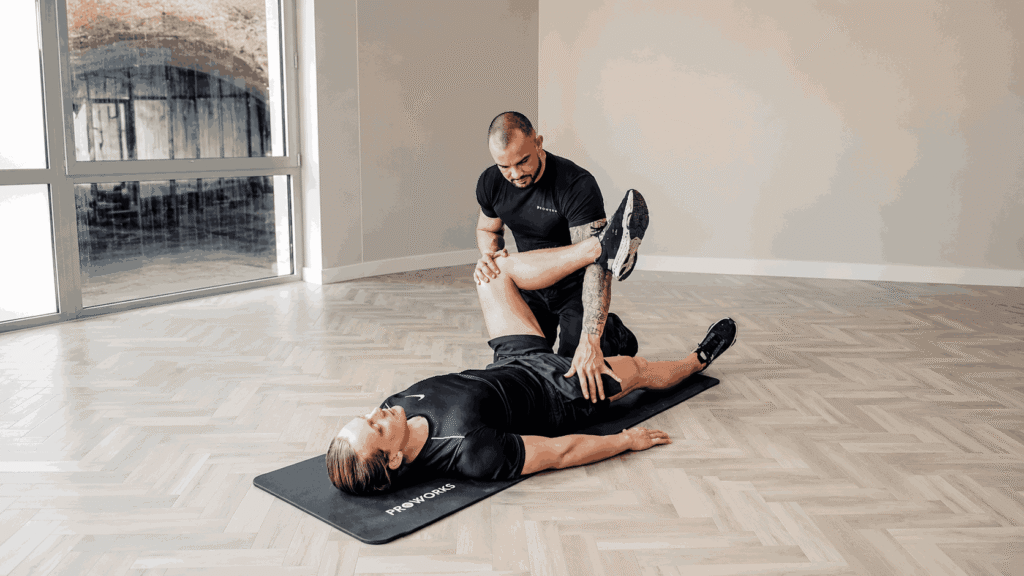
No onset moment, deep-position pain, and nothing to press point to the joint, and two patterns lead.
Joint-driven front-of-hip pain arrives without a starting incident and behaves by position. The sharp deep-flexion pinch, worst in low chairs, deep squats, and twisting on the leg, fits the impingement pattern, common in younger active hips and mapped with home tests in our guide to hip impingement symptoms and self-testing.
The duller groin ache with morning stiffness, building over months and more common with age, fits early joint wear, and its quiet signals are covered in our guide to early hip osteoarthritis warning signs. Where your pain sits in the groin and the wider sources need sorting first, our guide to groin pain that comes from the hip maps that territory. The muscle-or-joint rule still runs underneath all three: joints answer position, and fingers find nothing.
The Tightness Trap
Tight-feeling hip flexors are the internet’s favourite scapegoat, and tightness alone is not a strain.
Desk workers everywhere are told their hip flexors are tight, and the feeling is real while the diagnosis usually is not. A muscle can feel tight because it is weak, because it is guarding a joint problem underneath, or because it spends nine hours shortened at a desk, none of which is a strain, and none of which stretching alone fixes.
The sorting question is the story: tightness with no onset moment, no resisted-effort pain, and no pressable sore spot is a description, not an injury. The trap runs the other way too. A genuine strain treated as tightness, stretched hard and early, gets worse, because torn fibres need progressive loading, not aggressive lengthening. Feel tight, test first. The three checks above take two minutes and save a month of stretching the wrong problem.
When To Book An Assessment
Three triggers turn front-of-hip pain into a booking, whichever side of the rule it sits.
Duration: front-of-hip pain persisting beyond two to three weeks despite easing the loads that drive it. Function: pain now changing how you run, walk, or climb, since compensation spreads the problem to the back and the other hip.
Recurrence: a front-of-hip pattern that settles between active spells and returns with each one, the classic sign of a strain rebuilt to its old capacity and not past it. Any trigger met, book. The assessment runs the muscle-or-joint sorting properly, tests the strain against resistance, grades it where present, and stages the loading plan a hip pain recovery actually needs.
Our hip pain team in London assesses front-of-hip presentations within days through direct access, no referral needed, and the first job is always the same rule: contract or compress.
Note. Some front-of-hip symptoms need medical review rather than the muscle-or-joint sorting. Seek urgent care for hip pain after a fall you cannot bear weight through, sudden severe pain with a pop during sprinting in teenagers, a hot swollen hip with fever, or sudden inability to move the leg. Seek GP review for hip pain with unexplained weight loss, severe unrelenting night pain, or constant pain unrelated to movement. Physiotherapists screen for all of these at first assessment and refer onward the same day when they appear. Contact NHS 111 when unsure.
Frequently Asked Questions
We answer the hip flexor questions patients ask most.
What does a hip flexor strain feel like?
Sharp front-of-hip pain that began in a specific moment, hurts when you drive the knee up against resistance, and offers a tender spot you can press. Running uphill, kicking, and lunging typically fire it. Deep-position pain with nothing to press points to the joint instead.
How do I know if I pulled my hip flexor or something worse?
A pulled flexor has an onset story, resisted-effort pain, and pressable tenderness, while joint problems hurt by position and sit too deep to press. Pain with no clear moment, or deep groin ache with stiffness, deserves the joint pathways. Mixed pictures are what assessment untangles.
Should I stretch a hip flexor strain?
Not early, because torn muscle fibres need staged loading rather than aggressive lengthening, and hard stretching makes fresh strains worse. Gentle pain-free movement is the right start. Stretching earns a place later in recovery, guided by how the muscle tests.
How long does a hip flexor strain take to heal?
Mild strains typically settle over one to three weeks, while significant tears take considerably longer and reward guided loading. Recurrence signals a strain rebuilt only to its old capacity. A strain that keeps returning has earned an assessment rather than another rest.
References
- National Health Service. Hip pain in adults: causes and assessment.
- National Institute for Health and Care Excellence. Musculoskeletal injury management guidance.
- Chartered Society of Physiotherapy. Direct access to physiotherapy.
- Health and Care Professions Council. The register of physiotherapists.
