

Upper Back Pain: Symptoms, Causes, Treatment and Recovery
Key Takeaways
- Most upper back pain is muscular or joint-related, driven by posture, desk work and sustained positions.
- Pain between the shoulder blades is the signature location, and one-sided pain is usually muscular.
- Pain that catches with a deep breath is typically a rib joint or muscle, but pain with genuine breathlessness is a medical matter, not a physio one.
- Sleep and upper back pain interact strongly: position and pillow setup change symptoms more than most people expect.
- Chest pain or pressure arriving with upper back pain, particularly with sweating or breathlessness, needs emergency assessment.
What is Upper Back Pain?
Upper back pain is pain, stiffness or tension anywhere in the thoracic region, from the base of the neck to the bottom of the ribs, including the area between and around the shoulder blades. Because each thoracic vertebra connects to a rib, this part of the spine moves less and hurts differently: disc problems and nerve compression are far less common than in the lower back, while muscle overload, joint stiffness and rib-related pain are far more common.
The territory overlaps its neighbours. Pain at the very top blends into neck pain, which often refers between the shoulder blades, and the whole region sits within our broader back pain guide. What makes pain distinctly thoracic: it lives below the neck’s range, above the waist, and typically relates to posture, position and sustained load rather than bending and lifting.
What Causes Upper Back Pain?
Muscular overload and postural strain
The overwhelming majority. The upper back muscles work all day holding your head and shoulders against gravity, and long desk hours, screens and phones keep them in sustained low-grade contraction until they ache, burn and knot. This is the between-the-shoulder-blades ache nearly every desk worker knows.
Stress and tension
The upper back and shoulders are where many people physically hold stress. High-stress periods measurably increase muscle tension and pain sensitivity here, and anxiety can create a genuinely tight, aching upper back. The pain is real, the mechanism is muscular, and it responds to movement, breathing work and stress management together.
Rib joint irritation
Where ribs meet the spine, and where they meet the breastbone in front, the joints can be sprained or irritated, by coughing fits, twisting, a gym session, or sometimes nothing obvious. The signature: sharp, well-localised pain that catches with a deep breath, a cough, a sneeze or a twist.
Muscle strain from training
Deadlifts, squats, rows, pull-downs and new programmes all load the upper back, and a post-gym strain behaves like muscle strains everywhere: sore, movement-sensitive, and settling over days to a couple of weeks
Joint stiffness
The thoracic facet joints and rib joints can become stiff and locally painful, particularly after long static periods, awkward sleeping, or a sudden twist. A stiff segment often produces a specific, pressable sore spot beside the spine.
Wear-related change and, rarely, more
Thoracic arthritis and age-related stiffness contribute in older adults. Rarely, upper back pain has a non-mechanical cause, which is exactly what the red flag section below screens for.
In pregnancy, upper back pain is common as posture, breast weight and rib position change, and pregnancy-adapted physiotherapy treats it safely.
Where Does Your Upper Back Hurt?
Between the shoulder blades. The classic location. A burning, aching band across or between the blades points to the postural muscles, and a sharper single spot beside the spine points to a stiff joint segment. This is also where neck problems commonly refer, so persistent between-blade pain with neck stiffness deserves a look at both.
One side only. One-sided upper back pain, right or left, is usually muscular or joint-related: one overloaded segment, one strained muscle, one irritated rib joint. Right-sided pain is searched constantly and has no special sinister meaning by side alone; it matters what it does, not which side it picked.
One honest caveat: persistent one-sided pain that never varies with movement or position deserves assessment, because pain from internal organs, the gallbladder and kidneys among them, can refer to one side of the back.
Under or around a shoulder blade. Typically a muscular trigger-point pattern, or referral from the neck, and occasionally a rib joint. A physiotherapist can reproduce and locate mechanical pain by movement and pressing, which is precisely what organ-referred pain does not do.
Clinical insight from One Body LDN
"The first job with upper back pain is a sorting question: can we make your pain happen? When a twist, a deep breath or pressure on one spot reproduces it exactly, that is the frame talking, and it is treatable in clinic. Pain we cannot provoke by any movement or position is the kind we refer on the same day. Patients are often surprised how much reassurance sits inside that one distinction."Rebecca Bossick — Chartered Physiotherapist & Clinical Director
Upper Back Pain When Breathing: The Rule That Matters
This deserves its own section, because the searches around it mix a mostly harmless pattern with an occasionally serious one, and the sorting rule is clear.
Pain that catches with breathing: sharp, localised, worse on a deep breath, a cough or a twist, otherwise fine, is usually mechanical: a rib joint or the muscles between the ribs. It hurts because breathing moves those joints. Unpleasant, common, and treatable.
Breathlessness is different. Feeling genuinely short of breath is not a symptom of muscular back pain. Upper back pain with true difficulty breathing, breathlessness at rest, or breathing that feels obstructed needs urgent medical assessment, whatever the back is doing.
The same seriousness applies to the chest. Upper back pain with chest pain or pressure, particularly with sweating, nausea, breathlessness or pain spreading to the arm or jaw, is treated as a possible heart problem: call 999. Sudden, severe, tearing pain between the shoulder blades, unlike anything before, is also a 999 call.
And sharp breathing-related pain that arrives with breathlessness, a cough, or after long immobility or recent surgery needs same-day assessment. Mechanical pain is by far the most common story here, but this is the one region of the back where the serious mimics involve the heart and lungs, so the rules are stated plainly.
Upper Back Pain and Sleep
Sleep is where upper back pain and daily life collide hardest, in both directions: the pain disturbs sleep, and the sleeping position feeds the pain. Waking with upper back pain that eases through the morning points strongly at the night setup rather than a spine problem.
What actually helps. Side sleepers need a pillow height that keeps the neck level with the spine; too flat or too high both transfer strain into the upper back by morning, and hugging a second pillow stops the top shoulder from rolling forward and dragging on the between-blade muscles.
Back sleeping spreads load best for most upper backs: one supportive pillow for the head, not a stack, since a high stack pushes the head forward and loads exactly the muscles that hurt.
Stomach sleeping rotates the neck for hours and is the position most worth retiring during a painful spell. Mattresses matter less than pillows here, and no purchase substitutes for the free fix: position.
One more pattern worth naming: pain that is present lying down and eases when you get up is usually positional. Pain that is constant, worst at night, and unrelieved by any position belongs in the red flag list below.
How Long Does It Last, and When Should You Worry?
Seek emergency care (999/A&E) for upper back pain with: chest pain or pressure, sweating, breathlessness or pain spreading to arm or jaw; sudden severe tearing pain between the shoulder blades; or pain after significant trauma such as a fall or accident.
Seek urgent GP or 111 advice for upper back pain with: genuine shortness of breath; fever or feeling unwell; unexplained weight loss; a history of cancer; constant pain unchanged by position or movement that repeatedly wakes you; or new numbness, weakness, or changes in walking. In older adults, sudden upper back pain after a minor strain, with a history of osteoporosis or long steroid use, warrants a fracture check.
Everything outside those lists is very likely mechanical, and every physiotherapy first assessment screens for all of it.
How Is It Treated?
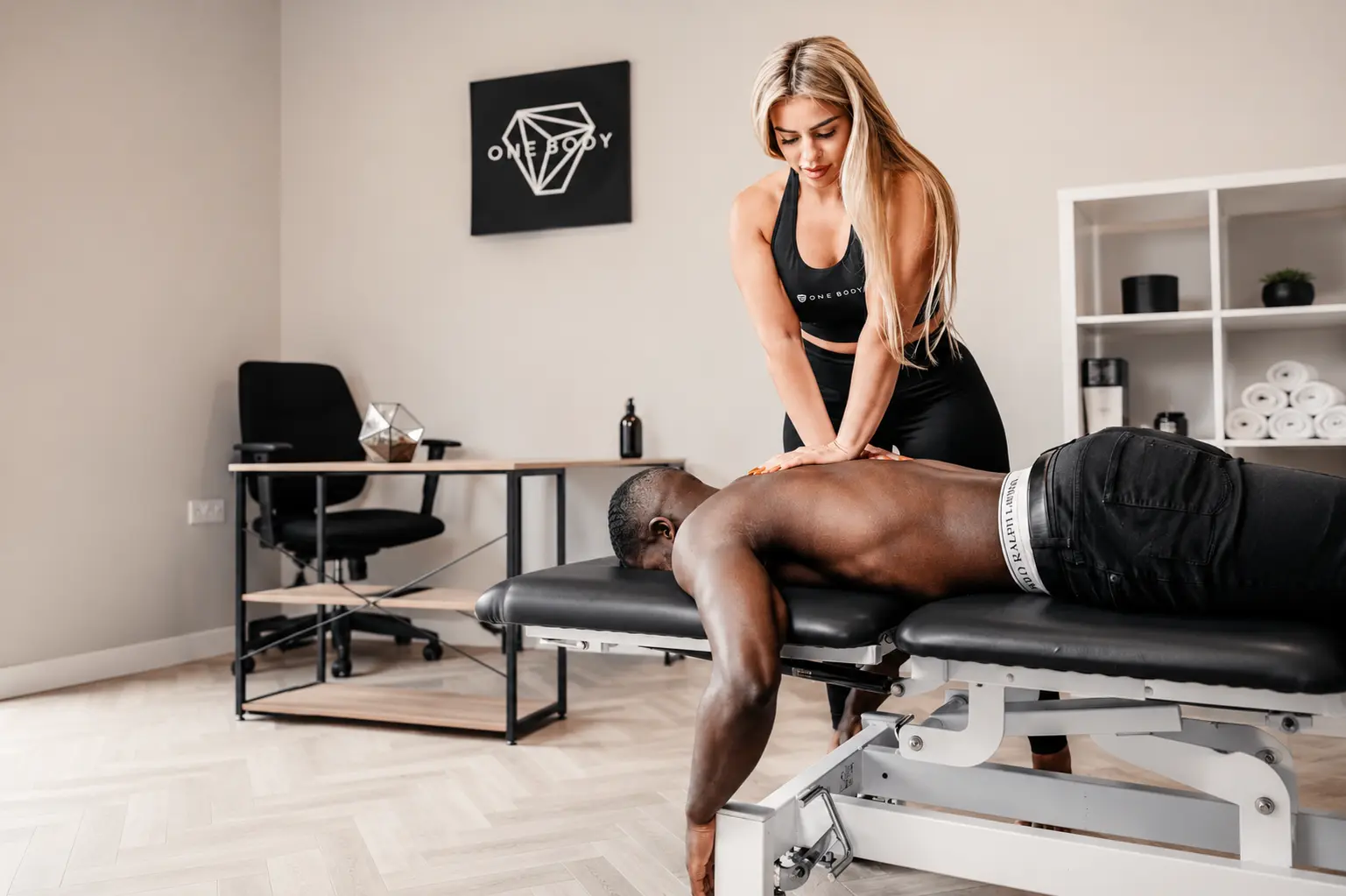
Assessment sorts the source: muscular, joint, rib, referred from the neck, or flagged onward. Treatment then combines hands-on work, joint mobilisation and soft-tissue treatment to genuinely help the stiff, knotted thoracic patterns, with the part that produces lasting change: movement.
Thoracic mobility work restores rotation and extension the region has lost to sitting, strengthening builds the postural endurance the muscles currently lack, and workstation and habit changes stop the daily reloading.
Yoga-style mobility, the open-book, thread-the-needle, cat-cow family, suits the thoracic spine particularly well and is safe to continue through mild symptoms. Our back pain physiotherapy team in London assesses upper back presentations within days through direct access, no GP referral needed.
The prevention story is honest and short: the upper back that stops hurting is the one that moves more and holds positions less. Breaks beat ergonomics, strength beats bracing, and both beat any pillow purchase.
Frequently Asked Questions
Why does my upper back hurt when I sit but not when I stand?
Can anxiety really cause upper back pain?
Could my upper back pain be my lungs or another organ?
Is upper back pain in pregnancy normal?
Why does my upper back hurt after deadlifts or a new gym programme?
How do I get rid of a knot in my upper back?
Can a rounded upper back or bad posture be corrected?
Does cracking or clicking in my upper back mean something is wrong?
Is heat or ice better for upper back pain?
Can my bra or backpack be causing my upper back pain?
Why does my upper back burn between the shoulder blades?
Can osteoporosis cause upper back pain?
Need Help With Upper Back Pain?
Learn more about back pain
References
- National Institute for Health and Care Excellence (NICE). Low back pain and sciatica in over 16s: assessment and management (NG59).
- NHS. Back pain overview.
- Chartered Society of Physiotherapy. Low back pain.
- NHS. Chest pain: when to get help.
- National Institute for Health and Care Excellence (NICE). Osteoporosis: assessing the risk of fragility fracture. Clinical guideline CG146.

Reviewed by Rebecca Bossick, Co-Founder & Clinical Director, HCPC-registered Physiotherapist.
Last reviewed: October 2026