

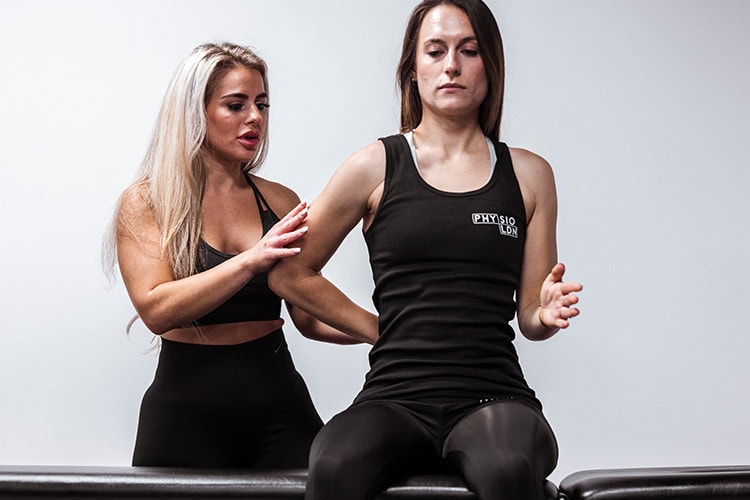

Most elbow pain settles with a few days of rest and sensible activity change. Some does not, and elbow tendon problems in particular are notoriously slow to resolve on their own. Three signals decide when it is time to book: how long the pain has lasted, how much it limits grip and everyday tasks, and how often it keeps returning.
Any one crossing its threshold means book. We put the thresholds first, because with the elbow, waiting rarely helps as much as people hope. Our MCSP-registered team at One Body LDN assesses elbow pain daily across our London clinics, and elbow tendon problems are one of the clearest examples of early assessment shortening the whole recovery.
Key Takeaways
- Elbow pain lasting beyond two to three weeks despite sensible self-care warrants a physiotherapy assessment.
- Pain that limits grip, gripping objects, shaking hands, or turning a doorknob, needs assessment sooner.
- A second episode within a year signals an unresolved driver worth finding.
- Elbow tendon problems are typically slow, so early assessment matters more than with many joints.
- Direct access applies. No GP referral is needed to book an elbow assessment.
The Three Signals That Mean Book Now
Any one of these three thresholds is enough on its own.
Signal 1: Duration
Elbow pain still present after two to three weeks of sensible self-care has declared itself. Tennis elbow and golfer’s elbow are tendon conditions, and tendons heal slowly on their own. Waiting longer rarely brings faster resolution.
Signal 2: Severity
Pain sharp enough to limit grip, gripping a cup, shaking hands, turning a doorknob, or carrying a bag, needs assessment sooner. Severity for the elbow is measured by grip and load tolerance, not just pain at rest.
Signal 3: Recurrence
Elbow pain that settles then returns, especially with the same activity, points to an unresolved load pattern. Recurrence is worth assessing rather than repeating the same rest-and-flare cycle.
Why Elbow Tendon Problems Reward Early Assessment
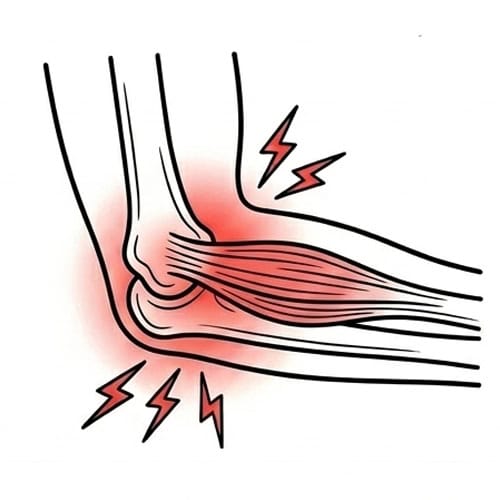
Tendon conditions like tennis elbow and golfer’s elbow are typically slow, and getting the load right early shortens the whole course.
Tendon tissue adapts slowly to both injury and to the right kind of loading. Left alone, an overloaded tendon often settles only partially, flaring again the moment the original activity resumes.
Assessed and staged properly, the same tendon can be guided through a progressive loading programme that actually builds its capacity back up, rather than simply waiting for symptoms to fade.
This is why the duration threshold matters more here than for many other joints. Knowing how to choose the right elbow physio is the first step, because a clinician experienced with tendon conditions specifically will stage the loading correctly from day one.
Matching The Signal To The Cause
Different elbow pain patterns cross these thresholds in slightly different ways.
Outer-elbow pain worse with gripping and lifting points toward tennis elbow. Inner-elbow pain worse with gripping and forearm rotation points toward golfer’s elbow. Numbness or tingling into the ring and little finger points toward a nerve pattern at the elbow rather than a tendon problem, and deserves its own look.
The thread across all of them: grip-related pain that persists or keeps returning has crossed the threshold, whichever structure is involved. Elbow pain with any of these patterns benefits from an assessment that identifies the specific structure rather than treating all elbow pain the same way.
What Happens When You Book
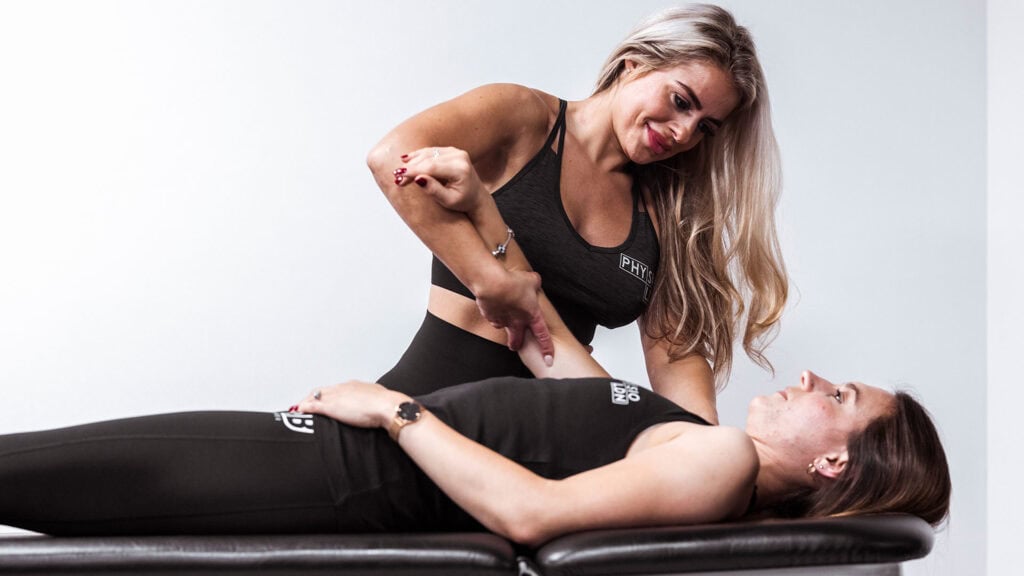
An elbow assessment confirms the source and builds a loading plan matched to it.
Your physiotherapist takes the history, examines the elbow, tests grip and forearm strength, and reaches a working diagnosis.
From there you get a staged plan, usually built around progressive loading rather than rest, because that is what actually restores a tendon’s tolerance. Our elbow pain team in London assesses new presentations within days through direct access, no referral needed.
Note. Some elbow symptoms need medical care before any physiotherapy booking. Seek urgent GP or A&E care for an elbow injury with visible deformity or inability to move it after a fall, a hot swollen elbow with fever, or sudden weakness or numbness spreading down the arm.
Physiotherapists screen for these at first assessment and refer onward the same day when they appear. Contact NHS 111 when unsure.
Frequently Asked Questions
We answer the timing questions elbow pain patients ask most.
How long should I wait before seeing a physio for elbow pain?
Two to three weeks of sensible self-care is the general threshold, and sooner if grip is affected or the pain keeps returning. Elbow tendon problems are typically slow to resolve alone, so waiting rarely brings faster results than an early assessment would.
Should I just rest my elbow and see if it gets better?
Complete rest often leads to only partial improvement, because tendons need the right kind of loading to rebuild properly. A brief period of easing the aggravating activity is reasonable, but persistent elbow pain usually benefits more from assessment than from waiting it out.
Do I need a referral to see a physio for elbow pain?
No, private physiotherapy runs on direct access, so you book the assessment yourself. Insurance-funded care sometimes needs pre-authorisation from your insurer first. Self-pay patients book directly.
References
- National Health Service. Elbow pain: causes and when to get help.
- National Institute for Health and Care Excellence. Tendinopathy: assessment and management guidance.
- Chartered Society of Physiotherapy. Direct access to physiotherapy.
- Health and Care Professions Council. The register of physiotherapists.
