



The word tear does more damage than most rotator cuff injuries. A scan report says tear, the mind says surgery, and neither step follows from the other. The honest picture has three parts. Strains, overloaded cuff tissue that recovers in weeks, are common and behave predictably.
Tears come in two kinds that share a name and little else: sudden traumatic tears with immediate weakness, which deserve prompt assessment, and gradual wear-related tears, which are so common with age that scans find them in plenty of shoulders that feel fine.
Function sorts the three better than fear does, and better than imaging does. What your shoulder can do, and how the problem began, decides the pathway, and the word on a scan report decides almost nothing by itself.
Key Takeaways
- A strain is overloaded cuff tissue that recovers over weeks. A tear is a structural disruption, traumatic or wear-related.
- Sudden injury with immediate real weakness points to a traumatic tear and books promptly.
- Gradual shoulder pain with preserved strength usually points to a strain or irritated tendon.
- Cuff tears appear on scans of many pain-free shoulders, and the share rises with age.
- Most wear-related tears do well with rehabilitation, while traumatic tears warrant an early opinion.
Strain Or Tear: The Functional Tells
How it started and what the arm can still do sort the cuff faster than any scan.
Three questions carry the sorting. Was there a moment? A fall, a heavy catch, a wrench of the arm, followed immediately by pain and weakness, points toward a traumatic tear. Pain that crept in after a heavy week of overhead work, gym pressing, or hedge cutting points toward a strain or irritated tendon.
Is there true weakness? Pain making a movement unpleasant is different from the arm genuinely failing: unable to lift sideways to shoulder height, unable to hold the arm up against light pressure. Real weakness, especially after an injury, is the tell that escalates.
Does it behave like tissue recovering? Strains improve week on week with sensible load management. A shoulder unchanged after several weeks, or an arm that stays weak, has earned an assessment whatever the starting story.
The Two Kinds Of Tear
Traumatic and wear-related tears share a name, and almost nothing else that matters.
A traumatic tear happens to a healthy tendon in one moment, usually a fall onto the arm or a sudden violent load, and typically in a younger or middle-aged shoulder. Pain and weakness arrive together, and this is the tear where timing matters: significant traumatic tears do best when assessed early, because surgical repair, where needed, works best on fresh injuries.
Prompt assessment is the honest advice, not watchful waiting. A wear-related tear is a different event entirely: tendon tissue thinning gradually over years, often painlessly, until a tear exists that no single moment created.
These tears are part of how shoulders age, many cause no symptoms at all, and the ones that do hurt usually respond well to strengthening the muscle around the remaining healthy tendon. Same word on the report. Different problem, different urgency, different pathway.
Why A Scan Alone Cannot Decide It
Cuff tears appear on scans of many pain-free shoulders, so the image needs the story.
Imaging studies of adults with no shoulder pain routinely find rotator cuff tears, and the proportion climbs steadily with age, to the point where a tear on the scan of an older shoulder is closer to expected than alarming.
The consequence follows the same logic our guides on knees, hips, and spines keep returning to: a scan finding a tear does not prove the tear is the pain source, and treating the image rather than the person leads care in the wrong direction.
Assessment reads it properly, testing whether the weak movement matches the torn tendon, whether the story fits the finding, and whether the pain behaves like the tear or like its neighbours. Scans earn their place when the result would change the plan, chiefly after trauma with real weakness, or when a proper rehabilitation course has genuinely failed.
Do Rotator Cuff Tears Need Surgery?
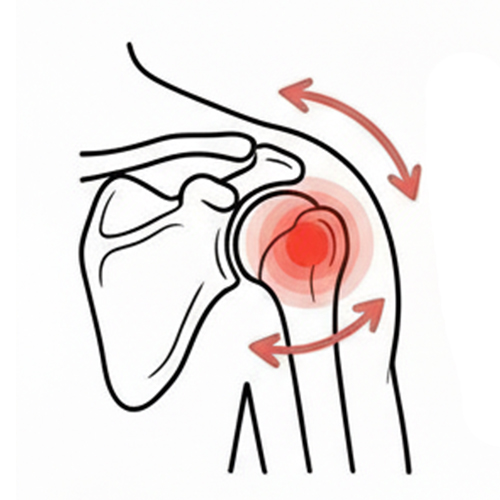
Most wear-related tears do well without surgery, and honest care escalates the ones that need more.
The evidence supports a staged answer. Wear-related tears, including many full-thickness ones in older shoulders, respond well to structured rehabilitation, because the remaining cuff and surrounding muscles can be strengthened to do the job, and trials comparing rehab against surgery for these tears show comparable outcomes for many people.
Traumatic tears in younger and active shoulders sit differently, and early surgical opinion is often the right call there, which a good clinician says plainly rather than defaulting to more sessions. Between the two sit shoulders that start with rehabilitation and escalate when progress genuinely stalls.
The pathway through all three runs on assessment, staging, and honesty about which group you are in, exactly what our rotator cuff physiotherapy in London is built around. Night pain lying on the shoulder, common across cuff problems, is mapped in our guide to shoulder pain at night, and a shoulder losing passive movement rather than strength points toward a different condition entirely, covered in our guide to frozen shoulder stages. Our shoulder pain team in London assesses cuff presentations within days through direct access, no referral needed, and traumatic-weakness stories go to the front of that queue.
Note. Some shoulder symptoms need medical review rather than tear-versus-strain sorting. Seek urgent medical advice for shoulder or left arm pain arriving with chest tightness, breathlessness, or sweating, as this can signal a heart problem. Seek urgent care for a shoulder that cannot move after a fall, visible deformity, or a hot swollen shoulder with fever. Seek prompt assessment for sudden weakness after injury, and GP review for shoulder pain with unexplained weight loss, a lump, or severe unrelenting night pain. Physiotherapists screen for all of these at first assessment and refer onward the same day when they appear. Contact NHS 111 when unsure.
Frequently Asked Questions
We answer the cuff questions patients ask most.
How do I know if my rotator cuff is torn or just strained?
The onset and the strength tell you most: a sudden injury with immediate real weakness points to a tear, while gradual pain with preserved strength points to a strain. Strains improve week on week with sensible management. An arm that stays weak, or a shoulder unchanged after several weeks, deserves assessment.
Can a rotator cuff tear heal on its own?
Torn tendon tissue does not knit back together by itself, and many tears become comfortable and fully functional without surgery. Rehabilitation strengthens the remaining cuff and surrounding muscles to do the job. Comfort and function, not scan appearance, are the honest goals.
What does a rotator cuff strain feel like?
An aching shoulder after a jump in load, sore lifting the arm overhead or lying on that side, with strength essentially preserved. Onset is gradual rather than a single moment. Sensible load management usually settles it over weeks, and persistence beyond that earns an assessment.
When does a rotator cuff tear need urgent attention?
A sudden injury followed by significant weakness, particularly an arm that cannot lift sideways to shoulder height, warrants prompt assessment. Traumatic tears do best when evaluated early, because repair, where needed, works best on fresh injuries. Gradual-onset shoulders can book at the normal pace.
References
- National Health Service. Rotator cuff injury: symptoms and treatment.
- National Institute for Health and Care Excellence. Shoulder pain and rotator cuff disorders: clinical knowledge summary.
- British Elbow and Shoulder Society. Rotator cuff tear management guidance.
- Chartered Society of Physiotherapy. Direct access to physiotherapy.
