



Night is the shoulder’s loudest hour. Problems that stay manageable through a busy day wake people at 2am, and the pattern of that waking carries real information. Pain only when lying on that side tells one story. A deep ache that ignores every position tells another.
Waking only when you roll or reach in your sleep tells a third. Matching your night pattern is the fastest route to understanding the problem, so we put the matcher first. Our MCSP-registered team at
One Body LDN assesses shoulder pain across our London clinics, and night pain is the symptom that brings more shoulders through the door than any other.
Key Takeaways
- Night shoulder pain follows patterns, and the pattern points toward the source.
- Pain mainly when lying on that side points toward the rotator cuff and the structures it compresses.
- A deep ache that ignores position, with growing stiffness, fits the frozen shoulder pattern.
- Night shoulder pain tends to persist while its cause waits, so it earns assessment early.
- A small set of night symptoms needs medical review first, listed at the end.
Why Does My Shoulder Hurt More At Night?
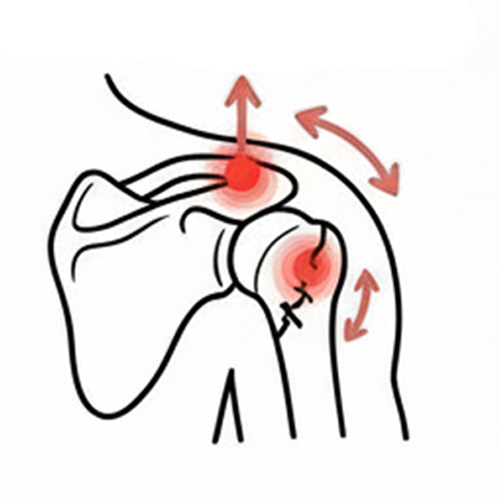
Three mechanisms make night the shoulder’s worst time.
Lying down changes the physics. Side-lying compresses the shoulder directly under body weight, loading the very tendons that are already irritated. Stillness removes the gentle movement that keeps a shoulder comfortable through the day, so sensitivity builds.
And distraction disappears, so signals the busy day masked get heard. None of this means night pain is imagined or inflated.
The opposite: a shoulder that reliably wakes you has a genuine source, and the way it wakes you, position-dependent or positionless, is the clue worth reading before anyone examines it.
Shoulder Pain When Lying On That Side
Pain compressed out of the shoulder by lying on it points toward the rotator cuff.
The most common night pattern: comfortable enough until you lie on the affected shoulder, then an ache or sharp pain that forces you onto the other side. Body weight compresses the tendons of the rotator cuff and the tissue around them, which is exactly where load-related shoulder problems live.
The same shoulders usually complain with overhead reaching and behind-the-back movements during the day. The pattern fits rotator cuff problems, and it responds to assessment and staged strengthening rather than waiting.
Short term, sleeping on the other side with a pillow supporting the sore arm eases the nights while the actual plan does the fixing.
Night Shoulder Pain That Ignores Position
A deep ache in every position, with growing stiffness, fits the frozen shoulder pattern.
The second pattern refuses to be positioned away. A deep, gnawing ache that finds you on your back, your side, and everywhere between, often paired with a shoulder that is progressively losing movement, reaching behind the back, fastening a seatbelt, and lifting the arm.
Position-independent night pain plus advancing stiffness is the signature of a frozen shoulder, and it is the night pattern that should be booked soonest, because early assessment shapes how the months ahead run.
A shoulder waking you nightly while quietly stiffening has said everything it needs to. The assessment confirms the stage and starts the right plan for it.
When Night Shoulder Pain Means Book An Assessment

Night pain is a severe signal in its own right, and two patterns book immediately.
The general thresholds for shoulder assessment, duration, recurrence, and night pain, among others, are set out in our guide to when to see a physio for shoulder pain. For night pain specifically, the rule tightens.
Book promptly for any shoulder pain that wakes you more than twice a week beyond a fortnight, because night-dominant problems rarely settle unattended. Book immediately for the positionless-ache-plus-stiffening pattern above.
The assessment tests movement, strength, and pattern, separates the cuff story from the stiffening story, and stages the plan. Persistent night shoulder pain responds to treating its source, not to better pillows, and our shoulder pain team in London assesses night-pattern shoulders within days through direct access, no referral needed.
Note. Some night shoulder symptoms need medical review rather than a physiotherapy booking. Seek urgent medical advice for shoulder or left arm pain arriving with chest tightness, breathlessness, or sweating, at night or any time, as this can signal a heart problem.
Seek GP review for night shoulder pain with unexplained weight loss, fever, a lump, or constant unrelenting pain no position or movement changes. Seek urgent care for night pain following a significant injury with the inability to move the arm. Physiotherapists screen for all of these at the first assessment and refer onward the same day when they appear. Contact NHS 111 when unsure.
Frequently Asked Questions
We answer the night shoulder pain questions that patients ask most.
Why does my shoulder hurt at night but not during the day?
Lying down compresses the shoulder, stillness builds sensitivity, and distraction falls away, so night exposes problems the day masks. The pattern of waking carries the clue: position-dependent pain points toward the rotator cuff, positionless ache toward a stiffening shoulder.
How should I sleep with shoulder pain?
Short term, sleep on the unaffected side with a pillow supporting the sore arm, or on your back with the arm slightly raised on a pillow. Positioning eases nights but treats nothing. A shoulder that keeps waking you has a source worth assessing.
Is shoulder pain at night serious?
Night pain is a severity signal worth acting on, though most causes are treatable shoulder problems rather than anything sinister. The exceptions are listed in the note below. A positionless ache with progressive stiffness should be assessed promptly.
References
- National Health Service. Shoulder pain: causes and when to get help.
- National Institute for Health and Care Excellence. Shoulder pain and frozen shoulder: assessment guidance.
- Chartered Society of Physiotherapy. Direct access to physiotherapy.
- Health and Care Professions Council. The register of physiotherapists.
