



Heel pain has one famous name and several quieter causes, and the famous name absorbs them all. Plantar fasciitis is common enough that under-heel pain arrives at clinics pre-diagnosed, and a meaningful share of those heels turn out to be something else: a worn fat pad, an irritated nerve, or occasionally a bone problem.
The label matters because the plans differ, and a fat pad treated as fascia goes nowhere for months. One rule does most of the sorting, and almost nobody uses it: timing beats location. First-steps pain, worse-the-longer-you-stand pain, and burning night pain are three different heels. Match yours below, then let the assessment settle it.
Key Takeaways
- Under-heel pain has four main causes: plantar fasciitis, fat pad problems, nerve irritation, and less commonly bone stress.
- Timing sorts heel pain better than location: when it hurts points to what hurts.
- First-steps pain after rest is the plantar fasciitis signature.
- Pain that worsens the longer you stand points toward the fat pad.
- Burning or tingling heel pain points toward a nerve, and heel spurs on X-rays are usually bystanders.
When Your Heel Hurts: The Timing Matcher
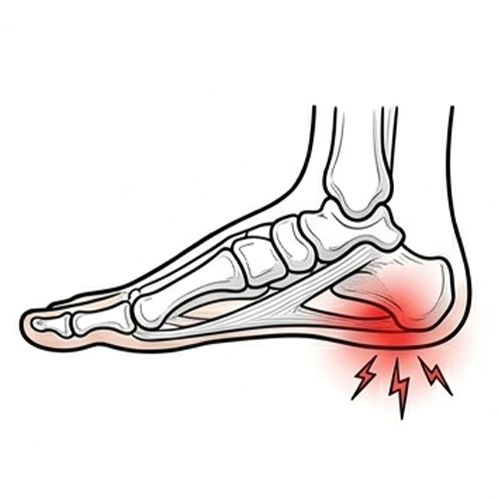
Four timing patterns cover most under-heel pain, and each names its own suspect.
Sharp Pain On First Steps, Easing As You Walk
Stabbing under-heel pain with the first steps out of bed or after sitting, warming up within minutes, returning after the next rest. The plantar fasciitis signature, mapped fully with home tests in our guide to plantar fasciitis symptoms and self-testing.
Pain That Builds The Longer You Stand
A bruised, walking-on-a-stone feeling in the centre of the heel that worsens through a day on your feet, hates hard floors and bare feet, and eases with cushioned shoes. Points toward the fat pad.
Burning, Tingling Or Electric Heel Pain
Heel pain with a nerve quality, burning, pins and needles, or numbness, sometimes spreading along the inner heel or arch, and sometimes loudest at night. Points toward an irritated nerve rather than the fascia.
A Deepening Ache That Worsens With Every Run
Heel pain building steadily with impact load, tender when the heel bone is squeezed from the sides. Points toward bone stress and needs prompt review rather than self-sorting.
Fat Pad Pain: The Bruised-Stone Heel
The heel’s natural cushion can thin or bruise, and the pattern reverses plantar fasciitis.
Beneath the heel bone sits a specialised fat pad, the body’s own shock absorber, and age, impact, or a hard landing can thin or irritate it. The pattern is close to a mirror of fascia pain. Fat pad heels feel fine on first steps and worsen the longer you stand.
The sore spot sits in the centre of the heel rather than the inner front edge. Hard surfaces and bare feet aggravate it, cushioning relieves it, and the feeling people report is walking on a pebble or a bruise. Fascia heels warm up. Fat pad heels wear down. That single reversal sorts more heels than any scan, and it changes the plan entirely, because fat pad care centres on cushioning and load, not the stretching and loading a fascia wants.
The Heel Spur Myth
Heel spurs appear on X-rays of pain-free heels, and the spur is rarely the pain.
The X-ray finds a bony spur under the heel, the report names it, and the spur takes the blame. The evidence tells a different story. Heel spurs show up in plenty of people with no heel pain at all, and plenty of painful heels have no spur.
The spur is a consequence: bone responding to years of load through the fascia’s attachment, a footprint of load rather than the source of pain. Painful heels with spurs are treated the same way as painful heels without them, by treating the overloaded tissue, and the spur usually stays exactly where it is while the pain resolves. A scan finding deserves the same question every time: does this finding explain this pattern? With heel spurs, the honest answer is usually no.
Nerve-Related Heel Pain: The Burning Heel
Nerve pain in the heel burns, tingles, and follows its own rules, including at night.
Small nerves run beneath and beside the heel, and an irritated one produces a different pain language: burning, electric jolts, pins and needles, or numb patches along the inner heel or arch. Two tells separate nerve heels from fascia heels.
Quality: nerve pain feels strange rather than sore, and pressing the classic fascia spot often finds nothing. Timing: nerve pain can ignore the rest-and-first-steps rhythm entirely and turn up at night, a pattern our guide to foot pain at night maps across the whole foot.
Burning in both heels or both feet together points beyond a local nerve toward body-wide causes and starts with a GP. One boundary note: pain at the back of the heel, rather than underneath, belongs to a different set of causes with its own guide coming in this series.
When Heel Pain Needs An Assessment

Persistent heel pain deserves a diagnosis, because the four causes need four different plans.
Book an assessment for under-heel pain persisting beyond two to three weeks despite sensible self-care, pain that is changing how you walk, or a pattern that keeps returning. Book promptly for the bone-stress story, heel pain worsening with every run and tender to squeeze, and for burning in both feet.
Assessment tests the fascia, the fat pad, and the nerves directly, checks the foot as a whole, and matches the plan to the actual source. Recovery timelines differ by diagnosis too, and our guide to how long plantar fasciitis lasts covers the honest ranges for the most common one.
Our foot pain team in London assesses heel presentations within days through direct access, no referral needed, and the first job is always the same: confirming which heel you actually have.
Note. Some heel symptoms need medical review rather than self-sorting. Seek prompt review for heel pain after a fall or landing from height, heel pain worsening with every run and tender when the heel bone is squeezed, or a hot swollen heel with fever. See a GP for burning or numbness in both feet, or heel pain with unexplained weight loss or night pain unrelated to position. Seek urgent care for a foot turning cold, pale, or numb, or new wounds on the foot of anyone with diabetes. Physiotherapists screen for all of these at first assessment and refer onward the same day when they appear. Contact NHS 111 when unsure.
Frequently Asked Questions
We answer the heel pain questions patients ask most.
How do I know if my heel pain is plantar fasciitis or something else?
Timing sorts it fastest: plantar fasciitis stabs on first steps after rest and eases as you walk, while fat pad pain builds the longer you stand. Burning or tingling points to a nerve. An assessment confirms the source by testing each structure directly.
Do heel spurs cause heel pain?
Usually no. Heel spurs appear on X-rays of many pain-free people, and painful heels often have no spur. The spur is bone responding to years of load, a bystander rather than the cause. Treatment targets the overloaded tissue, and the spur stays put while the pain resolves.
Why does my heel feel bruised when I stand?
A bruised, stone-under-the-heel feeling that worsens with standing points toward the fat pad, the heel’s natural cushion. Hard floors and bare feet aggravate it, cushioning eases it. The pattern reverses plantar fasciitis, which hurts most on first steps and warms up.
Can heel pain come from a nerve?
Yes, irritated nerves under and beside the heel produce burning, tingling, or electric pain, sometimes loudest at night. Nerve heels often lack the classic fascia sore spot. Burning in both feet together points to body-wide causes and starts with a GP.
References
- National Health Service. Heel pain: causes and treatment.
- National Institute for Health and Care Excellence. Plantar fasciitis and heel pain: clinical knowledge summary.
- Chartered Society of Physiotherapy. Direct access to physiotherapy.
- Health and Care Professions Council. The register of physiotherapists.
