


Neck pain and shoulder pain arrive together often enough that most people treat them as one thing. Sometimes they are. A single structure in the neck can send pain into the shoulder, and a shoulder that is guarding can pull the neck muscles tight. Sometimes they are two separate problems that happen to overlap, and treating one does nothing for the other.
The distinction decides the treatment. This guide gives you the three patterns we see when neck and shoulder pain present together, and a short set of movement checks that tells you which one you have.
Key takeaways
- Concurrent neck and shoulder pain follows one of three patterns: a single source referring to both areas, a shared driver loading both, or two separate problems.
- Neck structures refer pain into the shoulder far more often than shoulder structures refer pain into the neck.
- The upper trapezius and levator scapulae span both areas, so sustained load on either produces pain in both.
- Which movement changes the pain identifies the source. Neck movement points to the neck. Arm elevation points to the shoulder. Both point to the shoulder blade.
- Pain in both areas that no movement changes is not a neck or shoulder problem and needs medical assessment.
Why the two areas so often hurt together
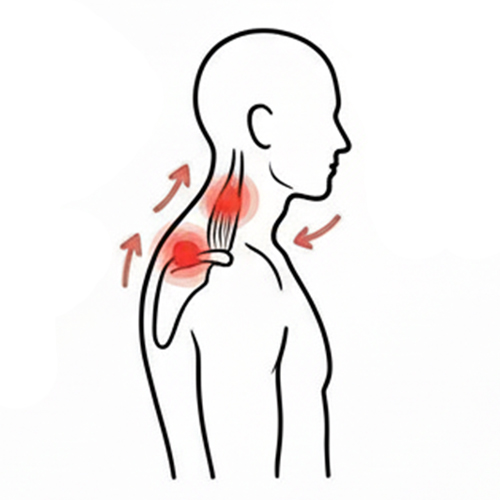
The neck and shoulder share muscles, nerves, and a common anchor in the shoulder blade, so a problem in one is felt in the other.
Three links connect them:
- Shared muscles. The upper trapezius runs from the base of the skull to the outer shoulder. The levator scapulae runs from the upper neck to the top corner of the shoulder blade. Tension in either is felt as neck pain and shoulder pain at the same time.
- Shared nerves. The nerves that leave the neck at C4, C5, and C6 supply the skin and muscles of the shoulder. Irritation at the neck is felt where those nerves end.
- A shared anchor. The shoulder blade is the base the neck muscles pull against and the platform the arm moves on. If it sits in the wrong position, the neck works harder and the shoulder’s space narrows at the same time.
That shared anatomy is why neck pain and shoulder pain are so often reported together, and why the direction of referral matters.
Pattern 1: One source, two areas
In most concurrent presentations, the neck is the source and the shoulder pain is referred.
From the neck into the shoulder
The small facet joints and discs of the lower neck refer pain into the top of the shoulder and the shoulder blade. Studies that stimulated individual cervical facet joints in volunteers produced pain over the shoulder girdle from the C4-5 and C5-6 levels. No shoulder structure was involved. The person feels shoulder pain because the brain maps it there.
Nerve root irritation at the same levels produces a sharper version. Pain runs from the neck over the top of the shoulder and down the outer arm, often with pins and needles. This is the cervical radiculopathy pattern and is treated through the neck, via our cervical radiculopathy pathway, not the shoulder.
From the shoulder into the neck
Shoulder structures rarely refer pain above the shoulder. What happens instead is guarding. A painful shoulder is held still and slightly raised. The upper trapezius and levator scapulae hold it there all day, fatigue, and start to ache. The neck pain is real, but it is the cost of protecting the shoulder, and it resolves when the shoulder is treated.
The tell for this pattern: the shoulder pain came first, often with a clear cause such as reaching or lifting, and the neck pain followed days or weeks later.
Moving from the neck to the shoulder, the second pattern involves neither as the source.
Pattern 2: A shared driver loading both
When the shoulder blade sits forward and down, the neck is overloaded and the shoulder space is narrowed at the same time.
The shoulder blade should rest flat against the ribcage with its top edge level. In a lot of people it tips forward and drops. The consequences arrive in both areas at once.
For the neck: the levator scapulae and upper trapezius are now holding the weight of the arm from a poor angle, and the lower neck is pulled into a forward position. The neck aches, particularly at the end of the day.
For the shoulder: a forward-tipped blade brings the bony arch of the shoulder down over the cuff tendons. The space narrows and the tendons are compressed on elevation. This is the mechanism behind many cases of shoulder impingement, and the shoulder impingement presentation often comes with neck pain for exactly this reason.
The tell for this pattern: both pains build through the day, both ease with rest, and neither has a clear single cause. Treating either area alone gives short-term relief. Treating the shoulder blade changes both.
Pattern 3: Two separate problems
Over the age of 50, age-related change in the neck and a rotator cuff problem in the shoulder are both common enough to coincide.
Cervical spondylosis, the wear-related change in the neck’s discs and joints, is common after 40. Rotator cuff degeneration is common after 50. A person with both has two conditions, two sets of triggers, and two treatment plans. The neck pain follows the neck’s rules: morning stiffness, worse looking up or turning. The shoulder pain follows the shoulder’s rules: worse reaching overhead or lying on that side.
The tell for this pattern: the two pains behave independently. A good neck day is not a good shoulder day.
Three checks to find your pattern
Which movement changes the pain tells you which pattern you have.
- Neck movement check. Sit upright. Turn the head fully each way, then look up and down. Does the shoulder pain change? If yes, the neck is involved in the shoulder pain. Pattern 1.
- Arm elevation check. Keep the neck still. Raise the painful arm forward and out to the side. Does the neck pain change? If yes, the shoulder is driving the neck pain. Pattern 1, shoulder first.
- Shoulder blade check. Gently draw the shoulder blades back and down and hold for 30 seconds. Does either pain ease? If yes, the blade is the shared driver. Pattern 2.
If neck movement changes only the neck pain and arm movement changes only the shoulder pain, you have two separate problems. Pattern 3.
If neither movement changes either pain, the pain is not coming from the neck or shoulder. See the note at the end.
What treatment looks like for each pattern
Treatment follows the source, not the location of the pain.
- Pattern 1, neck source: restore neck movement, settle the joint or nerve root driver, and let the referred shoulder pain resolve with it. Shoulder exercises are not the treatment.
- Pattern 1, shoulder source: treat the shoulder and release the guarding muscles. The neck pain goes when the shoulder stops needing protection.
- Pattern 2: retrain shoulder blade position and control. Both areas improve together.
- Pattern 3: two plans, run in parallel.
Our concurrent neck and shoulder physiotherapy assessment tests all three patterns in one appointment, because the wrong pattern means the wrong plan.
Frequently asked questions
Can neck pain cause shoulder pain?
Yes. The facet joints, discs, and nerve roots of the lower neck refer pain into the top of the shoulder and the shoulder blade. This is the most common reason the two areas hurt together, and the treatment is directed at the neck.
Can shoulder pain cause neck pain?
Indirectly. A painful shoulder is guarded by the upper trapezius and levator scapulae, and those muscles ache from holding it. The neck pain resolves when the shoulder is treated.
Why do my neck and shoulders hurt at the same time?
Because the two areas share muscles, nerves, and the shoulder blade as a common anchor. One source can refer to both, a forward-tipped shoulder blade can load both, or two separate problems can overlap.
Is neck and shoulder pain a sign of something serious?
Rarely. Pain that changes with neck or arm movement is mechanical. Pain in both areas that no movement changes, or that comes with chest pain, breathlessness, fever, or weakness, needs medical assessment.
Should I see a physio for neck and shoulder pain together?
Yes, and the assessment should test both areas and the shoulder blade, because the treatment depends on which pattern you have. Treating the painful area without finding the source is why concurrent neck and shoulder pain so often comes back.
Book a neck and shoulder assessment
Neck and shoulder pain together is one presentation with three possible causes. The One Body LDN neck and shoulder team assesses the neck, the shoulder, and the shoulder blade in one appointment and tells you which pattern you have before treatment starts. You can book a neck and shoulder assessment at any of our London clinics without a GP referral.
Note: neck and shoulder pain that needs medical care first
Call 999 if pain across the neck, shoulder, or left arm comes on with chest tightness, breathlessness, sweating, or nausea.
Contact NHS 111 or a GP urgently if neck and shoulder pain comes with:
- Weakness or numbness in both arms, clumsy hands, or a change in walking
- Fever, a stiff neck, and headache
- Pain that no position or movement changes, especially at night
- Unexplained weight loss or a history of cancer
References
- NHS. Neck pain and stiff neck.
- NHS. Shoulder pain.
- Dwyer A, Aprill C, Bogduk N. Cervical zygapophyseal joint pain patterns. I: A study in normal volunteers. Spine 1990;15(6):453-457.
- Cooper G, Bailey B, Bogduk N. Cervical zygapophysial joint pain maps. Pain Medicine 2007;8(4):344-353.
- NHS. Cervical spondylosis.
