

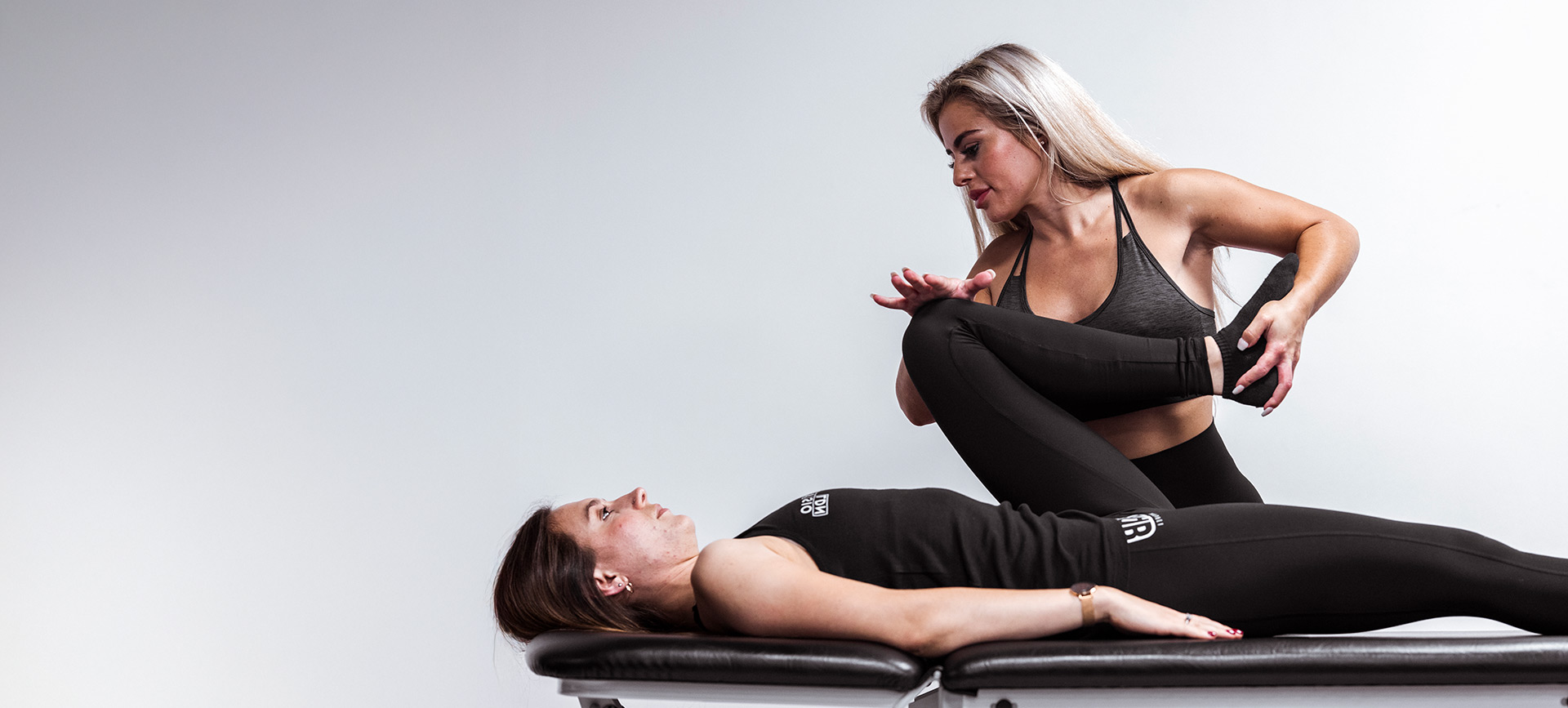

Your knee is fine when you walk and fine when you stand, and then you crouch to pick something up, kneel to tie a shoe or sit back into a chair and the pain arrives. Knee pain when bending comes from the structures that are compressed or stretched as the knee flexes: the kneecap against the thigh bone in the first half of the bend, the meniscus and the back of the joint in the deepest part.
Where the pain sits and at what point in the bend it starts narrow the cause to two or three possibilities before any test is done. This guide sets out which causes produce pain at which depth of bend, how the location of the pain changes the answer, how to check it at home, how each cause is treated and when a knee that hurts to bend needs to be assessed.
Key takeaways
- Knee pain in the first half of a bend, at the front of the knee, is most often patellofemoral pain; pain only in a deep bend points to the meniscus, the back of the joint or a Baker’s cyst.
- Pain on the inner joint line when bending and twisting, with catching or clicking, is the pattern of a meniscal irritation or tear.
- Pain when kneeling or bending with swelling at the front of the kneecap points to prepatellar bursitis or fat pad irritation rather than the joint itself.
- A knee that hurts to bend after sitting and on stairs responds to hip and quadriceps strengthening over 6 to 12 weeks in most people.
- A knee that will not bend or straighten fully, that is locked, or that swelled within hours of a twist needs assessment within days.
Why does the knee hurt when bending but not when walking?
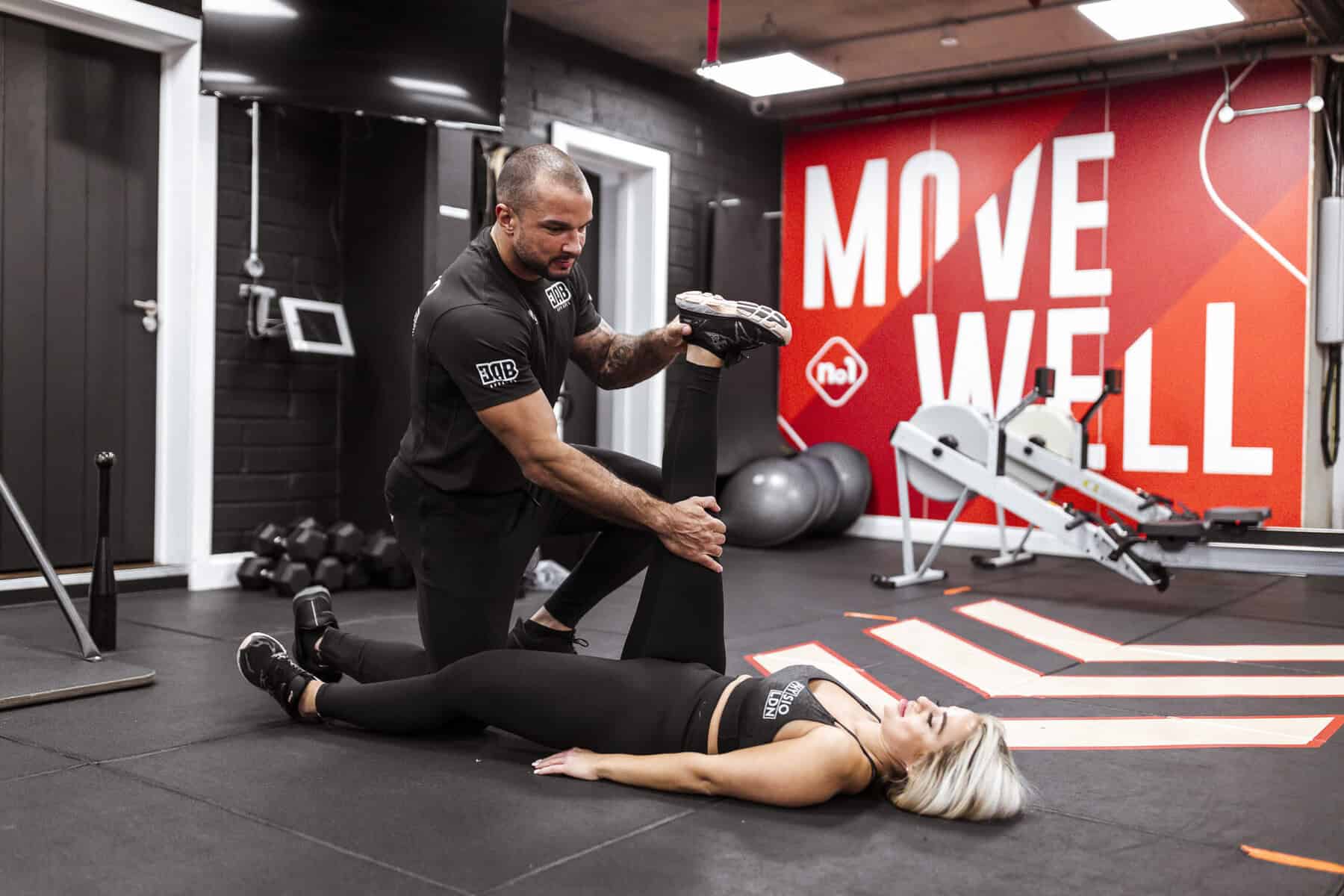
The knee hurts when bending because flexion compresses the kneecap against the thigh bone and squeezes the meniscus and the back of the joint, and walking uses only the first 60 degrees of that movement. A knee that walks without pain and hurts to crouch is a knee whose problem lives in the deeper half of its range.
The kneecap. Pressure between the kneecap and the thigh bone rises steeply as the knee bends past 30 degrees and peaks near 90 degrees. Pain from the patellofemoral joint therefore appears in squats, chairs and stairs and is absent on flat walking.
The meniscus. The two menisci are pushed backwards and compressed as the knee bends fully. A frayed or torn meniscus is pinched at the end of the bend and when the shin twists, which is why the pain arrives in a deep crouch, when kneeling, or when turning with the foot planted.
The back of the knee. The hamstring tendons, the joint capsule and any swelling behind the knee are squeezed in full flexion. A Baker’s cyst gives tightness rather than sharp pain, and the knee feels full when bent.
Which causes produce pain at which point in the bend?
The depth of bend at which pain starts separates the common causes of knee pain when bending.
| When the pain starts | Where it is felt | Most likely cause |
| Early in the bend, 30 to 90 degrees, worse after sitting | Front, around or behind the kneecap | Patellofemoral pain |
| Early in the bend, with a tender spot below the kneecap | Front, just below the kneecap | Patellar tendinopathy or fat pad irritation |
| Deep bend only, with catching or clicking | Inner or outer joint line | Meniscal irritation or tear |
| Deep bend only, tight and full rather than sharp | Behind the knee | Baker’s cyst or hamstring tendon irritation |
| Kneeling or direct pressure on the kneecap | Front of the kneecap, with a soft swelling | Prepatellar bursitis |
| Through the whole range, stiff in the morning, over 45 | Whole knee or inner side | Knee osteoarthritis |
| Any bend after a twist, with swelling and the knee unable to straighten | Whole knee | Displaced meniscal tear or ligament injury |
Our knee pain causes and treatment guide covers each diagnosis in full. Pain that is worse on stairs than in a squat has its own pattern, and our guide on knee pain going down stairs explains why the descent loads the kneecap most.
How do you check knee pain when bending at home?
Three movements performed slowly, with the depth and location of pain noted at each, tell you which row of the table you are in. Stop any movement that produces sharp pain or a sense of the knee catching.
The sit-to-stand. Sit on a dining chair with the knee bent for 15 minutes, then stand without using your hands. Pain at the front of the knee on standing, easing after a few steps, is the patellofemoral pattern.
The slow squat. Squat as low as you comfortably can, holding a door frame for balance. Note the depth at which pain begins. Pain between a quarter and half squat at the front is patellofemoral. Pain only at the bottom, at the joint line or behind the knee, points to the meniscus or the back of the joint. Pain that appears on the way up rather than the way down points to the quadriceps tendon.
The kneel and twist. Kneel on a cushion, then sit back onto your heels. Sharp pain on the inner or outer joint line, or a click you can feel, points to the meniscus, and our meniscus tear symptoms and self-test guide takes the check further. Pain at the front of the kneecap under pressure alone points to the bursa.
How is knee pain when bending treated?
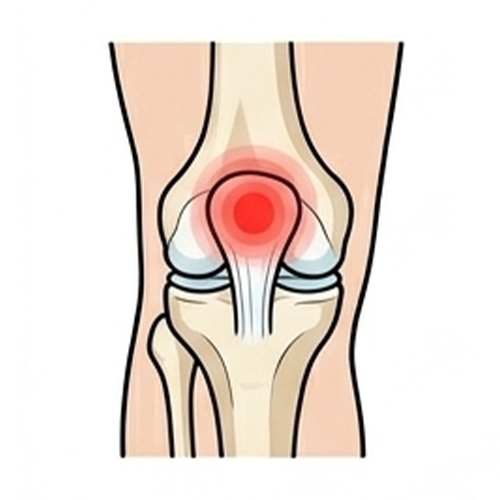
Knee pain when bending is treated by reducing the depth and frequency of the bend that provokes it, strengthening the hip and quadriceps, and then restoring the full bend in stages over 6 to 12 weeks. The programme differs by cause, and a scan is rarely needed to start it.
Patellofemoral pain. Shorten the time spent sitting with the knee bent, break long sitting with a straight-leg stretch, and avoid deep squats for the first two to three weeks. Strengthen the hip abductors and the quadriceps through a pain-tolerable range, then add depth. The 2018 international consensus on patellofemoral pain names exercise targeting both hip and knee as the treatment with the strongest evidence.
Meniscal irritation. Avoid deep squats, kneeling and pivoting on the planted foot while the joint line is tender. Strengthen the quadriceps and hamstrings in the pain-free range, then add depth as the catching settles. Most degenerative meniscal tears in adults over 40 settle with this approach, and surgery is reserved for a knee that locks.
Knee osteoarthritis. Keep bending within comfort and keep the knee moving every day. NICE guideline NG226 names exercise, weight management and education as the core treatment, and the loss of full bend in osteoarthritis is slowed by using the range you have.
Bursitis and fat pad irritation. Take the pressure off the front of the knee with a kneeling pad or a change in position, settle the swelling, then return to kneeling gradually. A fat pad that is pinched when the knee straightens fully responds to taping and to avoiding locked-knee standing.
What we tell you at the assessment. Most knee pain when bending settles inside 12 weeks once the cause is named and the bend is rebuilt in stages. We will tell you if the knee needs imaging or a surgical opinion, which applies to a locked knee and to very few others.
What makes knee pain when bending worse?
Forcing the bend, avoiding the bend entirely, and stretching a knee that is catching are the three habits that prolong knee pain when bending.
Forcing it. Pushing into a deep squat or kneeling through sharp pain to loosen the knee compresses the structure that is already irritated. Depth is earned back, not forced.
Avoiding it. Never bending the knee past 90 degrees for weeks lets the quadriceps weaken and the capsule tighten, and the first deep bend afterwards hurts more. The knee needs its full range used within comfort, daily.
Stretching a catching knee. A knee that clicks and catches at the joint line is being pinched, and stretching pushes the pinched tissue further in. Strength through a comfortable range comes first; stretching comes once the catching has settled.
When to get a knee that hurts to bend assessed
Knee pain when bending that has lasted more than two weeks, that stops you squatting, kneeling or using stairs normally, or that comes with catching, clicking or swelling warrants a physiotherapy assessment, and no GP referral is needed. The assessment tests the kneecap, the meniscus and the ligaments by hand and tells you which structure is responsible. Our knee pain physiotherapy service in London sees new knee assessments within days across all our clinics.
Note. Some knees that hurt to bend need urgent medical care rather than physiotherapy. A knee that is locked and will not straighten, a knee you cannot put weight on after a twist or fall, a knee that swelled within two hours of an injury, a hot, red and swollen knee with fever, or calf pain and swelling with shortness of breath are reasons to call NHS 111 or go to A&E.
Common questions about knee pain when bending
Why does my knee hurt when I bend it and straighten it?
Pain in both directions through the same part of the range points to the kneecap joint, because the kneecap is loaded on the way down and the way up. Pain only at the end of the bend or only at full straightening points to the meniscus or the fat pad.
Why does my knee hurt when bending after sitting?
Sitting with the knee bent compresses the kneecap against the thigh bone for the whole period, and standing up releases it under load. The pattern is patellofemoral pain, and breaking long sitting every 30 minutes reduces it.
Is it normal for the knee to click when bending?
Painless clicking is normal and comes from tendons moving over bone and from gas in the joint fluid. Clicking with pain, catching or a sense of the knee giving way is not normal and points to the meniscus or the kneecap tracking.
Can I still exercise with knee pain when bending?
Yes. Exercise within the pain-free range, with the depth of squats and lunges reduced to the point where the knee is comfortable, keeps the quadriceps and hip strong while the knee settles. Depth is added back over weeks.
Does knee pain when bending mean arthritis?
Knee pain when bending means arthritis only when the knee is also stiff for up to 30 minutes in the morning, aches after activity and the person is over 45. In younger adults the same pain is usually the kneecap or the meniscus.
Book your London knee assessment
A knee that hurts to bend regains its depth once the cause is named and the bend is rebuilt in stages. You can book your first assessment for knee pain physiotherapy in London at any of our clinics in 60 seconds, with no GP referral needed.
References
- National Institute for Health and Care Excellence. Osteoarthritis in over 16s: diagnosis and management. NICE guideline NG226, October 2022.
- Collins NJ, Barton CJ, van Middelkoop M, et al. 2018 consensus statement on exercise therapy and physical interventions to treat patellofemoral pain.
- Beaufils P, Becker R, Kopf S, et al. Surgical management of degenerative meniscus lesions: the 2016 ESSKA meniscus consensus. Knee Surgery, Sports Traumatology, Arthroscopy.
- NHS. Knee pain.
- Versus Arthritis. Knee pain: causes and treatment.
