Important Notice: This content covers topics that may significantly impact your wellbeing. We recommend consulting qualified professionals before acting on this information.
Last reviewed: June 2025
This article is for informational purposes only and is not a substitute for professional medical advice. Always consult a qualified healthcare provider before starting or changing any treatment plan.
Hip pain when running is one of the most common complaints among recreational and competitive runners alike, affecting up to 11% of runners at some point during their training. The causes range from muscle overuse and tendon irritation to biomechanical faults that build up over months of repetitive loading. In this piece, you’ll find a clear breakdown of why running triggers hip pain, the warning signs that something more serious may be going on, practical changes you can make to your form and training load, when professional help is warranted, and realistic timelines for getting back on the road.
Key Takeaways
- Most hip pain in runners stems from overuse: training errors, not traumatic injuries, are the primary driver of lower-extremity running injuries.
- The gluteus medius absorbs up to three times your body weight during each stride, making it a frequent source of pain when weak or overloaded.
- Red flags like night pain, inability to weight-bear, or groin pain with fever require urgent medical assessment rather than rest-and-wait strategies.
- The 10% rule matters: increasing weekly mileage by no more than 10% is one of the simplest ways to reduce injury risk.
- Returning too early is the most common mistake: structured, phased return-to-run programmes guided by a physiotherapist produce the best outcomes.
- Prolonged sitting at a desk compounds the problem: hip flexor tightness and glute deconditioning from sedentary work hours feed directly into running-related hip issues.
Why Running Triggers Hip Pain
Running looks simple, but the biomechanical demands on the hip joint are enormous. Each foot strike sends a force of roughly two to three times your body weight through the lower limbs, and the gluteus medius alone absorbs up to three times your body weight to stabilise the pelvis during single-leg stance. When any link in that chain is weak, stiff, or overloaded, the hip pays the price.
As Dr. Kenoma Anighoro has noted, hip pain in runners can come from several causes, but most often it’s due to overuse injuries involving muscles or tendons. That observation matches what clinicians see daily: the vast majority of running-related hip complaints are not the result of a single dramatic incident. They build gradually, driven by repetitive microtrauma that outpaces the body’s ability to repair.
Common Culprits
The specific structures involved tend to fall into a few categories:
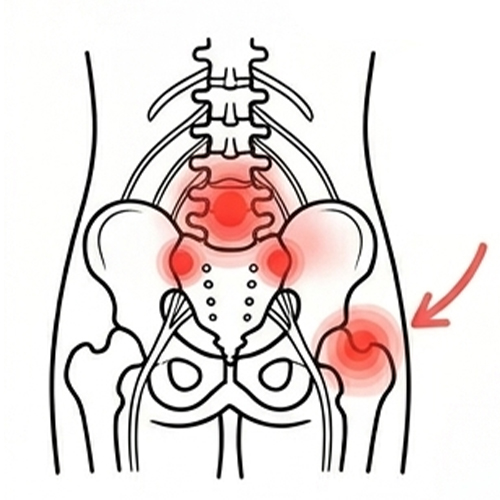
- Gluteal tendinopathy: pain on the outside of the hip, often worse when lying on that side at night or climbing stairs. This is frequently misdiagnosed as “bursitis” but is more accurately a tendon overload problem.
- Hip flexor strain or tendinopathy: tightness and pain at the front of the hip, particularly common in desk-bound professionals whose hip flexors spend hours in a shortened position before they head out for a run.
- Iliotibial band (ITB) friction: while often felt at the knee, ITB issues originate from the hip and are linked to weak hip abductors.
- Stress fractures: about two-thirds of hip stress fractures in runners are caused by excessive mileage, making them a serious consequence of training errors.
- Labral irritation: pain deep in the groin or front of the hip that may click or catch, sometimes related to underlying joint shape (femoroacetabular impingement).
The Desk-to-Run Pipeline
If you spend eight or more hours a day sitting, your hip flexors shorten, your glutes switch off, and your thoracic spine stiffens. Then you lace up your trainers and ask those same structures to absorb enormous forces at speed. The immediate trigger might be a particular hill session or tempo run, but the root cause is often months or years of accumulated deconditioning and postural stiffness from sedentary work. Taking movement breaks every 30 to 45 minutes during the working day can help counteract this effect.
Rebecca Bossick (BSc (Hons) Physiotherapy), a physiotherapist at One Body LDN, puts it plainly: “I see a pattern with many of our running clients: they sit at a desk all day, skip any kind of warm-up, and then wonder why their hip screams at them three kilometres in. The run isn’t the problem in isolation. It’s the accumulated load on tissues that were already compromised before they left the office.”
Red Flags – When It’s More Than Just Running
Most hip pain in runners resolves with sensible load management and targeted strengthening. But some presentations warrant urgent attention, and knowing the difference can prevent serious harm.
Symptoms That Need Same-Day or Emergency Assessment
- Inability to weight-bear or walk after a run
- Severe groin pain accompanied by fever, chills, or general malaise
- A sudden “pop” or “snap” followed by immediate loss of function
- Pain that wakes you from sleep and is unrelated to lying position
- Rapid, unexplained weight loss alongside hip or groin pain
- Pain that is constant and worsening despite complete rest
Any of these could indicate a stress fracture, infection, or, rarely, something more sinister. The NHS advises seeking urgent care if you experience unrelenting bone pain that does not settle with rest, particularly if you have risk factors such as low energy availability, hormonal irregormalities, or a history of disordered eating (NHS, 2023).
Morning Pain vs. Night Pain
These two presentations often have different underlying mechanisms. Morning stiffness that eases within 20 to 30 minutes of movement is typical of tendinopathy or early osteoarthritis: the tissues stiffen overnight and loosen with gentle activity. Night pain that disturbs sleep, on the other hand, may suggest an inflammatory condition, stress reaction in the bone, or referred pain from the lumbar spine. If your hip pain is worse at night and not improving, that is a clear signal to seek professional assessment rather than waiting it out.
Pain Does Not Always Equal Damage
This is a point worth sitting with. Research into pain science consistently shows that the relationship between tissue damage and pain is not linear. Stress, poor sleep, anxiety about the injury, and catastrophic thinking can all amplify pain signals. A biopsychosocial approach, one that considers physical, psychological, and social factors, tends to produce better outcomes than focusing on the MRI alone. Routine imaging for non-specific hip pain is generally not recommended in the absence of red flags, as findings like labral tears and cartilage changes are common even in pain-free runners (BJSM, 2019).
Self-Help Changes
Most running-related injuries affecting the lower extremities are due to preventable training errors, which means you have more control over this than you might think. The fixes fall into two broad categories: how you run and how much you run.
Training Load Adjustments
The single most evidence-backed principle is the 10% rule: increase your weekly mileage by no more than 10% per week. It sounds conservative, and it is. That’s the point. Tendons and bone adapt more slowly than cardiovascular fitness, so the fact that your lungs can handle a bigger week does not mean your hip can.
Other practical load management strategies:
- Alternate hard and easy days. Two intense sessions back-to-back is a recipe for overload.
- Include rest days. Complete rest or cross-training days (swimming, cycling) give tissues time to repair.
- Track weekly running volume in minutes, not just kilometres. A slow 10K takes longer than a fast one and creates more cumulative load.
- Replace running shoes every 300 to 500 miles. Worn-out cushioning shifts more force onto your joints.
Running Form Tweaks
Overhauling your running technique overnight is rarely helpful and can create new problems. But a few targeted adjustments can reduce hip load:
- Increase cadence by 5 to 10%. A slightly higher step rate tends to shorten stride length, which reduces the braking force at the hip with each foot strike.
- Avoid overstriding. Landing with your foot well ahead of your centre of mass increases impact forces. Aim for a midfoot strike roughly beneath your hips.
- Lean slightly forward from the ankles, not the waist. This encourages a more efficient loading pattern through the posterior chain.
Strength Work That Actually Helps
Isolated stretching rarely fixes the problem. Targeted strengthening, particularly of the glutes and lateral hip stabilisers, has a much stronger evidence base. A systematic review published in the British Journal of Sports Medicine found that hip-focused strengthening programmes significantly reduced pain and improved function in runners with patellofemoral and lateral hip pain (BJSM, 2020).
Three exercises that feature in most evidence-based rehabilitation programmes for runners:
- Single-leg bridge: targets the gluteus maximus and teaches pelvic control under load.
- Side-lying hip abduction (Clamshell progression): isolates the gluteus medius without irritating the ITB.
- Single-leg Romanian deadlift: develops posterior chain strength and single-leg balance simultaneously.
Aim for three sets of 8 to 12 repetitions, two to three times per week. If any exercise reproduces your hip pain, reduce the range or load rather than pushing through.
Lifestyle Adjustments for Desk Workers
If you sit for long periods, consider a medium-firm chair or a sit-stand desk to vary your posture throughout the day. Sleeping on your side with a pillow between your knees can reduce overnight hip compression, particularly if you have lateral hip pain. And a brief five-minute mobility routine before running, focusing on hip circles, leg swings, and glute activation, can make a measurable difference to how your hip feels in those first few kilometres.
When to See a Physiotherapist for Running-Related Hip Pain
There’s a common tendency among runners to wait until they physically cannot run before seeking help. That’s almost always a mistake. Early intervention tends to produce faster, more complete recovery.
Signs It’s Time to Book an Appointment
- Pain that has persisted for more than two weeks despite reducing your training load
- Hip discomfort that alters your running gait or causes you to limp
- Pain that is spreading, for example from the hip into the groin, lower back, or knee
- You’ve tried self-management strategies for a month with no improvement
- You’re unsure whether it’s safe to continue running
What a Good Physiotherapy Assessment Looks Like
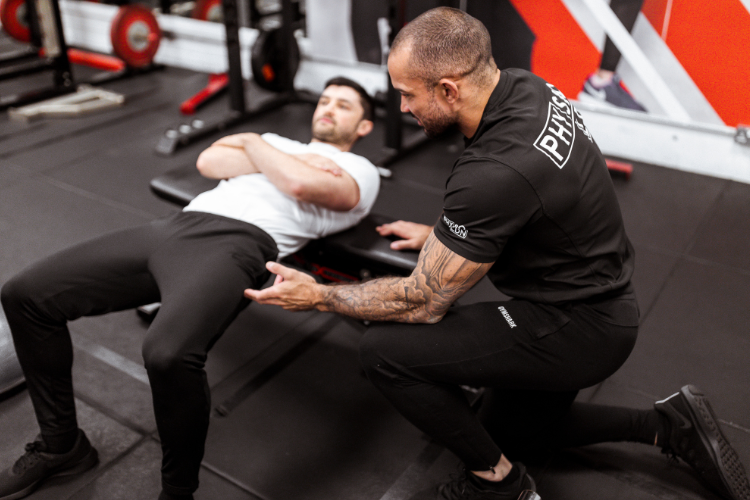
A thorough assessment goes beyond poking the sore spot. Expect a running-specific physiotherapist to evaluate your single-leg squat control, hip range of motion, lumbar spine mobility, and pelvic stability. Many will also analyse your running gait, either on a treadmill or via video. The goal is to identify not just the painful structure but the underlying biomechanical or loading factors that caused it to become painful.
Treatment typically combines hands-on manual therapy to settle acute symptoms with a progressive exercise rehabilitation programme tailored to your running goals. Passive treatments alone, such as massage or dry needling without active rehab, tend to produce short-lived results.
Kurt Johnson (M.Ost, Master of Osteopathy) at One Body LDN describes the approach this way: “We see a lot of runners who’ve been told to just rest for six weeks and then try again. Rest alone doesn’t fix the reason the hip became overloaded. We build a graded programme that addresses strength deficits, movement patterns, and training load, so the pain doesn’t just come back the moment they increase their mileage.”
At One Body LDN, the team has helped over 35,000 clients fix their pain using this kind of structured, evidence-based approach. All major private health insurers are accepted, and appointments are typically available within the same week, with no GP referral needed.
When to Return to Running After Hip Pain: Timelines
This is the question every runner wants answered, and the honest answer is: it depends. But here are some realistic benchmarks based on the most common diagnoses.
Typical Recovery Timelines
| Condition | Approximate Return-to-Run Timeline | Notes |
|---|---|---|
| Mild gluteal tendinopathy | 4 to 8 weeks | With load management and progressive strengthening |
| Hip flexor strain (Grade 1) | 2 to 4 weeks | Avoid aggressive stretching early on |
| ITB-related hip pain | 4 to 6 weeks | Requires hip abductor strengthening |
| Femoral stress fracture | 8 to 16 weeks | Requires medical clearance and imaging follow-up |
| Labral irritation (non-surgical) | 6 to 12 weeks | Depends on severity and response to rehab |
These are general ranges, not guarantees. Individual variation is significant, and factors like sleep quality, stress levels, nutrition, and training history all influence healing speed.
The Phased Return-to-Run Approach
Jumping straight back into your pre-injury mileage is the fastest route to re-injury. A phased approach typically looks like this:
- Phase 1 (pain-free walking): You can walk for 30 minutes without pain or limping. This is the baseline.
- Phase 2 (walk-run intervals): Alternate one minute of running with two minutes of walking, gradually shifting the ratio over two to three weeks.
- Phase 3 (continuous easy running): Short, flat, easy-paced runs of 15 to 20 minutes, building by no more than 10% per week.
- Phase 4 (return to structured training): Reintroduce tempo runs, intervals, and hills only after you’ve been running pain-free for at least two consecutive weeks.
A physiotherapist can help you progress through these phases with objective criteria rather than guesswork. The NICE guidelines on musculoskeletal rehabilitation emphasise the importance of graded return to activity, noting that patient-specific progression based on functional milestones produces better long-term outcomes than time-based protocols alone (NICE, 2024).
Preventing Recurrence
Once you’re back running, the work isn’t over. Maintaining a twice-weekly hip strengthening programme, managing your weekly volume sensibly, and addressing lifestyle factors like prolonged sitting will significantly reduce your risk of the same problem returning. Think of it as ongoing maintenance rather than a one-off fix.
Frequently Asked Questions
Can I run through mild hip pain? Mild discomfort that stays below a 3 out of 10 on a pain scale and doesn’t worsen during or after the run may be acceptable to run through, particularly if it settles within 24 hours. If pain escalates during the session, forces you to change your gait, or lingers into the next day, that’s a sign to back off and reassess. When in doubt, a physiotherapist can help you determine where the line is for your specific situation.
Is it better to stretch or strengthen for hip pain? Strengthening has a much stronger evidence base than stretching for most running-related hip conditions. Static stretching before a run may even temporarily reduce muscle stiffness in ways that impair force absorption. Dynamic warm-ups and targeted strength work, particularly for the glutes and hip stabilisers, are generally more effective. That said, gentle mobility work can complement a strengthening programme, especially if you have significant stiffness from prolonged sitting.
Should I get an MRI for my hip pain? Not necessarily. Routine imaging is generally not recommended for non-specific hip pain without red flag symptoms. MRI findings like labral tears and cartilage changes are common in pain-free runners and can lead to unnecessary worry or even unnecessary surgery. A thorough clinical assessment by a physiotherapist or sports medicine doctor is usually sufficient to guide treatment. Imaging becomes important if a stress fracture is suspected or if symptoms aren’t improving as expected.
Does hip pain from running mean I have arthritis? Not usually. While osteoarthritis can cause hip pain during running, the majority of running-related hip pain in adults under 50 is caused by soft tissue overload: tendons, muscles, and bursae. Running itself does not appear to increase the risk of hip osteoarthritis in recreational runners, and some research suggests it may even be protective. If you’re concerned, a clinical assessment can help clarify the source of your symptoms.
How do I know if my hip pain is a stress fracture? Stress fractures typically present with a deep, localised ache in the groin or front of the hip that worsens with impact activity and may hurt even during walking. Pain that increases with hopping on the affected leg is a classic clinical sign. Risk factors include rapid increases in mileage, low energy availability, and hormonal disturbances. If a stress fracture is suspected, imaging and medical assessment are essential, as continued running on a stress fracture can lead to a complete fracture.
Will a foam roller fix my hip pain? Foam rolling can provide temporary relief by reducing muscle tone and improving short-term flexibility, but it doesn’t address the underlying cause of most running-related hip pain. Think of it as a symptom management tool rather than a treatment. It works best as part of a broader programme that includes strengthening, load management, and form correction.
Moving Forward With Confidence
Hip pain during running is common, frequently fixable, and rarely a sign that you need to stop running permanently. The pattern is almost always the same: a combination of training load errors, strength deficits, and lifestyle factors like prolonged sitting creates a situation where tissues become overloaded faster than they can recover. Addressing those root causes, rather than just chasing the pain, is what produces lasting results.
If your hip pain has been hanging around for more than a couple of weeks, or if you’re unsure whether it’s safe to keep running, getting a professional assessment early saves time in the long run. At One Body LDN, rated 4.9 on Google from over 6,500 reviews and named London Physiotherapy Clinic of the Year 2025, the team specialises in getting runners back to full fitness through hands-on treatment and structured rehab plans. You can book your first session with no GP referral required, and all major private health insurers are accepted.
References
- https://www.true.physio/running-and-hip-flexor-pain/
- https://www.nike.com/id/a/hip-pain-after-running
- https://www.hartfordhospital.org/about-hh/news-center/news-detail?articleId=65821
- https://www.confluenthealth.com/resources/causes-and-treatments-of-hip-pain-after-running/
- https://www.spirehealthcare.com/health-hub/specialties/bones-and-joints/hip-pain-when-running-causes-and-symptoms/
- NHS Musculoskeletal Conditions Overview (2023): https://www.nhs.uk/conditions/joint-pain/
- Crossley KM, et al. (2020). Hip-targeted physiotherapy for patellofemoral pain. British Journal of Sports Medicine, 54(21).
- Register B, et al. (2012). Prevalence of abnormal hip findings in asymptomatic participants. American Journal of Sports Medicine, 40(12).
- NICE Guidelines: Musculoskeletal conditions – rehabilitation (2024): https://www.nice.org.uk/guidance/ng211