


Hip pain in adults over sixty rarely follows one pattern. Osteoarthritis dominates the picture, but fragility fracture, gluteal tendinopathy, post-replacement issues, and referred pain from the lower back all present in the same age group. Getting the right assessment matters more here than in any other age group, because the treatment pathways diverge sharply.
Physiotherapy is first-line for most presentations. A small number need urgent medical review before physiotherapy touches them. We wrote this piece to help you match your pattern to the right route. Our MCSP-registered team at One Body LDN assesses older adults with hip pain weekly across our London locations.
Key Takeaways
- Physiotherapy is first-line for most hip pain in adults over sixty.
- Hip osteoarthritis responds to physiotherapy across six to ten sessions typically.
- Hip pain after any fall in adults over sixty warrants same-day medical review.
- Physiotherapy before hip replacement improves surgical outcomes when surgery becomes necessary.
- NHS musculoskeletal waiting lists commonly exceed twelve weeks. Private assessment is often available within days.
Why hip pain is different after sixty
Three factors change the clinical picture after age sixty.
Bone density drops. Cartilage wear accumulates. Muscle mass reduces. All three shift the probability distribution of hip pain causes. Younger adults with hip pain most often have mechanical injury or overuse. Adults over sixty more often have degenerative joint change, tendinopathy at the trochanter, or fragility fracture risk.
The clinical response also changes. Painkiller options narrow because of polypharmacy considerations. Return-to-function targets matter more than return-to-sport targets. Independence, walking distance, and sleep quality become the outcomes that count.
Common causes of hip pain in older adults

Five causes account for most hip pain presentations in adults over sixty.
The clinical patterns for each differ enough that assessment separates them quickly:
Hip osteoarthritis
Deep groin pain, morning stiffness lasting over thirty minutes, reduced hip internal rotation, walking distance shrinking over months. The most common cause in this age group. NICE NG226 supports physiotherapy as first-line management, with the LEAP trial showing meaningful function gains from physiotherapist-led exercise across a typical six to ten session programme.
Greater trochanteric pain syndrome (GTPS)
Lateral hip pain over the greater trochanter, worse on side-lying and single-leg stance. Common in postmenopausal women. Includes trochanteric bursitis and gluteal tendinopathy. Responds well to targeted physiotherapy. Our team treats hip bursitis and GTPS in London as a first-line pathway.
Fragility fracture
Groin, buttock, or thigh pain following a fall from standing height. Sometimes only mild trauma. Inability to weight-bear typical. Shortened, externally rotated leg is the classic presentation. Warrants same-day hospital assessment, not physiotherapy.
Post-hip-replacement pain
New pain months or years after joint replacement. Can indicate aseptic loosening, infection, or altered mechanics. Warrants orthopaedic review before physiotherapy input.
Referred pain from the lumbar spine
Spinal stenosis and lumbar facet joint degeneration can refer pain to the buttock and lateral hip. Common in over-sixties. Physiotherapy is often the assessment that separates spinal referral from true hip pain.
When physiotherapy is the right first step
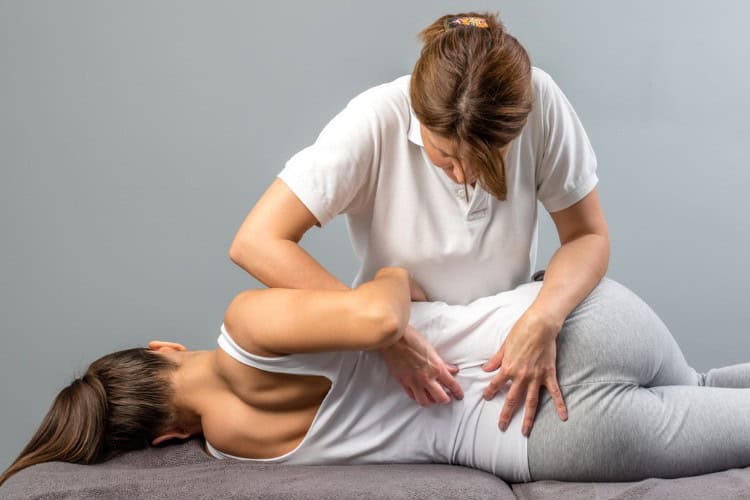
Physiotherapy is first-line for hip osteoarthritis, GTPS, and stable post-replacement rehabilitation.
NICE guidance is direct. Hip osteoarthritis management starts with exercise, education, and weight management before injection therapy or surgical consideration. Adults with moderate hip OA who complete a structured physiotherapy programme often postpone or avoid joint replacement.
Those who eventually need surgery recover faster when they enter the operation with better hip strength and function. Physiotherapy before hip replacement, sometimes called prehabilitation, improves post-operative outcomes across a growing evidence base.
Our private hip pain team in London works with older adults on both the conservative pathway and the pre-surgical pathway.
When physiotherapy is not the first step
Hip pain after a fall, hip pain with fever, and progressive night pain need medical review before physiotherapy.
The three patterns below fall outside physiotherapy first-line management:
Post-fall hip pain in adults over sixty
Even a low-energy fall can cause a fragility fracture. Any hip pain after a fall in an older adult warrants same-day medical assessment, ideally including hip X-ray.
Hip pain with fever or feeling unwell
Septic arthritis of the hip is rare but serious. Fever plus severe hip pain plus inability to weight-bear requires urgent hospital review.
Progressive night pain unrelieved by position change
Deep, worsening pain that no position relieves and NSAIDs no longer help warrants GP review to exclude serious pathology, including malignancy or avascular necrosis.
Once these patterns are excluded, physiotherapy resumes its first-line role.
The NHS wait versus private route
NHS musculoskeletal physiotherapy waits commonly exceed twelve weeks. Private assessment is often available within two working days.
The timing calculation matters for older adults. Every week of untreated hip pain in the over-sixties tends to reduce walking distance, disturb sleep, and increase fall risk. NHS hip physiotherapy access varies by region but often runs longer than the recovery window itself.
Private assessment carries a cost, but the total treatment course for hip OA under LEAP-style protocols is typically six to ten sessions, and outcomes improve when treatment starts early. Our overview of hip pain causes and assessment covers the wider clinical picture for both routes.
Frequently asked questions
We answer the questions patients and families ask most often.
Can hip osteoarthritis in older adults improve without surgery?
Yes, many people with mild to moderate hip osteoarthritis maintain function and reduce pain through structured physiotherapy, exercise, and weight management. NICE NG226 supports this pathway. The LEAP trial showed meaningful improvement across an eight-session programme. Surgery becomes appropriate when conservative management no longer holds the function you need.
Is walking good for older adults with hip pain?
Regulated, tolerable walking is one of the most useful activities for hip osteoarthritis. Complete rest often worsens stiffness and function. A physiotherapist can guide dose, terrain, and pacing so the walking helps rather than aggravates.
How long does hip physiotherapy take to work for older adults?
Most older adults with hip osteoarthritis see meaningful gains within six to ten sessions across two to three months. GTPS presentations often resolve in four to six sessions. Post-replacement rehabilitation runs longer and depends on surgical timing.
Note. Hip pain after any fall in adults over sixty warrants same-day medical assessment, even if the fall seemed minor. Classic fragility fracture signs include inability to weight-bear, groin pain, and a shortened externally rotated leg. Hip pain with fever, feeling systemically unwell, sudden severe hip pain, unexplained weight loss, progressive night pain unrelieved by position change, and bilateral leg symptoms with bladder or bowel changes all warrant urgent medical review rather than physiotherapy first. Patients on long-term steroids, with alcohol misuse history, or with a prior cancer diagnosis should seek GP review for any progressive hip pain. Physiotherapy is first-line for most hip pain in older adults but never replaces medical assessment of red flags. Contact NHS 111 for guidance when unsure.
References
- National Institute for Health and Care Excellence. Osteoarthritis in over 16s: diagnosis and management (NG226).
- Bennell KL, et al. LEAP trial: physiotherapist-led exercise for hip osteoarthritis outcomes.
- Royal Osteoporosis Society. Fragility fracture assessment and management guidance.
- National Health Service. Hip pain and when to seek help.
- Grimaldi A, Fearon A. Gluteal tendinopathy: integrating pathomechanics and clinical features in its management.
