


A hip labral tear announces itself mechanically. Deep groin pain you can almost point to with one finger, a catching or clicking sensation inside the joint, and pain on twisting or pivoting on the leg. The labrum is the cartilage rim that seals the hip socket, and when it tears, the hip starts producing sensations as well as pain.
That mechanical quality is the recognition key. One honesty sits above everything here: labral changes show up on scans of pain-free hips, too, so the pattern and the assessment matter more than any image.
We set out the signs first. Our MCSP-registered team at One Body LDN assesses deep hip and groin pain across our London clinics, and the labral pattern is one we check for routinely.
Key Takeaways
- Deep groin pain with catching or clicking inside the hip is the core labral tear pattern.
- Pain on twisting, pivoting, and deep hip bending typically provokes it.
- Labral tears often travel with hip impingement, and the two share a pattern.
- Scans alone do not decide it, because labral changes appear in pain-free hips too.
- Assessment confirms the pattern and stages the plan, which is often non-surgical.
The Signs Of A Hip Labral Tear
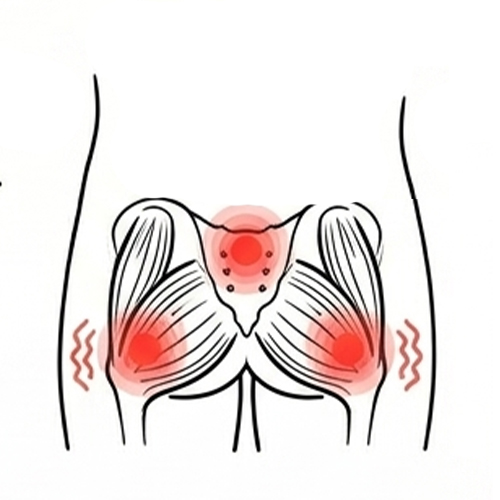
Five signs define the labral pattern, and the mechanical ones lead.
- Deep, pinpointable groin pain. Pain felt inside the hip or deep in the groin, often precise enough to indicate with a finger or the cupped C-shaped hand.
- Catching or clicking inside the joint. A mechanical sensation with movement, a catch, click, or momentary snag, felt deep rather than on the surface.
- Pain on twisting and pivoting. Turning on the planted leg, getting out of a car, or changing direction in sport provokes it.
- Pain in deep hip bending. Low chairs, deep squats, and pulling the knee to the chest bring the deep pinch on.
- Aching after sitting. Long sitting, especially in low seats, builds a deep ache.
The first two carry the pattern. Deep groin pain alone has several causes. Deep groin pain with mechanical catching points toward the labrum.
Hip Labral Tear Or Hip Impingement?
The two conditions travel together, and the patterns overlap by design.
Labral tears and hip impingement are close companions because the bone shape that causes impingement is a common reason for the labral tears. The symptom patterns overlap heavily: both give deep groin pain, deep-flexion pinching, and trouble with low sitting.
The distinguishing edge is the mechanical sensation, since catching and clicking point more toward labral involvement. In practice, the two are assessed together rather than separated at home, and the impingement side of the pattern, including the home tests, is covered in our guide to hip impingement symptoms and self-testing.
Where your groin pain lacks any mechanical quality, the wider causes are mapped in our guide to groin pain that comes from the hip.
Why A Scan Alone Does Not Decide It
Labral changes appear on scans of pain-free hips, so the picture needs the pattern.
Imaging studies find labral changes in a meaningful share of people with no hip pain at all. That single fact reshapes the whole question. A scan showing a labral tear does not prove the tear is the pain source, and chasing an incidental finding leads treatment in the wrong direction.
This is why assessment leads: the examination tests whether the labral pattern is actually present, whether movement reproduces the symptoms, and whether the hip behaves as the image suggests.
Imaging earns its place when the result would change the plan, typically when surgical questions arise. Pattern first, picture second is the honest order for hip pain of this kind.
What Happens When You Book An Assessment
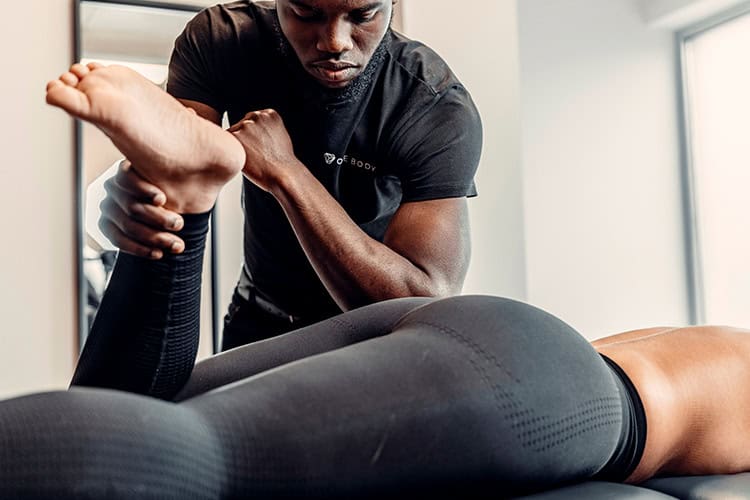
Assessment confirms the pattern, and the first-line plan is usually non-surgical.
Your physiotherapist takes the history, tests the hip through the movements that provoke the pattern, checks strength and control around the joint, and reaches a working diagnosis. Most labral-pattern hips start with a non-surgical plan: settling the irritation, then building the strength and movement control that reduce the load on the labrum.
Many do well on that path. Surgical opinions enter when a proper course has not resolved it, and your physiotherapist guides that referral when it is due. Our hip pain team in London assesses deep hip and groin presentations within days through direct access, no referral needed.
Note. Some hip symptoms need medical review rather than pattern-watching. Seek urgent GP or A&E care for hip pain after a fall you cannot bear weight through, a hot swollen hip with fever, or sudden inability to move the leg.
Seek GP review for hip pain with unexplained weight loss, severe unrelenting night pain, or constant pain unrelated to movement. Physiotherapists screen for these at the first assessment and refer onward the same day when they appear. Contact NHS 111 when unsure.
Frequently Asked Questions
We answer the labral tear questions patients ask most.
What does a hip labral tear feel like?
Deep groin pain, often precise enough to point to, with catching or clicking inside the joint. Twisting, pivoting, deep bending, and long sitting typically provoke it. The mechanical sensations are what separate it from plainer hip pain.
Can a hip labral tear heal without surgery?
Many labral-pattern hips do well with a non-surgical plan of settling irritation and building strength and control. Surgery is considered when a proper rehabilitation course has not resolved it. Assessment establishes which path fits your hip.
Do I need an MRI to diagnose a hip labral tear?
Not to start, because labral changes appear on scans of pain-free hips, so imaging alone cannot determine the pain source. Assessment tests whether the labral pattern is genuinely present. Imaging earns its place when the result would change the plan.
