


You were told you have hip bursitis, or you read it online, and then a clinician used a different phrase: greater trochanteric pain syndrome. Both names describe pain on the outer hip over the bony point you can feel at the top of the thigh, the greater trochanter, and the second name is the accurate one.
Imaging studies over the past two decades have shown that the bursa is inflamed in a minority of people with outer hip pain, and that the gluteal tendons attaching to the trochanter are the structure at fault in most. Greater trochanteric pain syndrome, or GTPS, is the umbrella term that covers gluteal tendinopathy, trochanteric bursitis and irritation of the iliotibial band where it crosses the trochanter.
The distinction changes the treatment. This guide explains what sits under the GTPS umbrella, why the name replaced bursitis, how the three conditions differ, who gets GTPS, how to check for it, how it is treated and when outer hip pain needs to be assessed.
Key takeaways
- Greater trochanteric pain syndrome is the umbrella term for pain over the outer hip bone, and it covers gluteal tendinopathy, trochanteric bursitis and iliotibial band irritation at the trochanter.
- Gluteal tendinopathy, not bursitis, is the main cause of GTPS; MRI studies find an inflamed bursa in a minority and a thickened or torn gluteus medius or minimus tendon in most.
- GTPS affects about one in four women over 50 at some point, and the pattern is pain lying on the side at night, on standing on one leg and on climbing stairs.
- Education and a progressive loading programme outperform a corticosteroid injection at eight weeks and at one year in the largest trial to date, published in the BMJ in 2018.
- Stretching the outer hip, sitting with crossed legs and standing with the hip pushed out to the side compress the tendons against the bone and are the three habits to stop first.
What does greater trochanteric pain syndrome cover?

Greater trochanteric pain syndrome covers every source of pain over the greater trochanter: tendinopathy or tears of the gluteus medius and gluteus minimus tendons, inflammation of the trochanteric bursa, and irritation of the iliotibial band where it crosses the bone. The three share a location and a pattern of pain, which is why they were lumped together as bursitis for decades.
The anatomy. The greater trochanter is the bony point on the outer hip. The gluteus medius and minimus tendons attach to it from above and hold the pelvis level when you stand on one leg. A bursa, a thin fluid-filled sac, sits between the tendons and the iliotibial band to reduce friction. The band itself runs over the trochanter from the pelvis to the knee.
Why one name. All three structures sit within a few millimetres of each other, hurt in the same spot, and are compressed by the same positions. A clinician cannot separate them by touch alone, and treatment for the common cause, the tendons, treats the others as well. Our hip pain causes and treatment guide places GTPS among the other causes of hip pain.
Why did the name change from hip bursitis?
The name changed because imaging showed that most people with outer hip pain have a diseased gluteal tendon rather than an inflamed bursa, and treating a tendon is not the same as treating a bursa. The term greater trochanteric pain syndrome has been standard in the research literature since the early 2000s.
What the scans showed. A 2001 MRI study of people with outer hip pain found gluteus medius tendinopathy or tears in the majority and bursal fluid in a minority, and later ultrasound studies repeated the finding. The bursa, when inflamed, is usually inflamed because the tendon beneath it is compressed and failing.
Why the name matters for you. Bursitis implies inflammation, which implies rest, ice and an injection. Tendinopathy implies a tendon that has lost its tolerance to load, which implies a progressive loading programme and the removal of compression.
A person treated for bursitis with injections alone often improves for weeks and relapses; a person treated for tendinopathy with loading improves more slowly and holds the gain. Our guide comparing hip bursitis and hip osteoarthritis covers the other condition GTPS is most often confused with.
How do the three conditions under GTPS differ?
Gluteal tendinopathy, trochanteric bursitis and iliotibial band irritation differ in what is damaged, in who gets them and in how fast they respond, and the table below sets the three side by side.
| Gluteal tendinopathy | Trochanteric bursitis | Iliotibial band irritation at the trochanter | |
| Structure | Gluteus medius and minimus tendons at their attachment | Fluid-filled sac between tendon and band | The band itself as it crosses the bone |
| Share of GTPS | Most cases | Minority, usually alongside tendinopathy | Small, mainly runners and cyclists |
| Typical person | Women 40 to 65, after a change in activity or weight | Anyone with tendinopathy or after a direct fall on the hip | Runners with a long stride or increased distance |
| Pain pattern | Lying on the side at night, standing on one leg, stairs, prolonged sitting | Sharp, local, worse with direct pressure | Snapping or burning at the outer hip during activity |
| Response to loading programme | Good over 8 to 12 weeks | Good once tendon load is addressed | Good with hip strengthening and running changes |
| Response to injection | Short-term only, worse than exercise at one year | Short-term relief, often repeated | Rarely used |
Who gets greater trochanteric pain syndrome?
Greater trochanteric pain syndrome affects about one in four women over 50 at some point and is three to four times more common in women than in men, with a second peak in runners of both sexes. A 2007 population study found a prevalence of 23.5 per cent in women aged 50 to 79 and 8.5 per cent in men of the same age.
Why women over 50. A wider pelvis increases the angle at which the gluteal tendons wrap around the trochanter, hormonal changes around menopause alter tendon structure, and weight gain and reduced activity in the same years lower the tendons’ tolerance. A change in activity, a long walk, a new exercise class or a period of inactivity is often the trigger.
Why runners. Running loads the gluteal tendons with every stride, and a long stride with a hip that drops on landing compresses them against the bone. Hip weakness and a rise in distance are the usual combination.
Who else. People with low back pain, knee osteoarthritis or a leg length difference load one hip more than the other and develop GTPS on the harder-working side.
How do you check for greater trochanteric pain syndrome?
Tenderness directly over the greater trochanter, pain on standing on one leg for 30 seconds and pain lying on the affected side at night are the three findings that point to GTPS. Groin pain, pain on putting on socks and a stiff hip point to the joint instead.
Find the trochanter. Stand and press on the outer hip at the level of the bony point you can feel at the top of the thigh. Sharp local tenderness there, rather than a deep ache in the groin or buttock, fits GTPS.
Stand on one leg. Stand on the painful leg for 30 seconds with the other foot off the floor. Pain building over the outer hip during the stand is a positive test and reproduces the load that irritates the tendons.
The night pattern. Lying on the painful side compresses the tendons against the bone; lying on the other side with the painful leg dropping forward across the body stretches and compresses them as well. Pain in both positions, relieved by a pillow between the knees, is typical. Our guide on hip pain at night covers the other causes of night hip pain. Our hip bursitis symptoms and self-test guide takes the self-check further.
How is greater trochanteric pain syndrome treated?
Greater trochanteric pain syndrome is treated with education on avoiding compression, a progressive gluteal loading programme over 8 to 12 weeks, and a return to activity in stages, with corticosteroid injection reserved for pain that prevents the programme from starting. The LEAP trial, published in the BMJ in 2018, found that education plus exercise gave better results than a corticosteroid injection at both eight weeks and one year.
Remove the compression. Sleep with a pillow between the knees, stop crossing the legs, stop standing with the weight on one hip pushed out to the side, and avoid stretching the outer hip. Each of these presses the tendons against the trochanter, and removing them often reduces night pain within two weeks.
Load the tendons. Start with isometric holds, such as pressing the knees outward against a band while sitting, which reduce pain. Progress to bridges, side-lying abduction, step-ups and single-leg squats with the pelvis level, three times a week, adding load every one to two weeks. The tendon adapts over months, and the programme runs 8 to 12 weeks before a judgement is made.
Return to activity. Walking distance and stairs are rebuilt in stages, with running reintroduced last and with a shorter stride and higher cadence where the hip drops on landing.
Injections and shockwave. A corticosteroid injection reduces pain for weeks and does not change the tendon; the LEAP trial found the injection group doing worse than the exercise group at one year. Shockwave has evidence for tendinopathy that has not responded to loading. Surgery is reserved for a full-thickness gluteal tendon tear that fails rehabilitation.
What we tell you at the assessment. Most people with GTPS improve inside 12 weeks once compression is removed and the tendons are loaded, and night pain is usually the first thing to settle. Our hip bursitis physiotherapy in London page explains how we assess the outer hip and the programme we use.
What makes greater trochanteric pain syndrome worse?
Stretching the outer hip, resting completely, and relying on repeated injections are the three mistakes that prolong GTPS.
Stretching. The piriformis stretch, the figure-four stretch and the crossed-leg iliotibial band stretch all pull the gluteal tendons tight across the trochanter and compress them. Relief lasts minutes; the irritation lasts longer.
Resting. A tendon that is rested loses tolerance, and the first long walk afterwards hurts at a shorter distance. The tendons need load matched to what they tolerate today, not no load.
Repeat injections. A second and third injection for a condition driven by a tendon treats the symptom each time and leaves the cause unchanged. One injection to allow loading to begin is the limit we recommend.
When to get outer hip pain assessed
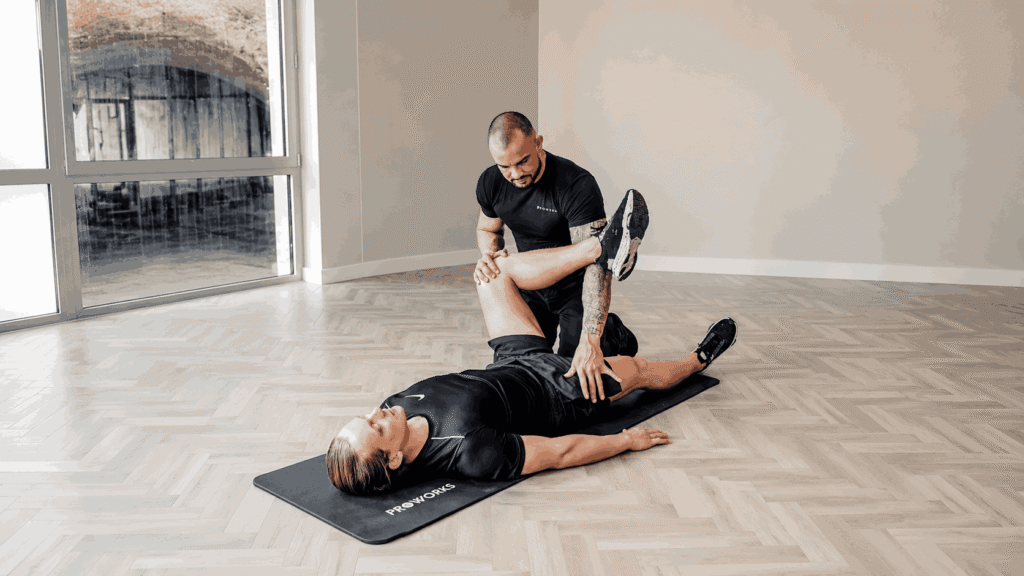
Outer hip pain that has lasted more than two weeks, that wakes you when lying on your side, that makes standing on one leg or climbing stairs painful, or that has not improved after removing compression warrants a physiotherapy assessment, and no GP referral is needed. The assessment separates GTPS from hip osteoarthritis, back-referred pain and the rarer causes, and tests the gluteal tendons under load. Our hip pain physiotherapy service in London sees new hip assessments within days across all our clinics.
Note. Some outer hip pain needs urgent medical care rather than physiotherapy. Hip pain after a fall with inability to put weight on the leg, a hot, red and swollen hip with fever, severe hip pain with unexplained weight loss or night sweats, or numbness and weakness spreading down the leg with changes to bladder or bowel control are reasons to call NHS 111 or go to A&E.
Common questions about greater trochanteric pain syndrome
Is greater trochanteric pain syndrome the same as hip bursitis?
Hip bursitis is one of the conditions inside greater trochanteric pain syndrome, not another name for it. GTPS also includes gluteal tendinopathy, which is the most common cause, and iliotibial band irritation at the trochanter.
How long does greater trochanteric pain syndrome take to heal?
Most people improve inside 8 to 12 weeks of removing compression and loading the gluteal tendons, with night pain settling first. Tendons adapt slowly, so a full return to long walks and running takes three to six months in some.
Should I get a steroid injection for greater trochanteric pain syndrome?
An injection reduces pain for several weeks and does not change the tendon. The 2018 LEAP trial found education and exercise gave better results than an injection at eight weeks and at one year, so an injection is reserved for pain that stops the loading programme from starting.
Can I walk with greater trochanteric pain syndrome?
Yes. Walking at a distance that produces mild symptoms only, with a shorter stride, keeps the tendons loaded and is part of the treatment. Long walks that leave the hip sore the next day are shortened and rebuilt.
Why does my outer hip hurt at night?
Lying on the painful side compresses the gluteal tendons against the trochanter, and lying on the other side lets the painful leg drop across the body and compresses them from the other direction. A pillow between the knees removes the second position, and most people with GTPS sleep better within two weeks of using one.
Book your London hip assessment
Greater trochanteric pain syndrome is a tendon problem in most people, and the treatment follows from that. You can book your first assessment for hip pain physiotherapy in London at any of our clinics in 60 seconds, with no GP referral needed.
References
- Mellor R, Bennell K, Grimaldi A, et al. Education plus exercise versus corticosteroid injection use versus a wait and see approach on global outcome and pain from gluteal tendinopathy: prospective, single blinded, randomised clinical trial (LEAP). BMJ.
- Bird PA, Oakley SP, Shnier R, Kirkham BW. Prospective evaluation of magnetic resonance imaging and physical examination findings in patients with greater trochanteric pain syndrome. Arthritis and Rheumatism.
- Segal NA, Felson DT, Torner JC, et al. Greater trochanteric pain syndrome: epidemiology and associated factors. Archives of Physical Medicine and Rehabilitation.
- Grimaldi A, Fearon A. Gluteal tendinopathy: integrating pathomechanics and clinical features in its management. Journal of Orthopaedic and Sports Physical Therapy.
- Grimaldi A, Mellor R, Nicolson P, Hodges P, Bennell K, Vicenzino B. Utility of clinical tests to diagnose MRI-confirmed gluteal tendinopathy in patients presenting with lateral hip pain. British Journal of Sports Medicine.
- NHS. Bursitis.
