

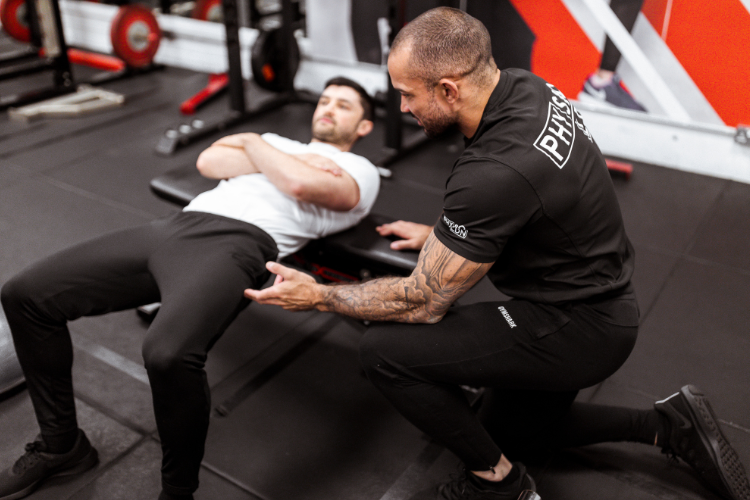

Hip pain that wakes you at night follows recognisable patterns. Each pattern points to a different source. Lateral hip pain on the affected side down usually points to bursitis. Deep groin pain that ignores position usually points to osteoarthritis. Anterior hip pain provoked by the fetal position usually points to impingement or a labral issue.
Progressive night pain that no position change relieves is the pattern that warrants urgent medical review, not physiotherapy first. We wrote this piece to help you match your pattern to the likely source and act on the right timeline. Our MCSP-registered clinicians at One Body LDN see nocturnal hip pain daily.
Key Takeaways
- Lateral hip pain on the affected side down usually points to hip bursitis or GTPS.
- Deep groin pain that ignores position usually points to hip osteoarthritis.
- Try the position-relief test before booking to identify the likely source.
- Book a physiotherapy assessment within two weeks if night pain wakes you two or more times.
- Progressive night pain unrelieved by any position change needs medical review, not physiotherapy first.
Why hip pain gets worse at night
Nocturnal hip pain has three mechanical causes and one systemic pattern.
The three mechanical causes cover most cases. Direct compression of an inflamed structure when side-lying loads it, most commonly the trochanteric bursa or gluteal tendon. Sustained hip flexion during fetal-position sleep provokes intra-articular structures such as the labrum or the impinging femoral neck.
Loss of muscle inhibition during sleep unmasks joint pain that daytime movement patterns mask. The systemic pattern is different. Constant progressive night pain unrelieved by position change or NSAIDs is a warning sign for serious pathology, not a physiotherapy-first presentation. Matching your pattern to one of these categories is the fastest route to appropriate care.
Nocturnal hip pain patterns by source
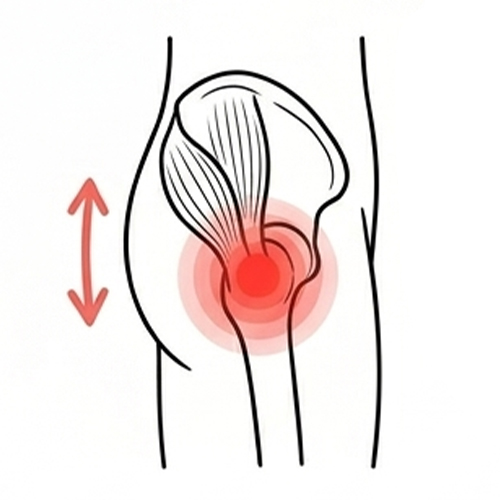
Different anatomical sources produce distinct nocturnal pain patterns.
The four common sources cover most physiotherapy-appropriate presentations:
Lateral hip pain: hip bursitis or GTPS
Pain over the greater trochanter that worsens when side-lying on the affected side. Pain often present on the unaffected side too, from adductor compression pulling the hip inward. Point tenderness palpable at the trochanter.
Common in females 40-60, runners, and patients with recent weight change. This pattern typically responds to hip bursitis physiotherapy in London within four to six sessions when caught early.
Deep groin pain: hip osteoarthritis
Pain felt deep in the groin, often referred to the anterior thigh. Position-independent, meaning changing sides rarely helps. Morning stiffness lasting more than thirty minutes on waking. Reduced hip internal rotation. Common in adults over fifty. Advanced hip OA can wake patients from sleep even in the absence of movement.
Anterior hip pain: FAI or labral pathology
Pain deep in the front of the hip, provoked by hip flexion. Fetal-position sleep worsens the pain. Common in athletes and younger adults. Catching or clicking with movement may accompany the night pain.
Trochanteric tendinopathy
Similar lateral pain pattern to bursitis but tendon-focused. Load-related pain during the day, side-lying pain at night. Overlaps clinically with GTPS.
The position-relief test
A three-minute position-relief test at home helps identify the likely source of your night pain.
Try this sequence when hip pain wakes you or when preparing for sleep:
Step 1. Lie supine (on your back) with a small pillow under your knees. Wait two minutes.
Step 2. Roll onto the unaffected side with a pillow between your knees. Wait two minutes.
Step 3. Roll onto the affected side. Wait two minutes if tolerable.
Interpretation:
- Pain relieved by supine and worse on affected side down: consistent with hip bursitis or GTPS.
- Pain unchanged by any position: consistent with hip osteoarthritis or intra-articular source.
- Pain worse in supine hip flexion: consistent with FAI or hip flexor irritation.
- Pain relentless and progressive across all positions over weeks: warrants medical review.
The test does not diagnose. It classifies your presentation so the physiotherapist can assess efficiently.
Escalation thresholds
Match your escalation timing to the severity and pattern.
The tiered thresholds below reflect standard clinical decision rules:
Book physiotherapy within two weeks

Lateral hip pain waking you once or twice nightly. Position-relief works. Daytime function preserved. Pattern present under six weeks.
Book physiotherapy within one week
Deep groin pain plus morning stiffness. Waking two or more times nightly. Daytime walking distance reduced. Pattern present over six weeks. Our private hip pain team in London typically assesses within forty-eight hours.
See a GP within one week
Progressive night pain worsening over weeks. Pain unrelieved by any position. NSAIDs no longer helping. Weight loss present.
Seek same-day medical assessment
Sudden severe hip pain waking from sleep with fever. Hip pain after a fall in adults over sixty. Bilateral leg symptoms with bladder or bowel changes. Any of these warrant urgent review, not physiotherapy first.
Frequently asked questions
We answer the questions patients ask most often about hip pain at night.
Why is my hip pain worse when I lie on my side?
Side-lying on the affected side compresses the trochanteric bursa and gluteal tendons, provoking pain typical of bursitis or GTPS. Side-lying on the unaffected side often still triggers pain from adductor pull pulling the affected hip inward. A pillow between the knees usually reduces both.
When should I worry about hip pain at night?
Progressive night pain that worsens over weeks, night pain unrelieved by any position, and night pain accompanied by fever or unexplained weight loss all warrant same-week medical review. Our overview of hip pain causes and clinical patterns explains the wider picture.
Can hip pain at night resolve on its own?
Bursitis-pattern night pain often improves with load management, a pillow between the knees, and position adjustment over two to four weeks. Deep groin OA-pattern pain rarely resolves without assessment. Progressive night pain across any pattern warrants clinical review rather than continued self-management.
Note. Some nocturnal hip pain patterns warrant urgent medical assessment before physiotherapy. Seek same-day GP or A&E review for sudden severe hip pain waking from sleep, hip pain with fever or feeling systemically unwell, hip pain after any fall in adults over sixty, hip pain with unexplained weight loss, and hip pain with bilateral leg symptoms or bladder or bowel changes.
Patients on long-term steroids, with alcohol misuse history, or with sickle cell disease should seek GP review for any progressive night hip pain. Physiotherapy is first-line for most nocturnal hip pain patterns but never replaces medical assessment of red flags.
References
- National Institute for Health and Care Excellence. Osteoarthritis in over 16s: diagnosis and management (NG226).
- National Health Service. Hip pain and when to seek help.
- Grimaldi A, Fearon A. Gluteal tendinopathy: integrating pathomechanics and clinical features in its management.
- Bennell KL, et al. LEAP trial: physiotherapist-led exercise for hip osteoarthritis.
- Chartered Society of Physiotherapy. Direct access to physiotherapy.
