


Flat feet are common, and most of them never hurt. Around one in four adults has a low or flat arch, and the majority walk, run and work on them without a problem. When foot pain does arrive, the arch usually gets the blame, and the internet is ready with an insole to sell you.
The evidence tells a different story. Arch height is a weak predictor of foot pain. What predicts it far better is load: how much your feet are asked to do, how quickly that changed, and whether the muscles and tendons supporting the foot have the capacity for it.
This guide covers what flat feet actually are, when they genuinely contribute to pain, what insoles can and cannot do, and how physiotherapy treats the problem rather than the shape.
Key takeaways
- Flat feet are a normal foot shape for most people, not a diagnosis, and most flat feet are painless
- Arch height poorly predicts foot pain; load, recent change and tissue capacity predict it well
- Flat feet matter most when they are new, one-sided, or stiff, which points to a tendon problem worth assessing
- Insoles change the load in the short term; strengthening changes the foot in the long term
- Persistent foot pain with flat feet deserves an assessment of what is overloaded, not a purchase
What flat feet actually are
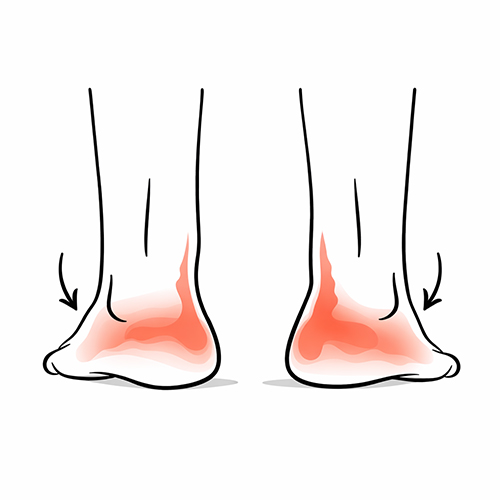
A flat foot is one where the inside arch sits low or touches the ground when standing. In most adults, it is a lifelong shape, and shape alone is not a problem.
Flexible flat feet
Most flat feet are flexible: the arch appears when you sit or stand on tiptoe and flattens when you put weight through the foot. This is the version most people have; it runs in families, and it is not a sign of weakness or damage. Children have flat feet as standard and most develop an arch by around six to ten years old without any intervention.
Rigid or newly flat feet
The exception worth naming: a foot that has become flat recently, usually on one side, often with aching on the inside of the ankle. This pattern points to the tibialis posterior tendon, the main tendon holding the arch up, losing its capacity.
It is called adult-acquired flat foot, it is progressive if ignored, and it responds well to early strengthening. A stiff flat foot that will not form an arch even on tiptoe is a different, rarer category and needs assessment.
Do flat feet cause foot pain? What the evidence says
Foot shape is a poor predictor of who gets foot pain. Systematic reviews find only a weak association between flat feet and injury, and most flat-footed people never develop the problems attributed to them.
Arch height is a weak predictor
Large reviews of foot posture and lower-limb injury find, at best, a small increase in risk for some conditions, and no association for most. Two people with identical flat feet can have completely different pain histories. If the arch were the cause, that could not happen.
Load and capacity are the strong predictors
What separates the flat foot that hurts from the one that does not is nearly always found in the recent history:
- A jump in walking distance, standing hours or training volume
- A switch to flatter, softer or worn-out footwear
- Weight change, pregnancy, or a return to activity after a break
- Weak calf and foot muscles relative to what is being asked of them
Flat feet do change how load spreads through the foot, which is why they can amplify an overload once it exists. They rarely create one on their own. The tissue hurts because it was asked to do more than it could, not because of its resting shape.
When flat feet do contribute
Flat feet matter clinically in three specific patterns, and each has a physiotherapy answer.
Inner ankle and arch pain that builds with standing: The tibialis posterior tendon working overtime to hold a low arch against high load. The tell is a heel that no longer lifts cleanly on a single-leg heel raise. Strengthening that tendon is the treatment.
Heel pain on the first steps of the morning: A low arch lengthens the plantar fascia under load and can feed plantar fasciitis when the calf is tight and the volume is high. The arch is one contributor among several, and our plantar fasciitis symptoms guide covers how to recognise it. Treatment sits on our plantar fasciitis page.
Knee, shin or hip pain in runners: A flat, rolling foot changes leg mechanics enough to contribute to problems above it, though almost never as the sole cause. Assessment looks at the whole chain, and the foot is treated as part of it.
Where the foot sits in the wider picture of foot pain, and how the other causes are told apart, is covered in our foot pain guide.
Insoles and orthotics: the honest position
Insoles change where load lands in the foot. They do not change the foot, and the evidence for them is short-term symptom relief, not cure.
Trials comparing orthotics with exercise for arch-related pain find similar results, and orthotics do not outperform strengthening beyond the first few weeks. That makes them a useful bridge: a pair of supportive insoles can ease symptoms enough to let you keep walking and start rehabilitation. They are not the rehabilitation.
Off-the-shelf insoles do this job for most people. Custom orthotic manufacture, along with nail and skin care and diabetic foot surveillance, is podiatry work, and we refer to podiatry where a foot needs it. Buying arch support to fix an arch that was never the problem is the most common wasted spend in foot pain, and the trial evidence is clear about why.
What physiotherapy does for flat feet and foot pain
Physiotherapy treats the overloaded tissue and rebuilds the capacity the foot lacks, so the arch you have becomes a foot you can trust.
Assessment works out which structure is complaining: tendon, fascia, joint or muscle. Standing, walking and single-leg tests show how the arch behaves under load, and the history shows what changed. From there the plan follows the problem, not the shape.
The exercises we start with
Progressive calf raises to build the calf and achilles, heel raises with the arch actively lifted to strengthen tibialis posterior, and short-foot and toe work for the small muscles of the sole. These start well within your tolerance and progress in load over weeks. Footwear and activity changes manage the load while capacity catches up, and runners get a graded return with mechanics reviewed.
Recovery follows the same timescales as other overload problems: most people feel change inside a few weeks, with strength continuing to build for months. Flat feet do not need correcting to stop hurting. They need supporting from the inside.
When to see a physiotherapist
Book an assessment if foot or inner-ankle pain with flat feet has lasted beyond two to three weeks, keeps returning, or is changing how you walk.
Two patterns deserve faster attention. A foot that has flattened recently on one side, or an inability to rise onto tiptoe on one leg, points to a tendon losing capacity and responds best to early treatment. And any non-healing sore or wound on the foot, particularly with diabetes, needs a GP the same day, not physiotherapy.
Our foot pain physiotherapy in London team assesses flat-foot related pain through direct access, no GP referral needed.
Common questions about flat feet and foot pain
Can flat feet be corrected in adults?
Not into a different shape, and they do not need to be. Strengthening builds the muscular support that stops a flat foot overloading its tendons and fascia. That is where the pain comes from, and it is what changes.
Should I buy arch support insoles for flat feet?
Only if your feet hurt, and then as a short-term aid alongside strengthening. Painless flat feet need nothing. Insoles ease symptoms while capacity rebuilds; they do not build it.
Are flat feet bad for running?
No. Plenty of fast, injury-free runners have flat feet. Runners with flat feet who get injured are usually runners whose volume outran their calf and foot strength. Load management and strengthening protect them, not motion-control shoes alone.
Why do my flat feet hurt on the inside of my ankle?
That is the tibialis posterior tendon, the main structure holding the arch up. Aching there that builds with standing, particularly on one side, is the pattern worth assessing early, because it responds well to strengthening and poorly to being ignored.
Do children with flat feet need treatment?
Almost never. Flat feet are normal in young children and most develop an arch by around ten. Pain, stiffness, or a foot that stays flat on tiptoe is the version to have checked.
Book your foot pain assessment
If your foot pain has been blamed on flat feet and the insoles have not fixed it, an assessment of what is actually overloaded is the missing step. Book through our foot pain physiotherapy in London page.
Note: Foot symptoms that need urgent care first
Contact NHS 111, your GP, or visit A&E for any of these signs:
- A sore or wound on the foot that is not healing, urgent if you have diabetes
- A hot, red, swollen foot with fever
- Numbness, coldness or colour change in the foot
- Sudden severe pain or deformity after injury
References
-
- NHS. Flat feet.
- Neal BS, Griffiths IB, Dowling GJ, et al. Foot posture as a risk factor for lower limb overuse injury: a systematic review and meta-analysis. Journal of Foot and Ankle Research. 2014;7:55.
- Tong JW, Kong PW. Association between foot type and lower extremity injuries: systematic literature review with meta-analysis. Journal of Orthopaedic & Sports Physical Therapy. 2013;43(10):700-714.
- Kulig K, Reischl SF, Pomrantz AB, et al. Nonsurgical management of posterior tibial tendon dysfunction with orthoses and resistive exercise: a randomized controlled trial. Physical Therapy. 2009;89(1):26-37.
- Whittaker GA, Munteanu SE, Menz HB, et al. Foot orthoses for plantar heel pain: a systematic review and meta-analysis. British Journal of Sports Medicine. 2018;52(5):322-328.
