

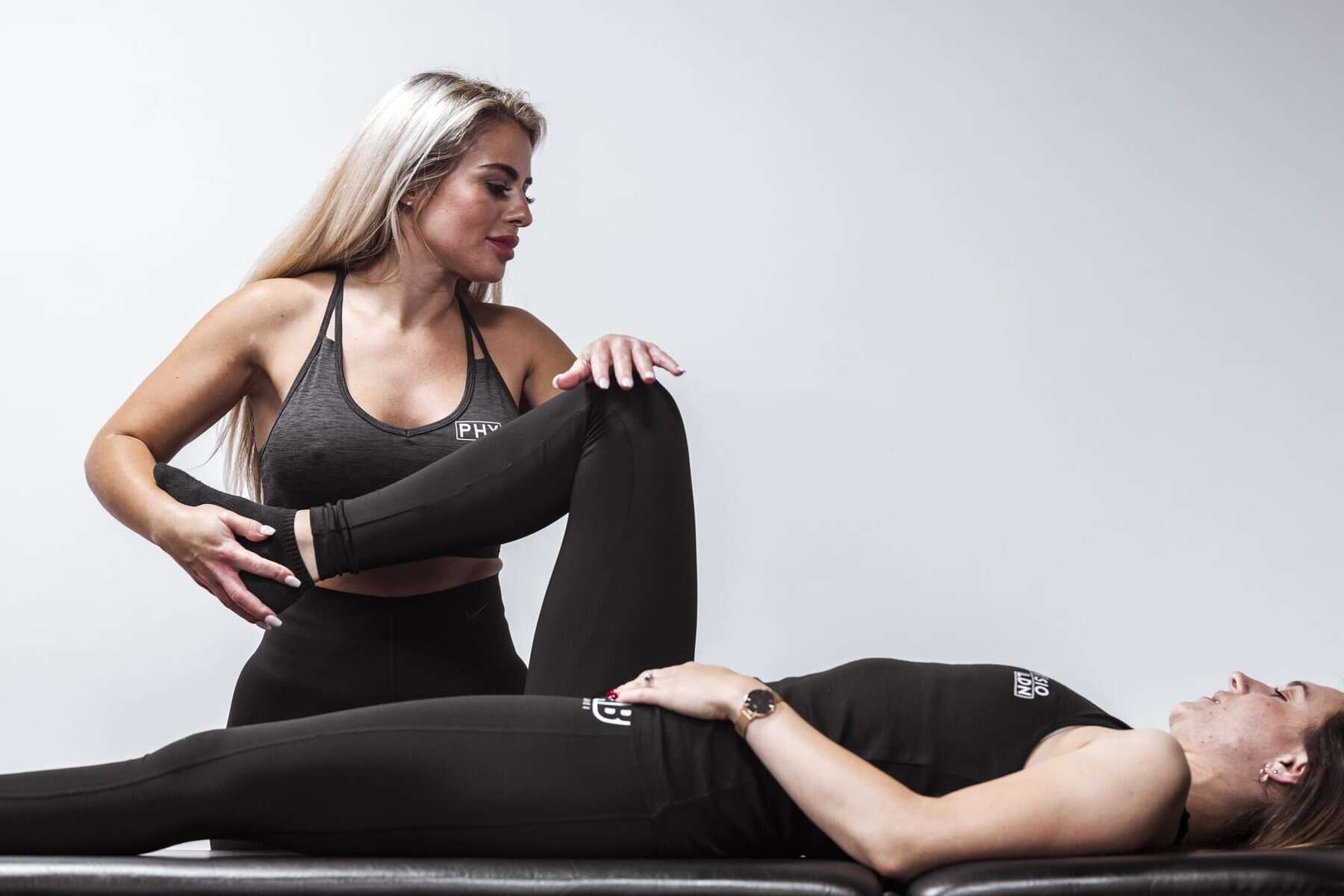

Anterior knee pain is the clinical term for pain at the front of the knee, in, around or just below the kneecap. If a clinician has used the phrase with you, or you have found it while searching, it describes a location rather than a diagnosis. Several different structures live at the front of the knee, and each produces its own version of the pain.
It also reaches far more people than the running population it is usually associated with. Cyclists, people who kneel for work, desk workers, gym-goers and older adults all present with it regularly. This guide covers what sits at the front of the knee, what each structure’s pain pattern looks like, why it develops in non-runners, and how it is treated.
Key takeaways
- Anterior knee pain describes a location at the front of the knee, not a single diagnosis
- The kneecap joint, the tendons above and below it, and the cushioning tissue in front all produce different patterns
- It is not only a runner’s problem: cycling, kneeling, desk work and gym training all cause it
- Pain after long sitting and on stairs is the most recognisable pattern, and it points to the kneecap joint
- Strengthening the thigh and hip muscles is the best-evidenced treatment across nearly all causes
What sits at the front of the knee
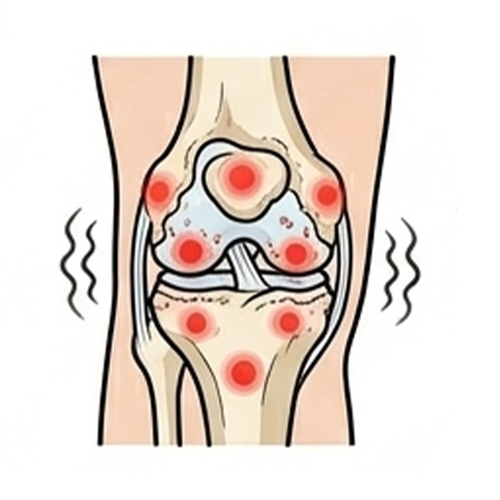
Four structures account for most anterior knee pain: the joint between the kneecap and thigh bone, the tendon below the kneecap, the tendon above it, and the cushioning tissue behind and around the kneecap.
The kneecap joint: Your kneecap glides in a groove on the thigh bone every time you bend and straighten. This joint takes enormous load, several times body weight on stairs and in a squat. Problems here are the most common source of front-of-knee pain by a wide margin.
The tendon below the kneecap: Connects the kneecap to the shin bone. Overloaded by jumping, and by sudden increases in explosive training.
The tendon above the kneecap: Connects the thigh muscles to the kneecap. Less commonly affected, and more associated with heavy resistance training and older knees.
The cushioning tissue: A bursa sits in front of the kneecap and is irritated by direct pressure, which is why kneeling occupations produce their own version. A fat pad sits just behind the tendon below the kneecap and can become pinched and sore.
The whole territory, including what makes front-of-knee pain different from pain elsewhere in the joint, is mapped in our knee pain guide.
What the pattern points to
Where exactly the pain sits, and what provokes it, narrows anterior knee pain to a likely structure.
Around or behind the kneecap, worse on stairs and after sitting
The commonest presentation by far. A diffuse ache that is hard to point to precisely, worse going down stairs, squatting, and after long periods with the knee bent. This points to the kneecap joint, and it is the pattern behind patellofemoral pain and what is popularly called runner’s knee. Our guide to kneecap pain and self-tests covers recognising it, and treatment sits on our runner’s knee treatment in London page, which covers the condition regardless of whether you run.
Pinpoint pain just below the kneecap, worse with jumping
A specific tender spot on the tendon below the kneecap, sore to press, worse starting activity and aching afterwards. This points to the tendon, and it is a loading problem that responds to progressive strengthening rather than rest.
Pain right on the front of the kneecap, worse with kneeling
Tenderness and sometimes swelling directly over the kneecap, provoked by pressure rather than by bending. This points to the bursa, and it is strongly associated with occupations involving kneeling.
Deep, grinding pain with stiffness in older knees
Aching with grinding or crunching, stiffness after sitting, worse at the ends of demanding days. This points toward wear-related change in the kneecap joint. It is common with age, frequently painless, and strength work remains the best-evidenced treatment.
Why non-runners get it
Anterior knee pain develops wherever the front of the knee is loaded more than it is conditioned for, which includes several activities that involve no running at all.
The association with running is historical rather than accurate. The four groups we see most often outside it:
Cyclists: Saddle height and position determine how much load lands on the kneecap joint. A saddle too low, or a sudden increase in climbing and high-resistance riding, loads the front of the knee heavily. Cyclists often present with textbook kneecap pain and no running history whatsoever.
People who kneel for work: Flooring, tiling, plumbing, gardening and cleaning all put sustained direct pressure on the front of the knee. This produces the bursa pattern in particular, and it is one of the few anterior knee problems that is genuinely about pressure rather than load.
Desk workers: Long hours with the knee bent compress the kneecap joint, which is why the first steps after a long meeting or a film can hurt. Combine that with low general leg strength and the knee has little capacity in reserve.
Gym and strength trainees: Squats, lunges, leg press and jumping all load the front of the knee deliberately. Anterior knee pain here usually traces to a jump in volume, depth or load rather than to the exercises themselves.
The common thread across all four: load went up, or capacity went down, and the front of the knee reported the gap.
How anterior knee pain is treated
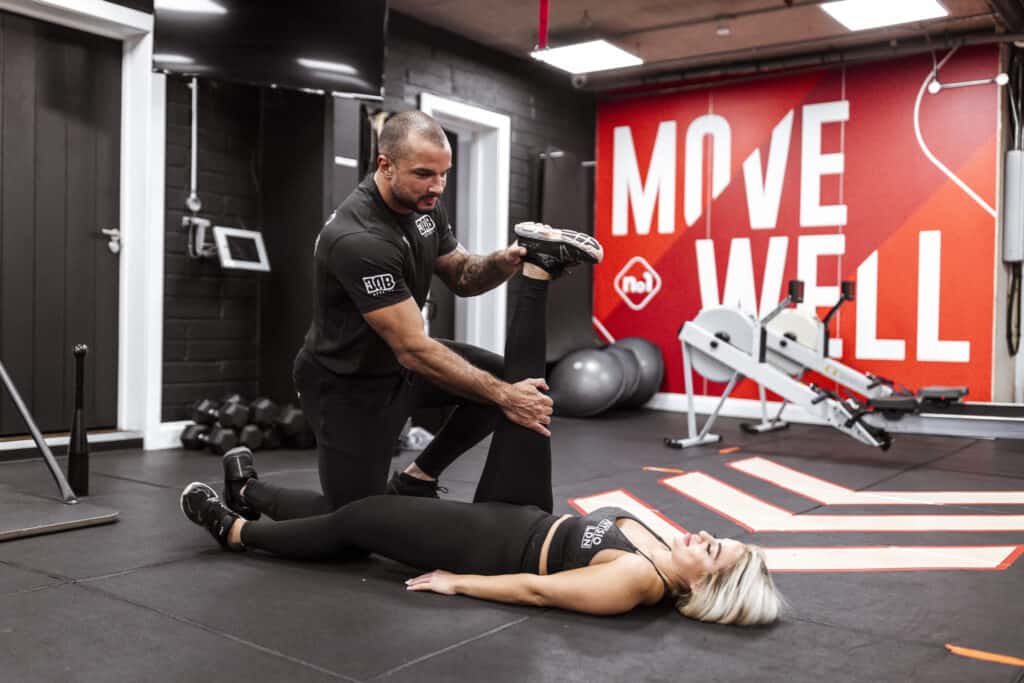
Strengthening the thigh and hip muscles is the best-evidenced treatment for anterior knee pain across nearly every cause, combined with adjusting the load that produced it.
Strength first: The quadriceps control how the kneecap tracks and how much load the joint absorbs. The hip muscles control the position of the thigh bone underneath it. Weakness in either sends more load through the front of the knee. This is why the evidence for exercise therapy in patellofemoral pain is strong and consistent, and why it outperforms rest.
Load management alongside: Reducing the specific aggravator while strength rebuilds: shallower squats, fewer stairs where possible, saddle height reviewed for cyclists, knee pads and position breaks for kneeling work, shorter sitting stretches for desk workers.
Supports as a bridge: Taping or a simple brace can ease symptoms enough to keep you moving during rehabilitation. They change how load lands; they do not change the knee, so they work best as short-term support alongside the strengthening.
What to expect: Most anterior knee pain improves substantially within six to twelve weeks of a proper loading programme. Progress is not linear, and a harder week inside an improving month is normal.
When to get it assessed
Book an assessment if front-of-knee pain has lasted beyond two to three weeks, keeps returning, is interfering with stairs, cycling or training, or has started changing how you move.
Get seen sooner for a knee that locks, gives way, swells rapidly, or will not take weight, and urgently for a hot, swollen knee with fever. Our knee pain physiotherapy in London team assesses anterior knee pain, identifies which structure is involved, and builds the loading programme for it, through direct access, no GP referral needed.
Common questions about anterior knee pain
What is the most common cause of anterior knee pain?
Problems at the joint between the kneecap and thigh bone, known as patellofemoral pain, account for the majority. The signature is a diffuse ache worse on stairs, squatting, and after long periods sitting.
Why does the front of my knee hurt when I sit for a long time?
Prolonged bending compresses the kneecap against the thigh bone, so the joint stiffens and complains when you stand. It is such a recognised pattern in kneecap pain that clinicians have a name for it, and it responds to position breaks plus strengthening.
Can you get anterior knee pain without running?
Yes, commonly. Cyclists, people who kneel for work, desk workers and gym trainees all develop it. The link with running is historical; the actual cause is load exceeding the knee’s current capacity, whatever produced that load.
What are the red flags for anterior knee pain?
A knee that locks, gives way, swells rapidly after injury, or cannot take weight needs prompt assessment. A hot, red, swollen knee with fever needs urgent medical care, as can signal joint infection.
Should I rest or exercise with anterior knee pain?
Exercise, modified. Complete rest weakens the muscles that protect the front of the knee and tends to prolong the problem. Reducing the specific aggravating load while strengthening is the combination that works.
Book your knee assessment
Pain at the front of the knee has several possible sources, and the treatment follows which one it is. Book an assessment with our knee pain physiotherapy in London team in 60 seconds, no GP referral needed.
References
- NHS. Knee pain.
- Collins NJ, Barton CJ, van Middelkoop M, et al. 2018 Consensus statement on exercise therapy and physical interventions to treat patellofemoral pain. British Journal of Sports Medicine. 2018;52(18):1170-1178.
- Willy RW, Hoglund LT, Barton CJ, et al. Patellofemoral pain: clinical practice guidelines. Journal of Orthopaedic & Sports Physical Therapy. 2019;49(9):CPG1-CPG95.
- Crossley KM, van Middelkoop M, Callaghan MJ, et al. 2016 Patellofemoral pain consensus statement: recommended physical interventions. British Journal of Sports Medicine. 2016;50(14):844-852.
- MedlinePlus. Anterior knee pain.
- Chartered Society of Physiotherapy. Knee pain.
