


Kneecap pain has a cluster of tells that give it away. Pain at the front of the knee, worse going down stairs, worse after long sitting, and worse squatting or kneeling. Doctors call it patellofemoral pain, from the joint between the kneecap and the thigh bone behind it. Runners call it runner’s knee.
The names point to the same pattern, and two home tests, run in ten minutes, tell most people whether their knee pain fits it. The tests classify, they do not diagnose, and we hold that line throughout. Our MCSP-registered team at One Body LDN assesses front-of-knee pain across our London clinics, and this is one of the most common and most treatable knee patterns we see.
Key Takeaways
- Pain at the front of the knee, worse going down stairs, is the hallmark patellofemoral sign.
- Aching after long sitting, called the theatre sign, is a strong pointer.
- Squatting, kneeling, and getting out of low chairs typically provoke it.
- Two home tests build a reliable pattern picture in ten minutes.
- Home tests classify the pattern. A physiotherapy assessment confirms it and stages the plan.
Kneecap Pain Symptoms
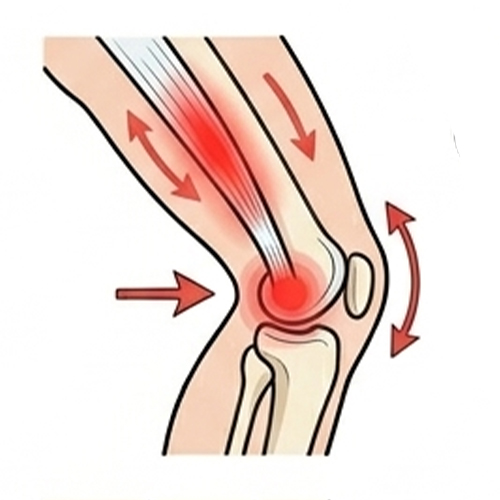
Five symptoms define the patellofemoral pattern, and front-of-knee stairs pain leads.
- Front-of-knee pain. A dull ache around or behind the kneecap, sometimes hard to point to exactly, felt at the front rather than the sides or back.
- Worse going down stairs. Descending provokes it more than climbing, the pattern covered in our guide to knee pain going down stairs.
- The theatre sign. Aching after sitting with the knee bent for a long time, in a cinema, car, or at a desk, easing when you straighten and move.
- Squat and kneel pain. Deep knee bending, squatting, kneeling, and rising from low chairs provoke it.
- A grinding or grating feel. A sense of friction behind the kneecap on movement, often harmless on its own but part of the pattern.
The first two carry the pattern. Front-of-knee pain, worse going down, is the core.
The Two Home Tests
Two tests build the pattern picture. Stop either if it produces sharp, worsening pain.
Test 1: The Squat Reproduction
How to do it. Holding support, slowly lower into a squat as far as comfortable, then rise. Note where and when discomfort appears.
Positive sign. A familiar ache at the front of the knee, around or behind the kneecap, appearing as you bend and load the knee, rather than pain at the sides or deep in the joint.
Test 2: The Step-Down Test
How to do it. Stand on a low step. Slowly lower the other foot toward the floor by bending the standing knee, controlling the descent, then come back up.
Positive sign. Front-of-knee pain reproduced during the lowering phase, often with the knee feeling wobbly or the movement hard to control. This recreates the downstairs load that defines the pattern.
Reading Your Results
Both tests reproducing front-of-knee pain, with the symptom pattern, point toward patellofemoral pain.
Both tests recreating your familiar front-of-knee ache, alongside the stairs and theatre-sign pattern, makes patellofemoral pain a leading explanation and a physiotherapy assessment the sensible next step. One positive test alone is weaker.
Zero positives with ongoing knee pain still warrants assessment, because knee pain has neighbours: pain at the sides points elsewhere, locking or giving way suggests a different structure, and swelling changes the picture, which our guide to when knee swelling is a worry covers. The tests narrow the field. The examination decides it.
What The Self-Test Cannot Tell You
Home testing classifies a pattern. It cannot confirm the diagnosis or find the cause.
The tests cannot measure how the kneecap tracks, cannot assess the hip and thigh muscles that control the knee, cannot separate patellofemoral pain from other front-of-knee sources, and cannot stage a recovery.
Assessment adds those layers: examination, strength and control testing up the whole leg, and the load history that explains why this knee and why now. Patellofemoral pain is strongly driven by how the hip and thigh control the knee, which is why assessment looks well beyond the knee itself.
Persistent knee pain that fails simple self-care deserves that fuller look. Our knee pain team in London runs exactly this assessment, typically within days through direct access, no referral needed.
When To Book The Assessment
Three triggers turn a positive self-test into a booking.
Duration: front-of-knee pain persisting beyond two to three weeks despite easing the aggravating activities. Function: pain now limiting stairs, squatting, sport, or sitting comfortably. Recurrence: a knee that settles then flares each time you return to activity.
Any trigger met, book. General guidance on timing sits in our guide to when to see a physio for knee pain. Patellofemoral pain responds well to targeted strengthening, and the earlier the plan starts, the quicker it usually settles.
Note. Some knee symptoms need medical review rather than self-testing. Seek urgent GP or A&E care for a knee you cannot bear weight through after injury, a hot swollen knee with fever, a knee that locks and will not straighten, or sudden severe swelling within hours of an injury.
Seek GP review for knee pain with unexplained weight loss or night pain unrelated to activity. Physiotherapists screen for these at first assessment and refer onward the same day when they appear. Contact NHS 111 when unsure.
Frequently Asked Questions
We answer the kneecap pain questions patients ask most.
What does patellofemoral pain feel like?
A dull ache at the front of the knee, around or behind the kneecap, worse going down stairs and after long sitting. Squatting, kneeling, and rising from low chairs typically provoke it. The pain is often hard to point to precisely, which is itself a clue.
Can I test for kneecap pain at home?
Yes, the two tests above build a reliable pattern picture, and reproducing front-of-knee pain points toward patellofemoral pain. The tests classify rather than diagnose. An assessment confirms it and finds the hip and thigh factors driving it.
How is patellofemoral pain treated?
The main treatment is progressive strengthening of the hip and thigh muscles that control the knee, guided by assessment. Patellofemoral pain is a control and load problem, so passive treatments alone rarely fix it. A staged plan restores the knee’s tolerance over time.
