Home - TMJ and Jaw Pain Physiotherapy in London

TMJ and Jaw Pain Physiotherapy in London

TMJ and jaw pain physiotherapy in London treats temporomandibular disorders, a group of conditions that cause pain in the jaw joint and jaw muscles, clicking, limited or uneven mouth opening, and headaches and ear symptoms that travel with them. Our HCPC-registered physiotherapists assess the jaw, the muscles that move it, and the neck that supports it, because the neck contributes to most persistent jaw pain, and treat all three together with hands-on techniques, exercises, and habit changes that take the load off the joint. The approach follows the conservative-first management NHS guidance sets out for temporomandibular disorders, with your dentist and GP involved where a splint, dental cause, or medical cause is needed. Appointments are available same day, early and late across our London clinics.

Book online in under 60 seconds
Google
5 star review

4.9/5 · 7000+ Google reviews

Health Insurance Accepted

Bupa
Axa Health
Aviva
Vitality
Cigna
WPA

Trusted by Thousands Across London

Rated Excellent on Trustpilot, with thousands of 5-star Google reviews across One Body LDN clinics.

Find a TMJ and Jaw Pain Physiotherapist Near You in London

Which TMJ and jaw conditions do we treat?

We treat temporomandibular disorders of the joint and of the muscles, the limited and uneven opening that follows them, and the neck and posture problems that drive or maintain them, in adults with jaw pain from clenching, grinding, stress, injury, dental work or no clear cause. The conditions we treat most often in our London clinics are listed below:

The NICE Clinical Knowledge Summary on temporomandibular disorders sets out conservative management as first-line care: explanation and reassurance, self-care advice, jaw exercises and physiotherapy, a dental splint from a dentist where night grinding is a factor, and referral to oral and maxillofacial services for persistent, locking, or structural cases. Assessing a jaw condition includes pain history, clenching and grinding, stress and sleep, dental history and any recent dental work, neck pain and posture, and joint opening, deviation, and sounds. We refer jaw swelling, a jaw that will not close, facial numbness, difficulty swallowing, unexplained weight loss, or persistent one-sided symptoms that don’t improve to your GP or dentist before physiotherapy.

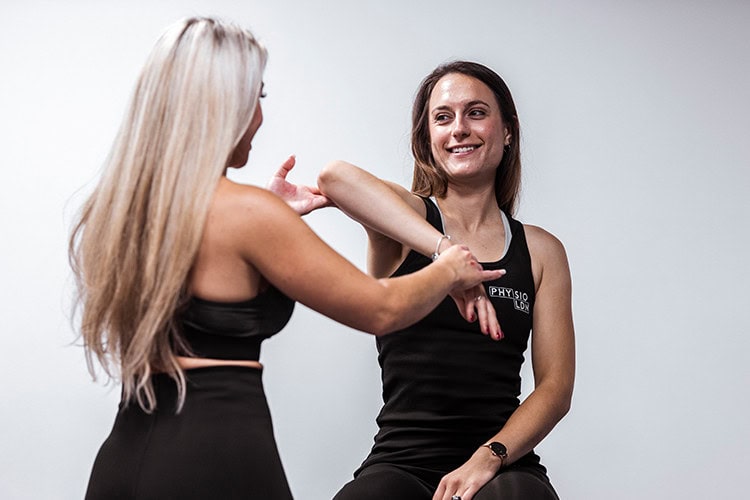
One Body LDN physiotherapist assessing an elbow injury from tennis, squash or badminton in a London clinic

How does TMJ physiotherapy work at One Body LDN?

TMJ physiotherapy at One Body LDN follows five stages: a jaw and neck history, a physical assessment of the jaw, jaw muscles, and neck, an explanation of the condition, hands-on treatment with a jaw and neck exercise plan, and progress measured by opening, pain, and function. The neck is assessed at every stage because the muscles that move the jaw and the muscles that hold the head share the same nerve supply and posture.

The five stages of TMJ physiotherapy are given below:

Jaw and neck history

Your physiotherapist records when the pain started, what provokes and eases it, clenching and grinding, stress and sleep, dental history and any splint, neck pain and headaches, and what the jaw stops you from doing: eating, talking, yawning, singing or sleeping.


Physical assessment

Mouth opening is measured in millimetres, and the deviation on opening is recorded; the joint is examined for tenderness and sounds; the jaw muscles are examined outside the mouth; and the upper neck and posture are examined for their contribution.

Explanation

The findings are explained in plain terms because most temporomandibular disorders improve with understanding and self-care, and knowing that a click without pain needs no treatment and that clenching causes the pain can change the habit from day one.

Hands-on treatment and exercise plan

Soft-tissue and joint techniques are applied to the jaw muscles, joint, and upper neck, and a short daily exercise plan for the jaw and neck is set alongside habit changes that reduce load.

Progress is measured in opening, pain and function

Reviews record opening in millimetres, pain on chewing and waking, headaches, and functions that have returned, and discharge to self-management is planned from the first review.

Why does the neck matter in jaw pain?

The neck matters in jaw pain because the upper neck and the jaw share nerve supply through the trigeminocervical nucleus, so upper neck problems produce pain felt in the jaw and the temple, and because a forward head posture changes the resting position of the jaw and raises the load on the jaw muscles with every bite and every word. Most people with persistent jaw pain have neck findings on examination, and most people whose jaw pain hasn’t improved with a splint or jaw exercises alone have an untreated neck. The jaw-related headache in the temple and forehead comes from the temporalis muscle and the upper neck working together, which is why the plan treats both.

How do we treat the jaw, the jaw muscles and the neck?

Treatment combines hands-on techniques to the jaw muscles, the joint and the upper neck with a daily jaw and neck exercise plan and the habit changes that take the load off the joint, in a course with discharge to self-management planned from the first review. Self-care carries most of the result, and the hands-on work makes the self-care possible by reducing pain and restoring the movement the exercises need.

The elements of a TMJ treatment plan are listed below:

Hands-on treatment

Soft-tissue release of the masseter, temporalis and the muscles inside the cheek, applied outside and, with gloves and consent, inside the mouth; joint mobilisation for limited opening and the closed lock; and mobilisation and soft-tissue work to the upper neck

Jaw exercises

Controlled opening with the tongue on the roof of the mouth, lateral and forward movements, and isometric holds against light resistance, performed for a few minutes several times a day

Neck and posture exercises

Deep neck strengthening, upper back mobility and the head position at a desk and a phone, because the resting load on the jaw follows the head

Habit changes

Teeth apart and lips together as the resting position, a soft diet during a flare, no gum, nail biting or pen chewing, yawning with a hand under the chin, and the clenching awareness that most people need

Sleep and stress

Night clenching and grinding are raised with your dentist for a splint where indicated, and stress and sleep are addressed in the plan and with your GP where needed

A person with jaw muscle pain on waking follows the resting position, the soft-tissue work and the exercises, with a splint from the dentist where grinding is confirmed, and reports pain-free mornings within three to four weeks in most cases. A person with limited opening after a long dental appointment receives joint mobilisation and a graded opening programme and regains full opening within two to four weeks in most cases. 

A person with a jaw-related headache that has lasted months receives the neck treatment alongside the jaw treatment, and the headaches reduce as the neck improves. People who want the needling techniques described use our dry needling page, where needling of the jaw and neck muscles is available with selected clinicians and compared with deep tissue massage.

How do we measure progress and plan discharge?

Progress is measured in mouth opening in millimetres, pain on chewing and on waking, headache frequency, the sounds and catching of the joint and the functions that have returned, recorded at each review against the baseline. Normal pain-free opening is around 40 millimetres or more, about three fingers stacked, and the measurement is what shows that a limited jaw has recovered.

The measures used at each review are listed below:

Most temporomandibular disorders improve within a short course of treatment, with self-care continuing after discharge and a route back if symptoms return. A jaw that locks and does not release, opening that stays below two fingers after a course of treatment, or persistent pain that has not responded is referred through your GP or dentist to oral and maxillofacial services, through our medical referral network where a private route is wanted. Jaw pain that has lasted more than three months with the sensitisation pattern of persistent pain is managed with the graded approach on our chronic pain physiotherapy page alongside the jaw treatment.

As featured In

GQ Magazine
Women's Health
Men's Health
The Times
Marie Claire
Men's Journal
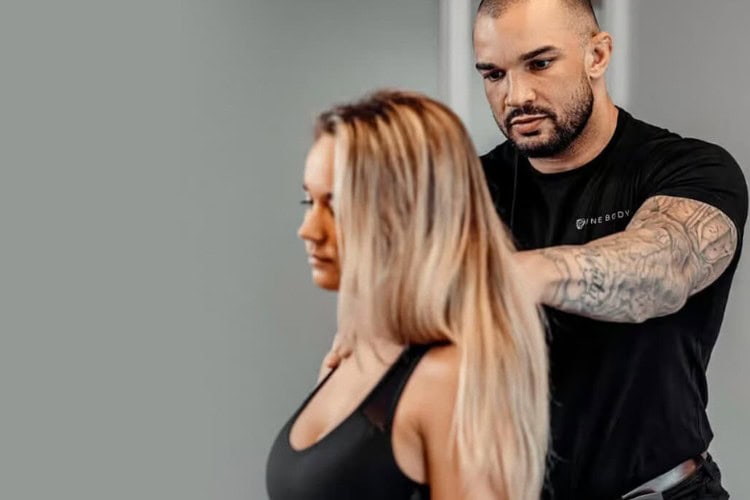
One Body LDN physiotherapist assessing a racket sports player at their first appointment in a London clinic

What should you expect at your first appointment?

Your first appointment is a full assessment and treatment session, booked online without a GP referral, in any of our London clinics. Bring any dental letters, a note of any splint you use, a list of your medication and a note of the functions the jaw has limited.

The session covers the jaw and neck history, the physical examination of the jaw, the jaw muscles and the neck, the explanation of your findings, first treatment, the first week of exercises and the habit changes. You leave knowing what is producing the pain, what the neck contributes, whether a dentist or a GP needs to be involved and what to do each day until the next appointment. Jaw pain physiotherapy is booked through the same online system as all private physiotherapy on our physiotherapy London page.

Most private medical insurance policies cover physiotherapy for a temporomandibular disorder as a musculoskeletal condition subject to authorisation, and some policies classify jaw conditions under dental cover, which is often excluded. People with jaw pain should check with their insurer before booking, and our team helps with the authorisation where cover is confirmed. Details are on our private health insurance page.

Dentist, GP or physiotherapist: who should you see for jaw pain?

A dentist rules out a dental cause and provides a splint where night grinding is a factor; a GP rules out an ear, sinus or medical cause and refers to oral and maxillofacial services where needed; a physiotherapist assesses and treats the jaw muscles, the joint and the neck, and the three work together for most persistent cases. The first contact depends on the symptoms.

If jaw pain is linked to toothache, a broken or worn tooth, a recent filling or crown, or pain that worsens when biting down on one tooth, start with the dentist. If you have ear pain with discharge, hearing loss, or fever, or jaw pain with facial swelling or numbness, start with your GP. Jaw pain with clicking, limited opening, muscle tenderness, headache, and neck pain starts with the physiotherapist once a dental and a medical cause have been ruled out or are not suggested. Our physiotherapists write to your dentist or your GP where a splint, a dental review or a medical review is indicated, and people whose jaw pain sits inside a wider neck problem use our neck pain page alongside this one.

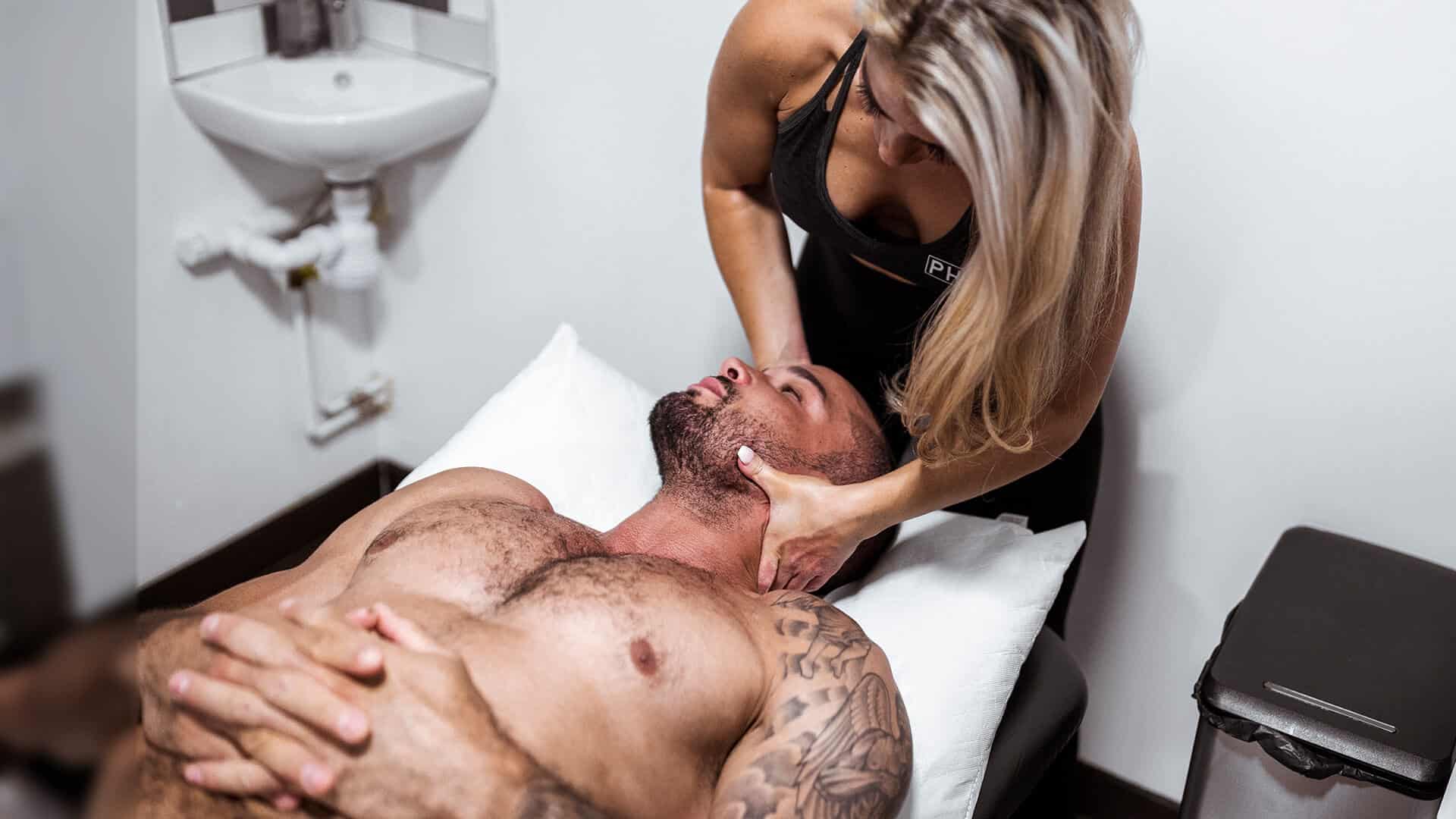
One Body LDN physiotherapist giving hands-on treatment to the jaw and upper neck for jaw clicking and pain

Does a clicking jaw need treatment?

A jaw that clicks without pain, catching or limitation needs no treatment, because the click is produced by a displaced disc that returns to position on opening and is present in a large proportion of the adult population without symptoms. The click becomes a reason to seek treatment when pain, catching, intermittent locking, or reduced opening accompanies it.

We assess clicking with pain or catching for disc and muscle contribution, and treat with joint mobilisation, controlled opening exercises, and habit changes that reduce load on the disc. Clicking that progresses to a closed lock, where the jaw stops opening fully and deviates to one side, needs early treatment, because a recent lock responds to mobilisation and a graded opening programme, and a long-standing lock responds more slowly. We explain the painless click and resting position, and recommend no treatment, while people whose jaw symptoms started with a neck injury should follow the whiplash guidance on our neck pain page.

Why choose One Body LDN for TMJ and jaw pain physiotherapy in London?

Every jaw pain appointment is delivered by an HCPC-registered physiotherapist and CSP member, working to the conservative-first management that NHS guidance sets out and writing to your dentist or GP where a splint, a dental review or a medical review is indicated.

One Body LDN has 7,000+ Google reviews at 4.9 and thousands of five-star reviews across Google and Trustpilot. Our structured analysis of 4,859 client survey responses recorded a Net Promoter Score of +79.

Hands-on treatment to the jaw, the jaw muscles and the upper neck, with the daily jaw and neck exercises and the habit changes written into Physitrack.

Appointments are paid individually with no packages or multi-session commitments. Self-management is planned from the first review.

Our clinics sit 2 to 8 minutes from major Tube and train stations, with same-day, early, late and weekend appointments available at many locations, so an acute lock is seen the same day.

We work with AXA Health, Bupa, Cigna Healthcare, WPA, Vitality, Aviva, Allianz, Aetna and Healix, and support cash plans including Medicash, Simplyhealth, Health Shield and Westfield Health, subject to each policy’s terms on jaw and dental conditions.

TMJ and jaw pain physiotherapy London: FAQs

TMJ is the temporomandibular joint, the joint between the jaw and the skull in front of each ear. Pain and dysfunction of the joint and jaw muscles is a temporomandibular disorder, often shortened to TMD; in everyday speech, TMJ is used for both the condition and the joint.

Yes. Physiotherapy is part of the first-line conservative management of temporomandibular disorders in NHS guidance, alongside explanation, self-care, and a dental splint where grinding is a factor, and it treats the jaw muscles, joint, and neck that contribute to the pain.

New clients can book a 45-minute physiotherapy assessment and treatment for £89.

Your appointment includes a comprehensive assessment, hands-on treatment where appropriate, and a personalised treatment plan tailored to your needs and recovery goals.

If further treatment is recommended, you can book your next appointment directly with your physiotherapist and access our lower follow-up rates. There are no contracts or multi-session commitments, appointments are paid for individually.

We also accept private health insurance from major UK and international insurers, subject to your policy coverage and authorisation requirements.

Most policies cover physiotherapy for a temporomandibular disorder as a musculoskeletal condition subject to authorisation, and some classify jaw conditions under dental cover, which is often excluded. Check with your insurer before booking, and our team can help with authorisation once cover is confirmed.

No. Self-paying patients book directly online. Our physiotherapists write to your dentist or GP when a splint, dental review, or medical review is indicated, and insured patients should confirm any referral requirements with their insurer.

Jaw pain on waking comes from clenching or grinding during sleep, which loads the masseter and temporalis muscles for hours. Resting position, soft-tissue work, and exercises reduce pain, and a dental splint from your dentist protects your teeth and reduces load when grinding is confirmed.

Yes. The temporalis muscle and upper neck can cause headaches felt in the temples and forehead, and jaw-related headaches improve when you treat the jaw muscles and neck together. Your GP assesses headaches with visual symptoms, nausea, sudden onset, or neurological symptoms first.

Yes. The jaw joint sits in front of the ear and shares nerve supply with the ear, so jaw conditions can cause ear pain, fullness, and ringing without an ear cause. Your GP confirms ear symptoms are non-otological before treating them as jaw-related.

An acute closed lock, where the jaw opens less than two fingers’ width and deviates to one side, needs early assessment, because a recent lock responds to mobilisation and a graded opening programme. Same-day appointments are available, and a jaw that will not close, or a lock after a blow to the jaw, needs A&E first.

There is no fixed number, it depends on your problem, how long you’ve had it, your goals and how you respond to treatment.

Some people may only need a small number of appointments, while longer-standing injuries or post-surgery rehabilitation can require a longer programme.

After your assessment, your physiotherapist will explain what they recommend and why, and your progress will be reviewed as treatment continues.

If you don’t need further physiotherapy, we’ll tell you.

Yes. Limited opening and muscle pain after a long dental appointment, wisdom tooth removal, or intubation respond to joint mobilisation and a graded opening programme, and we rehabilitate stiffness after jaw surgery alongside the surgical team.

A dentist provides and fits a splint where night grinding or clenching is confirmed; it protects the teeth and reduces muscle load. Our physiotherapists raise this with your dentist when the assessment suggests grinding, and a shop-bought guard isn’t a substitute for a fitted splint.

Ready to eat, talk and sleep without jaw pain?

TMJ and jaw pain physiotherapy in London from One Body LDN treats the jaw, jaw muscles, and neck together, with hands-on care, a daily plan, and habit changes that take the load off the joint. Same-day appointments across London. Insurance accepted, subject to policy terms.