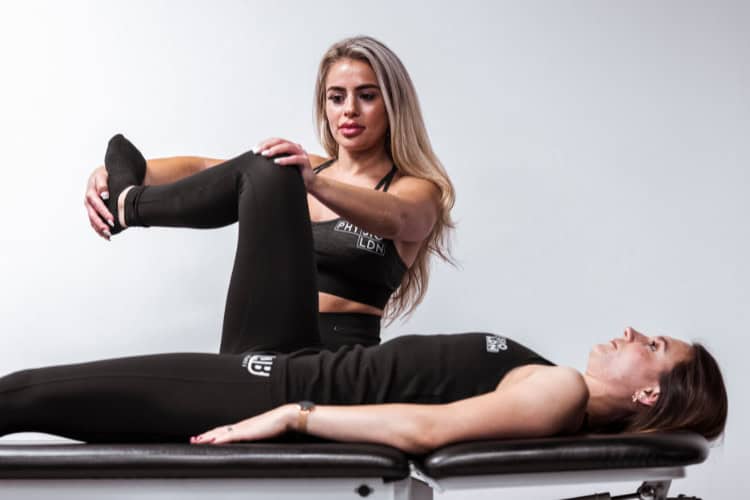
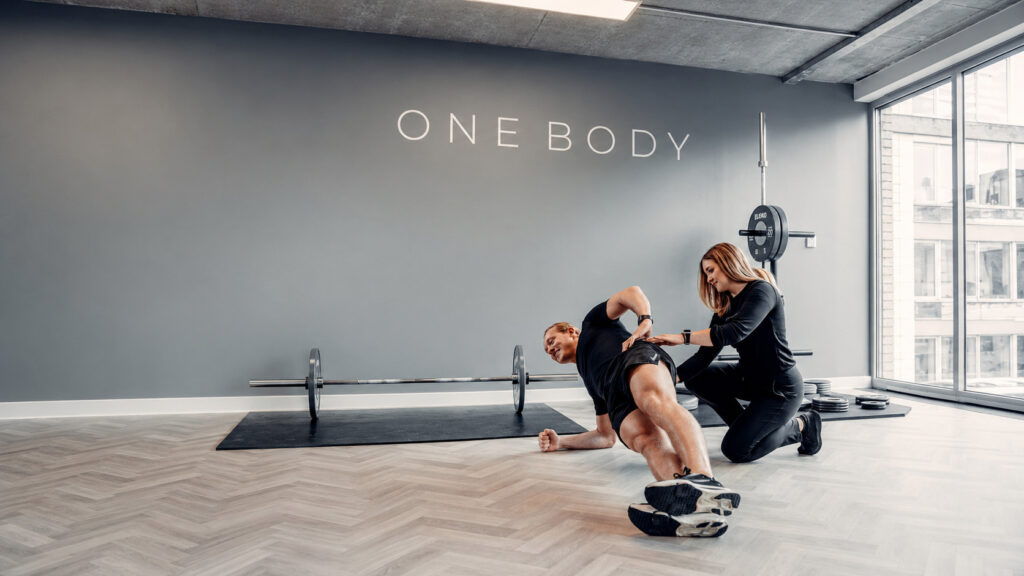
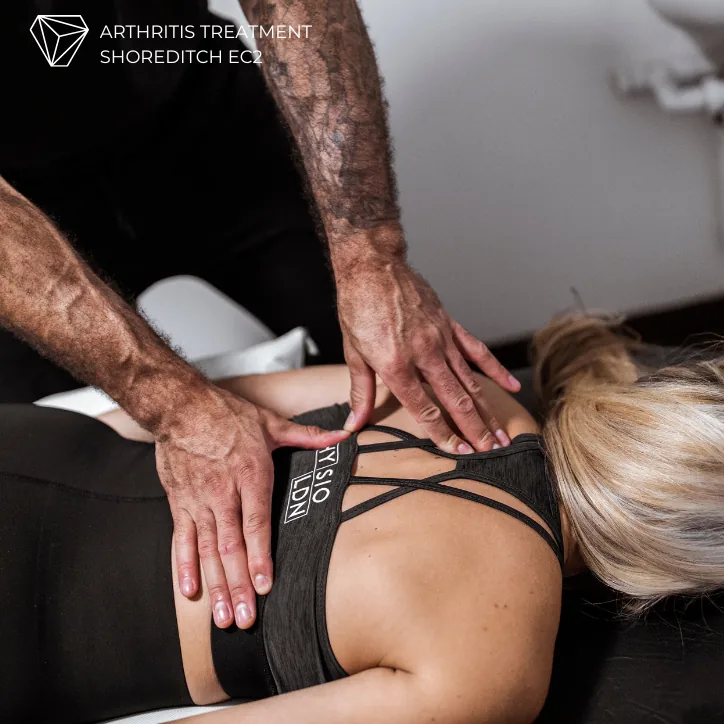
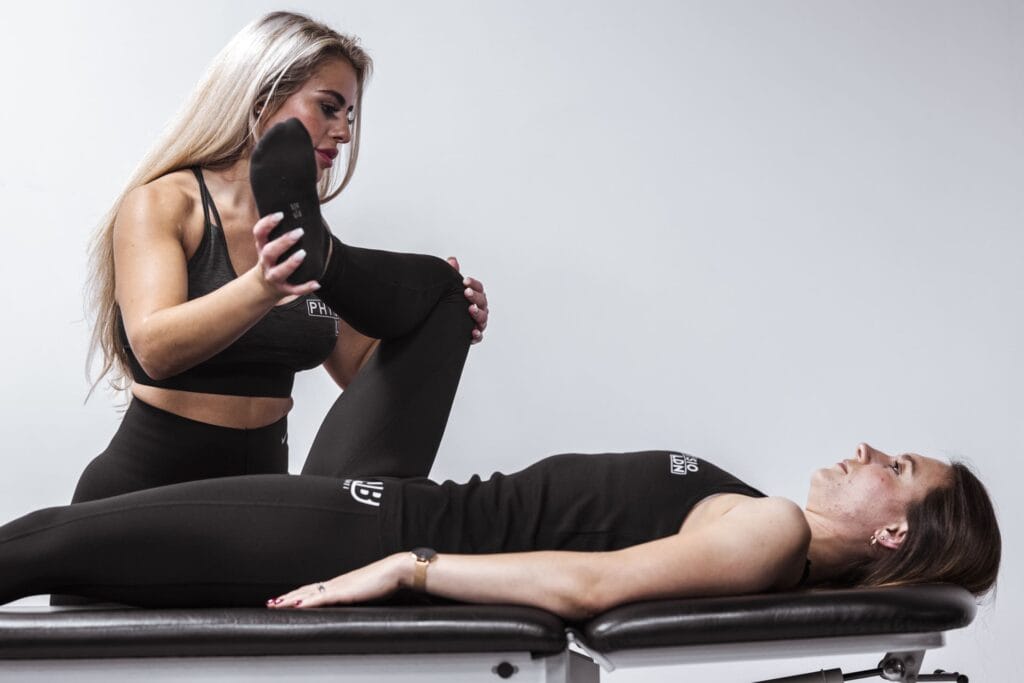
Sports physiotherapy in London treats sports injuries, rehabilitates the athlete and returns them to training and competition. Our HCPC-registered physiotherapists assess the injury, explain what is driving the symptoms and build a sport-specific rehabilitation plan. Treatment combines hands-on techniques where appropriate with progressive strength and conditioning. Return to sport is decided on measured criteria, not on a fixed number of weeks. Appointments are available same day, early and late across our London clinics.
Sport-specific rehabilitation from assessment to return to play
Same-day, early and late appointments across London
Rated Excellent on Trustpilot, with thousands of 5-star Google reviews across One Body LDN clinics.
“Within weeks my pain started to decrease and within months I was back at the gym doing most of the things I wanted to be able to do.”
Jake Whittaker
“The treatment plans were clear, effective and tailored to my needs, and the improvement in my pain and mobility has been excellent.”
Nik Ollek
“Through rigorous sports massage and a clear, well structured physio exercise programme, I was back playing within a month.”
Nicholas Morgan
“Six weeks on, I’m deadlifting weights in the gym and my back feels completely renewed.“
Catherine Gratwicke
“After his treatment, massages and the exercises he gave me, I saw big improvements very fast. Within the same week I was even able to complete a half marathon.”
Mirela
“I went to see Meher after struggling with shoulder and lower back pain due to long office hours, and the difference after starting treatment has been incredible.”
Nandu Krishna Anil Kumar
“I started physio with her 3 months ago and since then my knees pain has improved massively with her personalised program and custom exercises and manual therapy.”
Jessica Foster
“I came in with serious neck tension and frequent headaches from spending long hours at the computer. Preeti … did an excellent job targeting the problem areas with a focused sports massage.”
Tony French
“Her sports massages are outstanding! Easily some of the most effective I’ve had.”
IC OM
“I have been working with Matt for almost two years as part of my rehabilitation journey, and I cannot recommend him highly enough.”
Catherine
“I started going to One Body LDN only to improve my posture … After just a few sessions with my physiotherapist Om, I can tell my posture has already started improving.”
Bozhidara-Maria Opanska
“I feel now I am more aware of my foot placement, and my legs are definitely stronger than ever before. Roll on next ‘long run’ challenge.”
aine121
“Within just a few sessions, she managed to relieve a significant amount of the pain in my shoulder, and I’ve already noticed a real improvement.”
Rob And
“I went to see him with significant back pain, and after just one appointment the difference was remarkable.”
Anvit Desai
“My therapist assessed my issue quickly and got straight to hands on therapy. It did the trick perfectly. After one session my neck pain was considerably better.”
EP
“Very impressed with the in depth assessment and treatment plan I was given.”
Joel Greensite
“I came in with lower back pain, probably caused by spending long hours sitting at a computer … this was the first place where I started to notice a real improvement.”
Bruna Francyne
“The team is very professional, welcoming, and truly cares about their clients. From the moment I arrived, I felt comfortable and well looked after.”
Юлія Беген
“Best physio in London! Have tried multiple One Body clinics and always have such a good experience and knowledgeable physiotherapists.”
Amy Perring
“The trainers are incredibly knowledgeable and take the time to understand your goals, making every session feel personalised and effective.”
Yawar Hayat
“Her knowledge and expertise were immediately evident, and she took the time to understand my specific needs and concerns in a way I haven’t experienced before.”
Andrew G. T
“This is a first class service and the Physios are all excellent and very professional and go the extra mile to help people get back to things they want to do as soon as they can!”
Engine Room
Find a Sports Physiotherapist Near You in London
Find a Clinic Near Me ▼
2–8 mins from major stations
Same-day, early & late appointments
Which sports injuries do we treat in London?
Our sports physiotherapists treat muscle, tendon, ligament, joint and bone-stress injuries from training, competition and gym work. The injuries we treat most often in our London clinics are listed below:
Hamstring, calf and quadriceps strains
Ankle sprains and ankle instability
Anterior cruciate ligament (ACL) injury, before and after surgery
Meniscus tears and knee cartilage injuries
Patellofemoral pain, often called runner's knee
Patellar and Achilles tendinopathy
Shin splints and bone stress injuries of the lower leg
Tennis elbow and golfer's elbow
Rotator cuff injuries and shoulder instability from throwing, lifting and contact
Lower back pain from lifting, rowing and rotation sports
Groin and hip flexor strains, hip impingement and labral injury
Concussion recovery alongside medical management
Assessment of a sports injury considers the sport, the position or discipline, training volume, the mechanism of injury and the movement demands of returning to play. Rehabilitation is progressed from pain settling and load tolerance to strength, power, change of direction and sport-specific skill. Hands-on treatment is used where clinically appropriate and always alongside active rehabilitation.
How does sports physiotherapy work at One Body LDN?
Sports physiotherapy at One Body LDN follows five stages: assessment, working diagnosis, treatment, progressive rehabilitation and return to sport. Each stage has a purpose and an exit point, so you know where you are in the recovery at every appointment.
The five stages of sports physiotherapy are given below:
Assessment
Your physiotherapist takes a history of the injury, sport, and training load, then tests movement, strength, stability, and the specific sporting actions that reproduce the symptoms.
Working diagnosis
You receive a plain-English explanation of which structure is injured, why the injury happened and what a realistic recovery looks like for your sport.
Treatment
Hands-on treatment, such as soft-tissue techniques and joint mobilisation, is used where appropriate to reduce pain and restore movement, alongside initial rehabilitation exercises.
Progressive rehabilitation
Strength, control, plyometric and sport-specific drills are added in stages as the tissue tolerates load, with exercises delivered through Physitrack between appointments.
Return to sport
Return to training, then competition, is cleared against measured criteria rather than a calendar date.
Sports physiotherapy differs from general physiotherapy in the demands the rehabilitation must meet. Sports physiotherapy assesses and treats injuries related to sport and exercise, considering each injury in the context of the activity’s demands. A hamstring strain in a sprinter and the same strain in a weekend footballer share the diagnosis and differ in the rehabilitation endpoint.
What happens at your first sports physiotherapy appointment?
Your first sports physiotherapy appointment is a full assessment and treatment session, with no GP referral needed. The session covers the history, the physical examination, the working diagnosis, first treatment and the start of your rehabilitation plan. You leave knowing what is injured, what we recommend, how many sessions we expect, and what to do before the next appointment. Insured clients can use AXA Health, Bupa, Aviva, Vitality, Cigna, WPA and other policies, subject to authorisation.
How do we decide when you return to sport?
Return to sport at One Body LDN is cleared on measured criteria: pain-free full range of movement, strength within an agreed percentage of the uninjured side, completed sport-specific drills and confidence in the movement that caused the injury. A fixed number of weeks is not a criterion.
Return to sport is a continuum, not a single day. The 2016 consensus statement on return to sport, published by Ardern and colleagues in the British Journal of Sports Medicine after the first World Congress in Sports Physical Therapy, describes three stages: return to participation, return to sport and return to performance. We use the same three stages, so a footballer trains with the team before playing a match and plays reduced minutes before a full 90.
Criteria-based clearance protects the athlete from re-injury. A 2016 cohort study by Grindem and colleagues in the British Journal of Sports Medicine found that athletes who passed return-to-sport tests after ACL reconstruction had a lower re-injury rate than athletes who returned without passing them. The criteria we test depend on the injury and the sport, and your physiotherapist sets them out in writing at the start of the rehabilitation so the finish line is visible from the first session.
Which sports do we treat?
We treat injuries from every sport played in London, with dedicated pages for the sports that bring the most injuries through our doors. The sport-specific pages cover the common injury profile of that sport, the conditions we treat, the return-to-sport pathway, and the proof behind our approach.
From ACL and meniscus tears to wrist and shoulder injuries, on our ski and snowboard physiotherapy page
Football
With hamstring strains, groin pain and ankle sprains the most common presentations
Golf, with lower back pain, golfer's elbow and wrist injuries
Golf
With lower back pain, golfer's elbow and wrist injuries
Cycling
With knee pain, lower back pain and neck pain from position and load
Triathlon and endurance sport
Including swimming shoulder, cycling knee and running tendinopathy
Strength and functional fitness
Including gym injuries, weightlifting, powerlifting, CrossFit and HYROX
Combat sports
Including boxing, Muay Thai, MMA, Brazilian jiu-jitsu, kickboxing and wrestling
Team sports
Including rugby, cricket, hockey, netball and basketball
Racket sports
Including tennis, padel, squash and badminton
Julia, a CrossFit coach and former competitive Muay Thai fighter, came to us with a knee injury that was holding back her squats, cleans and snatches. Her rehabilitation rebuilt the lifts around the knee, and five years on, she remains injury-free with preventative check-ups. Her story sits on ourclient testimonials page alongside Iklam’s shin splints recovery and Joel’s Muay Thai lower back recovery.
As featured In
Who provides sports physiotherapy at One Body LDN?
HCPC-registered, degree-qualified physiotherapists deliver sports physiotherapy at One Body LDN, several of whom hold postgraduate qualifications in sports medicine, strength and conditioning, or football medicine. Physiotherapist is a protected professional title in the UK, and every clinician on our team is registered with the Health and Care Professions Council and a member of the Chartered Society of Physiotherapy.
Our team includes clinicians with an MSc in Sports Medicine, an MSc in Sports Medicine, Exercise and Health, a FIFA Diploma in Football Medicine, and certified strength and conditioning training. Our clinic experience spans NHS, private musculoskeletal, and sports and performance settings. Every physiotherapist completes our structured clinical onboarding, which covers red-flag screening, treatment planning, progressive exercise rehabilitation and clinical documentation.
We refer complex injuries onward when imaging, an injection, or a surgical opinion is needed. Our clinicians receive referrals from and refer to consultants at the Institute of Sport, Exercise and Health, London Sports Orthopaedics, Fortius Clinic London and the London Shoulder Unit, among the hospitals and clinics in ourmedical referral network. You stay with the same physiotherapist throughout the rehabilitation.
All private physiotherapy in our London clinics, including sports physiotherapy, is booked through the same online system on ourphysiotherapy London page.
Which rehabilitation after surgery do we provide for athletes?
We provide post-operative rehabilitation for athletes after ACL reconstruction, meniscus repair, rotator cuff repair, shoulder stabilisation, hip arthroscopy, and Achilles repair, following the surgeon’s protocol and progressing athletes back to sport. Post-operative rehabilitation follows the same five stages as any sports injury, with the surgeon’s healing timelines setting the earliest start date for each stage.
Post-operative rehabilitation begins by protecting the repair and restoring range of movement, then rebuilding strength and control, then returning the athlete to running, cutting, lifting, or throwing. We clear return to sport after surgery using the same measured criteria described above. The full pathway, from the first appointment after surgery to return to competition, is set out on ourpost-operative physiotherapy page.
Sports physiotherapy or sports massage: which do you need?
Sports physiotherapy diagnoses and rehabilitates injuries; sports massage treats muscle tightness and supports recovery between training sessions. Clinics offer both services, and many athletes use both at different points in a season.
Choose sports physiotherapy when pain limits training, when an injury is new, when symptoms have lasted more than two weeks, or when a joint feels unstable. Choose sports massage when muscles feel tight after a heavy training block, and no injury is suspected. A physiotherapist assesses, diagnoses and prescribes rehabilitation. A sports massage therapist works on the soft tissue. We recommend sports massage in London when an assessment finds no injury and recovery is the priority.
Why choose One Body LDN for sports physiotherapy in London?
HCPC-registered, degree-qualified physiotherapists with sports medicine training
Every sports physiotherapy appointment is delivered by an HCPC-registered physiotherapist and CSP member. Several clinicians hold postgraduate sports medicine qualifications or strength and conditioning certification.
Thousands of patient reviews and an NPS of +79
One Body LDN has 7,000+ Google reviews at 4.9 and thousands of five-star reviews across Google and Trustpilot. Our structured analysis of 4,859 client survey responses recorded a Net Promoter Score of +79, with hands-on treatment, self-reported progress, and structured aftercare among the recurring themes.
Hands-on treatment plus sport-specific rehabilitation
Treatment combines soft-tissue techniques and joint mobilisation where appropriate with progressive strength, plyometric and sport-specific drills, delivered through Physitrack between appointments.
Clear pricing and treatment plans, no pressure to overbook
Appointments are paid individually with no packages or multi-session commitments. Your physiotherapist tells you how many sessions to expect and tells you when physiotherapy is no longer needed.
Same-day, early and late appointments across London
Our clinics sit 2 to 8 minutes from major Tube and train stations, with same-day, early, late and weekend appointments available at many locations.
Private health insurance and health cash plans accepted
We work with AXA Health, Bupa, Cigna Healthcare, WPA, Vitality, Aviva, Allianz, Aetna and Healix, and support cash plans including Medicash, Simplyhealth, Health Shield and Westfield Health. Details are on ourprivate health insurance page.
Sports physiotherapy London: FAQs
Does sports physiotherapy work for sports injuries?
Sports physiotherapy can reduce pain, restore function and return athletes to sport for most muscle, tendon, ligament and joint injuries. Research funded by the National Institute for Health Research shows that physiotherapy for musculoskeletal conditions improves outcomes while reducing overall healthcare costs. Outcomes depend on the injury, how early treatment starts and how well the rehabilitation plan is followed between sessions.
How many sessions of sports physiotherapy will I need?
There is no fixed number; it depends on your problem, how long you’ve had it, your goals and how you respond to treatment. Some people may only need a small number of appointments, while longer-standing injuries or post-surgery rehabilitation can require a longer programme. After your assessment, your physiotherapist will explain what they recommend and why, and your progress will be reviewed as treatment continues. If you don’t need further physiotherapy, we’ll tell you.
How much does sports physiotherapy cost in London?
New clients can book a 45-minute physiotherapy assessment and treatment for £89.
Your appointment includes a comprehensive assessment, hands-on treatment where appropriate, and a personalised treatment plan tailored to your needs and recovery goals.
If further treatment is recommended, you can book your next appointment directly with your physiotherapist and access our lower follow-up rates. There are no contracts or multi-session commitments; appointments are paid for individually.
We also accept private health insurance from major UK and international insurers, subject to your policy coverage and authorisation requirements.
Can I use private health insurance for sports physiotherapy?
Yes. Sports physiotherapy is billed as physiotherapy, which most private medical insurance policies cover subject to authorisation. We hold provider numbers with AXA Health, Bupa, Aviva, Vitality, Cigna and WPA, and our team helps with authorisation codes and billing.
Do I need a GP referral for sports physiotherapy?
No. Self-paying clients book directly online without a GP referral. Insured clients should confirm any GP or consultant referral requirement with their insurer before authorisation.
Should I keep training with a sports injury?
In most cases, training should continue in a modified form rather than stopping completely. Your physiotherapist will identify which movements to avoid, reduce, or continue so you can maintain fitness while the injured tissue recovers. Complete rest is advised only for specific injuries such as suspected fractures or bone stress injuries.
What should I do in the first 48 hours after a sports injury?
Protect the injured area, avoid movements that provoke pain, apply ice for short periods, and keep moving gently where pain allows. Seek urgent medical care for a suspected fracture, a joint that will not bear weight, numbness, or a head injury with confusion, vomiting, or worsening headache. Book a physiotherapy assessment within the first few days so the rehabilitation starts early.
Can a sports physiotherapist diagnose my injury?
Yes. A physiotherapist reaches a working diagnosis from the history, the physical examination and specific clinical tests. Your GP, insurer, or a consultant in our referral network can request imaging when the examination suggests a fracture, a full tendon rupture, or a ligament injury that may need a surgical opinion.
Do you treat amateur athletes as well as professionals?
Yes. Our clinics treat recreational runners, gym members, club players, and competitive athletes. We use the same assessment and rehabilitation methods at every level, and set return-to-sport criteria based on the demands of your sport and goals.
How quickly can I see a sports physiotherapist in London?
Same-day and same-week appointments are available across our London clinics, with early, late and weekend slots at many locations. We show live availability online, and booking takes under 60 seconds.
What is the difference between a sports physiotherapist and a sports therapist?
A physiotherapist holds a protected title regulated by the HCPC and is trained to assess and treat the full range of musculoskeletal conditions, including those needing onward medical referral. A sports therapist holds a sports therapy qualification and is not regulated by the HCPC. Every clinician treating sports injuries at One Body LDN is an HCPC-registered physiotherapist.
Do you help prevent sports injuries as well as treat them?
Yes. Injury prevention is built into the final stage of rehabilitation, where your physiotherapist identifies the strength, mobility, and load factors behind the injury and gives you a programme to address them. Pre-season screening appointments are available for athletes who want the same assessment before injury.
Ready to get back to your sport?
Sports physiotherapy in London from One Body LDN takes you from injury to return to sport on a plan built for your sport, with measured criteria at every stage. Same-day appointments across London. Insurance accepted.