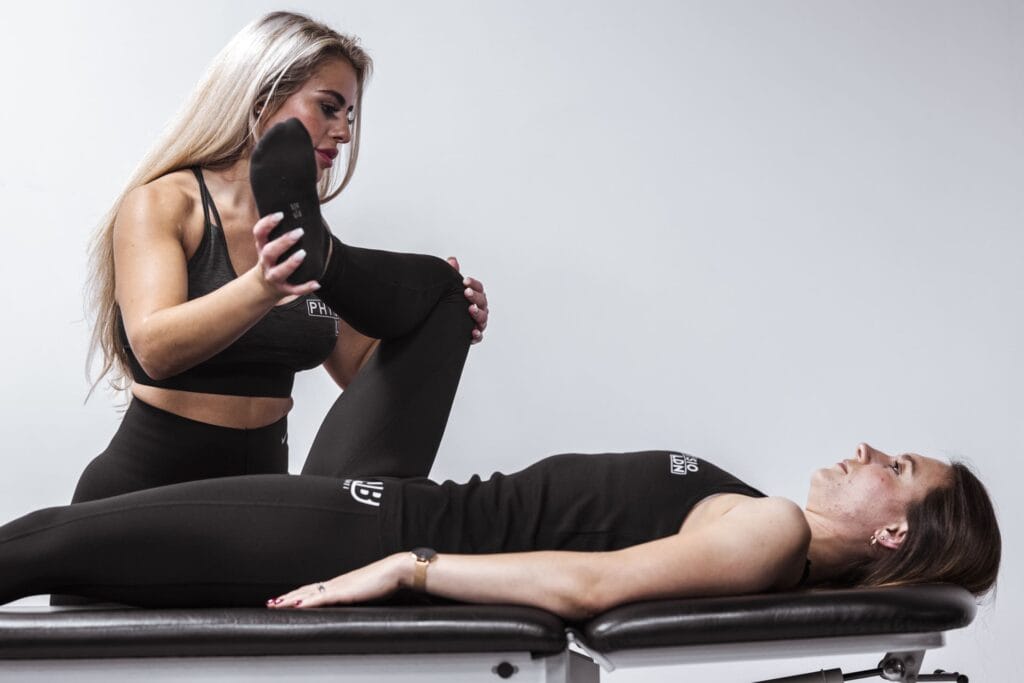
Post-operative physiotherapy in London rebuilds movement, strength, and function after orthopaedic surgery, helping you return to work, daily life, and sport. Our HCPC-registered physiotherapists follow your surgeon’s protocol and progress the rehabilitation in five stages, from protecting the repair to returning to full activity. Recovery timelines follow tissue healing, so each stage opens when the repair is ready, not on a fixed date.
We rehabilitate ACL reconstruction, meniscus repair, joint replacement, rotator cuff repair, shoulder stabilisation, hip arthroscopy, Achilles repair, fracture fixation and spinal surgery. We offer same-day, early, and late appointments across our London clinics, and most private medical insurance policies cover post-operative physiotherapy, subject to authorisation.
Rehabilitation that follows your surgeon's protocol
Same-day, early and late appointments across London
Rated Excellent on Trustpilot, with thousands of 5-star Google reviews across One Body LDN clinics.
“Within weeks my pain started to decrease and within months I was back at the gym doing most of the things I wanted to be able to do.”
Jake Whittaker
“The treatment plans were clear, effective and tailored to my needs, and the improvement in my pain and mobility has been excellent.”
Nik Ollek
“Through rigorous sports massage and a clear, well structured physio exercise programme, I was back playing within a month.”
Nicholas Morgan
“Six weeks on, I’m deadlifting weights in the gym and my back feels completely renewed.“
Catherine Gratwicke
“After his treatment, massages and the exercises he gave me, I saw big improvements very fast. Within the same week I was even able to complete a half marathon.”
Mirela
“I went to see Meher after struggling with shoulder and lower back pain due to long office hours, and the difference after starting treatment has been incredible.”
Nandu Krishna Anil Kumar
“I started physio with her 3 months ago and since then my knees pain has improved massively with her personalised program and custom exercises and manual therapy.”
Jessica Foster
“I came in with serious neck tension and frequent headaches from spending long hours at the computer. Preeti … did an excellent job targeting the problem areas with a focused sports massage.”
Tony French
“Her sports massages are outstanding! Easily some of the most effective I’ve had.”
IC OM
“I have been working with Matt for almost two years as part of my rehabilitation journey, and I cannot recommend him highly enough.”
Catherine
“I started going to One Body LDN only to improve my posture … After just a few sessions with my physiotherapist Om, I can tell my posture has already started improving.”
Bozhidara-Maria Opanska
“I feel now I am more aware of my foot placement, and my legs are definitely stronger than ever before. Roll on next ‘long run’ challenge.”
aine121
“Within just a few sessions, she managed to relieve a significant amount of the pain in my shoulder, and I’ve already noticed a real improvement.”
Rob And
“I went to see him with significant back pain, and after just one appointment the difference was remarkable.”
Anvit Desai
“My therapist assessed my issue quickly and got straight to hands on therapy. It did the trick perfectly. After one session my neck pain was considerably better.”
EP
“Very impressed with the in depth assessment and treatment plan I was given.”
Joel Greensite
“I came in with lower back pain, probably caused by spending long hours sitting at a computer … this was the first place where I started to notice a real improvement.”
Bruna Francyne
“The team is very professional, welcoming, and truly cares about their clients. From the moment I arrived, I felt comfortable and well looked after.”
Юлія Беген
“Best physio in London! Have tried multiple One Body clinics and always have such a good experience and knowledgeable physiotherapists.”
Amy Perring
“The trainers are incredibly knowledgeable and take the time to understand your goals, making every session feel personalised and effective.”
Yawar Hayat
“Her knowledge and expertise were immediately evident, and she took the time to understand my specific needs and concerns in a way I haven’t experienced before.”
Andrew G. T
“This is a first class service and the Physios are all excellent and very professional and go the extra mile to help people get back to things they want to do as soon as they can!”
Engine Room
Find a Post-Operative Physiotherapist Near You in London
Find a Clinic Near Me ▼
2–8 mins from major stations
Same-day, early & late appointments
Which operations do we rehabilitate?
We rehabilitate orthopaedic and spinal surgery across the knee, hip, shoulder, ankle, foot, spine, elbow, wrist and hand. The operations we see most often in our London clinics are listed below:
Knee: ACL reconstruction, meniscus repair and partial meniscectomy, total and partial knee replacement, patellar stabilisation (MPFL reconstruction)
Hip: total hip replacement, hip arthroscopy for femoroacetabular impingement and labral repair
Shoulder: rotator cuff repair, shoulder stabilisation (Bankart and Latarjet procedures), subacromial decompression, anatomical and reverse shoulder replacement
Ankle and foot: Achilles tendon repair, ankle fracture fixation, lateral ligament reconstruction, bunion surgery
Spine: lumbar discectomy and decompression, cervical spine surgery, rehabilitation after spinal fusion once cleared by the surgeon
Fractures: open reduction and internal fixation of the tibia, ankle, wrist, elbow and collarbone, and rehabilitation after a period in a cast or boot
Elbow, wrist and hand: tennis elbow release, carpal tunnel release, wrist fracture fixation and tendon repair, where physiotherapy is appropriate to the procedure
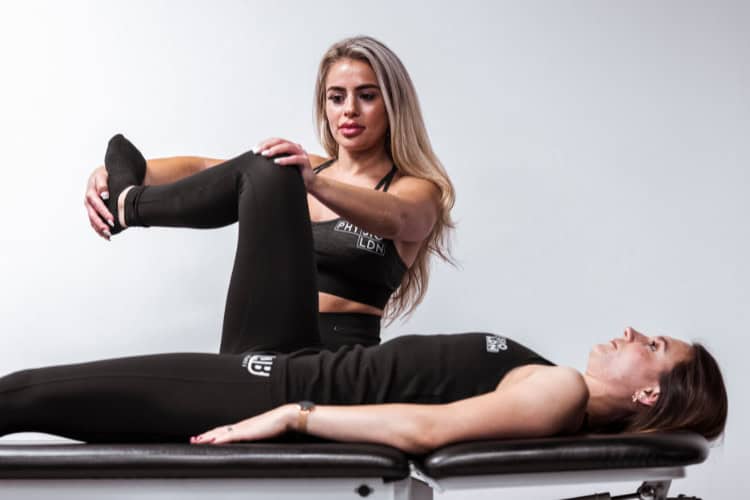
Post-surgery assessment considers the procedure, the surgeon’s protocol, the stage of healing, pain, swelling, range of movement, strength, and the demands of your work or sport. Rehabilitation progresses from protecting the repair to restoring range, rebuilding strength, restoring function, and returning to full activity. Hands-on treatment is used where the protocol allows and always alongside active rehabilitation.
How does post-operative physiotherapy work at One Body LDN?
Post-operative physiotherapy at One Body LDN runs in five stages: protect the repair, restore range of movement, rebuild strength and control, restore function, and return to work or sport. The surgeon’s protocol sets the earliest point each stage can begin, and your progress sets when each stage ends.
The five stages of post-operative rehabilitation are given below:
Protect the repair
Swelling and pain are managed, the surgeon's restrictions on weight-bearing, bracing or sling use are followed, and safe movement of the joints above and below the repair is kept going.
Restore range of movement
Recover joint mobility within the limits the protocol sets, with hands-on mobilisation where allowed and home exercises between sessions.
Rebuild strength and control
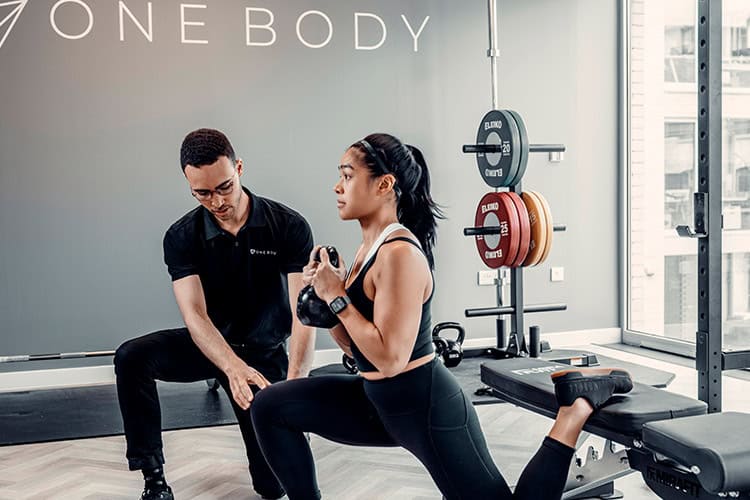
Progressive resistance exercise rebuilds the muscles that weakened during immobilisation, starting with isolated strength and moving to balance and control.
Restore function
Stairs, walking distance, lifting, driving and the demands of your job are rebuilt in order, so daily life returns before training does.
Return to work or sport
We provide clearance against measured criteria for the activity you are returning to, with sport-specific drills for athletes.
Each session ends with a clear statement of what was tested, what stage you are in and what to do before the next appointment. Exercises are delivered through Physitrack with video guidance, so the programme between sessions matches the in-clinic programme.
When should post-operative physiotherapy start?
Post-operative physiotherapy should start as soon as the surgeon’s protocol allows; for most orthopaedic procedures, that means within the first two weeks after discharge. NICE guideline NG157 on primary hip, knee and shoulder replacement recommends starting rehabilitation on the day of surgery, where possible, and continuing after discharge. An early start limits stiffness and muscle loss, which are the two factors that most often lengthen recovery. Patients who book an assessment before surgery, often called prehabilitation, enter the operation stronger and already know the exercises they will use in the first week after it.
How long does recovery take after surgery?
Recovery after orthopaedic surgery runs from six weeks for simple procedures to twelve months for return to competitive sport after ligament reconstruction. The ranges below describe typical timelines and your surgeon’s protocol and your own progress decide the actual dates.
The typical recovery timelines after common operations are set out below:
Operation
Walking or using the arm
Daily activity and driving
Full activity or return to sport
ACL reconstruction
Crutches for 1 to 2 weeks
6 to 12 weeks
9 to 12 months
Meniscus repair
Protected weight bearing for 4 to 6 weeks
6 to 12 weeks
4 to 6 months
Total knee replacement
Walking with aids on the day of surgery
6 to 12 weeks
Up to 12 months for full recovery
Total hip replacement
Walking with aids within 24 hours
6 to 12 weeks
3 to 6 months
Rotator cuff repair
Sling for 4 to 6 weeks
3 to 4 months
6 months or more for overhead sport
Shoulder stabilisation
Sling for 3 to 6 weeks
3 months
4 to 6 months for contact sport
Achilles tendon repair
Boot for 6 to 8 weeks
3 to 4 months
6 to 12 months
Ankle fracture fixation
Boot or cast for 6 weeks
8 to 12 weeks
4 to 6 months
The NHS describes recovery after joint replacement as taking up to a year to fully recover, with most people returning to daily activity within three months. Return to sport after ACL reconstruction is cleared on measured criteria rather than a date; a 2016 cohort study by Grindem and colleagues in the British Journal of Sports Medicine found that athletes who passed return-to-sport tests before returning had a lower re-injury rate than athletes who did not. The timelines in the table are the frame for your plan, and your physiotherapist explains where you sit in them at every appointment.
How do we work with your surgeon?
We rehabilitate to your surgeon’s written protocol and report back to the surgical team at the milestones they set. The protocol sets the restrictions for each phase, the earliest dates for weight bearing, range and loading, and the review points where the surgeon checks progress.
Our clinicians receive referrals from and refer to consultants at London Sports Orthopaedics, Fortius Clinic London, the London Shoulder Unit, the Institute of Sport, Exercise and Health, King Edward VII’s Hospital, The Wellington Hospital and the other hospitals and clinics in ourmedical referral network. Your physiotherapist writes to the surgeon at the review points with your consent and flags anything that needs a surgical opinion before the next clinic date.
Some symptoms after surgery need the surgical team or urgent care rather than physiotherapy. The symptoms that need same-day medical attention are listed below:
Calf pain, swelling or warmth in the operated leg, which can indicate a deep vein thrombosis
Chest pain or sudden breathlessness
Redness, discharge, opening of the wound or a temperature above 38°C
Sudden loss of movement or a new deformity at the repair
Numbness or weakness that was not present after the operation
Your physiotherapist screens for these at every appointment and directs you to the surgical team, NHS 111, or 999, depending on the symptom.
Igal, a corporate professional in London, came to us after a reverse shoulder replacement, having been let down by an earlier provider. His rehabilitation rebuilt his shoulder through each phase of the protocol to full function. Kat came to us after surgery for a double leg fracture, unable to walk for three months, and progressed to independent walking within weeks and jogging within two and a half months. Both stories sit on ourclient testimonials page.
What should you expect at your first post-operative appointment?
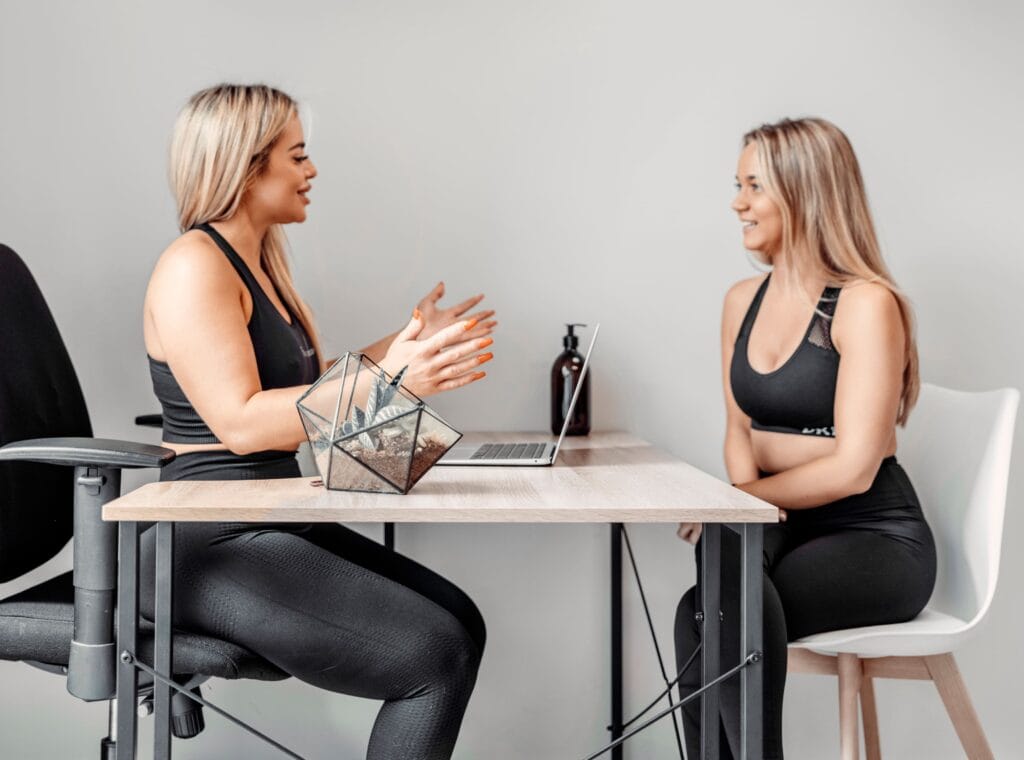
Your first post-operative appointment is a full assessment and treatment session, booked online without a GP referral, in any of our London clinics. Bring your discharge summary, the surgeon’s protocol and any imaging reports, so the plan is built on the surgeon’s instructions from the first session.
The session covers the operation history, current restrictions, a physical examination within the limits of the protocol, swelling and wound checks, initial treatment, and the start of your home programme. You leave knowing which stage you are in, what the next review point is, and what to do before the next appointment. You can book post-operative rehabilitation through the same online system as all private physiotherapy on our physiotherapy London page.
Most private medical insurance policies cover post-operative physiotherapy when the operation was covered, subject to authorisation and session limits. We hold provider numbers with AXA Health, Bupa, Aviva, Vitality, Cigna and WPA, and our team helps with authorisation codes and billing. Details are on our private health insurance page.
As featured In
Prehabilitation: what happens before surgery?
Prehabilitation is physiotherapy before surgery that builds strength and range of movement so recovery starts from a higher baseline. A patient waiting for ACL reconstruction who regains full knee extension and quadriceps strength before surgery recovers range faster after the operation, and the same principle applies to joint replacement and rotator cuff repair.
A prehabilitation programme runs from one to three sessions, with the exercises continued at home until the operation. The programme covers the restrictions you will face after surgery, the walking aids or sling you will use, and the first-week exercises, so nothing is new when you come home. We first assess patients still deciding on surgery; for example, a meniscus tear often recovers without surgery, and our guide tomeniscus tear recovery without surgery explains when rehabilitation alone is the right path.
Post-operative rehabilitation or non-surgical rehabilitation?
Post-operative rehabilitation follows a surgeon’s protocol and protects a repair; non-surgical rehabilitation treats the injury itself and is the first option for most sprains, strains and tendon problems. The surgeon makes the choice, and physiotherapy is the treatment in both cases.
Surgery is recommended for injuries where the structure will not heal or hold without repair, such as a complete ACL rupture in an athlete who pivots, a displaced fracture, a full-thickness rotator cuff tear in a younger patient or a locked knee from a bucket-handle meniscus tear. Rehabilitation alone is recommended for most other musculoskeletal injuries, including degenerative meniscus tears, partial tendon tears and many ligament sprains. OurACL injury,meniscus tear androtator cuff tear pages describe both pathways for each condition. Athletes returning from surgery to competitive sport move onto the return-to-sport criteria on oursports physiotherapy page once the protocol clears them for sport-specific training.
Why choose One Body LDN for post-operative physiotherapy in London?
Every post-operative appointment is delivered by an HCPC-registered physiotherapist and CSP member. Our team includes clinicians with NHS orthopaedic and trauma experience and private musculoskeletal experience.
Thousands of patient reviews and an NPS of +79
One Body LDN has 7,000+ Google reviews at 4.9 and thousands of five-star reviews across Google and Trustpilot. Our structured analysis of 4,859 client survey responses recorded a Net Promoter Score of +79, with structured aftercare and clear treatment plans among the recurring themes.
Rehabilitation that follows your surgeon's protocol
Treatment follows the written protocol for your procedure, with hands-on treatment where the protocol allows and progressive exercise delivered through Physitrack between appointments.
Clear pricing and treatment plans, no pressure to overbook
Appointments are paid individually with no packages or multi-session commitments. Your physiotherapist sets out the expected stages and review points at the first session.
Same-day, early and late appointments across London
Our clinics sit 2 to 8 minutes from major Tube and train stations, with same-day, early, late and weekend appointments available at many locations, so the first session after discharge is never delayed by availability.
Private health insurance and health cash plans accepted
We work with AXA Health, Bupa, Cigna Healthcare, WPA, Vitality, Aviva, Allianz, Aetna and Healix, and support cash plans including Medicash, Simplyhealth, Health Shield and Westfield Health.
Post-operative physiotherapy London: FAQs
Is physiotherapy necessary after surgery?
Yes. Rehabilitation after orthopaedic surgery restores the range of movement, strength and control that immobilisation and the operation itself reduce. NICE recommends rehabilitation after hip, knee, and shoulder replacement, and surgeons issue protocols for ligament, tendon, and fracture surgery because outcomes depend as much on rehabilitation as on the operation.
How many physiotherapy sessions will I need after surgery?
There is no fixed number, it depends on your problem, how long you’ve had it, your goals and how you respond to treatment.
Some people may only need a small number of appointments, while longer-standing injuries or post-surgery rehabilitation can require a longer programme.
After your assessment, your physiotherapist will explain what they recommend and why, and your progress will be reviewed as treatment continues.
If you don’t need further physiotherapy, we’ll tell you.
How much does post-operative physiotherapy cost in London?
New clients can book a 45-minute physiotherapy assessment and treatment for £89.
Your appointment includes a comprehensive assessment, hands-on treatment where appropriate, and a personalised treatment plan tailored to your needs and recovery goals.
If further treatment is recommended, you can book your next appointment directly with your physiotherapist and access our lower follow-up rates. There are no contracts or multi-session commitments, appointments are paid for individually.
We also accept private health insurance from major UK and international insurers, subject to your policy coverage and authorisation requirements.
Does private health insurance cover physiotherapy after surgery?
Most private medical insurance policies cover post-operative physiotherapy when the operation was authorised under the same policy, subject to a session limit and any excess. Request authorisation before the first appointment. Our guide explains how insurance-funded physiotherapy works.
Can I come to you if my surgery was on the NHS?
Yes. Patients who had NHS surgery often choose private post-operative physiotherapy for faster access and more frequent sessions. Bring the discharge summary and any protocol or exercise sheet the hospital gave you, and we’ll follow the same instructions.
Can I come to you if my surgeon is not in your referral network?
Yes. We rehabilitate to any surgeon’s protocol and write to the surgical team at the review points with your consent. The referral network describes the consultants we work with most often, not a limit on who we accept.
Will physiotherapy after surgery hurt?
Post-operative rehabilitation works within the pain limits the protocol sets, and treatment is adjusted to your response. Some exercises feel uncomfortable while range and strength return. Pain that increases after a session and does not settle within 24 hours is reported to your physiotherapist, and the plan is adjusted.
Do you offer home visits after surgery?
One Body LDN delivers post-operative physiotherapy in clinic. Our clinics are 2 to 8 minutes from major stations, accessible for patients on crutches or in a boot, and we schedule the first appointment once you can travel safely.
Can I drive after surgery?
You can drive when you can perform an emergency stop safely, and the surgeon has cleared you; for most lower-limb surgery, that’s six to eight weeks, and for many upper-limb procedures, it’s once the sling is removed. Your physiotherapist tests the movements required for driving before you return to the car, and your insurer may require the surgeon’s clearance.
What is the difference between post-operative physiotherapy and rehabilitation in hospital?
Hospital physiotherapy covers the first days after surgery: safe walking, stairs, wound care, and initial exercises before discharge. Post-operative physiotherapy in clinic covers the months that follow, from restoring range to return to work or sport. The two follow the same protocol, and our clinicians continue from the point the hospital reached.
Do you rehabilitate children or older adults after surgery?
We treat adults of all ages after orthopaedic surgery, including older adults after joint replacement and fracture fixation. Paediatric post-operative rehabilitation sits outside our scope, and we say so and refer onward when a child is referred to us.
What should I bring to my first post-operative physiotherapy appointment?
Bring your discharge summary, the surgeon’s protocol, any imaging reports, your insurance authorisation if applicable, and loose clothing that gives access to the operated area. If you don’t have the protocol to hand, bring the surgeon’s name and the date of the operation, and we will request the protocol from the surgical team.
Ready to start your recovery after surgery?
Post-operative physiotherapy in London from One Body LDN takes you from the first week after discharge to full activity on your surgeon’s protocol, with a clear stage and a clear next step at every appointment. Same-day appointments across London. Insurance accepted.