



A scan says you have a torn meniscus, and the word “torn” does the rest. Most people arrive at this question already assuming an operation is coming, and searching mainly to find out how long they can put it off.
The evidence tells a more useful story. For a large proportion of meniscus tears, particularly the wear-related ones that appear in knees over 40, high-quality trials have compared keyhole surgery against structured exercise and found no meaningful advantage for surgery. That is not a fringe position.
It is why UK guidance now steers these cases toward conservative care first. This guide covers which tears those are, what the treatment involves, and the situations where surgery genuinely is the right answer.
Key takeaways
- Many meniscus tears are managed successfully without surgery, and for degenerative tears the evidence is strong
- Trials comparing keyhole surgery with exercise therapy for degenerative tears found no meaningful benefit from the operation
- Tears in the outer rim have a blood supply and can heal; inner tears do not heal but often become symptom-free
- A locked knee that will not straighten needs prompt surgical assessment, not a rehabilitation plan
- Conservative treatment is progressive strengthening, not rest, and typically runs three to six months
Not all meniscus tears are the same
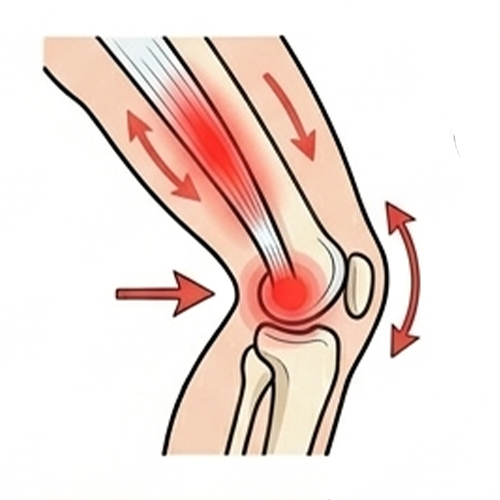
Meniscus tears fall into two broad groups, traumatic and degenerative, and they behave differently enough that the treatment question has different answers.
Traumatic tears
A specific incident: a twist while the foot is planted, a tackle, a fall. More common in younger, active knees, often with swelling within a day and sometimes with catching or locking. These tears are more likely to need a surgical opinion, particularly if the knee locks, and repair is more likely to be worthwhile in a young knee.
Degenerative tears
No injury, or a trivial one. The meniscus thins and frays with age, and tears develop gradually. Extremely common: degenerative meniscal changes show up on scans of large numbers of people with no knee pain at all, which is the crucial point. A tear on a scan in a knee over 40 may be an incidental finding rather than the cause of the pain.
This group is where the research is clearest, and where surgery has been shown to add the least.
The wider picture of what causes knee pain, and how a meniscus problem is told apart from the rest, sits in our knee pain guide. If you are still working out whether a meniscus tear is what you have, our guide to meniscus tear symptoms and home checks covers recognition.
What the evidence actually shows
Randomised trials comparing arthroscopic surgery with exercise therapy for degenerative meniscus tears have repeatedly found no meaningful additional benefit from the operation.
This is the finding that changed practice, and it is worth stating plainly because most content on this topic does not.
Several large, well-designed studies compared keyhole surgery, partial meniscectomy, against structured physiotherapy for degenerative tears. At follow-up, outcomes were comparable. Patients who had exercise therapy alone did as well as those who had the operation. One trial compared surgery against a sham procedure and found no difference in outcomes, which is about as strong as evidence in this field gets.
NICE guidance reflects this, recommending against routine arthroscopic surgery for degenerative knee disease. The practical translation: for a wear-related meniscus tear, a proper course of physiotherapy is not a delaying tactic before the real treatment. For most people it is the treatment.
Two honest caveats. This evidence concerns degenerative tears, not traumatic tears in young knees. And a minority of people in these trials did go on to have surgery, which remains an option if conservative care does not work.
Can a meniscus tear heal?

The outer third of the meniscus has a blood supply and can heal; the inner portion does not, but tears there frequently become symptom-free with rehabilitation.
The meniscus has blood flow only at its outer rim. Tears there can genuinely repair, which is also why surgical repair, stitching the tear, works best in that zone.
Tears in the inner portion will not knit back together. That sounds discouraging and usually is not, because healing and becoming pain-free are different things. A knee can have a tear that remains on imaging while functioning normally and without symptoms, once the surrounding muscles take the load properly. That is what conservative treatment achieves, and it is why so many people do well without the tear ever changing on a scan.
What non-surgical treatment involves
Conservative management of a meniscus tear is progressive strengthening of the muscles that protect the knee, alongside temporary load modification. It is not rest.
Early phase: Settle the swelling and restore full movement, particularly full straightening. Gentle loading starts immediately; complete rest weakens the quadriceps quickly, and quadriceps weakness is the single biggest predictor of a poor outcome.
Strengthening phase: The main event. Quadriceps, hamstrings, glutes and calf, progressed in load over weeks. Strong muscles absorb load the meniscus would otherwise take. This is what changes symptoms.
Return phase: Graded reintroduction of squatting, twisting, and sport-specific movement, built back in stages rather than tested all at once.
Timescales: Most people notice meaningful improvement within six to twelve weeks, with the full programme running three to six months. Deep squatting and heavy twisting typically return last.
Activity in the meantime: Walking is usually fine and encouraged. Cycling and swimming are good bridges. Deep squats, heavy twisting and pivoting sports are the things to reduce temporarily while capacity rebuilds.
Our meniscus tear treatment in London page sets out the full rehabilitation pathway.
When surgery is the right answer
A locked knee, a large traumatic tear in a young active knee, or a failure to progress after a proper course of rehabilitation are the situations where a surgical opinion is warranted.
Being honest about this matters, because the point is not to avoid surgery. It is to have it when it helps.
A locked knee: A knee that will not fully straighten because something is physically blocking it needs prompt orthopaedic assessment. This is the clearest indication, and it is not a case for waiting.
Traumatic tears in younger knees: Where the tear pattern is repairable and the knee is young and active, surgical repair preserves meniscus tissue and can be the better long-term choice.
Persistent symptoms after proper rehabilitation: If a genuine course of progressive strengthening, three months or so, has not changed things, that is a reasonable point to seek a surgical opinion.
What has changed is the default. Surgery for a degenerative tear is no longer the automatic first step, and trying conservative care first costs you very little, because the rehabilitation you do is the same rehabilitation you would need after an operation anyway.
When to get assessed
Book an assessment if your knee is painful, swelling, catching, or has been diagnosed with a meniscus tear you are unsure how to treat. Seek prompt care for a locked knee, a knee that gives way, or rapid swelling after injury.
Our knee physiotherapy in London team assesses meniscus tears, builds the loading programme, and arranges surgical referral where the picture warrants it, through direct access, no GP referral needed.
Common questions about meniscus tears without surgery
Can a meniscus tear heal without surgery?
Tears in the outer rim can heal because they have a blood supply. Inner tears do not knit together, but often become symptom-free with strengthening. Many people function normally with a tear still visible on a scan.
How long does a meniscus tear take to recover without surgery?
Most people improve meaningfully within six to twelve weeks, with the full programme running three to six months. Deep squatting and twisting usually return last.
Is physiotherapy as good as surgery for a meniscus tear?
For degenerative tears, trials comparing the two found no meaningful benefit from surgery over exercise therapy. Traumatic tears in younger knees are a different situation and may warrant repair.
Will walking on a torn meniscus make it worse?
Walking is generally safe and encouraged for most meniscus tears. Deep squatting, heavy twisting and pivoting are what to reduce temporarily. A knee that locks or gives way is the exception and needs assessment first.
When do I definitely need meniscus surgery?
A knee that locks and will not fully straighten needs prompt surgical assessment. So does a large traumatic tear in a young active knee, or symptoms that have not responded to a proper course of rehabilitation.
Book your knee assessment
A meniscus tear diagnosis is not automatically a surgical one, and for many knees the strengthening programme is the treatment rather than the wait. Book an assessment through our meniscus tear treatment in London page in 60 seconds, no GP referral needed.
References
- Katz JN, Brophy RH, Chaisson CE, et al. Surgery versus physical therapy for a meniscal tear and osteoarthritis (METEOR trial). New England Journal of Medicine. 2013;368(18):1675-1684.
- Sihvonen R, Paavola M, Malmivaara A, et al. Arthroscopic partial meniscectomy versus sham surgery for a degenerative meniscal tear (FIDELITY trial). New England Journal of Medicine. 2013;369(26):2515-2524.
- Thorlund JB, Juhl CB, Roos EM, Lohmander LS. Arthroscopic surgery for degenerative knee: systematic review and meta-analysis. BMJ. 2015;350:h2747.
- National Institute for Health and Care Excellence. Osteoarthritis in over 16s: diagnosis and management. NICE guideline NG226; 2022.
- Englund M, Guermazi A, Gale D, et al. Incidental meniscal findings on knee MRI in middle-aged and elderly persons. New England Journal of Medicine. 2008;359(11):1108-1115.
- NHS. Knee pain.
