Padel Physiotherapy in London
Padel physiotherapy in London treats the elbow, shoulder, wrist, lower back, knee, ankle, calf, and Achilles injuries padel causes, and returns players to the court and competition on measured criteria. Our HCPC-registered physiotherapists assess the injury, the court time of the weeks before it, and the padel-specific mechanisms that cause most of the injuries we see: the bandeja and vibora overheads, the low ready position, the turn off the glass and the short, sharp doubles movement. Most padel injuries in London arrive in adults who have taken up the sport within the last year, so the plan treats the injury and builds the base the sport demands. Return to full play is cleared on criteria rather than on a court booking. Appointments are available same day, early and late across our London clinics.
- Rehabilitation that keeps you on court, with the strokes and the court time adjusted
- The bandeja, the glass and the ready position assessed, not only the injury
- AXA Health, Bupa, Cigna, WPA and more accepted
4.9/5 · 7000+ Google reviews
Health Insurance Accepted
Trusted by Thousands Across London
Rated Excellent on Trustpilot, with thousands of 5-star Google reviews across One Body LDN clinics.
“Within weeks my pain started to decrease and within months I was back at the gym doing most of the things I wanted to be able to do.”
“Through rigorous sports massage and a clear, well structured physio exercise programme, I was back playing within a month.”
“After his treatment, massages and the exercises he gave me, I saw big improvements very fast. Within the same week I was even able to complete a half marathon.”
“I went to see Meher after struggling with shoulder and lower back pain due to long office hours, and the difference after starting treatment has been incredible.”
“I started physio with her 3 months ago and since then my knees pain has improved massively with her personalised program and custom exercises and manual therapy.”
“I came in with serious neck tension and frequent headaches from spending long hours at the computer. Preeti … did an excellent job targeting the problem areas with a focused sports massage.”
“Her sports massages are outstanding! Easily some of the most effective I’ve had.”
“I have been working with Matt for almost two years as part of my rehabilitation journey, and I cannot recommend him highly enough.”
“I started going to One Body LDN only to improve my posture … After just a few sessions with my physiotherapist Om, I can tell my posture has already started improving.”
“I feel now I am more aware of my foot placement, and my legs are definitely stronger than ever before. Roll on next ‘long run’ challenge.”
“Within just a few sessions, she managed to relieve a significant amount of the pain in my shoulder, and I’ve already noticed a real improvement.”
“I went to see him with significant back pain, and after just one appointment the difference was remarkable.”
“My therapist assessed my issue quickly and got straight to hands on therapy. It did the trick perfectly. After one session my neck pain was considerably better.”
“Very impressed with the in depth assessment and treatment plan I was given.”
“I came in with lower back pain, probably caused by spending long hours sitting at a computer … this was the first place where I started to notice a real improvement.”
“The team is very professional, welcoming, and truly cares about their clients. From the moment I arrived, I felt comfortable and well looked after.”
“Best physio in London! Have tried multiple One Body clinics and always have such a good experience and knowledgeable physiotherapists.”
“The trainers are incredibly knowledgeable and take the time to understand your goals, making every session feel personalised and effective.”
“Her knowledge and expertise were immediately evident, and she took the time to understand my specific needs and concerns in a way I haven’t experienced before.”
“This is a first class service and the Physios are all excellent and very professional and go the extra mile to help people get back to things they want to do as soon as they can!”
Find a Padel Physiotherapist Near You in London
Find a Clinic Near Me ▼
- 2–8 mins from major stations
- Same-day, early & late appointments
Which padel injuries do we treat?
We treat the overhead and hitting-arm injuries of the bandeja, the vibora and the smash and the court-movement injuries of the low stance, the lateral push and the turn off the glass, in new players, club and league players and competitive pairs. The injuries we treat most often in our London clinics are listed below by how they happen:
Hitting-arm and overhead injuries:
- Padel elbow, lateral elbow pain from the volume of hitting with a solid-faced racket and the wrist-led backhand, the most common padel injury we treat, covered on our tennis elbow page
- Medial elbow pain from the bandeja, the vibora and the smash, covered on our golfer's elbow page
- Shoulder pain from the overhead volley, including rotator cuff-related pain and shoulder impingement, because the bandeja and the vibora are hit at shoulder height with trunk rotation and the smash at full extension, covered on our shoulder pain page
- Wrist pain from the flick at the net and the wrist-led volley, covered on our wrist pain page
- Lower back pain from the extension of the overheads and the low ready position held through a match, covered on our lower back pain page
Court-movement injuries:
- Ankle sprains from the lateral push, the stop and the turn off the glass, covered on our ankle sprain page
- Calf strains and Achilles tendinopathy from the repeated push-off from a static low position, and Achilles tendon rupture in players over 35, managed medically first and rehabilitated with us
- Knee pain, including patellar tendinopathy from the low stance and meniscus injuries from the twist toward the glass, covered on our knee pain page
- Hip and groin pain from the wide ready position and the lunge, covered on our hip pain page
- Hamstring strains from the sprint from the net to the back glass
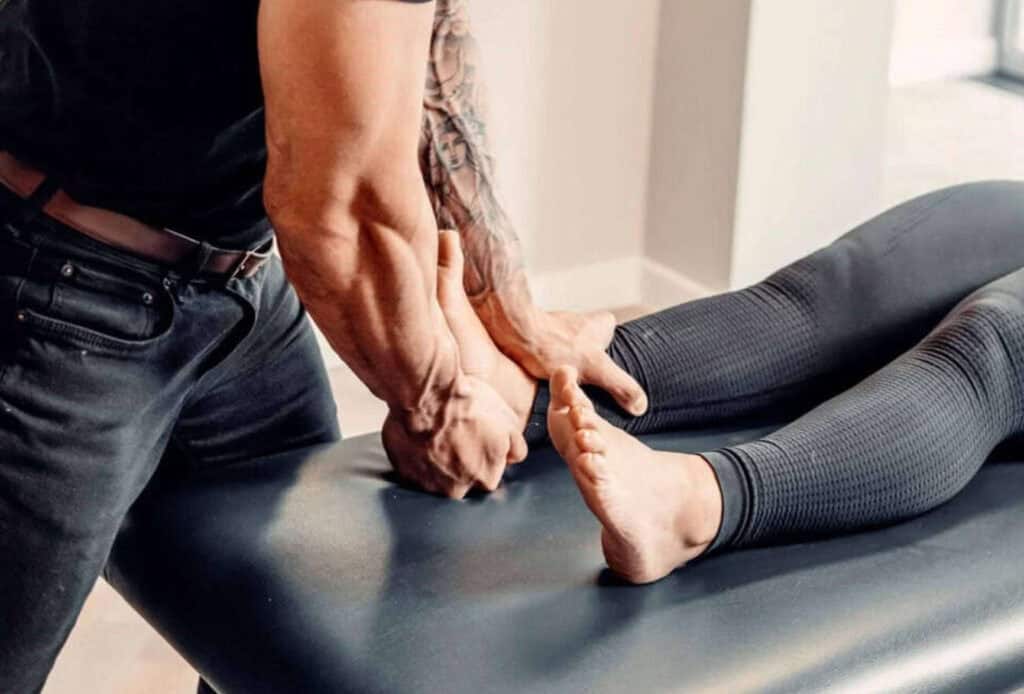
Padel is played in doubles on an enclosed court, so the movement is short, repeated and multidirectional rather than long, and the glass adds a turn and a backward run that no other racket sport has. Assessing a padel injury considers court time and match load over the previous four weeks, how long you have played the sport, your racket, any coaching block, the surface and shoes, and your next match or tournament. We use hands-on treatment where clinically appropriate, always alongside active rehabilitation.
How does padel injury physiotherapy work at One Body LDN?
Padel injury physiotherapy at One Body LDN follows five stages: a court time and playing-history review, a physical assessment, a stroke and movement assessment, a modified playing plan and a graded return to full play. Padel injuries are explained by hitting and movement volume, time in the sport, and the stroke or movement that concentrates load, so all three are assessed.
The five stages of padel injury physiotherapy are given below:
Court time and playing-history review
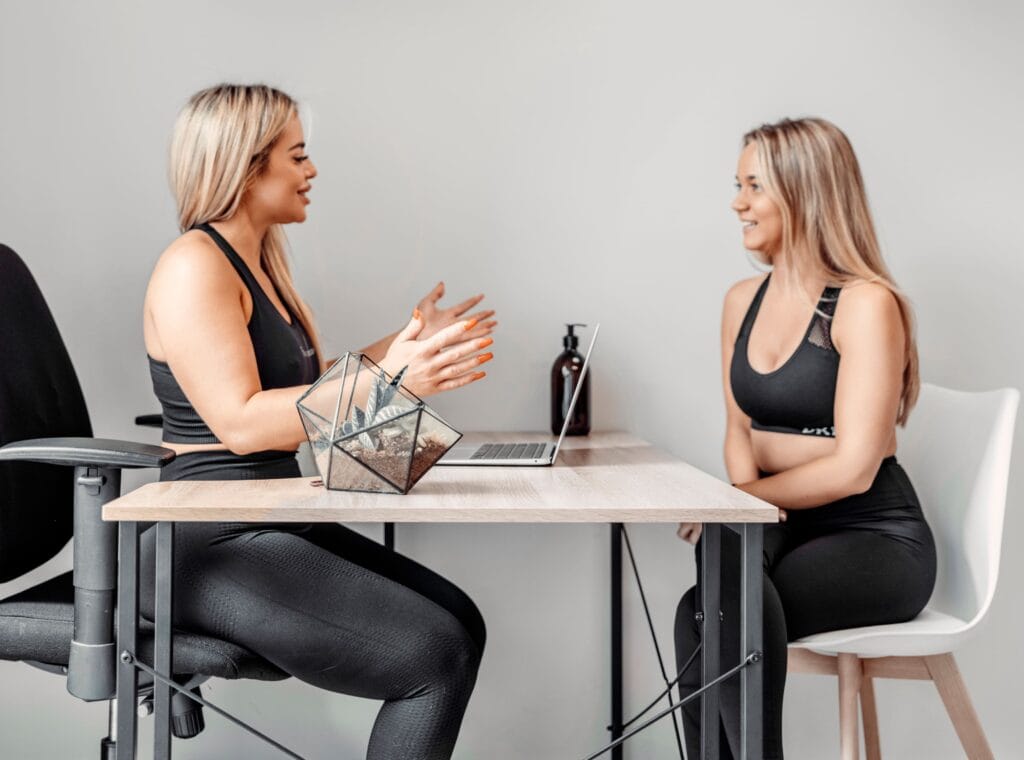
Your physiotherapist reviews the previous four weeks: hours on court, matches, coaching sessions, how many months you have played, previous sports, your racket and shoes, and your next match.
Physical assessment
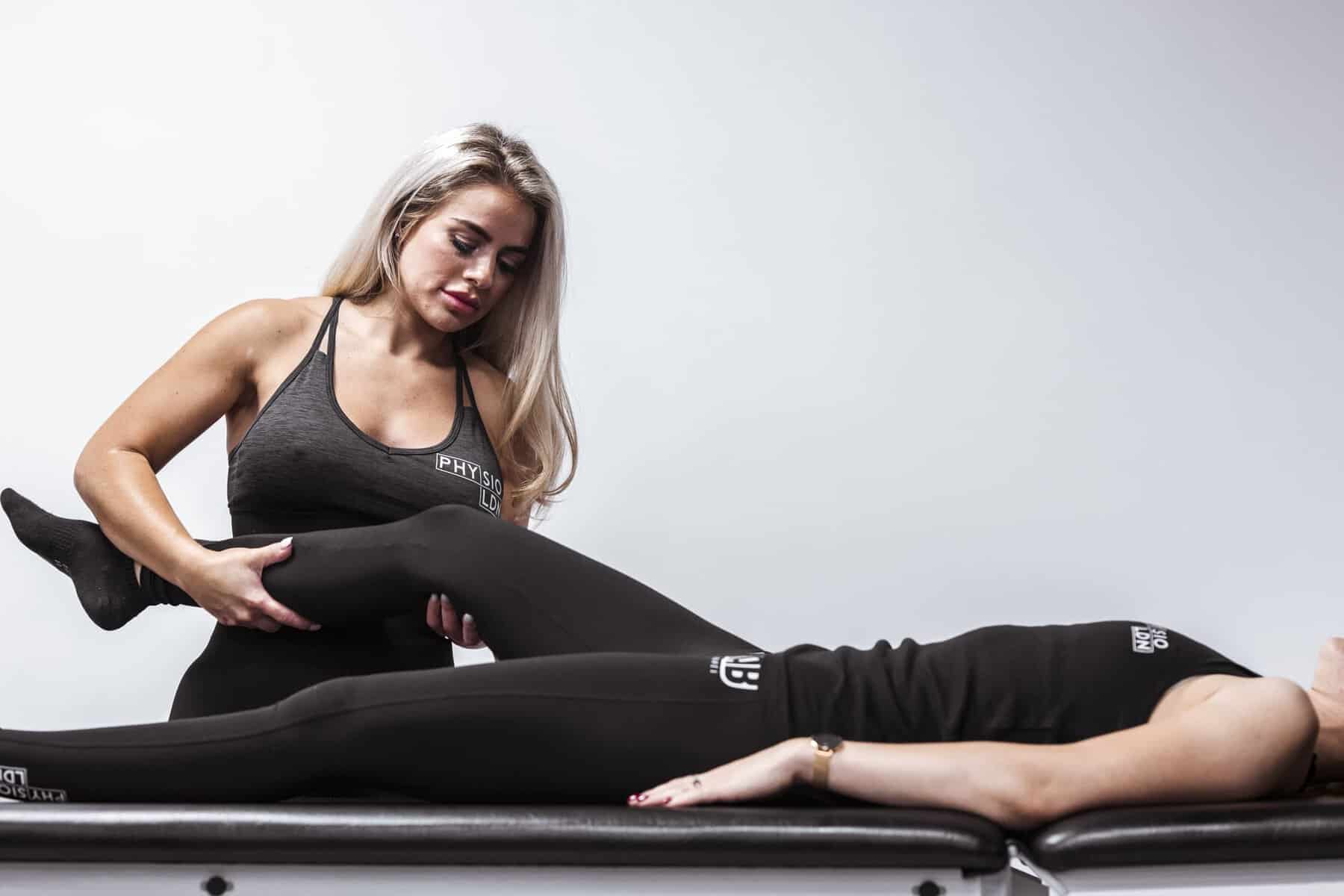
Strength, range of movement, and control in the injured region and the regions above and below are measured, with clinical tests that confirm or rule out the suspected diagnosis, and imaging or a consultant opinion arranged if the examination finds an Achilles rupture, a meniscus tear, or a ligament rupture.
Stroke and movement assessment
The bandeja, the vibora, the smash, the backhand, the low ready position, or the turn off the glass that reproduces the pain is assessed in clinic via video and movement tests, so the plan separates a strength or mobility deficit from a technique fault, which is referred to your coach.
Modified playing plan
Play continues with the provoking stroke removed or shortened, the court time capped, and the rehabilitation exercises placed in the week beside the court sessions, with the base strength the sport demands built at the same time.
Graded return to full play
Strokes, court time and match play are rebuilt in stages with criteria to pass before each step and a decision point on the next match.
Why do most padel injuries happen?
Most padel injuries in London follow the pattern of a new sport: an adult with no recent racket or court base takes up padel, plays several times a week within months because the sport is social and easy to start, and loads the elbow, the shoulder, the calf and the Achilles faster than the tissue adapts. The overhead strokes add a load the player’s previous sports did not have, because the bandeja and the vibora are hit with a solid racket at shoulder height with trunk rotation, hundreds of times a match. The glass adds a movement the player has never made: a turn and a backward run to play the ball off the rebound, which loads the ankle and the knee in rotation. Players who come to us with padel elbow have usually doubled their court time in the previous two months, and players who come to us with a calf strain have usually played three or four matches in a week on a base of none.
How do we keep you playing during rehabilitation?
Playing during rehabilitation continues with the provoking stroke removed or shortened, the court time capped, and the base strength the sport demands built in the same week. Complete rest from the court is reserved for an Achilles rupture, a meniscus or ligament tear awaiting a consultant opinion, and the first days of an acute calf strain.
The four levers for modifying padel are listed below:
Strokes
The provoking stroke is removed or shortened: a player with padel elbow keeps the forehand and the volleys and removes the wrist-led backhand and the smash; a player with shoulder pain removes the bandeja, the vibora and the smash and plays the point from the net and the back without the overheads
Court time and match load
Court sessions are capped by time and by matches per week, with social matches played at reduced intensity and competitive matches removed until the criteria are passed
Court movement
Players with ankle, calf and Achilles problems play from a set position without the sprint to the back glass, with the lateral push and the turn returned as single-leg strength and landing control rebuild
Base strength
Calf, shoulder, forearm and trunk strength are built two to three times a week, because the base is what the new player lacks and what the modified play cannot build on its own
A player with padel elbow keeps two capped sessions a week without the backhand and smash while the 12-week tendon-loading programme and forearm-strength work run. A player with a calf strain plays volleys and the net game from a set position in the second week while calf strength is rebuilt on a step, and the sprint to the glass returns last. A player with shoulder pain keeps the net game and lobs and removes overheads while cuff and shoulder blade strength rebuild. The plan is written into Physitrack with the week’s strokes, court time and exercises visible to you and, with your consent, your coach.
How do we return you to full play and competition?
Return to full play is cleared in stages, each with a criterion to pass: pain-free rallies without the provoking stroke, then the provoking stroke at reduced intensity, then at full intensity, then full match play with the sprint to the glass, then competition. A court booking or a league fixture is not a criterion.
The return-to-play stages are listed below:
- Rallies without the provoking stroke, pain-free during and the day after
- The provoking stroke at reduced intensity and volume, the bandeja before the vibora and the smash, the backhand with a shortened swing
- Full intensity on every stroke, with the court time rebuilt
- Full match play including the sprint to the back glass and the turn off the glass at match pace
- Competition with a decision point one to two weeks before a league match and three to four weeks before a tournament
The 12-week loading programme clears tendon problems at the elbow, shoulder, and Achilles rather than pain alone, because an elbow that feels fine in a social match at week four can fail in a league match at week six. Players returning from an Achilles rupture repair, shoulder surgery or a meniscus repair move onto the protocol-led stages on our post-operative physiotherapy page before the stages above begin.
What should you expect at your first appointment?
Your first appointment is a full assessment and treatment session, booked online without a GP referral, in any of our London clinics. Bring your racket, your court shoes, a short video of the stroke that hurts if you have one, your match dates and any report from a court-side or A&E assessment.
The session covers the court time and playing-history review, the physical examination, the stroke and movement assessment, the working diagnosis, first treatment and the first week of the modified playing plan. You leave knowing what is injured, which strokes to play this week and how much court time, which base strength work to start and what to do before the next appointment. Padel injury rehabilitation is booked through the same online system as all private physiotherapy on our physiotherapy London page, and insured players can use AXA Health, Bupa, Aviva, Vitality, Cigna, WPA and other policies subject to authorisation.
What is padel elbow, and how is it different from tennis elbow?
Padel elbow is tennis elbow (lateral epicondylalgia) caused by padel, and the difference is the cause: a solid-faced racket with no strings to absorb impact, a wrist-led backhand, and a volume of hitting a new player can reach within months. The tendon and the treatment are the same; the court context is not.
Our physiotherapists treat the tendon with a 12-week loading programme and assess the backhand, grip, and racket in clinic. We refer a backhand hit with the wrist leading to your coach with the findings. We refer a heavy, head-heavy, or hard-faced racket to your racket shop with the measurements, because a lighter, softer-faced frame reduces the load at the elbow during the programme. Players who want the tendon treated without the court context use our tennis elbow page, and players whose elbow pain comes from the gym as well as the court carry the lifting load on our strength and fitness physiotherapy page.
Padel physiotherapy or racket sports physiotherapy?
Padel physiotherapy treats padel-court injuries, with the bandeja, the glass, and doubles movement as the mechanisms; racket sports physiotherapy treats tennis, squash, badminton, and table tennis, where the serve, the single-handed backhand, and long-court movement set the pattern. The stages are the same on both pages, and the mechanisms differ enough to keep the pages apart.
Padel players use this page. Tennis, squash, badminton and table tennis players use our racket sports physiotherapy page, and players who have moved from tennis to padel carry both the old pattern and the new one, which the playing-history review captures. All players follow the return-to-sport principles on our sports physiotherapy page, and players with aches from three matches a week, rather than an injury, use our sports massage in London service between sessions.
As featured In
Why choose One Body LDN for padel physiotherapy in London?
HCPC-registered, degree-qualified physiotherapists with sports medicine training
Every padel injury appointment is delivered by an HCPC-registered physiotherapist and CSP member. Several clinicians hold postgraduate sports medicine or strength and conditioning qualifications.
Thousands of patient reviews and an NPS of +79
One Body LDN has 7,000+ Google reviews at 4.9 and thousands of five-star reviews across Google and Trustpilot. Our structured analysis of 4,859 client survey responses recorded a Net Promoter Score of +79.
Hands-on treatment plus a modified playing plan
Treatment combines soft-tissue techniques and joint mobilisation where appropriate with tendon loading, base strength and court-movement work delivered through Physitrack beside your court sessions.
Clear pricing and treatment plans, no pressure to overbook
Appointments are paid individually with no packages or multi-session commitments. Your physiotherapist tells you how many sessions to expect and when your coach is the right next step.
Same-day, early and late appointments across London
Our clinics sit 2 to 8 minutes from major Tube and train stations, with same-day, early, late and weekend appointments available at many locations, so an injury from an evening match is assessed the next morning.
Private health insurance and health cash plans accepted
We work with AXA Health, Bupa, Cigna Healthcare, WPA, Vitality, Aviva, Allianz, Aetna and Healix, and support cash plans including Medicash, Simplyhealth, Health Shield and Westfield Health. Details are on our private health insurance page.
Padel physiotherapy London: FAQs
Should I stop playing padel with elbow pain?
Most padel elbow cases can continue with modified play: remove the wrist-led backhand and smash, cap court time, and have your racket checked while the 12-week loading programme runs. Complete rest is advised only for the first days of an acute flare.
How long does padel elbow take to heal?
Padel elbow follows a 12-week loading programme in most cases, with pain reducing in the first four weeks and the full backhand and full court time cleared at the end. Elbow pain lasting more than six months before treatment takes longer.
How much does padel physiotherapy cost in London?
New clients can book a 45-minute physiotherapy assessment and treatment for £89.
Your appointment includes a comprehensive assessment, hands-on treatment where appropriate, and a personalised treatment plan tailored to your needs and recovery goals.
If further treatment is recommended, you can book your next appointment directly with your physiotherapist and access our lower follow-up rates. There are no contracts or multi-session commitments, appointments are paid for individually.
We also accept private health insurance from major UK and international insurers, subject to your policy coverage and authorisation requirements.
How many sessions of padel physiotherapy will I need?
There is no fixed number, it depends on your problem, how long you’ve had it, your goals and how you respond to treatment.
Some people may only need a small number of appointments, while longer-standing injuries or post-surgery rehabilitation can require a longer programme.
After your assessment, your physiotherapist will explain what they recommend and why, and your progress will be reviewed as treatment continues.
If you don’t need further physiotherapy, we’ll tell you.
Can I use private health insurance for a padel injury?
Yes. A padel injury is treated as physiotherapy, which most private medical insurance policies cover subject to authorisation. We hold provider numbers with AXA Health, Bupa, Aviva, Vitality, Cigna and WPA, and our team helps with authorisation codes and billing.
Do I need a GP referral to see a physiotherapist for a padel injury?
No. Self-paying patients book directly online. Insured patients should confirm with their insurer whether they need a GP or consultant referral before authorisation.
Why does my shoulder hurt when I hit a bandeja?
Shoulder pain in the bandeja and the vibora is most often rotator cuff-related pain or shoulder impingement from the overhead volume, because both strokes are hit at shoulder height with trunk rotation and a solid racket. Rehabilitation rebuilds cuff and shoulder blade strength; overheads return in order from the bandeja to the smash, and persistent pain with clicking, instability, or night pain is assessed for a labral or cuff injury.
I felt a kick in my calf running to the back glass. What is it?
Sudden calf pain during push-off, felt like a kick or blow, is a calf strain if the pain is in the muscle and an Achilles rupture if the pain is at the back of the ankle with weakness when pushing off. A suspected rupture needs A&E the same day, and we assess a calf strain within days.
Why do new padel players get injured so often?
New padel players get injured because the sport is easy to start and social, so court time can rise to several sessions a week within months on a base that the elbow, shoulder, calf, and Achilles haven’t built. The plan treats the injury while building the base.
Which racket is best for padel elbow?
A lighter, softer-faced racket with a handle-biased balance reduces the load on the elbow during rehabilitation. Our physiotherapists give you the measurements to take to your racket shop, and you choose the frame with them and your coach.
Can you work with my padel coach?
Yes. With your consent, we share the findings of the stroke and movement assessment with your coach, so the on-court technique work and the in-clinic strength work address the same cause.
How quickly can I see a physiotherapist for a padel injury in London?
Same-day and same-week appointments are available across our London clinics, with early, late and weekend slots at many locations. Live availability is shown online, and booking takes under 60 seconds.
Do you treat competitive padel players as well as social players?
Yes. We treat league and tournament players on the same stages, with the decision point set three to four weeks before a tournament and overheads cleared at full intensity before competition returns.
Ready to get back on the padel court?
Padel physiotherapy in London from One Body LDN treats your injury, keeps you playing with adjusted strokes and court time, and clears your return to full play and competition on measured criteria. Same-day appointments across London. Insurance accepted.