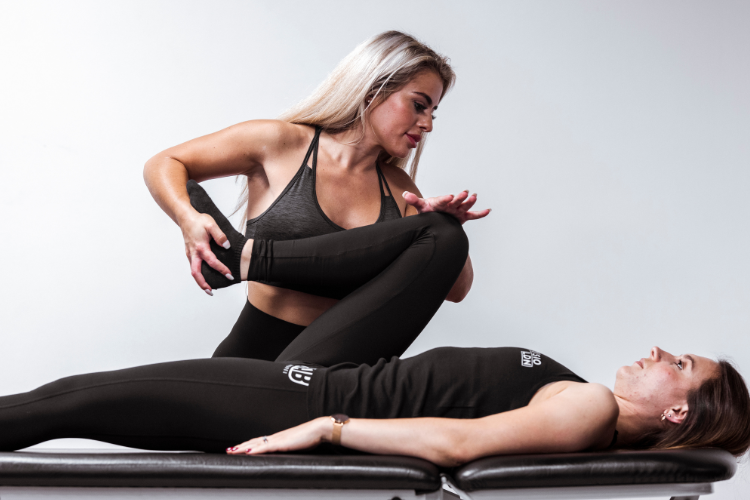
Football Physiotherapy in London
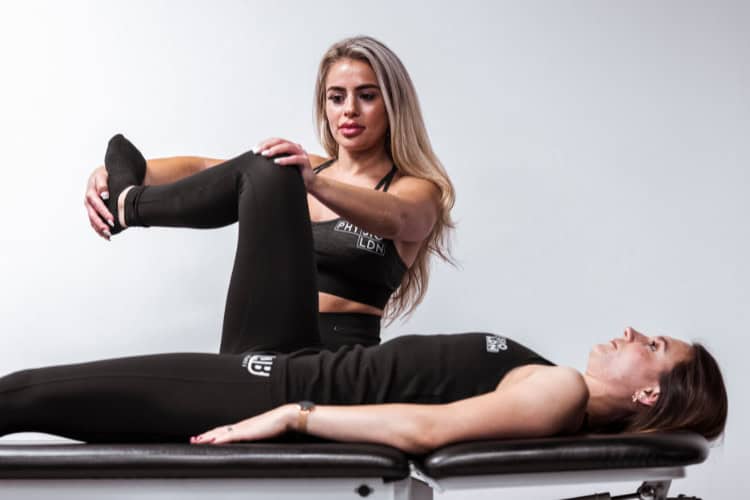
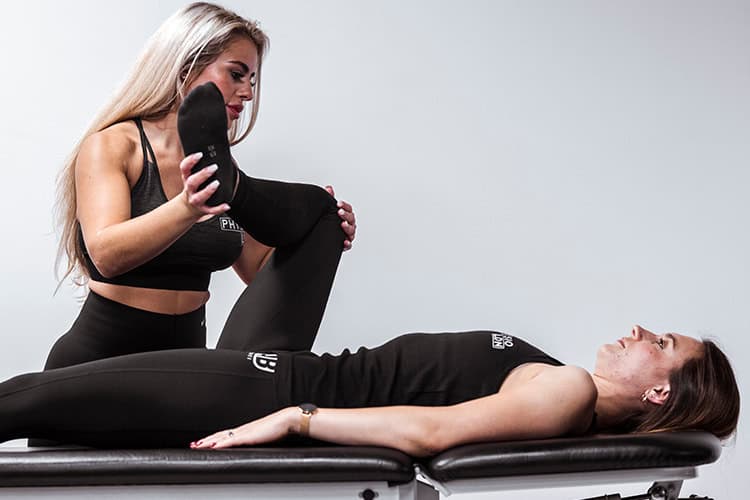
Football physiotherapy in London treats hamstring, groin, ankle, knee, and ACL injuries in 11-a-side, 5-a-side, and 7-a-side football, and returns players to training and matches based on measured criteria. Our HCPC-registered physiotherapists assess the injury, the training and match load of the weeks before it and the sprint, cut or kick that produced it, and build a plan that keeps you in modified training with your team. Our team includes clinicians who hold the FIFA Diploma in Football Medicine. Our return-to-play process follows the stages used in professional football, scaled to a Sunday league or a works five-a-side. Appointments are available same day, early and late across our London clinics.
- Rehabilitation that keeps you in modified training, not on the sidelines
- Return to play cleared on measured criteria, not on the fixture list
- AXA Health, Bupa, Cigna, WPA and more accepted
4.9/5 · 7000+ Google reviews
Health Insurance Accepted
Trusted by Thousands Across London
Rated Excellent on Trustpilot, with thousands of 5-star Google reviews across One Body LDN clinics.
“Within weeks my pain started to decrease and within months I was back at the gym doing most of the things I wanted to be able to do.”
“Through rigorous sports massage and a clear, well structured physio exercise programme, I was back playing within a month.”
“After his treatment, massages and the exercises he gave me, I saw big improvements very fast. Within the same week I was even able to complete a half marathon.”
“I went to see Meher after struggling with shoulder and lower back pain due to long office hours, and the difference after starting treatment has been incredible.”
“I started physio with her 3 months ago and since then my knees pain has improved massively with her personalised program and custom exercises and manual therapy.”
“I came in with serious neck tension and frequent headaches from spending long hours at the computer. Preeti … did an excellent job targeting the problem areas with a focused sports massage.”
“Her sports massages are outstanding! Easily some of the most effective I’ve had.”
“I have been working with Matt for almost two years as part of my rehabilitation journey, and I cannot recommend him highly enough.”
“I started going to One Body LDN only to improve my posture … After just a few sessions with my physiotherapist Om, I can tell my posture has already started improving.”
“I feel now I am more aware of my foot placement, and my legs are definitely stronger than ever before. Roll on next ‘long run’ challenge.”
“Within just a few sessions, she managed to relieve a significant amount of the pain in my shoulder, and I’ve already noticed a real improvement.”
“I went to see him with significant back pain, and after just one appointment the difference was remarkable.”
“My therapist assessed my issue quickly and got straight to hands on therapy. It did the trick perfectly. After one session my neck pain was considerably better.”
“Very impressed with the in depth assessment and treatment plan I was given.”
“I came in with lower back pain, probably caused by spending long hours sitting at a computer … this was the first place where I started to notice a real improvement.”
“The team is very professional, welcoming, and truly cares about their clients. From the moment I arrived, I felt comfortable and well looked after.”
“Best physio in London! Have tried multiple One Body clinics and always have such a good experience and knowledgeable physiotherapists.”
“The trainers are incredibly knowledgeable and take the time to understand your goals, making every session feel personalised and effective.”
“Her knowledge and expertise were immediately evident, and she took the time to understand my specific needs and concerns in a way I haven’t experienced before.”
“This is a first class service and the Physios are all excellent and very professional and go the extra mile to help people get back to things they want to do as soon as they can!”
Find a Football Physiotherapist Near You in London
Find a Clinic Near Me ▼
- 2–8 mins from major stations
- Same-day, early & late appointments
Which football injuries do we treat?
We treat muscle, ligament, and joint injuries in football at every level, from hamstring strains during a sprint to ACL ruptures on a cut, in players from Sunday league and five-a-side to semi-professional. The injuries we treat most often in our London clinics are listed below, with the action that most often causes them:
- Hamstring strains from sprinting and reaching for a ball, the most common injury in football at every level, covered on our hamstring injury page
- Groin and adductor pain from kicking, cutting and changing direction, covered on our groin pain page
- Ankle sprains from a tackle, a landing or a turn on uneven ground, covered on our ankle sprain page
- ACL injuries from a non-contact cut, a landing or a tackle, covered on our ACL injury page
- MCL sprains and meniscus tears from a blocked tackle or a twist on a planted foot, covered on our knee pain page
- Quadriceps and calf strains from kicking, acceleration and the pre-season volume spike
- Hip flexor pain and hip impingement from kicking volume, covered on our hip pain page
- Achilles tendinopathy from running volume on artificial surfaces
- Concussion from a head clash or heading, managed medically first, covered on our concussion page
The UEFA Elite Club Injury Study, led by Ekstrand and published in the British Journal of Sports Medicine, has recorded hamstring strain as the single most common injury in professional football across two decades of data, with groin, ankle and knee ligament injuries following, and the same pattern holds in the amateur players we treat. Assessing a football injury considers the training and match load of the previous four weeks, the surface and footwear, the action and moment in the match when the injury happened, and the date of the next fixture. We use hands-on treatment where clinically appropriate, always alongside active rehabilitation.
How does football injury physiotherapy work at One Body LDN?
Football injury physiotherapy at One Body LDN follows five stages: a load and match review, a physical assessment, a movement assessment, a modified training plan and a graded return to play. A football injury is explained by the load that preceded it as much as by the action that caused it, so both are assessed.
The five stages of football injury physiotherapy are given below:
Load and match review
Your physiotherapist reviews the previous four weeks: training sessions, matches, minutes played, pre-season or mid-season timing, surface, and the date of the next fixture.
Physical assessment
The physiotherapist measures strength, range of movement, and control in the injured region and the regions above and below, and uses clinical tests to confirm or rule out the suspected diagnosis; imaging or a consultant opinion is arranged if the examination finds a ligament rupture, a locked knee, or a fracture.
Movement assessment
The clinic assesses the sprint, cut, kick, or landing that produced the injury, because a cutting pattern that loads the knee or a kicking pattern that loads the groin is the cause, and treatment alone does not fix it.
Modified training plan
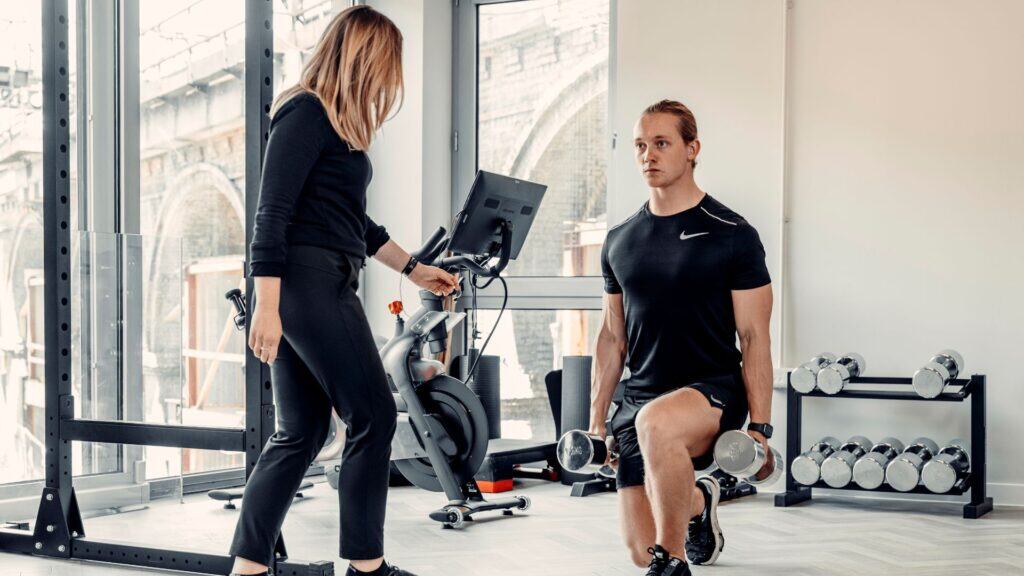
Training with the team continues at the level the injury allows, with the provoking action removed and rehabilitation exercises placed in the warm-up or gym session.
Graded return to play
Football-specific loading is rebuilt in stages from straight-line running to full training, with criteria to pass before each step and a decision point on the next fixture.
Why do most football injuries happen?
Most football injuries follow a spike in training or match load, most often in pre-season and after a break, a technique or movement pattern that loads one tissue, or a single contact in a tackle. Muscle strains follow the spike: the first pre-season sessions after a summer off, the first full match after a layoff, and the second match of a weekend in amateur football produce the hamstring, groin, and calf strains we see most. Ligament injuries follow the action: a cut, a landing, or a blocked tackle. Artificial surfaces and five-a-side pitches add Achilles and calf problems from short, repeated accelerations on a hard surface.
How do we keep you training during rehabilitation?
Training during rehabilitation continues at one of three levels: non-contact individual work, non-contact team training or full contact, and the plan sets the level for each session of the week. Complete rest from football is reserved for concussion, suspected fractures, ligament ruptures awaiting a consultant opinion and the first days of an acute muscle strain.
The three training levels used in a modified plan are listed below:
Non-contact individual work
Walking without pain for 30 minutes on consecutive days
Non-contact team training
Warm-up with the team, passing drills, possession work in a restricted area without tackles, and running at set speeds; used once pain has settled and strength criteria are met
Full contact
Full training including tackles, headers and small-sided games, then matches
The provoking action is modified at each level. A player with a hamstring strain keeps ball work and runs at a capped speed before sprinting returns. A player with groin pain keeps running and short passing and removes long kicking and cutting on the painful side until the criteria are passed. A player with an ankle sprain trains in a brace on a flat surface before turning on grass returns. The plan is written into Physitrack with the training level for each session, so you and, with your consent, your coach or manager work from the same sheet.
How do we return you to matches?
Return to matches is cleared in stages, each with a criterion to pass: pain-free full range, strength within an agreed percentage of the uninjured side, completed sprinting at full speed, completed non-contact team training and a full-contact training week without symptoms. A fixture on Saturday is not a criterion.
The return-to-play stages are listed below:
Running in straight lines at a capped speed, progressing to full speed, without pain during or the day after
Change of direction through planned cuts and turns, then reactive cuts and turns
Football-specific skills including kicking at full power, heading and jumping
Full training with contact, tackles and small-sided games for one week
Matches as a substitute with capped minutes, then a full match
Hamstring strains are cleared on strength and sprint criteria, because an early return is the main cause of a second strain. ACL reconstruction follows a longer pathway: a 2016 study by Grindem and colleagues in the British Journal of Sports Medicine found that athletes who passed return-to-sport tests had a lower re-injury rate, and that return before nine months after surgery raised the re-injury rate. Players returning from ACL, meniscus or ankle surgery move onto the protocol-led stages on our post-operative physiotherapy page before the stages above begin.
As featured In
What should you expect at your first appointment?
Your first appointment is a full assessment and treatment session, booked online without a GP referral, in any of our London clinics. Bring your fixture list, the boots and the surface you play on, and any report from a pitch-side assessment or A&E visit.
The session covers the load and match review, the physical examination, the movement assessment, the working diagnosis, first treatment and the first week of the modified plan. You leave knowing what is injured, which training level each session takes this week, whether the next fixture is realistic and what to do before the next appointment. Football injury rehabilitation is booked through the same online system as all private physiotherapy on our physiotherapy London page, and insured players can use AXA Health, Bupa, Aviva, Vitality, Cigna, WPA and other policies subject to authorisation.
How do you prevent football injuries?
A structured warm-up and hamstring, groin, and ankle strength work built into the training week reduce football injuries, with the FIFA 11+ warm-up and the Nordic hamstring exercise having the strongest evidence. Prevention sits within the rehabilitation plan rather than after it, because the exercises that return a player from a hamstring strain also reduce the risk of the next one.
A 2008 trial by Soligard and colleagues in the BMJ found that the FIFA 11+ warm-up reduced injuries in young female players by about a third, and a 2019 meta-analysis by van Dyk and colleagues in the British Journal of Sports Medicine found that programmes including the Nordic hamstring exercise reduced hamstring injuries by about half. Our physiotherapists build the warm-up and strength work into the plan and provide the programme for the team when a coach asks for it. Players carrying the aches of a long season rather than an injury use our sports massage in London service between matches.
Who looks after injured players without a club physio?
Amateur, Sunday league, five-a-side, and university players often don’t have a club physiotherapist, so the pitch-side decision, diagnosis, and return-to-play plan fall to the player, and a private sports physiotherapist fills the gap. Decisions made in the first days after an injury shape the season: a hamstring strain played through becomes a six-week injury, and an unassessed ankle sprain becomes a recurring one.
Our physiotherapists assess injured players within days of a match, arrange imaging or a consultant opinion when the examination calls for it, and follow the same stages a club physiotherapist uses. Players in other sports follow the same return-to-sport criteria on our sports physiotherapy page, and we cover knee or hip injuries picked up in the gym between fixtures on our strength and fitness physiotherapy page.
Why choose One Body LDN for football physiotherapy in London?
HCPC-registered physiotherapists with football medicine training
Every football injury appointment is delivered by an HCPC-registered physiotherapist and CSP member. Our team includes clinicians who hold the FIFA Diploma in Football Medicine and postgraduate sports medicine qualifications.
Thousands of patient reviews and an NPS of +79
One Body LDN has 7,000+ Google reviews at 4.9 and thousands of five-star reviews across Google and Trustpilot. Our structured analysis of 4,859 client survey responses recorded a Net Promoter Score of +79.
Hands-on treatment plus a modified training plan
Treatment combines soft-tissue techniques and joint mobilisation where appropriate with strength, running and change-of-direction work delivered through Physitrack beside your training week.
Clear pricing and treatment plans, no pressure to overbook
Appointments are paid individually with no packages or multi-session commitments. Your physiotherapist tells you how many sessions to expect and gives you a decision on the next fixture.
Same-day, early and late appointments across London
Our clinics sit 2 to 8 minutes from major Tube and train stations, with same-day, early, late and weekend appointments available at many locations, so a Saturday injury is assessed on Monday morning.
Private health insurance and health cash plans accepted
We work with AXA Health, Bupa, Cigna Healthcare, WPA, Vitality, Aviva, Allianz, Aetna and Healix, and support cash plans including Medicash, Simplyhealth, Health Shield and Westfield Health. Details are on our private health insurance page.
Football physiotherapy London: FAQs
Can I play on Saturday with a hamstring strain?
No. Playing on a hamstring strain before strength and sprint criteria are met is the main cause of a second strain, which takes longer to recover from than the first. Your physiotherapist gives you a return date on the criteria, usually two to six weeks depending on the grade.
How long does a football injury take to heal?
A grade one hamstring or calf strain returns to matches in 2 to 3 weeks and a grade two in 4 to 6 weeks. An ankle sprain takes 2 to 6 weeks depending on the ligaments involved. ACL reconstruction takes nine months or longer before a return to matches. Your physiotherapist gives you an expected timeline at the assessment.
How much does football physiotherapy cost in London?
New clients can book a 45-minute physiotherapy assessment and treatment for £89.
Your appointment includes a comprehensive assessment, hands-on treatment where appropriate, and a personalised treatment plan tailored to your needs and recovery goals.
If further treatment is recommended, you can book your next appointment directly with your physiotherapist and access our lower follow-up rates. There are no contracts or multi-session commitments, appointments are paid for individually.
We also accept private health insurance from major UK and international insurers, subject to your policy coverage and authorisation requirements.
How many sessions of football physiotherapy will I need?
There is no fixed number, it depends on your problem, how long you’ve had it, your goals and how you respond to treatment.
Some people may only need a small number of appointments, while longer-standing injuries or post-surgery rehabilitation can require a longer programme.
After your assessment, your physiotherapist will explain what they recommend and why, and your progress will be reviewed as treatment continues.
If you don’t need further physiotherapy, we’ll tell you.
Can I use private health insurance for a football injury?
Yes. A football injury is treated as physiotherapy, which most private medical insurance policies cover subject to authorisation. We hold provider numbers with AXA Health, Bupa, Aviva, Vitality, Cigna and WPA, and our team helps with authorisation codes and billing.
Do I need a GP referral to see a physiotherapist for a football injury?
No. Self-paying patients book directly online. Insured patients should confirm with their insurer whether they need a GP or consultant referral before authorisation.
My knee gave way in a tackle. Do I need a scan?
A knee that gave way with a pop, swelled within hours or will not bear weight needs assessment the same day and usually an MRI, because the pattern suggests an ACL or meniscus injury. Your physiotherapist examines the knee and, if the examination calls for it, arranges imaging or a consultant opinion through our referral network.
Why does my groin hurt when I kick?
Groin pain in kicking is most often adductor-related groin pain from the kicking and cutting load, with hip flexor and hip joint causes assessed alongside. Rehabilitation rebuilds adductor and hip strength, returns kicking in stages, and assesses groin pain with lower abdominal pain for other causes of groin pain in football.
Do you treat five-a-side and astroturf injuries?
Yes. Calf strains, Achilles tendinopathy, and ankle sprains from five-a-side on artificial surfaces are among the most common injuries we treat, and our plan accounts for the surface and the short, repeated accelerations that cause them.
Can you help my team with injury prevention?
Yes. Our physiotherapists provide a warm-up and strength programme for teams that request one, built on the FIFA 11+ and Nordic hamstring evidence, and assess individual players with recurring injuries.
How soon after a match injury should I be seen?
Players should be seen within the first few days of the injury. An early assessment establishes the diagnosis, training level, and return date, and prevents a strain or sprain from being played on. Same-day appointments are available across our London clinics.
Do you treat women's football injuries?
Yes. Women’s and girls’ teams are treated with the same stages, with attention to the higher ACL injury rate recorded in women’s football and the strength and landing work that reduces it.
Do you treat youth players?
Yes. We assess youth players for growth-related conditions such as Osgood-Schlatter disease and Sever’s disease, which present as knee or heel pain during a growth spurt and follow a different plan than adult injuries.
Ready to get back on the pitch?
Football physiotherapy in London from One Body LDN treats your injury, keeps you in modified training with your team, and clears your return to matches based on measured criteria. Same-day appointments across London. Insurance accepted.