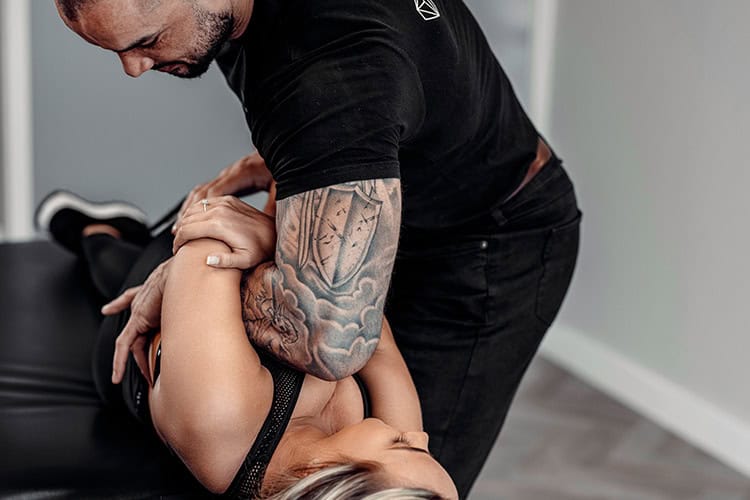
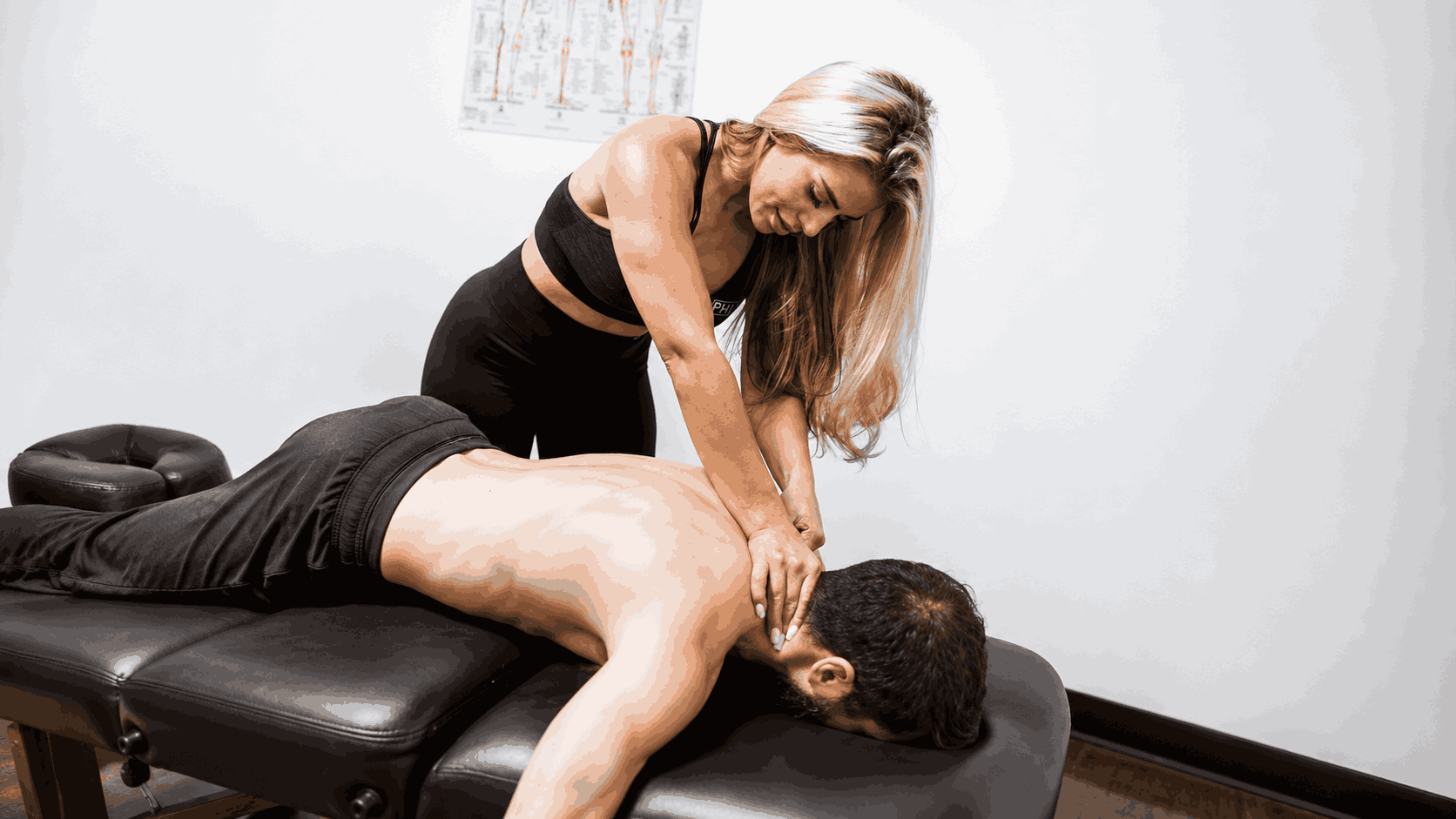
Combat sports physiotherapy in London treats hand, wrist, shoulder, knee, elbow, neck, and rib injuries from boxing, Muay Thai, kickboxing, MMA, Brazilian jiu-jitsu, and wrestling, and returns fighters to sparring and competition on measured criteria. Our HCPC-registered physiotherapists assess the injury, the training camp that caused it, and the technique that keeps it going, then build a plan that keeps you in the gym with modified contact.
One Body LDN was co-founded by a former professional fighter and combat sports coach, so we understand the demands of a fight camp from the inside. We manage concussion with medical care first, then a graded return to contact. Appointments are available same day, early and late across our London clinics.
Rehabilitation that keeps you in camp on modified contact
Return to sparring and competition cleared on measured criteria
Rated Excellent on Trustpilot, with thousands of 5-star Google reviews across One Body LDN clinics.
“Within weeks my pain started to decrease and within months I was back at the gym doing most of the things I wanted to be able to do.”
Jake Whittaker
“The treatment plans were clear, effective and tailored to my needs, and the improvement in my pain and mobility has been excellent.”
Nik Ollek
“Through rigorous sports massage and a clear, well structured physio exercise programme, I was back playing within a month.”
Nicholas Morgan
“Six weeks on, I’m deadlifting weights in the gym and my back feels completely renewed.“
Catherine Gratwicke
“After his treatment, massages and the exercises he gave me, I saw big improvements very fast. Within the same week I was even able to complete a half marathon.”
Mirela
“I went to see Meher after struggling with shoulder and lower back pain due to long office hours, and the difference after starting treatment has been incredible.”
Nandu Krishna Anil Kumar
“I started physio with her 3 months ago and since then my knees pain has improved massively with her personalised program and custom exercises and manual therapy.”
Jessica Foster
“I came in with serious neck tension and frequent headaches from spending long hours at the computer. Preeti … did an excellent job targeting the problem areas with a focused sports massage.”
Tony French
“Her sports massages are outstanding! Easily some of the most effective I’ve had.”
IC OM
“I have been working with Matt for almost two years as part of my rehabilitation journey, and I cannot recommend him highly enough.”
Catherine
“I started going to One Body LDN only to improve my posture … After just a few sessions with my physiotherapist Om, I can tell my posture has already started improving.”
Bozhidara-Maria Opanska
“I feel now I am more aware of my foot placement, and my legs are definitely stronger than ever before. Roll on next ‘long run’ challenge.”
aine121
“Within just a few sessions, she managed to relieve a significant amount of the pain in my shoulder, and I’ve already noticed a real improvement.”
Rob And
“I went to see him with significant back pain, and after just one appointment the difference was remarkable.”
Anvit Desai
“My therapist assessed my issue quickly and got straight to hands on therapy. It did the trick perfectly. After one session my neck pain was considerably better.”
EP
“Very impressed with the in depth assessment and treatment plan I was given.”
Joel Greensite
“I came in with lower back pain, probably caused by spending long hours sitting at a computer … this was the first place where I started to notice a real improvement.”
Bruna Francyne
“The team is very professional, welcoming, and truly cares about their clients. From the moment I arrived, I felt comfortable and well looked after.”
Юлія Беген
“Best physio in London! Have tried multiple One Body clinics and always have such a good experience and knowledgeable physiotherapists.”
Amy Perring
“The trainers are incredibly knowledgeable and take the time to understand your goals, making every session feel personalised and effective.”
Yawar Hayat
“Her knowledge and expertise were immediately evident, and she took the time to understand my specific needs and concerns in a way I haven’t experienced before.”
Andrew G. T
“This is a first class service and the Physios are all excellent and very professional and go the extra mile to help people get back to things they want to do as soon as they can!”
Engine Room
Find a Combat Sports Physiotherapist Near You in London
Find a Clinic Near Me ▼
2–8 mins from major stations
Same-day, early & late appointments
Which combat sports injuries do we treat?
We treat the striking and grappling injuries of boxing, Muay Thai, kickboxing, MMA, Brazilian jiu-jitsu and wrestling, from the hand and wrist injuries of punching to the knee and shoulder injuries of takedowns and submissions. The injuries we treat most often in our London clinics are listed below, grouped by how they happen:
Striking injuries:
Hand and wrist pain from punching, including boxer's knuckle, metacarpal bruising and wrist sprains from a bent wrist on impact, covered on our hand pain and wrist pain pages, with suspected fractures referred for imaging.
Finger and toe sprains from gripping gis and mat contact
Lower back pain from bridging, lifting an opponent and the volume of a camp
Concussion from sparring or competition is managed with medical assessment first and physiotherapy for the graded return to contact, covered on ourconcussion page. Assessing a combat sports injury considers the discipline, stance, sparring and camp volume, mechanism of injury, and the date of the next fight or competition. We use hands-on treatment where clinically appropriate, always alongside active rehabilitation.
How does combat sports injury physiotherapy work at One Body LDN?
Combat sports injury physiotherapy at One Body LDN follows five stages: a camp and sparring review, a physical assessment, a technique assessment, a modified-contact training plan and a graded return to sparring and competition. A fight camp compresses months of load into weeks, so the plan is built around the camp calendar, not against it.
The five stages of combat sports injury physiotherapy are given below:
Camp and sparring review
Your physiotherapist reviews the training week: sparring rounds and intensity, pad and bag volume, strength and conditioning, roadwork, grappling rounds, and the date of the next fight or competition.
Physical assessment
Strength, range of movement and control at the injured region and the regions above and below are measured, with clinical tests that confirm or rule out the suspected diagnosis.
Technique assessment
The punch, kick, shot, bridge, or grip that reproduces the pain is assessed in clinic, because a bent wrist on impact or a dropped elbow on a kick is a cause that treatment alone does not fix.
Modified-contact plan
Training continues at the level of contact the injury allows, with the provoking technique modified and rehabilitation exercises placed in the warm-up or strength session.
Graded return to sparring and competition
Contact is rebuilt in stages from technical work to live sparring, with criteria to pass before each step and a decision point on the fight date.
Why do most combat sports injuries happen?
Most combat sports injuries follow the volume and intensity of a fight camp, a technique fault that appears under fatigue, or a single hard contact in sparring or competition. Overuse injuries- hand, wrist, shoulder, and hip flexor pain- follow weeks of repetition on the bag, the pads, and the mats. Acute injuries, knee ligament sprains, shoulder dislocations, and elbow hyperextension, follow a takedown, a submission, or a checked kick. Fighters who come to us in the final weeks of camp usually have both: an overuse injury they pushed through and an acute injury from training on it. One of our co-founders competed professionally in boxing and coached across combat sports and strength disciplines before qualifying in healthcare, and that experience shapes how our clinicians read a camp.
How do we keep you in training during rehabilitation?
Training during rehabilitation continues at one of three levels of contact: no contact, technical contact or live contact, and the plan sets the level for each session of the week. Complete rest from the gym is reserved for concussion, suspected fractures and a small number of acute injuries, because stopping loses conditioning and leaves the cause untreated.
The three levels of contact used in a modified plan are listed below:
No contact
Shadow work, footwork, bag work with a wrapped and supported hand, solo drilling, conditioning and the rehabilitation exercises; used in the first phase of most injuries and throughout a concussion recovery until medical clearance.
Technical contact
Pad work without power, flow rolling, positional grappling from set positions with no takedowns or submissions on the injured side, light technical sparring at agreed intensity; used once pain has settled and range is restored.
Live contact
Full sparring and competition, reintroduced in rounds and intensity as the criteria are passed.
Modify the provoking technique at each level. A boxer with a wrist injury keeps the lead hand on the bag with a supported wrist and works the rear hand on the pads. A grappler with an MCL sprain drills from the knees and plays guard with the leg braced before returning to standing takedowns. A Muay Thai fighter with a hip flexor strain keeps the hands and the clinch and removes kicks and knees on that side until they meet the criteria. The plan is written into Physitrack with the contact level for each session, so you and, with your consent, your coach work from the same sheet.
How do we clear you to spar and compete?
We clear you to return to sparring and competition based on measured criteria: pain-free full range of movement; strength and grip within an agreed percentage of the uninjured side; neck strength for grapplers; completed technical rounds without symptoms; and confidence in the technique that caused the injury. The fight date sets the target, not the clearance.
The return-to-contact stages are listed below:
No contact with pain settled and range restored
Technical contact completed for a full training week without symptoms the next day
Live sparring reintroduced at reduced rounds and intensity, with the injured side tested in controlled exchanges
Full sparring at camp intensity for one week
Competition with a decision point two to three weeks before the date, so a fighter who is not ready withdraws with time to reschedule
Concussion follows a separate pathway. The UK Government’s 2023 concussion guidelines for grassroots sport set a minimum of 21 days from the injury before return to competition, with a graded return through symptom-free rest, light activity, sport-specific training without contact, and contact training, each stage held for at least 24 hours without symptoms. Our physiotherapists manage the graded stages alongside a doctor’s clearance, and a fighter with a second concussion in a short period is referred for specialist assessment before any return to contact.
Joel, a City of London banker, former competitive sprinter and active Muay Thai kickboxer, came to us with recurring lower back pain that was affecting training. His rehabilitation rebuilt his back through gluteal and hip strengthening and got him back to full training. Julia, a former competitive Muay Thai fighter and now a CrossFit coach, has stayed injury-free under our care for five years after a career-ending knee injury. Both stories sit on ourclient testimonials page.
What should you expect at your first appointment?
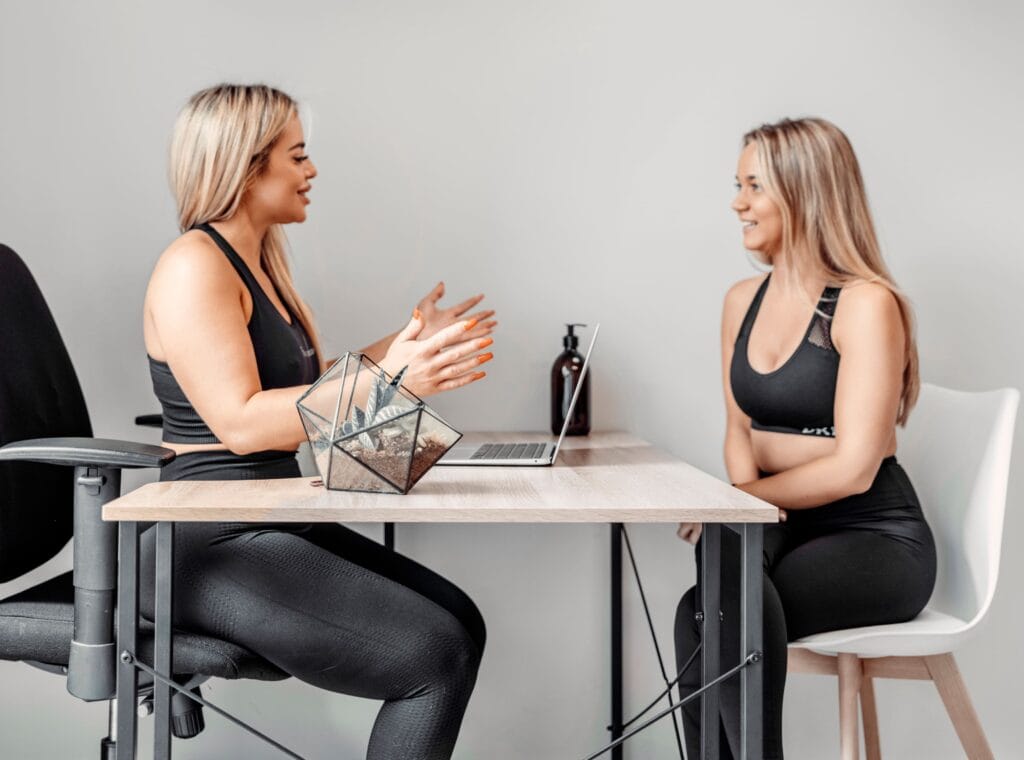
Your first appointment is a full assessment and treatment session, booked online without a GP referral, in any of our London clinics. Bring your camp schedule, the date of your next fight or competition, your wraps and gloves if the injury is in the hand or wrist, and any medical report from a bout.
The session covers the camp review, the physical examination, the technique assessment, the working diagnosis, first treatment and the first week of the modified-contact plan. You leave knowing what is injured, which contact level each session takes this week and what to do before the next appointment. Combat sports injury rehabilitation is booked through the same online system as all private physiotherapy on our physiotherapy London page.
Most private medical insurance policies cover physiotherapy for training injuries subject to authorisation, and we hold provider numbers with AXA Health, Bupa, Aviva, Vitality, Cigna and WPA. Some policies exclude injuries sustained in professional or paid competition, so fighters who compete for payment should confirm cover with their insurer before authorisation. Details are on our private health insurance page.
Boxing hand and wrist injuries: when is an X-ray needed?
If a hand or wrist is swollen over a knuckle, painful to grip or make a fist, or tender over the bone after punching, an X-ray is needed before training continues, because it can miss metacarpal and scaphoid fractures. Boxer’s fracture, a break of the fifth metacarpal behind the little finger, is the most common fracture in striking sports and is managed medically before rehabilitation begins.
We assess hand and wrist pain without fracture signs for the cause: wrapping technique, wrist position on impact, glove fit, and punching volume. Rehabilitation rebuilds wrist and grip strength, corrects wrist position through technique assessment, and gradually returns you to bag and pad work. Your physiotherapist applies the clinical rules that decide when an X-ray is needed and refers you for imaging through ourmedical referral network, where you are met.
Combat sports physiotherapy or sports massage?
Combat sports physiotherapy diagnoses and rehabilitates injuries; sports massage treats muscle tightness and supports recovery between sparring and strength sessions. Fighters in camp often use both, at different points in the week.
Physiotherapy is the right choice when pain limits a technique, when an injury is new, when a joint feels unstable or when symptoms have lasted more than two weeks. Sports massage is the right choice when the legs, hips and shoulders feel heavy and tight after a hard sparring week, and no injury is suspected. Oursports massage in London page sets out our treatment sessions. Fighters who compete in other sports or return from surgery move onto the return-to-sport criteria on oursports physiotherapy page and the protocol-led stages on ourpost-operative physiotherapy page.
As featured In
Why choose One Body LDN for combat sports physiotherapy in London?
HCPC-registered physiotherapists and a founding team from inside the sport
Every combat sports injury appointment is delivered by an HCPC-registered physiotherapist and CSP member. One Body LDN was co-founded by a former professional fighter and combat sports coach, and we have worked with fighters and coaches at Fight City Gym and Ringtone Boxing Gym through referrals and member initiatives.
Thousands of patient reviews and an NPS of +79
One Body LDN has 7,000+ Google reviews at 4.9 and thousands of five-star reviews across Google and Trustpilot. Our structured analysis of 4,859 client survey responses recorded a Net Promoter Score of +79.
Hands-on treatment plus a modified-contact plan
Treatment combines soft-tissue techniques and joint mobilisation where appropriate with strength and control work delivered through Physitrack beside your camp schedule.
Clear pricing and treatment plans, no pressure to overbook
Appointments are paid individually with no packages or multi-session commitments. Your physiotherapist tells you how many sessions to expect and gives you a decision on the fight date.
Same-day, early and late appointments across London
Our clinics sit 2 to 8 minutes from major Tube and train stations, with same-day, early, late and weekend appointments available at many locations, so an injury from an evening sparring session is assessed the next morning.
Private health insurance and health cash plans accepted
We work with AXA Health, Bupa, Cigna Healthcare, WPA, Vitality, Aviva, Allianz, Aetna and Healix, and support cash plans including Medicash, Simplyhealth, Health Shield and Westfield Health.
Combat sports physiotherapy London: FAQs
Can I keep training with an injury?
Continue training at the level of contact the injury allows, modify the provoking technique, and place rehabilitation within the week. Complete rest is advised for concussion, suspected fractures, acute muscle tears and any injury that hurts with daily movement.
How long before a fight should I see a physiotherapist about an injury?
Book as early as possible, and at least four weeks before the date, if the injury is more than bruising. Four weeks allows the contact levels to rebuild and gives you a decision point on the fight, with time to withdraw or reschedule.
How much does combat sports physiotherapy cost in London?
New clients can book a 45-minute physiotherapy assessment and treatment for £89.
Your appointment includes a comprehensive assessment, hands-on treatment where appropriate, and a personalised treatment plan tailored to your needs and recovery goals.
If further treatment is recommended, you can book your next appointment directly with your physiotherapist and access our lower follow-up rates. There are no contracts or multi-session commitments, appointments are paid for individually.
We also accept private health insurance from major UK and international insurers, subject to your policy coverage and authorisation requirements.
Does private health insurance cover fighting injuries?
Most private medical insurance policies cover physiotherapy for training and amateur competition injuries, subject to authorisation. Some policies exclude injuries sustained in professional or paid competition, so fighters who compete for payment should confirm cover with their insurer first.
Do I need a GP referral to see a physiotherapist for a combat sports injury?
No. Self-paying patients book directly online. Insured patients should confirm with their insurer whether they need a GP or consultant referral before authorisation.
How many sessions of combat sports physiotherapy will I need?
There is no fixed number, it depends on your problem, how long you’ve had it, your goals and how you respond to treatment.
Some people may only need a small number of appointments, while longer-standing injuries or post-surgery rehabilitation can require a longer programme.
After your assessment, your physiotherapist will explain what they recommend and why, and your progress will be reviewed as treatment continues.
If you don’t need further physiotherapy, we’ll tell you.
How long after a concussion can I spar again?
The UK Government’s 2023 guidelines for grassroots sport set a minimum of 21 days from the concussion before return to competition, with contact training reintroduced only after symptom-free progression through rest, light activity and non-contact training. A doctor’s clearance is required, and a second concussion within a short period needs specialist assessment before any return.
Why does my shoulder hurt when I punch?
Shoulder pain when punching is most often rotator cuff-related or shoulder impingement from the volume of repetitions on the bag and pads, plus technique issues with elbow position and shoulder blade control at the end of the punch. Rehabilitation rebuilds cuff and scapular strength and corrects technique, and persistent pain with clicking, instability, or night pain warrants assessment for a labral or cuff injury.
Should I see a physiotherapist or a doctor after a knee injury from a takedown?
A physiotherapist is the right first contact for a knee that is painful but stable and bears weight, and they refer you for imaging or a consultant opinion if the examination finds a ligament rupture, a locked knee, or a fracture. A knee that gave way with a pop, swelled within hours or will not bear weight needs assessment the same day.
Do you treat BJJ and grappling injuries as well as striking injuries?
Yes. We treat knee ligament sprains from leg entanglements, shoulder injuries from submissions, elbow hyperextension from armbars, and neck pain from stacking, among the most common injuries. The modified-contact plan uses positional and flow rolling to keep grapplers on the mats during rehabilitation.
Can you work with my coach?
Yes. We share the modified-contact plan with your coach, with your consent, so the clinic sets the contact level for each session and applies it in the gym.
How quickly can I see a physiotherapist for a sparring injury in London?
Same-day and same-week appointments are available across our London clinics, with early, late and weekend slots at many locations. Live availability is shown online, and booking takes under 60 seconds.
Do you treat recreational fighters as well as competitors?
Yes. Recreational boxers, Muay Thai and BJJ club members and white-collar fighters preparing for a first bout are among the most common patients we see, and the assessment and plan follow the same stages at every level.
Ready to get back in camp?
Combat sports physiotherapy in London from One Body LDN treats the injury, keeps you training on the right level of contact and clears your return to sparring and competition on measured criteria. Same-day appointments across London. Insurance accepted.