



Most hand and finger pain settles with a short spell of rest and sensible activity change. Some does not, and with the hand, function is usually a clearer signal than pain alone. Three signals decide when to book: how long it has lasted, how much it affects what you can actually do, and how often it returns.
Any one crossing its threshold means book. We put the function-based severity signal first, because grip and fine motor tasks are the most reliable early warning the hand gives you. Our MCSP-registered team at One Body LDN assesses hand pain daily across our London clinics, and function is usually what tells us the most in a first conversation.
Key Takeaways
- Hand pain lasting beyond two to three weeks despite sensible self-care warrants an assessment.
- Trouble gripping, buttoning, writing, or opening jars is a clearer signal than pain intensity alone.
- A second episode or a finger that locks and catches again warrants assessment.
- Age does not rule out a treatable cause. Function change is worth assessing at any age.
- Direct access applies. No GP referral is needed to book a hand assessment.
The Three Signals That Mean Book Now
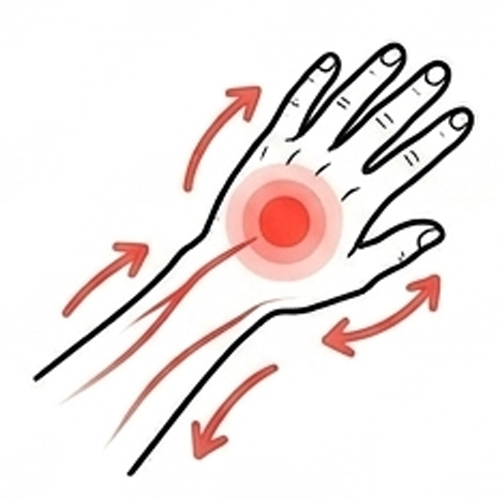
Any one of these three thresholds is enough on its own.
Signal 1: Function
Trouble gripping a cup, buttoning a shirt, writing, or opening a jar is often clearer than pain itself. Hands are used constantly and quietly, so a function change is frequently the first sign something needs a look, sometimes before pain becomes noticeable.
Signal 2: Duration
Hand pain still present after two to three weeks of sensible self-care has declared itself. Rest alone rarely resolves stiffness or aching that has settled into a pattern.
Signal 3: Recurrence
A finger that locks then frees itself again, or hand pain that clears then returns, points to an unresolved cause. Recurrence, especially a locking or catching finger, is worth assessing rather than working around it.
Function Matters More Than Pain Here
Hand problems often show up as changed function before they show up as significant pain.
The hand does hundreds of small tasks a day without conscious thought, so a subtle loss, weaker grip, a finger that hesitates before straightening, difficulty with buttons, often arrives before pain becomes the dominant complaint. Waiting for pain to become severe before booking means waiting past the point where the signal was clearest.
This is why function belongs at the top of the list for the hand specifically, differently from areas where pain intensity leads. Hand pain assessment looks at exactly this functional picture, not only at where it hurts.
Age Does Not Rule This Out

A change in hand function at any age is worth assessing, not dismissed as simply getting older.
Our guide on choosing a hand physiotherapist covers this same point from the booking side. On the timing side, it means the same rule: a function change crossing the thresholds above is worth assessing whether you are thirty or seventy. Age changes what an assessment might find, not whether it is worth having one. Catching a pattern early, at any age, usually means more options, not fewer.
What Happens When You Book
A hand assessment tests function directly, then builds the plan.
Your physiotherapist takes the history, examines each joint and finger involved, tests grip and pinch strength, and checks the specific daily tasks affected. From there you get a working diagnosis and a plan aimed at restoring the function that prompted the booking in the first place. Our hand pain team in London assesses new presentations within days through direct access, no referral needed.
Note. Some hand symptoms need medical care before any physiotherapy booking. Seek urgent GP or A&E care for a hand injury with visible deformity or inability to move a finger after a fall, a hot swollen joint with fever, or sudden weakness or numbness spreading through the hand. Physiotherapists screen for these at first assessment and refer onward the same day when they appear. Contact NHS 111 when unsure.
Frequently Asked Questions
We answer the timing questions hand pain patients ask most.
How do I know if hand pain is serious enough to see a physio?
A change in what you can do, gripping, writing, buttoning, matters as much as how much it hurts. Function change is often the clearest early signal the hand gives. Two to three weeks of persistence, or a return of the same problem, are the other two thresholds worth acting on.
I’m older and my hands ache. Is that just my age?
Age is a factor for some hand conditions, but a function change at any age is worth assessing. Catching a pattern early tends to mean more options, not fewer. Assessment establishes what is happening rather than assuming age explains it.
Do I need a referral to see a physio for hand pain?
No, private physiotherapy runs on direct access, so you book the assessment yourself. Insurance-funded care sometimes needs pre-authorisation from your insurer first. Self-pay patients book directly.
