



Finding the right private physiotherapist for hand pain takes one checklist and ten minutes. Hand problems often get talked out of an assessment before they start, because stiff fingers or an aching palm get quietly filed under getting older rather than something worth booking for. Many hand and finger conditions respond well to assessment and treatment at any age.
Verification of who you see matters as much here as anywhere, so we put the checklist first and the reasoning after it. Our MCSP-registered team at One Body LDN assesses hand pain daily across our London clinics, and this is exactly what we would tell a family member to run before booking anywhere.
Key Takeaways
- Verify HCPC registration first. Physiotherapist is a protected title, and the register takes two minutes to check.
- MCSP after a name confirms chartered status with the professional body.
- Finger stiffness or hand pain is not automatically just ageing, and often responds well to assessment.
- Hand therapy overlaps heavily with occupational therapy, and both routes can be excellent.
- Direct access applies. No GP referral is needed to book a private hand assessment.
The Five-Minute Verification Checklist

Five checks separate a regulated hand physiotherapist from an unverified title.
Run these before booking, in order.
1. Check The HCPC Register
Search the clinician’s name on the Health and Care Professions Council register. Registration is the legal requirement to practise as a physiotherapist in the UK. No entry, no booking.
2. Look For MCSP Status
MCSP after a name confirms membership of the Chartered Society of Physiotherapy, signalling chartered standards on top of legal registration.
3. Ask About Hand Caseload
One question by phone: how often does the clinician treat hand and finger problems specifically? Weekly hand caseload beats occasional, because fine motor function and grip need a clinician comfortable assessing small, precise movements.
4. Confirm Assessment Length
The first appointment should run forty-five minutes minimum, enough time to test grip, individual finger movement, and function, not just look at the sore joint.
5. Confirm The Named Clinician
Ask who you will see, then check that exact name against the register.
Is This Just My Age
Finger stiffness and hand aches are commonly dismissed as ageing when many respond well to assessment and treatment.
Age is a genuine risk factor for several hand conditions, and being older does not mean nothing can be done. Early joint stiffness, a locking finger, or a change in grip are all worth assessing regardless of your age, because catching a pattern early usually means more options, not fewer.
The assumption that hand pain is simply what happens with age keeps people from booking an assessment that might meaningfully help. Our guide to early signs of hand and finger arthritis covers exactly this early window, and it exists because too many people wait years before getting looked at.
The Hand Therapy Question
Hand therapy is even more occupational-therapy-led than wrist care, and both routes can be excellent.
Many practitioners who specialise in hands trained as occupational therapists, building deep expertise in grip, fine motor function, and daily task recovery. This is a genuinely strong route for many hand problems, alongside physiotherapy.
The checklist above still applies in spirit, verify the relevant professional register for whichever title is in front of you, and ask the same caseload question. What matters is depth of hand-specific experience, not which of the two related professions someone trained in. Understanding how physiotherapy treats hand pain helps you compare what either route offers before you book.
What A Proper Hand Assessment Includes
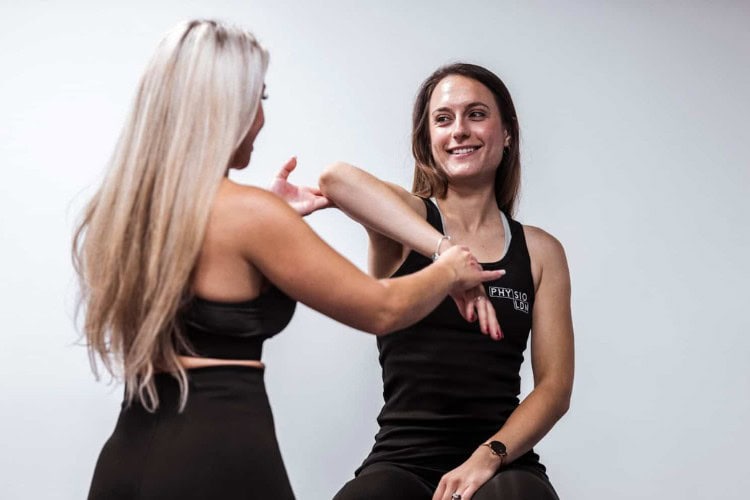
A real hand assessment tests function, not only the sore joint.
Expect four parts. A structured history: which finger or joint, how it behaves through the day, and whether grip or fine tasks are affected. A physical examination: movement of each joint, grip and pinch strength, and palpation of the specific structures involved.
A functional check: whether daily tasks like gripping, buttoning, or writing are affected, since function often tells you more than pain alone. A working diagnosis and plan. Our hand pain team in London runs this full assessment, typically within days through direct access, no referral needed.
Note. Some hand symptoms need medical review rather than a physiotherapy booking. Seek urgent GP or A&E care for a hand injury with visible deformity or inability to move a finger after a fall, a hot swollen joint with fever, or sudden weakness or numbness spreading through the hand. Physiotherapists screen for these at first assessment and refer onward the same day when they appear. Contact NHS 111 when unsure.
Frequently Asked Questions
We answer the booking questions hand pain patients ask most.
Do I need a GP referral to see a private physio for hand pain?
No, private physiotherapy runs on direct access, so you book the assessment yourself. Insurance-funded care sometimes needs pre-authorisation from your insurer first, which is a policy condition rather than a law. Self-pay patients book directly.
Is my hand pain just part of getting older?
Age is a factor for some hand conditions, but that does not mean nothing can be done. Many presentations respond well to assessment and treatment at any age, and catching a pattern early usually means more options. Dismissing hand pain as simply ageing is the most common reason people delay booking.
Should I see a physiotherapist or a hand therapist?
Both can be well qualified, and hand therapy overlaps heavily with occupational therapy training. What matters most is verified registration and genuine caseload with hand and finger problems specifically, whichever title is on the door.
