



A finger that clicks when you bend it. A finger that catches halfway and then snaps through. A finger that wakes up locked in a bent position and needs your other hand to prise it straight. If any of that sounds familiar, you almost certainly have trigger finger, and it is more mechanical than it feels.
It is not arthritis, it is not a nerve problem, and the finger is not going to stay stuck permanently. What is happening is simple once explained, and this guide covers the mechanism, the symptoms, a check you can do at home in thirty seconds, and what actually helps.
Key takeaways
- Trigger finger happens when a thickened tendon struggles to glide through a narrowed tunnel in the palm
- The catching, clicking and locking are that tendon forcing its way through
- A tender lump in the palm at the base of the finger is the most specific sign
- Symptoms are worst in the morning, because the finger has been still for hours
- Forcing a locked finger straight aggravates it; gentle assistance is the better approach
What is actually happening in your finger
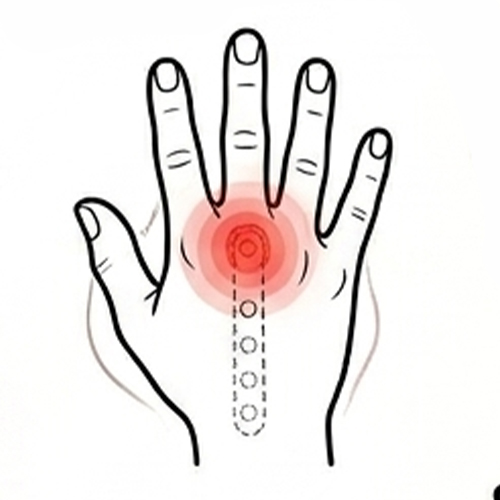
Trigger finger occurs when the tendon that bends your finger thickens, or the tunnel it passes through narrows, so the tendon catches as it tries to glide.
The tendons that bend your fingers run from your forearm, through your palm, and out to the fingertips. Along the way they pass through a series of snug tunnels that hold them close to the bone, so your fingers bend smoothly rather than bowstringing away from the hand.
One of those tunnels sits right at the base of the finger, in the palm. When the tendon there thickens, often forming a small nodule, or when the tunnel itself narrows through irritation, the fit becomes too tight. The tendon can still get through, but not smoothly.
That single fact explains every symptom:
- The click is the thickened part of the tendon forcing its way through the narrowed tunnel.
- The catch is the tendon hesitating just before it squeezes through.
- The lock is the thickened part getting through on the way in, then being unable to pull back out.
- The lump in your palm is the thickened tendon itself, which is why you can feel it and why it is tender.
Clinicians call the tunnel a flexor tendon sheath, and the condition stenosing tenosynovitis. Where trigger finger sits among the other causes of hand pain is mapped in our hand pain guide.
The symptoms, in the order they usually appear
Trigger finger typically progresses from clicking, to catching, to locking, with morning stiffness throughout.
Early: clicking and stiffness
A click or pop as the finger bends and straightens, often painless at first. Stiffness in the finger, particularly first thing. Many people notice this stage for weeks before anything else changes.
Middle: catching and a tender lump
The finger starts hesitating mid-movement before snapping through. Pressing the palm at the base of that finger produces a distinct tender spot, and often a small firm lump you can feel roll under your thumb. Pain at that spot with gripping.
Later: locking
The finger sticks in a bent position and needs the other hand to straighten it, often with a sudden snap when it releases. Some people wake with the finger locked and have to unfold it before getting out of bed.
Why mornings are worst
The finger has been still and bent for hours, and the tendon and its sheath are at their most swollen after a night of inactivity. Once you have worked the hand for a few minutes it usually eases. That morning pattern is so consistent it is a recognition feature in itself.
Which fingers
Ring finger and thumb most often, then middle finger. It can affect more than one, and both hands. The thumb version is sometimes called trigger thumb and behaves identically.
The self-test: two thirty-second checks

Two simple checks, feeling for the nodule and watching the finger open, identify trigger finger in most people who have it.
Check one: the palm press
- Turn your affected hand palm up.
- Find the crease where the finger meets the palm.
- Press firmly with the thumb of your other hand at that spot, at the base of the affected finger.
- Note whether it feels tender, and whether you can feel a small firm lump.
A tender nodule at the base of that specific finger is the most telling sign of trigger finger. It is localised: the neighbouring fingers’ bases will not feel the same.
Check two: the slow fist
- Make a tight fist.
- Open your hand slowly and deliberately, watching the affected finger.
- Note whether it opens smoothly, hesitates, snaps through, or stays bent while the others straighten.
Hesitation, a visible snap, or the finger lagging behind the others confirms the triggering pattern. Doing this slowly matters; a fast movement can mask the catch.
What the results mean
A tender nodule plus a catching finger is a clear picture. Either sign alone is suggestive and worth assessing. Neither sign, with a finger that simply aches or is stiff generally, points to something else, more likely a joint problem, and deserves a different assessment.
One instruction: when you find the catch, do not repeatedly force the finger through it to test it again. Each forced release irritates the tendon further.
Why it happens
Trigger finger develops from repeated gripping and, in a significant proportion of cases, from underlying health conditions that affect tendons.
The common contributors:
- Repeated or sustained gripping, particularly with tools, steering wheels, weights, or anything requiring a firm hold for long periods
- A recent increase in hand-intensive work, DIY, gardening, a new job, or new training
- Diabetes, which is associated with a notably higher rate of trigger finger, and often more stubborn cases
- Rheumatoid arthritis and thyroid conditions, which also raise the likelihood
- Age and sex, with cases more common after 40 and more frequent in women
The diabetes association is worth knowing about. If you have trigger finger in more than one digit, or it keeps returning after treatment, that is worth mentioning to your GP.
What to do about it
Most trigger fingers improve with activity modification, splinting and hand therapy, and the earlier the stage, the better the response.
Early cases, clicking without locking, often respond well to reducing the gripping that caused it, a period of night splinting to keep the finger straight, and tendon-gliding exercises that restore smooth movement. Hand therapy addresses the tendon’s ability to glide and the surrounding hand and forearm.
On releasing a locked finger: do not force it. Gently assist it straight with the other hand, slowly, and stop if it resists sharply. Forcing produces a bigger snap and more irritation each time, which is why people whose only strategy is forcing tend to find it worsens.
Steroid injection is a well-established option for cases that do not settle with conservative care, and it works well for many. Surgery to release the tunnel is reserved for fingers that stay locked or keep returning after other treatment. Most people never need it.
When to get it assessed
Book an assessment if a finger has been clicking or catching for more than two to three weeks, if it locks at all, or if you are having to straighten it with your other hand. Earlier stages respond better, which makes waiting the expensive option.
Our hand pain physiotherapy in London team assesses and treats trigger finger through direct access, no GP referral needed. If you are weighing up whether it is time, our guide to when to see a physio for hand pain sets out the thresholds.
Common questions about trigger finger
How do I know if I have trigger finger?
A tender lump in the palm at the base of the finger, plus a finger that catches, snaps or locks when you open your hand. Those two together are the classic picture. Morning stiffness that eases with movement supports it.
Will trigger finger go away on its own?
Sometimes, particularly mild cases where the gripping that caused it stops. Cases that have progressed to locking are less likely to resolve alone. Treatment is more effective at earlier stages, so waiting to see is not a neutral choice.
How do I release a stuck trigger finger?
Gently assist it straight with your other hand, slowly, rather than forcing it. Forcing produces a harder snap and more tendon irritation each time. A finger that locks regularly needs assessment rather than a better releasing technique.
What gets mistaken for trigger finger?
Arthritis in the finger joints is the most common confusion, along with a stiff joint after injury. The difference is the catch: trigger finger produces a distinct snap and a tender nodule in the palm. Joint problems produce stiffness and pain at the joint itself, without the palm lump.
Does trigger finger mean I need surgery?
Usually not. Most cases settle with activity changes, splinting, hand therapy, or an injection. Surgery is reserved for fingers that remain locked or keep recurring after other treatment.
Book your hand assessment
A clicking finger caught early is a far simpler problem than a locking one caught late. Book an assessment with our hand pain physiotherapy in London team in 60 seconds, no GP referral needed.
References
- NHS. Trigger finger.
- Lunsford D, Valdes K, Hengy S. Conservative management of trigger finger: a systematic review. Journal of Hand Therapy. 2019;32(2):212-221.
- Makkouk AH, Oetgen ME, Swigart CR, Dodds SD. Trigger finger: etiology, evaluation, and treatment. Current Reviews in Musculoskeletal Medicine. 2008;1(2):92-96.
- National Institute for Health and Care Excellence. Clinical Knowledge Summary: Trigger finger.
- Chartered Society of Physiotherapy. Hand and wrist problems.
