

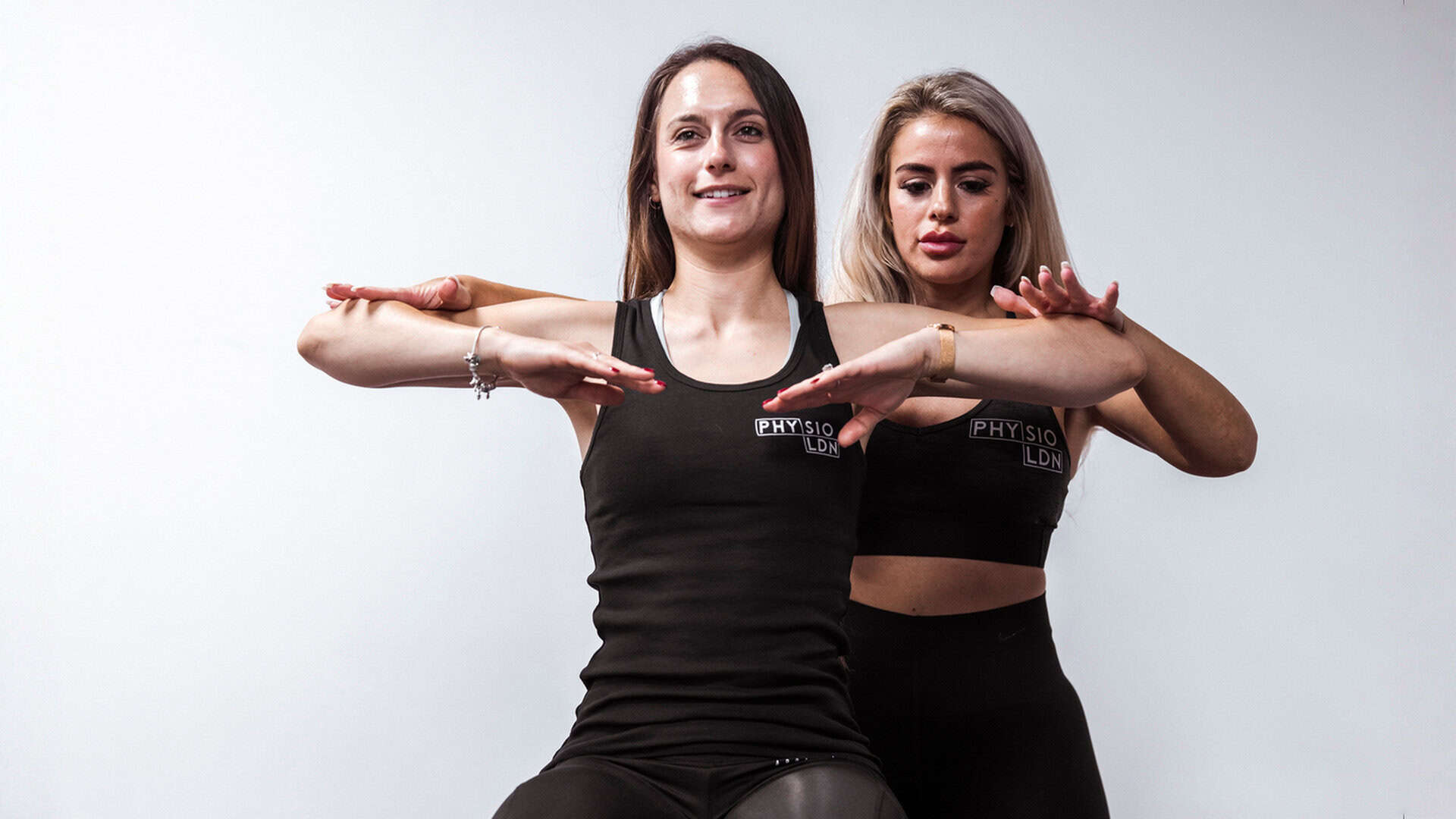

One elbow, two famous names, and a single rule sorts them: the side. Pain on the bony point on the outside of the elbow is tennis elbow. Pain on the bony point on the inside is golfer’s elbow. The rule works because the elbow’s anatomy mirrors itself.
The muscles that grip and lift with the palm down anchor at the outer point, and the muscles that curl and squeeze with the palm up anchor at the inner point, so each tendon group complains at its own address.
Beyond the address, the two conditions are close relatives: both are overload problems of grip-related tendons, both follow a jump in hand use, and both recover the same way. The differences that matter, and the third option that is neither, sit below.
Key Takeaways
- The side of the pain names the condition: outside is tennis elbow, inside is golfer’s elbow.
- Palm-down gripping and lifting fires the outside. Palm-up lifting and curling fires the inside.
- Both are tendon overload problems, and neither usually comes from its named sport.
- Tingling into the ring and little fingers is a third story, the nerve, and books an assessment.
- The two conditions share one recovery logic: staged loading, not rest alone.
The Side Rule: One Check Sorts It
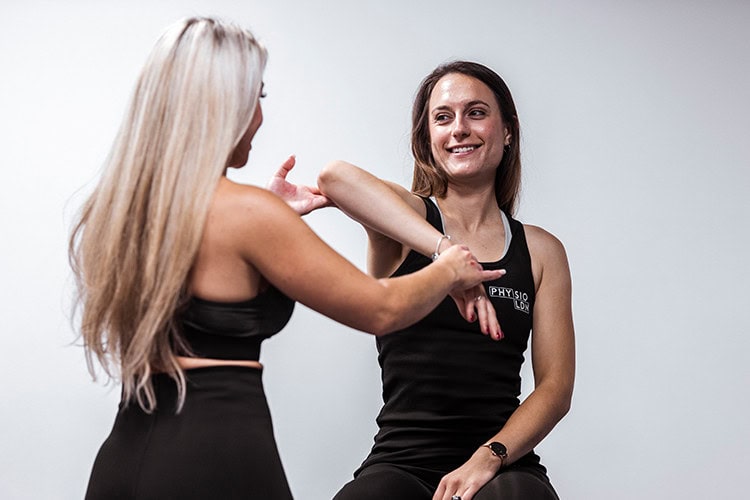
Press both bony points, and the tender one names your condition.
Bend your elbow and find the two bony knobs, one on the outer side, one on the inner side. Press each firmly with a thumb. Tennis elbow lives on the outer point: focused tenderness there, sharpened by gripping and by lifting palm-down. Golfer’s elbow lives on the inner point: focused tenderness there, sharpened by squeezing and by lifting palm-up.
The loading direction confirms what the pressing suggests, and the mirror is exact enough that one lift tests both: gripping and raising a light chair hurts the outer point palm-down and the inner point palm-up. Full recognition patterns and home tests for each side sit in our guides to tennis elbow symptoms and self-testing and golfer’s elbow symptoms and self-testing.
Tennis Elbow And Golfer’s Elbow Compared
The table below holds every practical difference, and the mirror pattern runs through it.
| Tennis elbow | Golfer’s elbow | |
| Pain location | Outer bony point | Inner bony point |
| Loading that fires it | Palm-down lifting, gripping, wrist-back movements | Palm-up lifting, curling, squeezing, wringing |
| Muscle group | The tendons that extend the wrist and power grip | The tendons that curl the wrist and power squeeze |
| Typical triggers | Desk work, DIY, racket sports, new gym loads | Rows and curls at the gym, carrying, manual work, throwing |
| How common | The more common of the pair | The rarer of the pair |
| Nerve neighbour | None of note | The funny-bone nerve runs directly behind it |
| Clinical name | Lateral epicondylitis | Medial epicondylitis |
The last two rows carry the practical weight. The inner elbow has a nerve neighbour the outer does not, which is why inner elbow pain with tingling changes the story entirely, covered next.
When It Is Neither: The Third Options
Some elbow pain belongs to neither tendon, and three patterns give it away.
Tingling or numbness into the ring and little fingers points to the ulnar nerve behind the inner elbow, not a tendon, and nerve symptoms book an assessment rather than a self-sort. Deep elbow pain with stiffness, loss of full straightening, or swelling points into the joint itself.
Elbow pain travelling down from the neck in a line, sometimes with neck stiffness, belongs to a nerve root rather than the arm. The side rule sorts the two tendons quickly, and an elbow that fails all the patterns, hurts on both sides at once, or carries any tingling has stepped outside the tendon story and earns a proper look at the whole elbow.
One Recovery Logic For Both
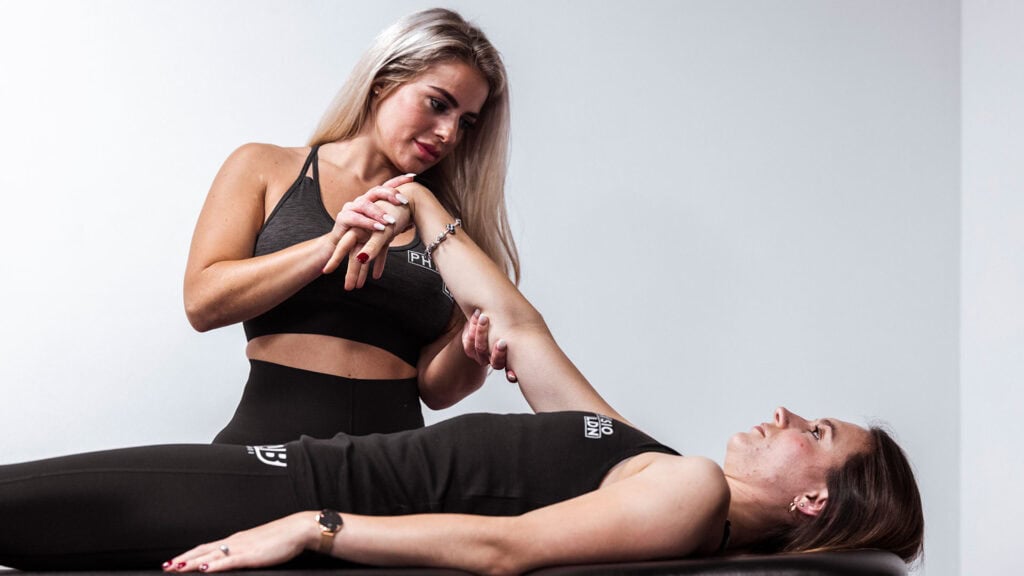
Whichever side you have, the plan is the same shape: staged loading of the overloaded tendon.
The mirror runs all the way through. Both conditions arrive after a jump in hand use, both deceive by easing during activity and complaining after, and both respond to the same treatment logic: settle the aggravating load, then rebuild the tendon’s capacity through progressive, guided loading.
Rest alone fails both for the same reason, since rested tendons lose capacity rather than regain it. The differences are in the details an assessment sets: which movements load your tendon specifically, where your strength deficit sits, and how fast the progression can run.
Outer-point patterns route through our tennis elbow physiotherapy pathway and inner-point patterns through our golfer’s elbow physiotherapy pathway, both within days through direct access, no referral needed, and both starting from the same first step: confirming the side rule got it right.
Note. Some elbow symptoms need medical review rather than side-sorting. Seek urgent care for an elbow that cannot straighten or bend after an injury, visible deformity, a hot swollen elbow with fever, or an arm turning cold, pale, or numb. Seek prompt review for tingling or numbness into the fingers, hand weakness progressing week on week, or elbow pain with unexplained weight loss or night pain unrelated to activity. Physiotherapists screen for all of these at first assessment and refer onward the same day when they appear. Contact NHS 111 when unsure.
Frequently Asked Questions
We answer the comparison questions patients ask most.
How do I know if I have tennis elbow or golfer’s elbow?
Press the two bony points of your elbow: outer-point tenderness is tennis elbow, inner-point tenderness is golfer’s elbow. Palm-down lifting fires the outer, palm-up lifting fires the inner. The side of the pain names the condition.
Can you have tennis elbow and golfer’s elbow at the same time?
Yes, both tendon groups can overload together, though one side usually dominates. Dual-sided elbow pain deserves an assessment rather than two self-tests, partly to confirm the pattern and partly to rule out the joint and nerve stories.
Which is worse, tennis elbow or golfer’s elbow?
Neither is inherently worse, and both recover well with staged loading. Golfer’s elbow carries one extra consideration: the funny-bone nerve runs directly behind the inner point, so inner elbow pain with finger tingling needs a nerve-aware assessment.
Why are they called tennis elbow and golfer’s elbow?
The names come from the sports that classically loaded each tendon group: backhand strokes load the outer tendons, and swing follow-through loads the inner. Most modern cases come from desks, gyms, and manual work. The names describe history, not your hobby.
References
- National Health Service. Tennis elbow: symptoms and treatment.
- National Institute for Health and Care Excellence. Lateral and medial epicondylitis: clinical knowledge summaries.
- Chartered Society of Physiotherapy. Direct access to physiotherapy.
- Health and Care Professions Council. The register of physiotherapists.
