

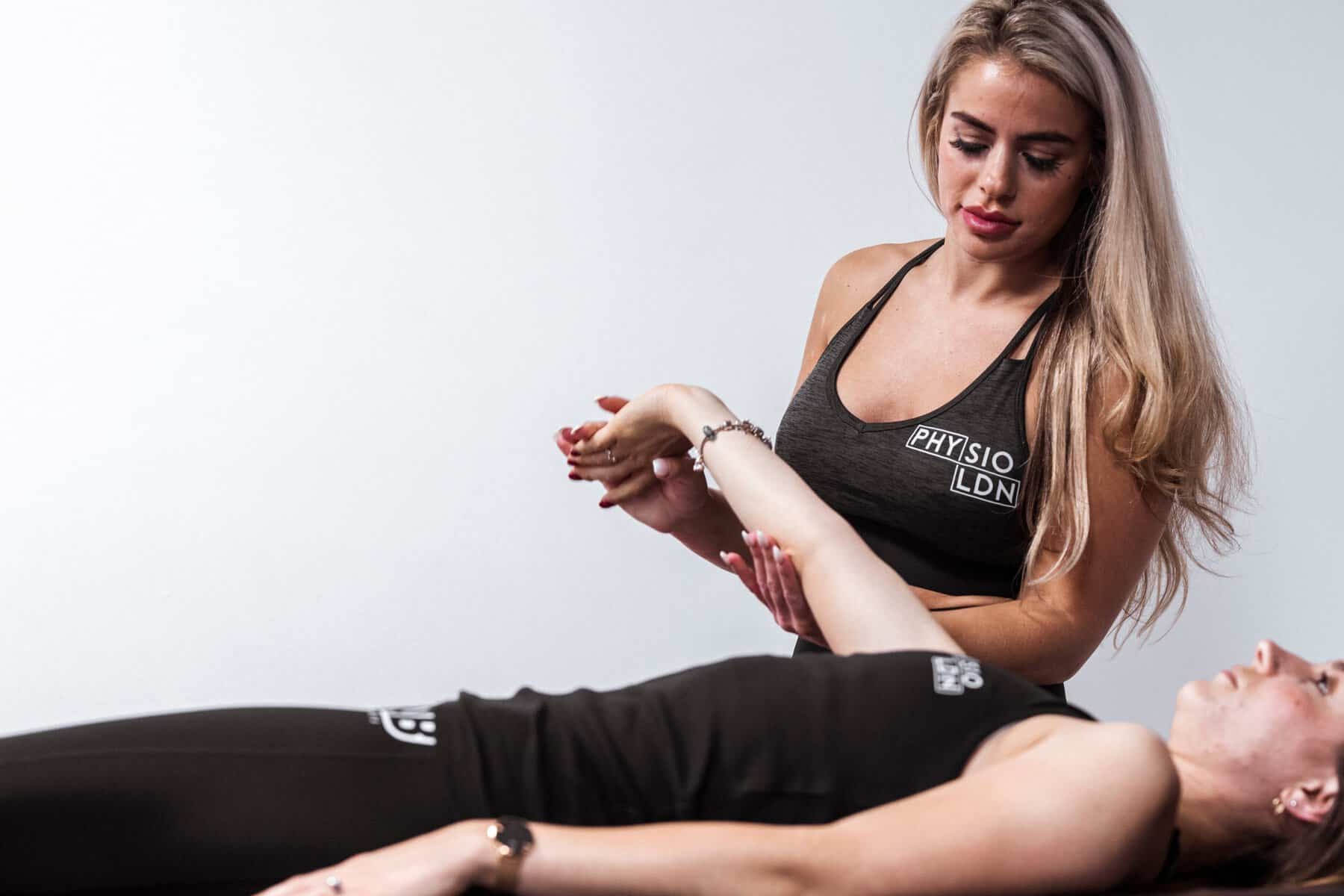

Golfer’s elbow is tennis elbow’s inner-side twin, and the rarer, more misread of the pair. The pain sits on the bony point on the inside of the elbow, and the mechanism mirrors its twin exactly: the muscles that curl your wrist and squeeze your grip anchor at that inner point, so lifting palm-up, carrying bags, pull-ups, and hard gripping all pull on the sore spot.
Clinicians call it medial epicondylitis, and golf is one trigger among many, well behind gym training, manual work, and lifting around the house. One neighbour makes the inner elbow trickier than the outer: the funny-bone nerve runs directly behind it, and tingling into the fingers changes the story entirely. Two home tests sort the pattern in five minutes.
Key Takeaways
- Golfer’s elbow is pain at the bony point on the inside of the elbow, triggered by gripping and palm-up lifting.
- The wrist-curling and grip muscles anchor at the inner elbow, which is why hand work fires inner elbow pain.
- Gym pull movements, carrying, manual work, and DIY start more cases than golf does.
- Two home tests build a reliable pattern picture in five minutes.
- Tingling into the ring and little fingers points to the nerve behind the inner elbow, a different problem needing assessment.
Golfer’s Elbow Symptoms
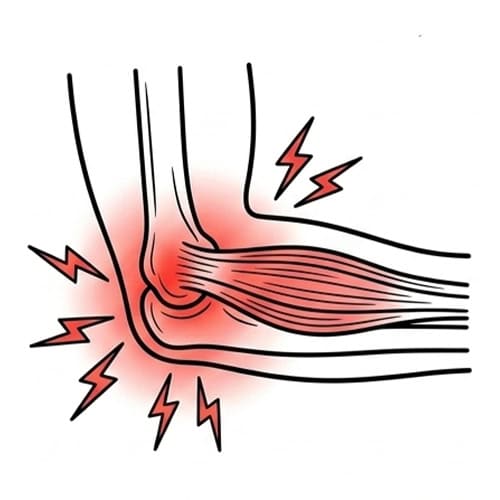
Five signs define the golfer’s elbow pattern, and palm-up loading leads.
- Pain at the inner elbow point. A focused soreness on the bony knob on the inside of the elbow, precise enough to press with one finger.
- Fired by palm-up lifting and carrying. Shopping bags, kettlebells, pull-ups, and lifting children reproduce it, because palm-up loading works the muscles anchored at the inner point hardest.
- Worse with gripping and squeezing. Wringing a towel, a firm handshake, or opening a stiff jar brings the pain on.
- A recent change in pulling or gripping load. New gym programme heavy on rows and curls, a house move, a spell of manual work. The tendon complains after the load jumped.
- Inner elbow stiffness with first use. Sore and tight in the morning or after rest, easing with movement, returning after the day’s load.
One symptom does not belong to this list. Tingling or numbness running into the ring and little fingers is the nerve behind the elbow speaking, not the tendon, and a guide to that condition is coming in this series. Pain plus tingling means book an assessment rather than run home tests.
The Two Home Tests
Two tests load the inner tendon specifically. Stop either if pain is sharp or tingling starts.
Test 1: The Resisted Wrist Curl
How to do it. Sit with your forearm on a table, palm facing up, hand off the edge. Make a loose fist. Use the other hand to press down against the fist while you resist by curling the wrist upward.
Positive sign. Your familiar pain reproduced at the inner elbow point as you resist. The curling muscles pull on their inner anchor, so an overloaded tendon answers at the elbow, not the wrist.
Test 2: The Palm-Up Lift
How to do it. Stand behind a light chair. Grip the back of it with one hand, palm facing up, elbow straight, and lift the chair a few centimetres.
Positive sign. Inner elbow pain arriving as you grip and lift palm-up. Readers of our tennis elbow guide will recognise the mirror: the same lift palm-down tests the outer tendon, palm-up tests the inner one, and the side that hurts names the twin.
Reading Your Results
Both tests reproducing inner elbow pain, with the grip-and-carry pattern, point toward golfer’s elbow.
Both tests recreating your familiar inner elbow pain, alongside palm-up triggers and a recent load change, make golfer’s elbow a leading explanation and an assessment the sensible next step. One positive alone is weaker.
The inner elbow also has more neighbours than the outer: the nerve running behind it, the joint beneath it, and in throwers or racket players, the ligament that stabilises the inner elbow under speed, which deserves its own assessment pathway.
Outer elbow pain is the twin condition, mapped with its own tests in our guide to tennis elbow symptoms and self-testing. The side names the suspect. The examination confirms it.
What The Self-Test Cannot Tell You
Home testing classifies the pattern. Assessment separates tendon from nerve and stages the plan.
The tests cannot check the nerve behind the inner elbow properly, cannot grade the tendon, cannot assess the grip and forearm strength deficits that let the overload happen, and cannot stage a return to lifting.
Assessment adds each layer, and the nerve check matters most here, because tendon and nerve problems sit millimetres apart at the inner elbow and need different plans. Genuine golfer’s elbow is a capacity problem that resolves through staged loading, guided properly through golfer’s elbow physiotherapy. Rest alone lets the tendon lose capacity while the cause waits untouched.
When To Book The Assessment
Three triggers turn a positive self-test into a booking, and tingling skips the tests entirely.
Duration: inner elbow pain persisting beyond two to three weeks despite easing the gripping and carrying loads that drive it. Function: pain now limiting gym, work, carrying, or daily gripping. Recurrence: an elbow that settles between busy spells and flares with each return.
Any trigger met, book. Tingling or numbness into the fingers books promptly without waiting on thresholds, because nerve symptoms deserve assessment in their own right. Our elbow pain team in London assesses inner elbow presentations within days through direct access, no referral needed, testing tendon and nerve in the same session.
Note. Some elbow symptoms need medical review rather than self-testing. Seek urgent care for an elbow that cannot straighten or bend after an injury, visible deformity, a hot swollen elbow with fever, or an arm turning cold, pale, or numb.
Seek prompt review for tingling or numbness into the fingers, hand weakness progressing week on week, or elbow pain with unexplained weight loss or night pain unrelated to activity. Physiotherapists screen for all of these at first assessment and refer onward the same day when they appear. Contact NHS 111 when unsure.
Frequently Asked Questions
We answer the golfer’s elbow questions patients ask most.
What does golfer’s elbow feel like?
A focused pain on the bony point at the inside of the elbow, fired by gripping, wringing, and lifting palm-up. Inner elbow stiffness after rest and pain after activity rather than during are part of the pattern. Most people can press the sore spot with one finger.
Can you get golfer’s elbow without playing golf?
Yes, gym pull movements, carrying, manual work, and DIY start more cases than golf does. The condition is a grip-and-curl tendon problem at the inner elbow. Anything that loads those muscles repeatedly can begin it, and most cases never saw a fairway.
How is golfer’s elbow different from tennis elbow?
Location: golfer’s elbow hurts on the inside bony point, tennis elbow on the outside. The two are mirror conditions of different tendon groups, palm-up loading fires the inner, palm-down fires the outer. A full side-by-side guide is coming in this series.
Why do my fingers tingle with inner elbow pain?
Tingling into the ring and little fingers points to the ulnar nerve, which runs directly behind the inner elbow, rather than the tendon. Nerve symptoms need assessment in their own right. Book promptly rather than self-testing further.
References
- National Health Service. Golfer’s elbow: symptoms and treatment.
- National Institute for Health and Care Excellence. Medial epicondylitis: clinical knowledge summary.
- Chartered Society of Physiotherapy. Direct access to physiotherapy.
- Health and Care Professions Council. The register of physiotherapists.
