

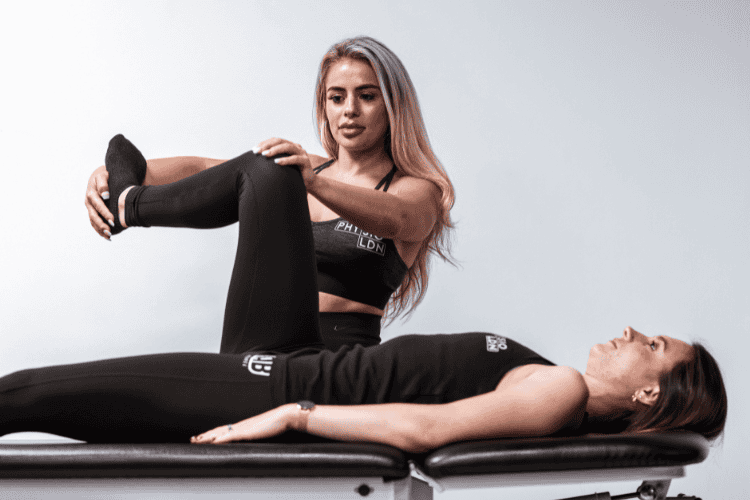

Your operation is booked or done, your consultant has said you will need physiotherapy, and you are not sure how that works in private care: who refers you, when it starts, how the physiotherapist knows what the surgeon wants, and what happens if the two disagree. Physiotherapy after surgery is driven by the consultant’s protocol, a written set of rules for what the repaired tissue can bear in each week after the operation, and the physiotherapist’s job is to get you as far as that protocol allows, as fast as the tissue tolerates.
The first six weeks decide most of the outcome, and a delay of a fortnight in starting is a delay the joint remembers for months. This guide sets out when post-operative physiotherapy starts, how a consultant referral works in private care, what a protocol is, what the first weeks involve for the common operations, how we work with your surgeon and what goes wrong when rehabilitation is left to chance.
Key takeaways
- Physiotherapy after surgery starts within the first week for most joint, ligament and tendon operations, and a consultant referral is not required to book it privately, although the consultant’s protocol is.
- The protocol sets what the repaired tissue can bear in each phase; the physiotherapist sets how quickly you reach each limit and what you do within it.
- Full range of movement, a quiet joint and an early return of muscle activation in the first six weeks predict the outcome more than anything done later.
- Private post-operative physiotherapy differs from the NHS pathway in start date, session length and continuity rather than in the protocol, which is the same.
- Most private medical insurance policies cover post-operative physiotherapy under the surgical claim, with a session limit set by the policy.
When does physiotherapy after surgery start?

Physiotherapy after surgery starts within the first week for most orthopaedic operations, and in hospital on the first or second day for joint replacements. The timing is set by the operation, not by how the wound looks or how you feel.
Day one to seven. Knee and hip replacement, ACL reconstruction, meniscal repair, ankle fracture fixation and spinal decompression all begin physiotherapy in the first week, with swelling control, circulation, safe movement and walking as the goals.
Week one to three. Rotator cuff repair, shoulder stabilisation and Achilles tendon repair begin supervised physiotherapy once the surgeon’s immobilisation period allows, with the early sessions spent on the joints around the repair, posture and the movements the protocol permits.
Why early matters. A joint that is not moved in the first fortnight stiffens, a muscle that is not activated switches off, and both are harder to recover in month three than to prevent in week one. Research on knee replacement shows that range of movement at six weeks predicts range at one year.
How does a consultant referral work in private physiotherapy?
A consultant referral in private care is a letter or discharge summary that names the operation, the date, the graft or implant, and the protocol the surgeon wants followed, and it is sent to the physiotherapist before or at the first session. No referral is needed to book, because physiotherapists registered with the Health and Care Professions Council treat without one, but the protocol is needed to treat safely.
What the referral contains. The operation note or a summary of it, any restrictions on weight bearing, range or load, the brace or sling instructions, the review dates with the consultant, and the surgeon’s protocol or a reference to a published one.
If you have no letter. Ask the consultant’s secretary for the discharge summary and the protocol, or bring the hospital discharge sheet to the first session. We write to the consultant to confirm the protocol where anything is unclear, and we do not progress past a restriction until it is confirmed.
Insurance. Most private medical insurance policies cover post-operative physiotherapy under the surgical authorisation, with a set number of sessions. The insurer usually asks for the consultant’s referral, so keep the letter. Our guide on what happens at a first physiotherapy appointment covers the paperwork for the first visit.
What is a post-operative protocol?
A post-operative protocol is the surgeon’s written timetable of what the repaired tissue can bear in each phase after the operation, and it sets the limits within which the physiotherapist works. The protocol protects the repair; the physiotherapist delivers the recovery inside it.
What the protocol sets. Weight bearing: none, partial or as tolerated, and from which week. Range of movement: how far the joint may bend or lift, and when the limit rises. Load: when resistance may begin and when open-chain or overhead work is allowed. Protection: how long a brace, sling or boot is worn. Milestones: when running, driving, work and sport are considered.
What the protocol does not set. How quickly you reach each limit, which exercises you do, how swelling is managed, how the joints above and below are kept working, or how the muscle is re-activated. Two people on the same protocol can be weeks apart at three months, and the difference is the physiotherapy.
When protocols differ. Surgeons differ, and a protocol from one hospital is not a standard. We follow your surgeon’s protocol and raise a query with the consultant where it departs from published guidance, rather than choosing between the two ourselves.
What do the first six weeks involve for common operations?
The first six weeks after surgery are spent on swelling, range of movement, muscle activation and safe walking or arm use, and the goals differ by operation.
| Operation | First six weeks | What must be achieved by week six |
| Knee replacement | Swelling control, full extension, bend to 90 then 110 degrees, walking with and then without aids | Full extension, bend over 100 degrees, walking without a frame |
| Hip replacement | Walking, hip precautions where the surgeon applies them, gluteal and quadriceps activation | Walking without aids, stairs, no limp |
| ACL reconstruction | Full extension, quadriceps activation, bend past 120 degrees, gait without crutches | Quiet knee, full extension, normal walk |
| Rotator cuff repair | Sling for four to six weeks, passive and assisted range only, elbow, wrist and posture work | Passive range to the protocol limit, no active lifting yet |
| Shoulder stabilisation | Sling two to four weeks, protected range avoiding the position of dislocation, scapular control | Protected range achieved, scapular control, sling off |
| Ankle fracture fixation | Boot and weight bearing as the surgeon allows, swelling, toe and knee movement | Walking in or out of the boot per protocol, swelling settling |
| Lumbar discectomy | Walking daily, neural mobility, core activation, avoiding prolonged sitting | Walking 30 minutes, sitting tolerance, nerve symptoms settling |
How does the physiotherapist work with your consultant?
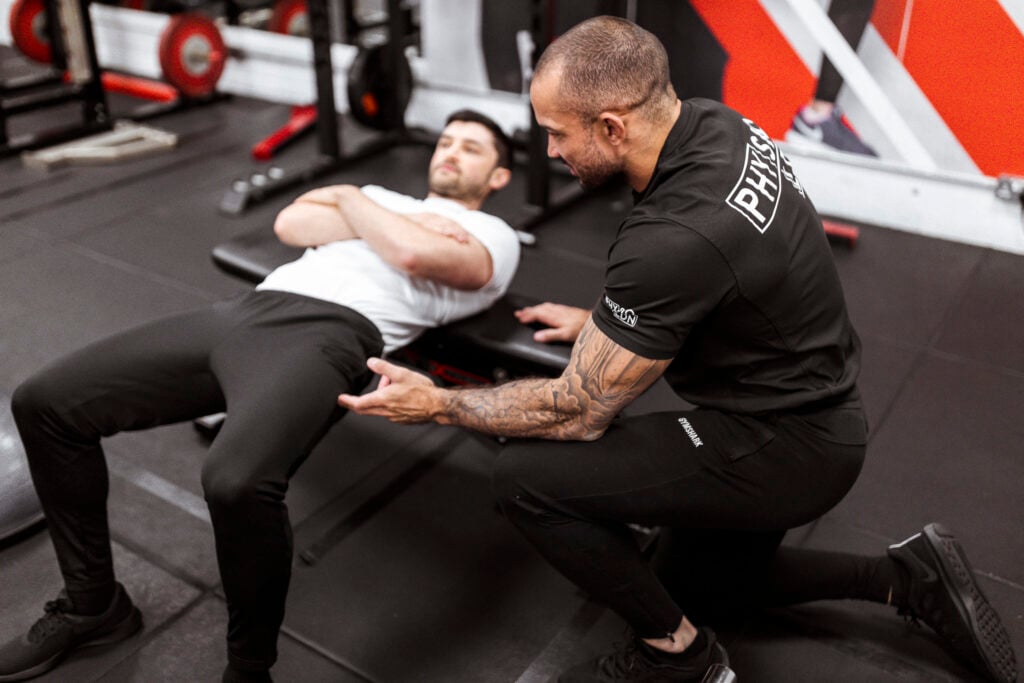
The physiotherapist works to the consultant’s protocol, reports progress at the consultant’s review points, and raises any concern about the wound, the joint or the repair directly with the surgical team rather than managing it alone. The consultant owns the repair; the physiotherapist owns the recovery; you see both.
Reports. We write a short progress report before each consultant review, with range, strength, swelling and any problem, so the surgeon sees measurements rather than impressions.
Queries. A restriction that seems to be holding you back, a protocol that is behind published guidance, or a goal you have reached early is raised with the consultant in writing, and the answer is followed.
Red flags. Wound changes, calf pain, a sudden loss of range, a fever or a new instability are referred back to the surgical team the same day. We will tell you when something needs the surgeon rather than us.
Where you are seen. Post-operative physiotherapy runs in the same clinic with the same physiotherapist from the first week to discharge, at any of our London clinics, so the person measuring you at week twelve is the person who measured you at week one.
What goes wrong with physiotherapy after surgery?
Starting late, stopping early, working without the protocol and pushing through swelling are the four failures that turn a good operation into a poor result.
Starting late. Waiting for the six-week consultant review to begin physiotherapy loses the window in which range is cheapest to regain. The first session is booked for the first week.
Stopping early. Discharge at the point of walking without a limp leaves the strength and control work undone, and the joint fails under load months later. Rehabilitation runs to the protocol’s final phase, not to the first comfortable week.
Working blind. A physiotherapist without the protocol either under-treats, out of caution, or overloads a repair that cannot yet take it. The letter comes first.
Pushing through swelling. A joint that swells after a session has been loaded past what it tolerates, and swelling switches the muscle off. The load is set to a quiet joint.
When to book physiotherapy after surgery
Physiotherapy after surgery is booked before the operation where possible and within the first week after it otherwise, and a consultant referral is not needed to book. Bring the discharge summary and the protocol to the first session, or send them ahead. Our physiotherapy service runs post-operative rehabilitation across all our London clinics, with the same physiotherapist from the first week to discharge.
Note. Some symptoms after surgery need urgent medical care rather than a physiotherapy session. Calf pain, swelling or warmth with or without shortness of breath or chest pain, a wound that is red, hot, leaking or opening, a fever, a sudden loss of movement or a new deformity, or numbness and weakness spreading down a limb are reasons to contact the surgical team, call NHS 111, or go to A&E.
Book your London post-operative physiotherapy
The operation repairs the tissue; the rehabilitation decides what you get back. You can book physiotherapy in London at any of our clinics in 60 seconds, with no GP referral needed.
Common questions about physiotherapy after surgery
Do I need a referral from my consultant for private physiotherapy after surgery?
No referral is needed to book, because HCPC-registered physiotherapists treat without one. The consultant’s protocol and discharge summary are needed to treat safely, and most insurers ask for the referral letter to authorise sessions.
How soon after surgery should physiotherapy start?
Within the first week for joint replacements, ligament reconstructions, fracture fixations and spinal surgery, and as soon as the immobilisation period allows for tendon and shoulder repairs. Waiting for the six-week review loses the period in which range is easiest to regain.
How many physiotherapy sessions do I need after surgery?
Knee and hip replacements typically need 8 to 12 sessions over three to six months, ACL reconstruction 12 to 20 or more over 9 to 12 months, and rotator cuff repair 12 to 16 over four to six months. The protocol and your progress set the number.
Does private health insurance cover physiotherapy after surgery?
Most UK private medical insurance policies cover post-operative physiotherapy under the surgical claim, with a session limit and sometimes an excess. The insurer usually asks for the consultant’s referral and a treatment plan.
What if my physiotherapist and my consultant disagree?
The consultant’s protocol is followed, and the physiotherapist raises the disagreement with the consultant in writing. You are told what was asked and what was answered, and the plan changes only when the consultant agrees.
References
- NHS. Knee replacement: recovery.
- NHS. Hip replacement: recovery.
- van Melick N, van Cingel REH, Brooijmans F, et al. Evidence-based clinical practice update: practice guidelines for anterior cruciate ligament rehabilitation based on a systematic review and multidisciplinary consensus. British Journal of Sports Medicine.
- Thigpen CA, Shaffer MA, Gaunt BW, Leggin BG, Williams GR, Wilcox RB. The American Society of Shoulder and Elbow Therapists’ consensus statement on rehabilitation following arthroscopic rotator cuff repair. Journal of Shoulder and Elbow Surgery.
- Chartered Society of Physiotherapy. Physiotherapy works: orthopaedics.
- Health and Care Professions Council. Check the register.
