


Search this question and you get a number that stops people in their tracks: six to twelve months. Sometimes eighteen. It sounds like a sentence, and it sends a lot of people looking for a shortcut that does not exist.
The number is roughly right, but it answers the wrong question. Tendons take months to rebuild their capacity, which is where those figures come from. How long until your elbow stops hurting and you can grip normally is a different, usually much shorter timeline. Understanding the gap between the two is what stops people abandoning a plan that is actually working.
Key takeaways
- Most tennis elbow improves within weeks of starting proper treatment, while full tendon capacity takes months
- The often-quoted six to twelve months is the tendon rebuilding timeline, not how long you stay in pain
- Caught early, tennis elbow typically settles faster; long-standing cases take longer but still respond
- Around one in six cases runs beyond a year, usually where the load never changed or rest was the plan
- Rest alone extends the timeline, because rested tendons lose capacity rather than regain it
Why tennis elbow takes longer than a strain
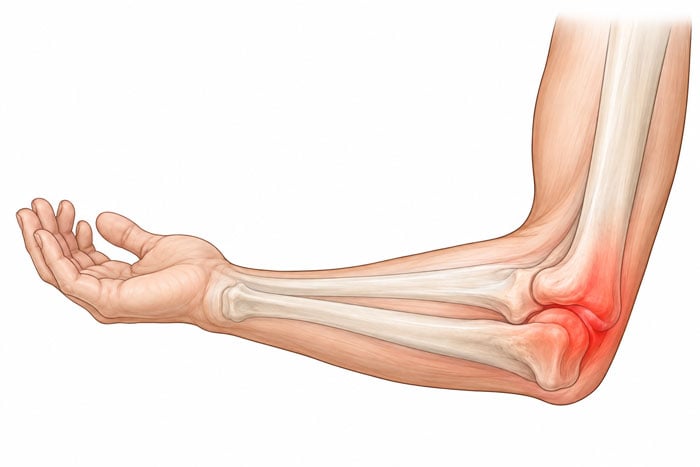
Tennis elbow is a tendinopathy, a gradual breakdown in the tendon’s structure and capacity, not a short-lived inflammation, and that is why it runs on months rather than days.
The old name, tendonitis, implied inflammation, and inflammation settles quickly. That framing is outdated. What actually happens in tennis elbow is that the tendon anchoring your forearm muscles to the outside of the elbow has been loaded beyond what it could handle, repeatedly, and its structure has begun to degrade.
That changes everything about the timeline. You cannot anti-inflammatory your way out of a capacity problem. The tendon has to be rebuilt, and tendons rebuild slowly, partly because they have a relatively poor blood supply compared with muscle. This is the same principle we apply to achilles problems, and it is why the honest answer to the duration question is measured in months rather than weeks.
The upside: tendons rebuild reliably when they are loaded properly. Slow is not the same as stuck.
The honest timescales
How long tennis elbow lasts depends mostly on how long you have had it and whether the load that caused it has changed.
Caught early
Tennis elbow addressed within the first few weeks, with the aggravating load adjusted and a loading programme started, often improves substantially within six to eight weeks. Pain usually eases well before the tendon is fully rebuilt, which is normal and expected.
The typical course
The commonly quoted range of six to twelve months describes the full arc: symptoms resolving and the tendon returning to its previous capacity. Most people are functioning well, gripping, working, training, long before the end of that window. The figure is a tendon timeline, not a pain timeline.
The long tail
A minority of cases, roughly one in six, run beyond a year. This group is rarely unlucky. It is usually made up of people whose aggravating load never changed, who rested and waited instead of loading, or who stopped their programme as soon as the pain eased. The condition remains treatable at that stage, it simply takes longer from a lower starting point.
An elbow that has hurt for a year is not an elbow that is damaged beyond repair. Our tennis elbow treatment in London pathway handles long-standing cases routinely.
How to tell you are actually improving
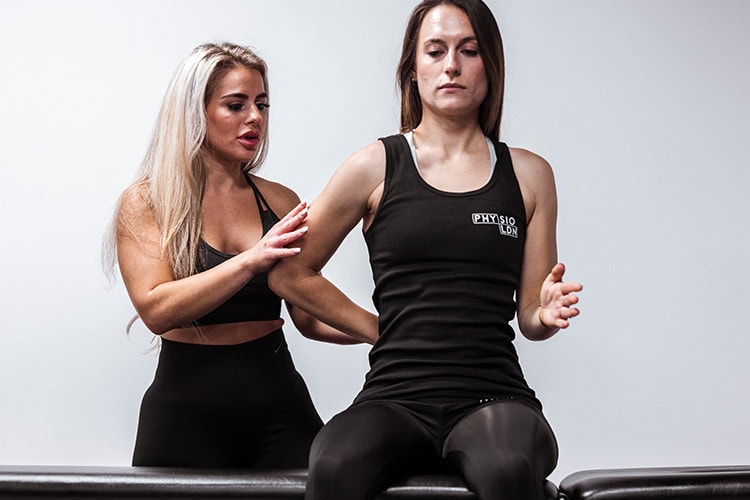
Recovery from tennis elbow shows up in function before it shows up in pain, so the markers to watch are what you can do, not how much it hurts.
This is the most useful thing to know during a long recovery, because pain swings week to week and makes progress feel invisible.
Early: the flares get shorter
The first sign of progress is not less pain, it is shorter recovery from it. An aggravating task that used to leave your elbow sore for two days starts leaving it sore for one. That is the tendon tolerating load better, even though the peak pain may feel unchanged.
Middle: grip improves
Grip strength, compared against your other arm, is the marker we track most closely. A grip that is steadily closing the gap tells you the tendon is genuinely rebuilding, and it typically improves before the pain fully leaves. People who do not know this often stop their programme at exactly the wrong moment.
Later: the ordinary tasks return
Kettles, shopping bags, laptop lids, door handles. When the tasks that used to announce themselves stop registering, the tendon has regained real capacity. Sport and heavy work return after that, not before.
Progress is rarely linear. A worse week inside an improving month is normal tendon behaviour, not a setback.
What moves your timeline
Four things account for most of the variation in how long tennis elbow takes.
- How long you have had it: Early cases settle faster than cases measured in months. This is the single biggest factor, and the only one you cannot change retrospectively.
- Whether the load changed: If the work, sport, or grip pattern that caused it continues unchanged, the tendon cannot get ahead. This is the most common reason recoveries stall.
- Whether you did the loading programme: Progressive strengthening is the best-evidenced treatment for tennis elbow. Doing it consistently is what moves the timeline most.
- Whether you rested instead: Covered next, because it deserves its own explanation.
Why resting makes it take longer
Rest eases tennis elbow pain in the short term and extends the recovery, because a tendon that is not loaded loses the capacity it needs to get better.
This is counterintuitive, and it is the single most expensive mistake people make with this condition. Stopping everything does reduce the pain, which feels like progress. But the tendon does not use that time to repair itself back to full strength. It deconditions. When you return to normal activity, you return with a weaker tendon than you had before, and the pain comes back faster.
The evidence points the same way: trials comparing a wait-and-see approach with physiotherapy found that at one year the exercise-based group did better, and the wait-and-see group simply took longer to get there. Relative rest, reducing the aggravating load while loading the tendon deliberately, is the version that works.
When to get it assessed
Book an assessment if elbow pain has lasted beyond two to three weeks, keeps returning with every spell of activity, or has stopped improving despite rest. If you want to confirm the condition first, our guide to tennis elbow symptoms and self-tests covers recognition, and the wider set of causes sits in our elbow pain guide.
Common questions about tennis elbow recovery
How long does tennis elbow take to heal on its own?
Left untreated it can take a year or more, and a minority run longer than that. Tendons do not rebuild capacity without being loaded, so waiting it out is usually the slowest route rather than the safest one.
Why is my tennis elbow not getting better?
The two usual reasons are that the aggravating load never changed, or that rest was the plan instead of progressive loading. Both leave the tendon without the stimulus it needs. Neither means the condition has become untreatable.
Can I still use my arm with tennis elbow?
Yes, and you should, in modified form. Reducing the sharply aggravating grips while continuing to use and load the arm is what rebuilds the tendon. Complete avoidance extends the recovery.
How do I know if my tennis elbow is healing?
Watch function, not pain. Shorter flares after aggravating tasks, improving grip strength, and ordinary tasks stopping being an event are the real markers. Grip usually improves before the pain fully goes.
Does tennis elbow come back?
It can, if the capacity that failed was never fully rebuilt or the original load returns unchanged. Finishing the strengthening after the pain stops is what makes the difference between one episode and a recurring one.
Book your elbow assessment
The six-to-twelve-month figure describes a tendon rebuilding, not a year in pain. The sooner the right loading starts, the shorter your version of it gets. Book an assessment through our tennis elbow treatment in London page in 60 seconds, no GP referral needed.
References
- Cook JL, Purdam CR. Is tendon pathology a continuum? A pathology model to explain the clinical presentation of load-induced tendinopathy. British Journal of Sports Medicine. 2009;43(6):409-416.
- Smidt N, van der Windt DA, Assendelft WJ, et al. Corticosteroid injections, physiotherapy, or a wait-and-see policy for lateral epicondylitis: a randomised controlled trial. The Lancet. 2002;359(9307):657-662.
- Bisset L, Beller E, Jull G, et al. Mobilisation with movement and exercise, corticosteroid injection, or wait and see for tennis elbow: randomised trial. BMJ. 2006;333(7575):939.
- Coombes BK, Bisset L, Brooks P, Khan A, Vicenzino B. Effect of corticosteroid injection, physiotherapy, or both on clinical outcomes in patients with unilateral lateral epicondylalgia: a randomized controlled trial. JAMA. 2013;309(5):461-469.
- NHS. Tennis elbow.
- National Institute for Health and Care Excellence. Clinical Knowledge Summary: Tennis elbow.
