Important Notice: This content covers topics that may significantly impact your wellbeing. We recommend consulting qualified professionals before acting on this information.
Last reviewed: June 2025
This article is for informational purposes only and is not a substitute for professional medical advice, diagnosis, or treatment. Always consult a qualified healthcare provider with any questions about a medical condition.
If you’re dealing with hip pain at work, you’re far from alone: around 67% of desk workers report regular hip discomfort or stiffness, and deep hip pain ranks as the second most common complaint after lower back pain among sedentary professionals. The causes are usually mechanical, driven by prolonged sitting, poor chair setup, and weak glutes. But the fixes are often straightforward. This article covers why your desk setup is likely contributing to your hip symptoms, the warning signs that something more serious might be going on, practical ergonomic and movement changes you can make today, and when it’s time to get professional help.
Key Takeaways
- Prolonged sitting compresses hip flexors and weakens glutes, creating a muscular imbalance that commonly leads to anterior hip pain and stiffness.
- Over 85% of people sitting more than six hours daily experience hip flexor tightness, a primary driver of desk-related hip discomfort.
- Regular movement breaks every 30 minutes can significantly reduce hip stiffness and may help prevent long-term joint problems.
- Ergonomic adjustments to your chair height, desk position, and monitor setup are often the single most effective first step.
- Not all hip pain is desk-related: red flag symptoms like night pain, unexplained weight loss, or sudden inability to bear weight require urgent medical assessment.
- Physiotherapy focused on active rehabilitation is the most evidence-supported intervention for persistent desk-related hip pain.
Why Work and Desk Setups Trigger Hip Pain
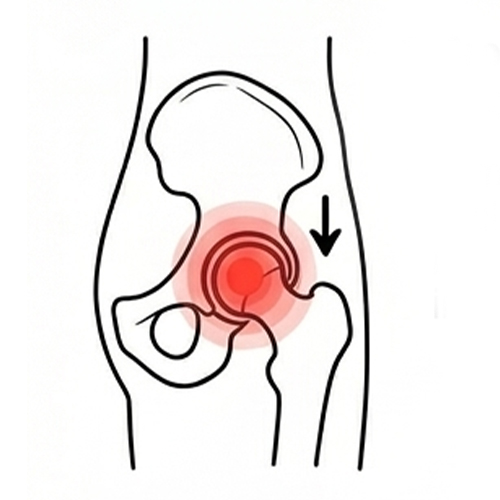
The human hip joint is designed for movement. It’s a ball-and-socket joint built to walk, run, squat, and rotate through a wide range of motion. Sitting at a desk for eight or more hours a day forces this joint into a fixed, flexed position that it was never meant to hold for prolonged periods.
The Hip Flexor Problem
When you sit, your hip flexors (primarily the iliopsoas and rectus femoris) are held in a shortened position. Over weeks and months, these muscles adapt by becoming chronically tight. As one clinical explanation puts it: “Sitting in a hip-flexed position for long periods of time causes our hip flexors to get short and tight. Then the muscles on our backside, our gluteus muscles, get long and weak because we are not really using them.” This imbalance is the root cause of most desk-related hip complaints.
The numbers back this up. People who sit for more than six hours daily are significantly affected: over 85% of them experience hip flexor tightness. That’s not a small subset of desk workers. That’s nearly everyone in a standard office role.
What’s Actually Happening in the Joint
It helps to understand the distinction between a trigger and a root cause. The trigger for your hip pain might be a particular morning when you stood up from your chair and felt a sharp pinch in the front of your hip. But the root cause is almost certainly weeks or months of accumulated deconditioning: shortened hip flexors, weakened glutes, and reduced joint mobility from sustained sitting.
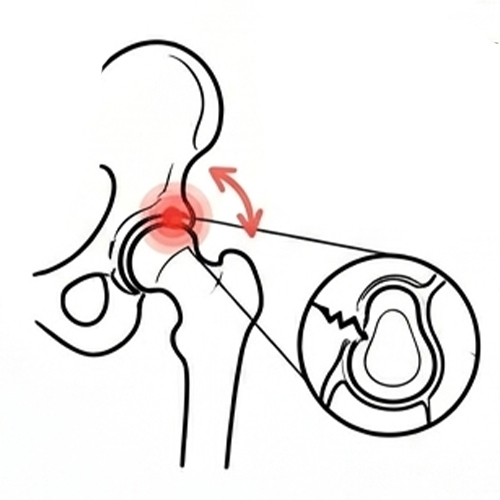
This sustained posture increases compressive load through the anterior hip structures. Over time, it may contribute to labral irritation, bursitis, or early cartilage changes. Research indicates that office workers are 40% more likely to develop hip osteoarthritis compared to those in more active professions. That’s a striking statistic for anyone spending their career behind a desk.
The Chair and Desk Setup Factor
Your specific workstation matters more than most people realise. A chair that’s too low forces excessive hip flexion beyond 90 degrees. A seat that’s too deep puts pressure on the back of the thighs and tilts the pelvis posteriorly. A monitor placed too low encourages forward slumping, which rounds the lumbar spine and further loads the hip joint.
Cross-legged sitting, a common habit, creates asymmetric loading through the pelvis and can aggravate the piriformis and surrounding deep rotators on one side. If you consistently cross the same leg, you may notice that your hip pain is worse on that side.
The Stress Connection
For high-pressure professionals, there’s another layer worth considering. Work-related stress increases muscle tension throughout the body, and the hip flexors and pelvic floor are particularly susceptible. Pain science research supports a biopsychosocial model: your brain’s interpretation of threat, including work deadlines, financial pressure, and job insecurity, can amplify pain signals. Pain does not always equal tissue damage, and stress can genuinely lower the threshold at which your nervous system produces a pain response.
The economic scale of this problem is enormous. The annual costs of pain, including joint pain, in the US alone range from $560 to $635 billion when you factor in lost productivity and medical care. While that figure is US-based, the UK picture is similarly concerning, with musculoskeletal conditions remaining one of the leading causes of sickness absence.
Red Flags – When It’s More Than Just Your Desk
Most desk-related hip pain is mechanical and responds well to movement, ergonomic changes, and physiotherapy. But not all hip pain is benign, and recognising the warning signs that something more serious might be happening is critical.
Symptoms That Warrant Urgent Medical Review
You should seek same-day or emergency medical assessment if you experience any of the following:
- Sudden inability to bear weight on the affected leg
- Severe groin or hip pain following a fall, even a minor one (especially if you’re over 50 or have osteoporosis risk factors)
- Hip pain accompanied by fever, chills, or general unwellness, which may suggest infection
- Unexplained weight loss alongside persistent hip or groin pain
- Night pain that wakes you from sleep and is not related to sleeping position
- Pain that is constant, progressive, and unrelated to activity or position
- Bladder or bowel disturbance alongside hip or back pain, which could indicate cauda equina syndrome
These red flags don’t necessarily mean something catastrophic is wrong, but they do require proper clinical investigation to rule out conditions such as avascular necrosis, fracture, infection, or referred pain from an abdominal or pelvic source.
Referred Pain vs. Local Hip Pain
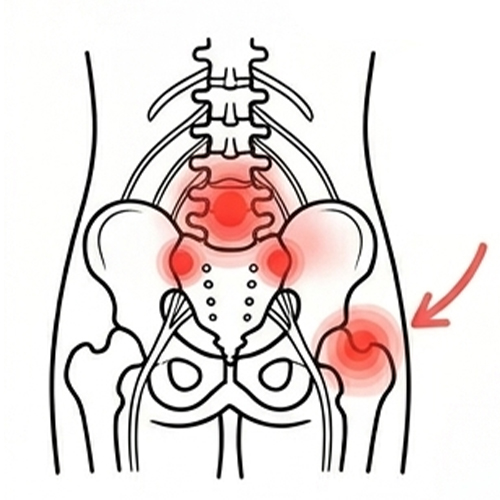
One of the trickiest aspects of hip pain is that it doesn’t always originate in the hip. The lumbar spine (particularly L2-L4 nerve roots) can refer pain into the groin, front of the thigh, and lateral hip. Sacroiliac joint dysfunction can mimic deep buttock and posterior hip pain. Even abdominal conditions can occasionally present as hip discomfort.
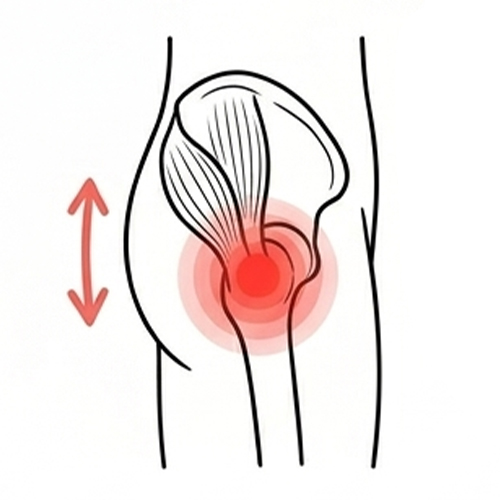
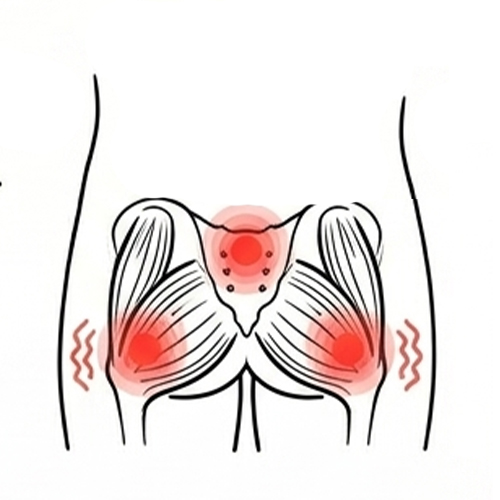
A useful clinical distinction: pain that is felt deep in the groin crease and worsens with hip rotation is more likely to be a true hip joint issue. Pain felt on the outside of the hip, particularly over the bony prominence (greater trochanter), often points to gluteal tendinopathy or trochanteric bursitis. Pain in the buttock that radiates down the back of the leg may be lumbar in origin.
Morning vs. Evening Pain Patterns
The timing of your pain offers clues. Morning stiffness lasting less than 30 minutes is common with mechanical causes and typically improves once you start moving. Morning stiffness lasting longer than 30 to 45 minutes may suggest an inflammatory component, such as rheumatoid arthritis or ankylosing spondylitis, and warrants investigation.
Evening or end-of-day pain that builds throughout your working hours is more consistent with mechanical overload from sustained sitting. This pattern is the most typical presentation for desk-related hip problems and generally responds well to the strategies outlined below.
Rebecca Bossick, BSc (Hons) Physiotherapy, at One Body LDN, notes: “I see a lot of corporate clients who assume their hip pain is just part of getting older. But when we assess them properly, the issue is almost always a combination of prolonged sitting and weak glutes rather than age-related degeneration. The good news is that these factors are very modifiable.”
Self-Help Changes: Ergonomics, Breaks and Load Management
If your hip pain follows a mechanical pattern, the most effective first steps are within your control. You don’t need expensive equipment or radical lifestyle changes. You need targeted adjustments to how you sit, how often you move, and how you manage the load on your hips throughout the day.
Ergonomic Setup: Getting the Basics Right
Your chair and desk configuration is the foundation. Here’s what to aim for:
- Seat height: Your hips should be level with or very slightly higher than your knees. This keeps hip flexion at or just below 90 degrees, reducing compressive load on the anterior hip.
- Seat depth: There should be a two-to-three finger gap between the front edge of the seat and the back of your knees. A seat that’s too deep pushes you into a posterior pelvic tilt.
- Lumbar support: A small cushion or built-in support at the curve of your lower back helps maintain a neutral spinal and pelvic position, which directly affects hip loading.
- Feet flat on the floor: If your feet dangle, use a footrest. Unsupported feet shift load unevenly through the pelvis.
- Monitor at eye level: This prevents the forward head posture and thoracic slumping that cascades down to affect pelvic alignment.
Standing desks deserve a mention here. Research shows they can lead to a 54% reduction in upper back and neck pain, and while the evidence for hip-specific benefits is less robust, alternating between sitting and standing throughout the day reduces the total time your hips spend in a flexed position. A sit-stand desk used in 30-minute intervals is a reasonable approach for most people.
Movement Breaks: The 30-Minute Rule
This is arguably the single most important change you can make. Regular breaks with movement every 30 minutes are considered essential to prevent hip stiffness and pain. You don’t need to do a full workout. Simply standing up, walking to the kitchen, or doing a brief stretch resets the hip flexors and re-engages the glutes.
A practical approach for busy professionals:
- Set a silent vibrating timer on your phone or smartwatch for every 30 minutes
- Stand up and walk for 60 to 90 seconds
- Perform two to three hip flexor stretches or bodyweight squats
- Sit back down and continue working
This adds up to roughly 15 minutes of movement per working day, and the cumulative benefit is significant.
Targeted Exercises
Three categories of exercise tend to help most with desk-related hip pain:
- Hip flexor stretching: A half-kneeling hip flexor stretch held for 30 to 45 seconds, repeated two to three times per side, directly addresses the shortened position your hip flexors are held in all day.
- Glute strengthening: Bridges, clamshells, and single-leg Romanian deadlifts rebuild the posterior chain that sitting systematically weakens. Aim for three sets of 10 to 15 repetitions, three to four times per week.
- Hip mobility work: Controlled articular rotations (CARs) take the hip through its full range of motion and help maintain joint health. These can be done standing at your desk.
The key principle here is load management. If you’ve been sedentary for months, jumping into heavy squats on day one is likely to aggravate your symptoms. Start with bodyweight exercises, progress gradually, and pay attention to how your hip responds in the 24 hours after exercise. A slight increase in awareness is normal. A significant flare-up means you’ve done too much, too soon.
Sleep and Recovery
For those whose hip pain lingers into the evening, sleep position matters. Side-sleeping with a pillow between the knees keeps the pelvis in a neutral alignment and reduces strain on the lateral hip structures. A medium-firm mattress provides enough support to prevent excessive pelvic drop. If you’re a back sleeper, placing a pillow under your knees reduces hip flexor tension overnight.
When to See a Physiotherapist for Work-Related Hip Pain
Self-help measures work well for mild to moderate symptoms, but there’s a point where professional assessment becomes the smarter choice. The question is when.
Timing Matters
As a general guide, consider seeing a physiotherapist if:
- Your hip pain has persisted for more than four to six weeks despite consistent ergonomic changes and movement breaks
- Pain is interfering with your ability to concentrate at work, exercise, or sleep
- You’ve noticed a progressive reduction in your hip’s range of motion
- You’re compensating with altered movement patterns, such as limping, avoiding stairs, or shifting your weight to the other side
- You’re unsure whether your symptoms are coming from the hip, the lower back, or both
Early intervention tends to produce better outcomes. A problem that’s been building for three months is generally quicker to resolve than one that’s been present for two years. The longer compensatory patterns persist, the more secondary issues develop in the lower back, knee, and opposite hip.
What Does Physiotherapy Actually Involve?
A good physiotherapy assessment for hip pain will include a detailed history of your symptoms, your work setup, your exercise habits, and your goals. The physical examination will test hip range of motion, muscle strength, joint integrity, and provocation tests to identify the specific structure involved.
Treatment typically combines hands-on techniques (manual therapy, soft tissue work, joint mobilisation) with a structured exercise rehabilitation programme. The National Institute for Health and Care Excellence (NICE) guidelines for osteoarthritis, including hip OA, recommend exercise as a core treatment, supported by manual therapy where appropriate (NICE guideline CG177). The Chartered Society of Physiotherapy similarly advocates for active rehabilitation over passive treatments for musculoskeletal pain.
Kurt Johnson, M.Ost (Master of Osteopathy), at One Body LDN, explains: “We often see clients who’ve been told to just stretch more, but stretching alone rarely fixes the problem. The hip needs to be strong through its full range, not just flexible. A proper rehab programme addresses both, and we tailor it around each person’s work demands and training goals.”
Should You Get a Scan?
Many clients ask about MRI scans early on, and the honest answer is that imaging is rarely needed for typical desk-related hip pain. Research consistently shows that MRI findings often don’t correlate well with symptoms: many people with labral tears or mild cartilage changes on imaging have no pain at all, while others with significant pain have unremarkable scans. A systematic review published in the British Journal of Sports Medicine (Reiman et al., 2017) highlighted that hip imaging findings are common in asymptomatic individuals, reinforcing that clinical assessment should guide treatment, not imaging alone.
Scans become appropriate when red flag symptoms are present, when symptoms fail to respond to a reasonable course of physiotherapy (typically 6 to 12 weeks), or when surgical intervention is being considered.
The Role of Your Workplace
If your employer offers occupational health assessments or workstation reviews, take advantage of them. Under UK health and safety regulations, employers have a duty to assess and manage workstation risks for employees who use display screen equipment. A formal workstation assessment can identify issues you might not notice yourself and provides documentation if you need to request equipment changes.
For those with private health insurance, physiotherapy is typically covered, and most insurers don’t require a GP referral. This means you can often get assessed within days rather than waiting weeks.
Frequently Asked Questions
Can sitting too long actually damage my hip joint?
Prolonged sitting alone is unlikely to cause acute structural damage, but it can contribute to long-term changes. Office workers are around 40% more likely to develop hip osteoarthritis than those in more active professions. The mechanism is likely a combination of reduced joint nutrition (cartilage relies on movement for nutrient exchange), chronic muscle imbalance, and increased compressive loading. Regular movement breaks and strengthening exercises can significantly reduce this risk.
How do I know if my hip pain is from sitting or from exercise?
Timing and behaviour of the pain are your best clues. Desk-related pain typically builds during or after prolonged sitting and eases with movement. Exercise-related pain tends to worsen during or immediately after specific activities like running or squatting. If your pain is worst after a long day at your desk and improves on weekends when you’re more active, the desk is the more likely culprit.
Is a standing desk worth the investment?
Standing desks can help by reducing total sitting time and allowing you to alternate positions. The evidence shows a 54% reduction in upper back and neck pain with standing desk use, though hip-specific data is less conclusive. The key is alternating between sitting and standing rather than standing all day, which can create its own set of problems including increased lower limb fatigue.
How quickly can physiotherapy help with desk-related hip pain?
Most people notice meaningful improvement within three to six sessions, spread over four to eight weeks. Acute mechanical hip pain often responds faster, sometimes within two to three weeks. Chronic cases that have been present for months may take longer. The speed of recovery depends heavily on how consistently you follow your exercise programme and whether you’ve addressed your workstation setup.
Should I stop exercising if my hip hurts at work?
Generally, no. Complete rest tends to make desk-related hip pain worse by further weakening the muscles that support the joint. The better approach is to modify your training: reduce impact, lower intensity temporarily, and focus on exercises that strengthen the hip without aggravating symptoms. A physiotherapist can help you adjust your training programme so you stay active while your hip recovers.
Can stress really make hip pain worse?
Yes. The biopsychosocial model of pain, well supported by research published in journals like PAIN and the European Journal of Pain, shows that psychological stress, poor sleep, and anxiety can amplify pain perception. Stress increases muscle tension in the hip flexors and pelvic region and lowers the threshold at which your nervous system produces pain signals. Managing work stress is a genuine part of managing hip pain.
Your Next Steps
Hip pain related to desk work is common, usually mechanical, and highly treatable. The pattern is predictable: prolonged sitting tightens the hip flexors, weakens the glutes, and gradually shifts load onto structures that aren’t built to handle it. The fixes start with your workstation setup and movement habits, and for most people, these changes alone make a significant difference within a few weeks.
If your symptoms have been hanging around despite your best efforts, professional assessment is the logical next step. At One Body LDN, the physiotherapy team specialises in treating desk-related pain with a combination of hands-on treatment and structured rehab plans tailored to your work and training demands. You can book your first session online in under 60 seconds, all major private health insurers are accepted, and no GP referral is needed.
References
- 67% of desk workers report experiencing regular hip discomfort or stiffness
- Over 85% of people who sit for more than 6 hours daily experience hip flexor tightness
- Office workers are 40% more likely to develop hip osteoarthritis compared to more active professions
- Standing desks can lead to a 54% reduction in upper back and neck pain
- Deep hip pain is the second most common complaint after lower back pain in sedentary workers
- The annual economic costs of pain range from $560 to $635 billion
- Regular breaks with movement every 30 minutes are crucial to prevent hip stiffness
- Tips for healthy hips: expert insight on hip flexor tightness from prolonged sitting
- NICE guideline CG177: Osteoarthritis: care and management. National Institute for Health and Care Excellence, 2014 (updated 2022).
- Reiman MP et al. (2017). MRI findings in asymptomatic hips: a systematic review. British Journal of Sports Medicine, 51(4), 268-275.