

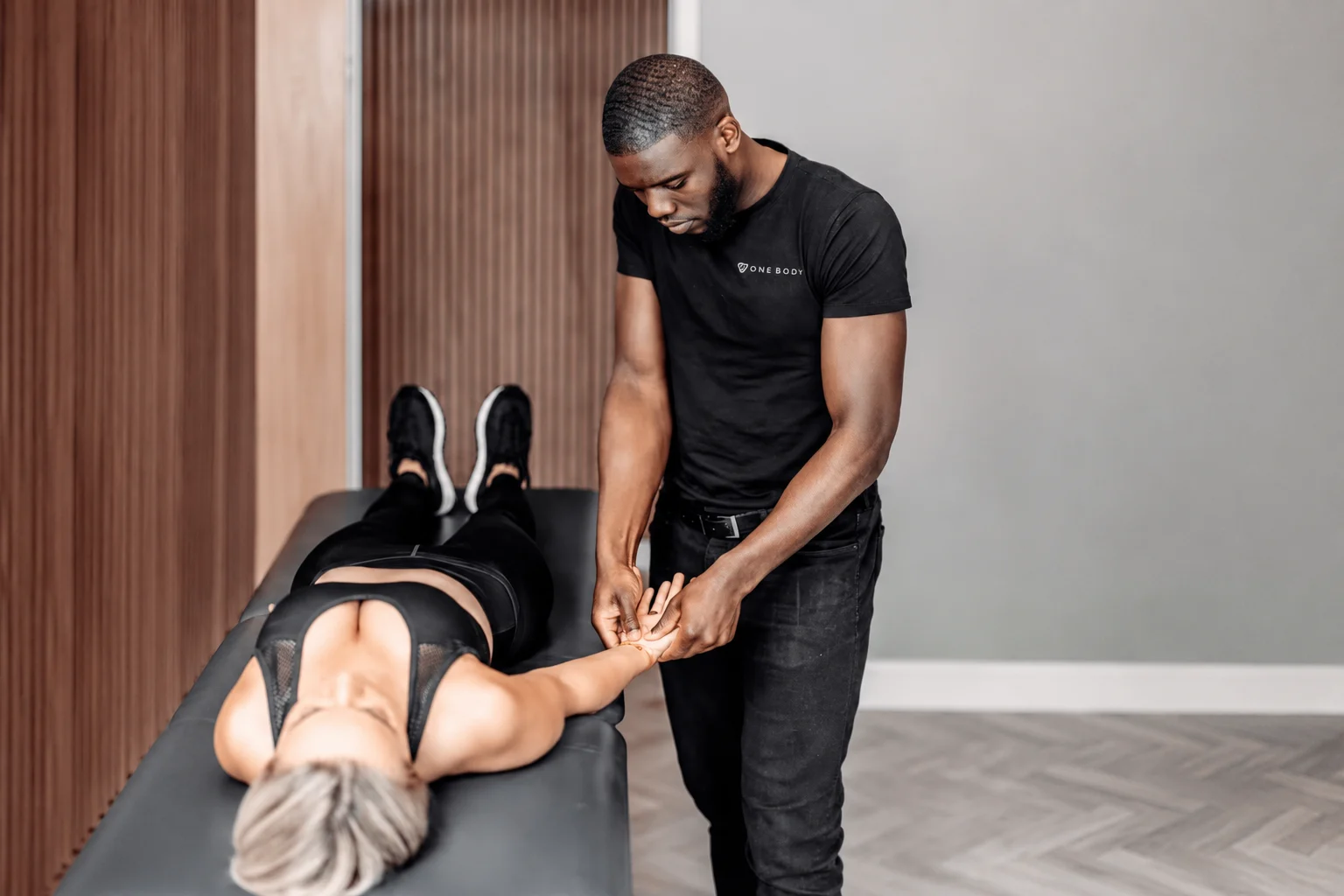

Opening a jar, carrying shopping, wringing a cloth, holding a kettle: the hand hurts when you grip, and the rest of the time it is fine. Hand pain when gripping comes from one of the structures that gripping loads: the joint at the base of the thumb, the tendons that run into the fingers, the finger joints themselves, the tendons on the outside of the elbow that power the grip, or a nerve that gripping compresses.
Where the pain sits and which kind of grip provokes it narrow the cause to two or three possibilities before any test is done. This guide sets out why gripping hurts, which cause sits where, what the type of grip tells you, how to check at home, how each cause is treated and when a hand that hurts to grip needs to be assessed.
Key takeaways
- Hand pain when gripping comes most often from thumb base osteoarthritis, De Quervain’s tenosynovitis, trigger finger, finger joint arthritis or tennis elbow, and the location separates them.
- Pain at the base of the thumb on opening jars and turning keys is thumb base arthritis in most people over 45; pain on the thumb side of the wrist when lifting is De Quervain’s.
- Pain on the outside of the elbow when gripping, with a weak grip, is tennis elbow, because the muscles that grip start at the elbow.
- A finger that clicks, catches or locks when you release a grip is trigger finger, and numbness with grip is a nerve, not a joint or tendon.
- Most grip pain settles over 6 to 12 weeks with load changes, a splint where the thumb base is involved and progressive grip strengthening, without imaging.
Why does the hand hurt when gripping?
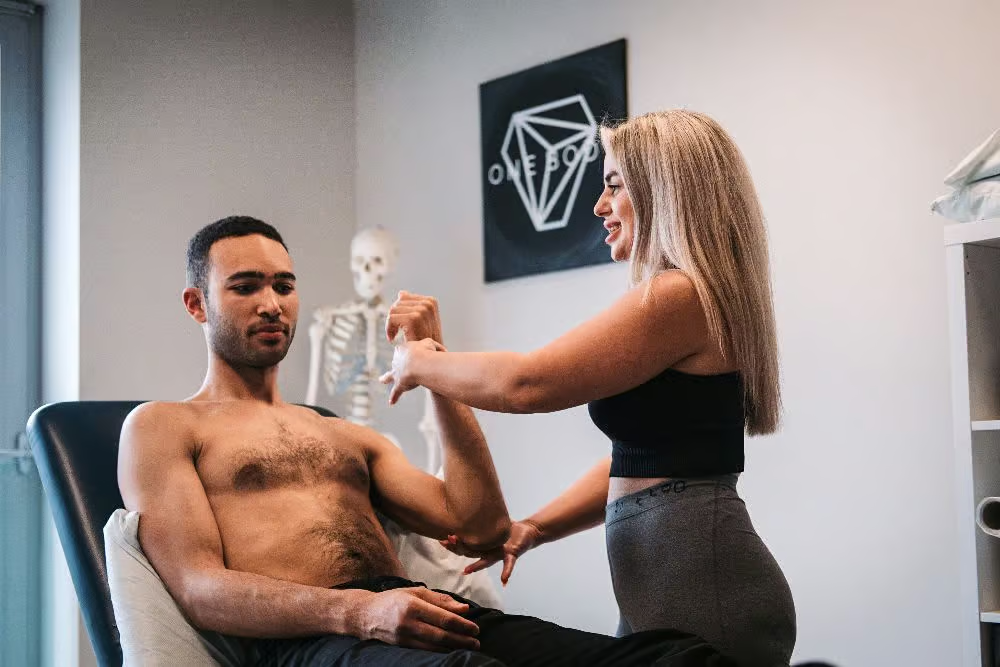
The hand hurts when gripping because a grip loads the thumb base joint, the finger tendons and their sheaths, the finger joints and the forearm muscles all at once, and a structure that has lost tolerance to that load hurts under it and not at rest. Gripping a jar lid generates a force at the base of the thumb of more than ten times the force at the fingertips, which is why that joint fails first.
The thumb base. The joint between the thumb and the wrist takes the greatest share of any pinch or grip and wears earlier than any other hand joint.
The tendons. The tendons that bend the fingers run through tight sheaths in the palm and the fingers, and the tendons that lift the thumb run through a tunnel at the wrist. A thickened tendon catches in its sheath under load.
The forearm. The muscles that close the fingers start on the inside of the elbow and the muscles that hold the wrist steady while you grip start on the outside. Grip pain felt at the elbow is a tendon problem at that attachment.
The nerves. A tight grip with the wrist bent raises the pressure in the carpal tunnel, and leaning on the elbow compresses the ulnar nerve; both produce tingling with grip rather than pain alone.
Which cause of grip pain sits where?
The location of hand pain when gripping narrows the cause to two or three possibilities, and the table sets them out from thumb to elbow.
| Where it hurts when gripping | Most likely cause | What else fits |
| Base of the thumb, where it meets the wrist | Thumb base osteoarthritis | Opening jars, turning keys, writing; a squared-off thumb base; over 45 |
| Thumb side of the wrist, 2 cm above the crease | De Quervain’s tenosynovitis | Lifting with the thumb out, wringing, texting; tender swelling on the spot; new parents |
| Palm, at the base of a finger, with clicking | Trigger finger | Finger catches or locks on opening the hand; a tender nodule in the palm |
| Finger joints, stiff in the morning | Finger joint osteoarthritis or inflammatory arthritis | Bony swellings at the fingertip joints, or warm soft knuckles with long morning stiffness |
| Outside of the elbow, with a weak grip | Tennis elbow | Pain lifting a kettle or shaking hands; tender on the bony point of the outer elbow |
| Inside of the elbow | Golfer’s elbow | Pain gripping and pulling; tender on the inner elbow bone |
| Palm and fingers, with tingling | Carpal tunnel syndrome | Tingling in thumb to middle finger, worse at night and holding a phone |
| Little and ring finger, with tingling | Ulnar nerve irritation at the elbow | Worse leaning on the elbow or with the elbow bent for long periods |
| Whole hand, weak and aching after use | Deconditioning or overload | New job, new sport, long days of manual work; no single tender spot |
Our hand pain causes and treatment guide covers each diagnosis in the table.
What does the type of grip tell you?
The type of grip that hurts separates the thumb base, the finger tendons and the forearm, because each grip loads a different structure most.
Pinch grip. Turning a key, holding a pen, picking up a coin. Pain here loads the thumb base joint and points to thumb base arthritis.
Power grip with the thumb out. Lifting a kettle, a pan or a child with the thumb spread. Pain here loads the thumb tendons at the wrist and points to De Quervain’s.
Power grip with the wrist straight. Carrying shopping, holding a bar, shaking hands. Pain at the outer elbow points to tennis elbow; pain in the palm with a catch points to trigger finger; tingling points to a nerve.
Sustained grip. Holding a steering wheel, a phone or a tool for a long period. Aching that builds with time and eases on release points to a nerve under pressure or to deconditioned forearm muscles.
Twisting grip. Opening jars, wringing a cloth, using a screwdriver. Pain here loads the thumb base and the outer elbow together, and both are checked.
How do you check hand pain when gripping at home?
Four checks separate the thumb base, the wrist tendons, the finger tendons and the elbow as the source of grip pain. Stop any check that produces sharp pain.
The grind test. Hold the base of the thumb between the other thumb and index finger, press it gently into the wrist and rotate. Grinding or sharp pain at the base is thumb base arthritis.
The thumb-in-fist test. Make a loose fist with the thumb tucked inside and bend the wrist towards the little finger. Sharp pain on the thumb side of the wrist is De Quervain’s. Our guide on carpal tunnel or De Quervain’s covers the full self-test.
The open and close test. Make a tight fist, then open the hand fully, ten times. A finger that catches, clicks or has to be straightened with the other hand is trigger finger. Press the palm at the base of that finger for a tender nodule.
The chair lift test. Stand behind a dining chair, grip the back with the palm facing down and the elbow straight, and lift it. Pain on the outer elbow is tennis elbow.
Then check sensation. Tingling in the thumb, index and middle fingers after a minute of gripping is the carpal tunnel; tingling in the ring and little fingers is the ulnar nerve. Nerve symptoms are treated differently from joint and tendon pain.
How is hand pain when gripping treated?
Hand pain when gripping is treated by changing the grips that provoke it, supporting the structure that is failing, and strengthening grip and the forearm progressively over 6 to 12 weeks, with the programme differing by cause. Rest alone weakens the grip and does not change the cause.
Thumb base arthritis. A splint that supports the base of the thumb during provoking tasks, a jar opener and thick-handled tools to spread the pinch, thumb stability and pinch strengthening with putty, and topical anti-inflammatory gel. NICE guideline NG226 names exercise and joint protection as the core treatment, with injection and surgery reserved for cases that fail.
De Quervain’s. A thumb and wrist splint during provoking tasks for two to four weeks, a change in lifting technique so the thumb stays close to the hand, and progressive loading of the thumb tendons once the sharp pain settles. An injection resolves most cases that do not.
Trigger finger. A finger splint worn at night to hold the finger straight for six weeks, tendon gliding exercises and a reduction in sustained grip. A corticosteroid injection into the sheath resolves most cases that persist, and a small release procedure the few that recur.
Tennis elbow and golfer’s elbow. Reduce the load on the forearm tendons without stopping use, strengthen the wrist extensors or flexors with slow, heavy resistance, and rebuild grip strength over 8 to 12 weeks. Our tennis elbow physiotherapy in London page sets out the loading programme we use.
Nerve-related grip symptoms. A night splint and nerve gliding for carpal tunnel; elbow padding and avoiding sustained elbow bending for the ulnar nerve; a severity grading in both cases to decide whether a surgical opinion is needed.
Deconditioning. Progressive grip and forearm strengthening with a hand gripper, towel wringing and farmer’s carries, starting below the load that hurts and adding 10 per cent a week.
What we tell you at the assessment. Most grip pain settles inside 12 weeks once the structure is named and the grip is changed and then strengthened. We will tell you if the pattern suggests inflammatory arthritis or nerve damage that needs a GP review, which applies to warm swollen knuckles, constant numbness and very few others.
What makes hand pain when gripping worse?
Avoiding gripping altogether, gripping harder to compensate for weakness, and ignoring tingling as if it were joint pain are the three habits that prolong grip pain.
Avoiding it. A hand that stops gripping to protect a sore thumb loses grip strength within weeks, and the same jar hurts more on the first attempt. Grip is modified and strengthened, not avoided.
Gripping harder. A weak grip compensated for with a tighter squeeze loads the thumb base and the forearm tendons further. Tools with thicker handles and a lighter grip take the load off.
Treating a nerve as a joint. Tingling with grip treated with thumb exercises and splints leaves the nerve compressed. Sensation is checked first, and nerve symptoms are treated as nerve symptoms.
When to get hand pain when gripping assessed
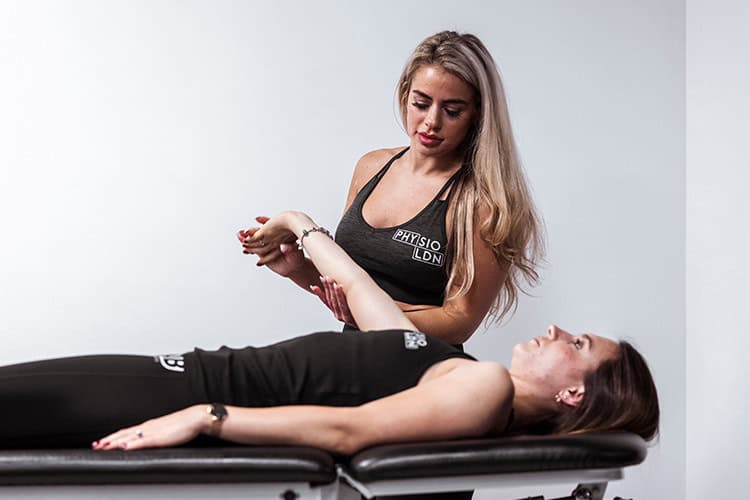
Hand pain when gripping that has lasted more than two weeks, that stops you opening jars, carrying or working, that comes with a finger that locks, or that comes with tingling or numbness warrants a physiotherapy assessment, and no GP referral is needed. The assessment tests the thumb base, the wrist and finger tendons, the elbow and the nerves in one visit and names the structure.
Note. Some hand symptoms need a GP review within days rather than a physiotherapy appointment. Warm, soft swelling across the knuckles of both hands with long morning stiffness, a single hot, red, swollen joint, constant numbness with wasting at the base of the thumb, sudden weakness in the hand, or a finger that is locked and cannot be straightened at all are reasons to see a GP urgently or call NHS 111.
Book your London hand assessment
The grip that hurts tells us which structure is failing, and the assessment confirms it in one visit. You can book your first assessment for hand pain physiotherapy in London in 60 seconds, with no GP referral needed. Our wrist pain causes and treatment guide covers the wrist conditions assessed alongside the hand.
Common questions about hand pain when gripping
Why does my hand hurt when I open a jar?
Opening a jar loads the base of the thumb with many times the force at the fingertips and twists the forearm tendons at the same time. Pain at the base of the thumb is thumb base arthritis in most people over 45; pain at the outer elbow is tennis elbow; pain on the thumb side of the wrist is De Quervain’s.
Why is my grip weak and painful?
Grip weakens when a structure that gripping loads is painful, because the hand inhibits the muscles to protect it, and the weakness returns to normal once the pain is treated. Weakness without pain, or with numbness, points to a nerve and is tested separately.
Is pain when gripping a sign of arthritis?
Pain when gripping is a sign of arthritis when it sits at the base of the thumb or in the finger joints, with stiffness in the morning and bony swelling, in a person over 45. Pain at the wrist, in the palm with clicking, or at the elbow is a tendon problem rather than arthritis.
Should I wear a splint for grip pain?
A splint helps thumb base arthritis, De Quervain’s and trigger finger when worn during provoking tasks or at night for a set period, and does not help tennis elbow or nerve symptoms. A splint worn all day for months weakens the hand and is avoided.
Can I still exercise with hand pain when gripping?
Yes. Grip is modified rather than avoided, with thicker handles, straps for pulling exercises and a lighter grip, while the hand and forearm are strengthened progressively. Pain that stays mild during exercise and settles within a day is acceptable.
References
- National Institute for Health and Care Excellence. Osteoarthritis in over 16s: diagnosis and management. NICE guideline NG226, October 2022.
- Kloppenburg M, Kroon FP, Blanco FJ, et al. 2018 update of the EULAR recommendations for the management of hand osteoarthritis.
- Huisstede BM, Coert JH, Friden J, Hoogvliet P. Consensus on a multidisciplinary treatment guideline for de Quervain disease: results from the European HANDGUIDE study.
- Coombes BK, Bisset L, Vicenzino B. Management of lateral elbow tendinopathy: one size does not fit all. Journal of Orthopaedic and Sports Physical Therapy.
- NHS. Trigger finger.
- NHS. Hand pain.
