



Pain under the ball of the foot is one of the most common complaints we see, and it comes in two distinct flavours that get lumped together almost everywhere. One is a bruised, aching soreness that feels like the padding has worn thin. The other is a sharp, burning, electric sensation that shoots into the toes, often with numbness attached.
Those are different problems. The first is usually metatarsalgia, an overload of the joints and tissue under the forefoot. The second points to a nerve, and the usual culprit is Morton’s neuroma. Telling them apart is not difficult once you know what to listen for, and it matters because they are treated differently.
Key takeaways
- A dull, bruised ache under the ball of the foot points to metatarsalgia
- Burning, tingling, or electric pain shooting into the toes points to a nerve, usually Morton’s neuroma
- Numbness in the toes is a nerve sign, not an overload sign, and it separates the two quickly
- Metatarsalgia spreads across the forefoot; Morton’s concentrates between two toes, most often the third and fourth
- Both respond well to load and footwear changes plus targeted treatment, and neither needs a scan to start
Why the two get confused
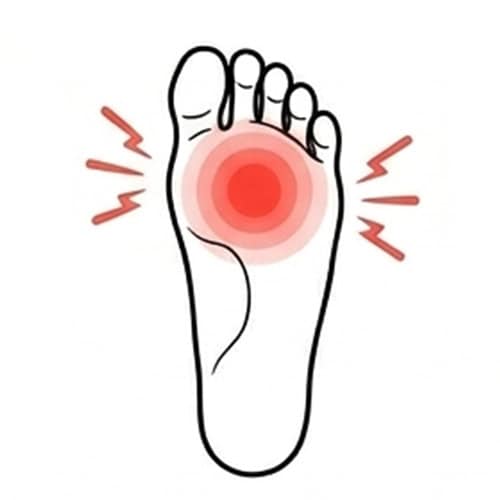
Metatarsalgia and Morton’s neuroma both cause pain under the ball of the foot, in the same small area, and are often aggravated by the same shoes and activities.
Both hurt in the forefoot. Both get worse in tight or thin-soled shoes, on hard floors, and after long periods standing or walking. Both ease when you take your shoes off and rub your foot. That shared behaviour is why search results, and plenty of general advice, treat them as roughly the same thing.
They are not. One is a loading problem in the joints and soft tissue under the forefoot. The other is an irritated nerve being squeezed between the bones. The pain each produces feels genuinely different, and that difference is the fastest way to tell which you have. How ball-of-foot pain sits within the wider picture of foot pain is covered in our main guide.
The split: what the pain quality tells you

The quality of the pain, whether it aches or burns, is the clearest separator between metatarsalgia and Morton’s neuroma.
The metatarsalgia pattern: a bruised ache
Metatarsalgia feels like the padding under the ball of your foot has worn thin. The usual descriptions:
- A dull, aching or bruised soreness under the forefoot
- A sensation like walking on a stone, or like the bone is too close to the ground
- Pain spread across the ball of the foot rather than concentrated at one point
- Worse after long standing, walking, or running, and worse in thin or hard-soled shoes
- Eases when you sit down and take the weight off
It builds with load and settles with rest. There is no burning, and no numbness. It is an overload story: the forefoot absorbed more than its current capacity, often after a change in footwear, activity, or time on your feet. Treatment sits on our metatarsalgia treatment in London page.
The Morton’s neuroma pattern: burning, tingling, numbness
Morton’s neuroma involves an irritated nerve between the long bones of the foot, and nerves complain differently:
- Burning or electric pain, rather than a dull ache
- Tingling or numbness in the toes, often two adjacent toes
- Pain that shoots forward into the toes rather than staying under the ball
- The classic sensation of a pebble or a fold in the sock under the forefoot that you cannot shake out
- Sharp flares in narrow or high-heeled shoes, often eased by removing the shoe and rubbing the foot
The single most useful discriminator: numbness. Overloaded joints and tissue do not make your toes go numb. A nerve does. If tingling or numbness travels with the pain, that points firmly toward Morton’s.
The toe-spread sign
Morton’s neuroma most commonly develops between the third and fourth toes, occasionally the second and third. Some people notice those two toes sitting slightly further apart than they used to, or a sense of separation between them. It is not present in everyone and it confirms nothing on its own, but where it appears alongside burning pain and numbness, it adds to the nerve picture.
Where metatarsalgia spreads across the whole ball of the foot, Morton’s tends to concentrate in one web space between two specific toes. Location plus quality usually settles it.
What causes each
Both conditions usually trace back to load and footwear, which is why both respond to changing those things alongside treatment.
Metatarsalgia typically follows a rise in forefoot load: more walking or standing, a training jump, a switch to flatter or thinner shoes, or the natural thinning of the fat pad under the forefoot that comes with age. High heels shift weight forward onto the ball of the foot, which is why they aggravate it reliably.
Morton’s neuroma develops where the nerve gets compressed between the bones, and narrow footwear is the usual contributor. Shoes with a tight toe box, or heels that push the forefoot into the front of the shoe, squeeze the space the nerve needs. High-impact activity adds to it.
The overlap is real, which is another reason they get confused: the same pair of shoes can cause either. But the tissue that ends up complaining is different, and so is the treatment.
How each is treated
Both are managed conservatively first, with footwear and load changes plus targeted physiotherapy, and neither needs a scan to begin treatment.
For metatarsalgia, the plan reduces the load going through the forefoot while rebuilding the foot’s capacity to handle it: footwear with adequate cushioning and a wider toe box, temporary activity adjustment, and strengthening for the foot and calf. Offloading support can help in the short term while the strengthening does the lasting work.
For Morton’s neuroma, the priority is taking the pressure off the nerve: wider footwear, lower heels, and changes that stop the forefoot being squeezed, alongside treatment to settle the irritated nerve and address how the foot is loading. Most cases respond well to this, and the more invasive options are reserved for the minority that do not.
Neither condition normally needs imaging to start. Both are diagnosed from where the pain sits, what it feels like, and how the foot responds to examination. A scan enters the picture only if the diagnosis is unclear or a proper course of treatment has not worked.
When to get it assessed
Book an assessment if ball-of-foot pain has lasted beyond two to three weeks, keeps returning, is changing how you walk, or comes with numbness or burning in the toes. Our foot pain physiotherapy in London team assesses forefoot pain, separates these two presentations, and builds the plan that fits, through direct access, no GP referral needed.
Common questions about ball of foot pain
How do I know if I have metatarsalgia or Morton’s neuroma?
Metatarsalgia feels like a dull, bruised ache spread under the ball of the foot. Morton’s neuroma burns, tingles, or shoots into the toes, usually with numbness. Numbness is the clearest single separator, because overloaded tissue does not cause it.
Why does it feel like there is a stone in my shoe?
Both conditions can produce that sensation, which is part of why they get confused. With metatarsalgia it accompanies a bruised ache; with Morton’s it accompanies burning and numbness in the toes. What the pain feels like alongside it tells you which.
Can ball of foot pain go away on its own?
Sometimes, if the cause was a one-off change in shoes or activity that you then reverse. Pain that has lasted more than a few weeks, keeps returning, or brings numbness needs assessment rather than more waiting, because both conditions tend to persist while the load that caused them continues.
What shoes should I wear for ball of foot pain?
Cushioned soles, a wide toe box, and a low heel help both conditions, for different reasons. Cushioning reduces the load in metatarsalgia; width takes the squeeze off the nerve in Morton’s. Narrow, thin-soled, or high-heeled shoes aggravate both.
Do I need a scan for ball of foot pain?
Usually not to begin treatment. Both conditions are diagnosed from the pain’s location, its quality, and examination. Imaging is reserved for unclear cases or where a proper course of treatment has not worked.
Book your foot assessment
Ball-of-foot pain that aches and ball-of-foot pain that burns are two different problems with two different plans. An assessment tells you which you have before you spend months treating the wrong one. Book through our metatarsalgia and forefoot pain treatment in London page in 60 seconds, no GP referral needed.
References
- NHS. Metatarsalgia (pain in the ball of the foot).
- NHS. Morton’s neuroma.
- Bhatia M, Thomson L. Morton’s neuroma: current concepts review. Journal of Clinical Orthopaedics and Trauma. 2020;11(3):406-409.
- Besse JL. Metatarsalgia. Orthopaedics & Traumatology: Surgery & Research. 2017;103(1S):S29-S39.
- Chartered Society of Physiotherapy. Foot and ankle problems.
